




Ornamental Brass Table Clock
An ornamental brass table clock brings meticulous timekeeping and heavy metalwork into a room, offering both function and sculptural presence.
Ornamental Brass Table Clock
An ornamental brass table clock sits on desks, brackets, and mantelpieces, taking the form of mantel clocks, desk clocks, and bracket clocks. These objects emerge predominantly from the nineteenth century, spanning Victorian and Belle Epoque periods, alongside earlier eighteenth-century examples.
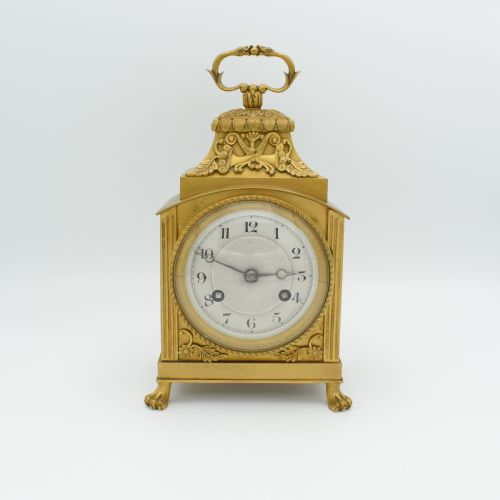
The selections on this page showcase varied regional and stylistic origins, notably French Empire, Louis XVI Revival, and English bracket designs. Makers such as Jean-Baptiste Delettrez, Chater & Son, and James Murray appear among these varied horological forms.
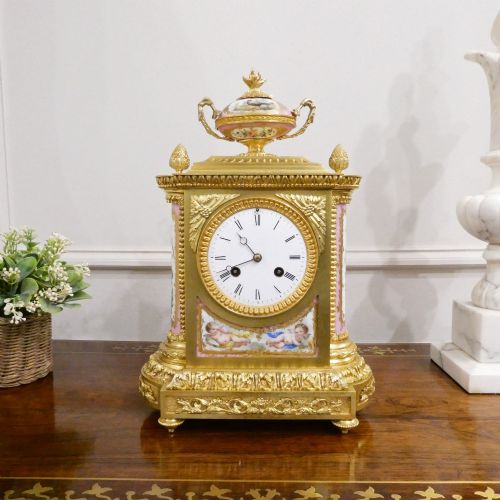
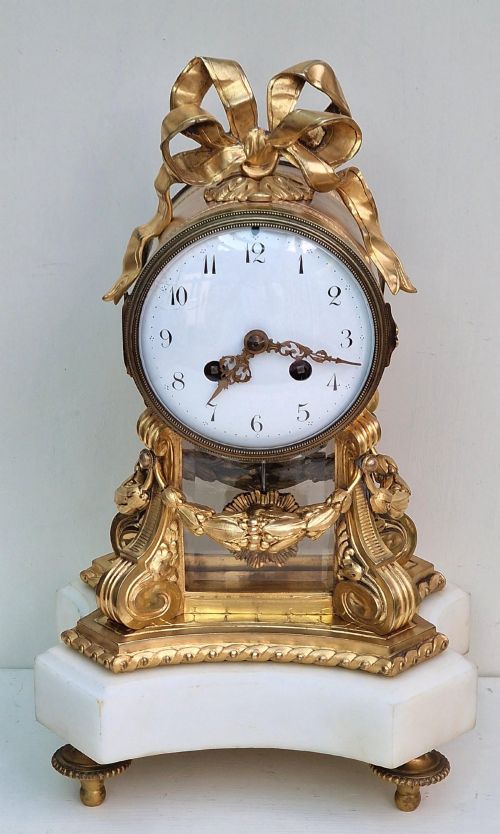
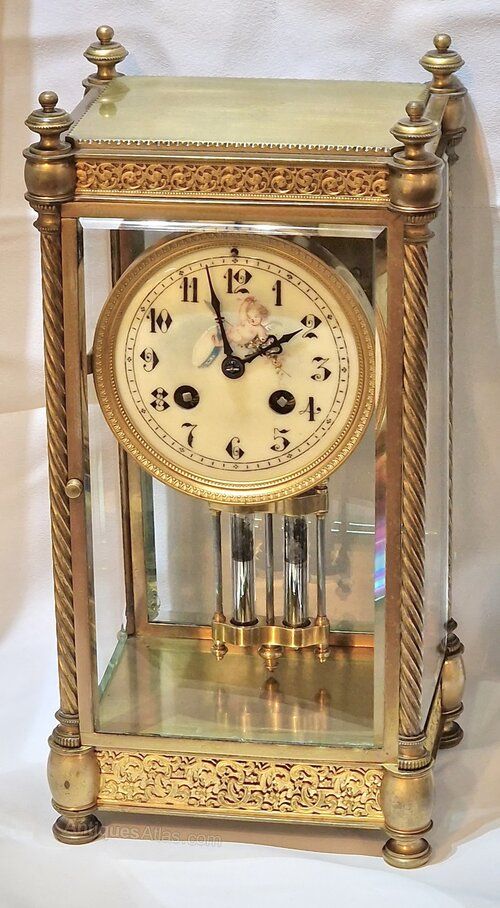
Buyers meet objects constructed with secondary materials like marble, porcelain, enamel, and glass. These pieces range from simple four-glass clock bodies to figural ormolu sculptures and architectural portico structures.
How they were made
The physical structure relies heavily on cast brass, ormolu, and gilt bronze, forming the architectural and decorative outer cases. Artisans fused these metallic elements with panels of white marble, porcelain, and glass to construct robust housing for intricate mechanical movements.
Dials and bezels frequently incorporate fired enamel for numerals, while specialist makers applied gilt, lacquer, and intricate inlays of lemon wood onto rosewood foundations. Fine metal casting and mechanical assembly dictate the core construction of each movement and housing.
Several clocks on this page feature winged cherubs staring permanently at passing time.
What varies in quality
The refinement of the casting and chasing on the ormolu and gilt bronze cases separates standard production from superior work. Sharp definition in figural elements, such as cherubs or lions, points to skilled artisan output.
The integration of supplementary materials like hand-painted porcelain plaques, undamaged enamel dials, and multi-piece marble bases dictates the overall standard of the piece. Complexity in movement engineering, including double fusee mechanisms and quarter striking capabilities, also elevates the horological merit.
Jean-Baptiste Delettrez·Chater & Son·James Murray
The Ornamental Brass Table Clock Glossary
- Ormolu
- Gilded bronze produced by applying a mercury-gilding amalgam to cast bronze. This technique creates a rich golden surface finish seen on many nineteenth-century French clock cases.
- Double fusee
- A mechanical system using chains and cone-shaped pulleys to equalise the pull of the mainspring. This mechanism ensures even tension and improves timekeeping accuracy.
- Four glass clock
- A mantel clock housed in a brass or gilt metal frame with glass panels on all four sides. This design exposes the movement and pendulum to view from multiple angles.
- Portico clock
- A clock case shaped like a classical architectural portico with supporting columns. These structures often utilise wood veneers and gilt bronze ornaments.
- Bracket clock
- A portable spring-driven clock originally designed to sit on a wall bracket. Later examples function as table or desk clocks while retaining the traditional name.
Ornamental Brass Table Clock: Frequently Asked Questions
Where should I place a table clock?
These clocks suit mantelpieces, desks, and dedicated wall brackets where their metalwork and mechanical movements remain visible. Stable, flat surfaces away from direct heat sources ensure the longevity of both the case and the internal gears.
Position the clock away from damp environments to protect enamel dials and delicate gilt surfaces from tarnishing. A secure table prevents accidental knocks that might disturb the pendulum or striking mechanism.
How do I wind an antique clock?
Winding requires a matching key inserted gently into the winding holes on the dial face. Turn the key steadily until you feel resistance, avoiding over-winding which can snap the mainspring.
Different movements require specific intervals, with many eight-day clocks needing attention roughly once a week. Consult the specific striking or fusee configuration of your piece to establish the correct routine.
What does a striking movement do?
A striking movement sounds the hours or quarters automatically using an internal bell or gong. These systems rely on separate gear trains driven by their own weight or spring power.
Quarter striking pieces ring at fifteen-minute intervals, adding an audible dimension to the visual appeal of the clock. This complication requires proper synchronisation during setup to ensure the chime matches the hands.
How do I identify nineteenth-century styles?
Nineteenth-century clocks often draw on earlier French aesthetics, such as Louis XVI Revival or Second Empire designs. Look for symmetrical neoclassical motifs, gilt bronze mounts, and architectural marble elements.
Victorian English examples frequently incorporate robust brass casting and bracket clock formats. Comparing the materials, dial typography, and case construction helps determine the approximate period of manufacture.