




Enamel Lidded Jar
An enamel lidded jar brings together colourful metalwork and fitted glass, porcelain or pottery to hold your daily small treasures.
Enamel Lidded Jar
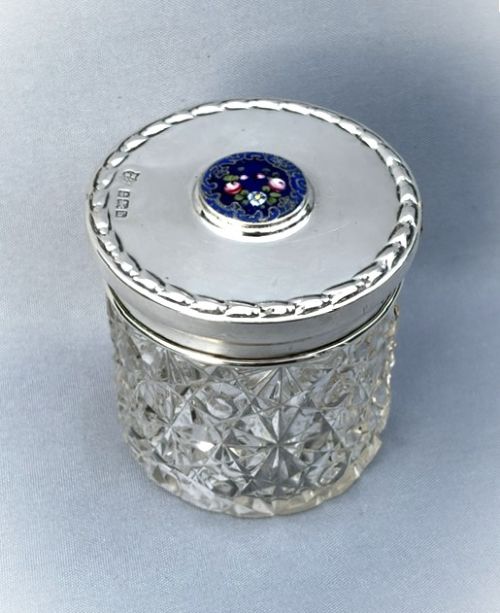
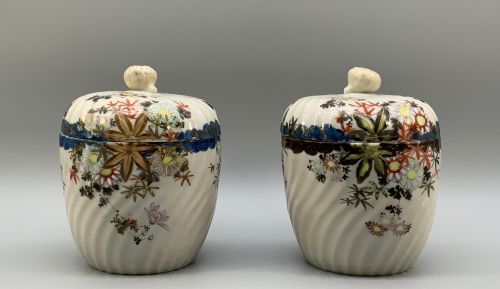
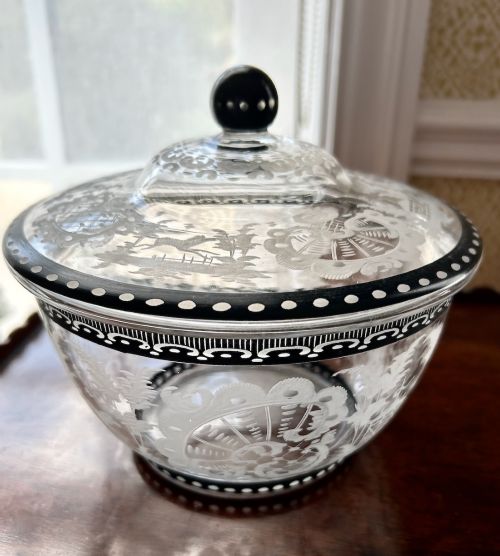
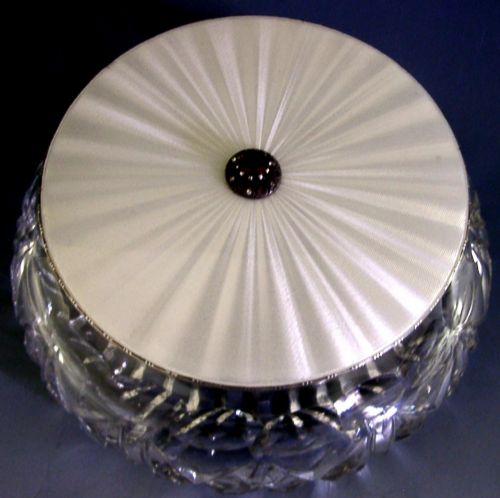
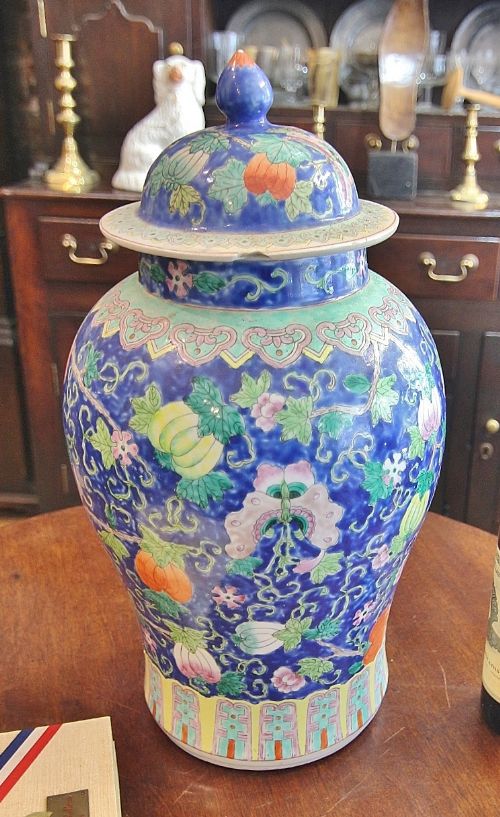
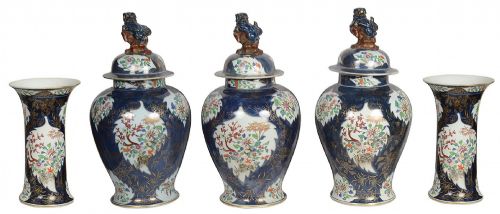
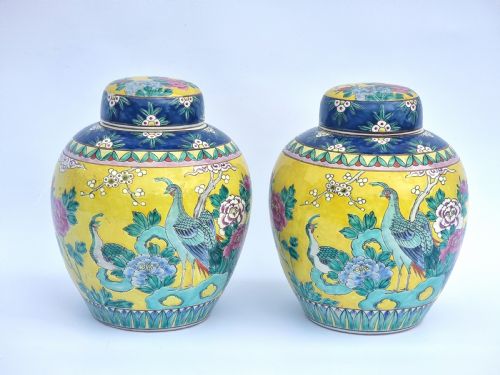
An enamel lidded jar encompasses dressing table vanity pots, ginger jars, biscuit barrels and small trinket boxes designed to hold cosmetics, sweets or precious items. The pieces span Victorian, Edwardian and Art Deco periods, reaching back to nineteenth century Chinese export wares and Japanese Meiji cloisonne.
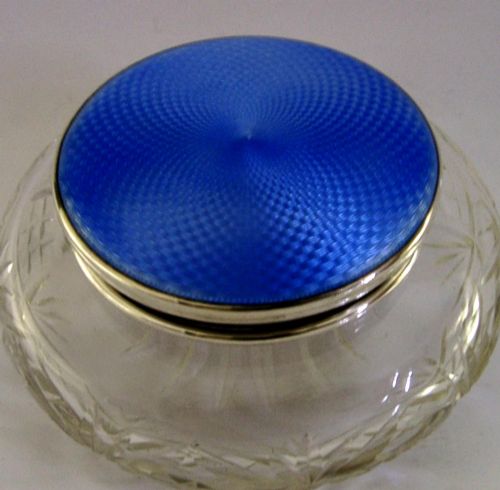
The domestic English examples often pair sterling silver mounts with guilloche enamel lids in shades of blue, pink and green. Alongside these sit Asian porcelain and pottery vessels decorated with hand painted floral motifs or dragons under various glazes.
How They Were Made
Silversmiths constructed mounts from sterling silver, brass and copper, frequently incorporating engine turned guilloche patterns beneath translucent enamel layers. Potters shaped porcelain, glass and pottery bodies, applying detailed hand painting and glazes before firing.
Japanese and Chinese workshops utilised cloisonne techniques, soldering metal wires onto metal bases to create cells filled with coloured enamel paste prior to kiln firing.
What Varies in Quality
The refinement of the enamel work dictates much of the distinction, separating uniform translucent applications from uneven surfaces. Metal mounts show varying thickness and depth of engraving, particularly on engine turned guilloche lids where crisp geometric lines define superior output.
Porcelain and glass bodies display different standards through the precision of hand painted detail, the clarity of the glass cuts, and the exactness with which the lid fits its collar.
Goldsmith's and Silversmith's Co.
The Enamel Lidded Jar Glossary
- Guilloche
- A decorative engraving technique where a precise mechanical pattern is etched into metal beneath translucent enamel. This method creates repeating geometric waves or sunbursts that catch the light.
- Cloisonne
- An ancient metalworking technique involving wire soldered to a metal body to form compartments that are filled with enamel paste. These cells keep different colours separate during the firing process.
- Ginger Jar
- A wide bell shaped storage jar originally used for holding spices in China. Later European and Asian interpretations feature matching flat or domed lids.
- Famille Rose
- A palette of Chinese porcelain enamels dominated by opaque pink or rose colours introduced during the Qing Dynasty. The style also incorporates yellow, blue and green tones.
- Biscuit Barrel
- A covered container designed to hold dry biscuits or sweets on the dining table, often fashioned from glass or ceramic with metal mounts.
Enamel Lidded Jar: Frequently Asked Questions
How are enamel lidded jars dated?
English silver mounts carry hallmarks that indicate assay offices, maker marks and precise years of manufacture. Stylistic shifts from Victorian floral painting to geometric Art Deco guilloche provide further chronological markers.
Asian ceramics and cloisonne rely on reign marks, period styles and decorative motifs to place them within dynasties such as the Qing era or the Meiji period.
What were vanity jars used for?
Vanity jars sat on dressing tables to hold creams, powders, hairpins and small cosmetics. The fitted lids kept contents clean and prevented moisture from spoiling powders.
Their decorative sterling silver and guilloche enamel tops made them attractive display pieces in Edwardian and Art Deco bedrooms.
How do I clean an antique jar?
Enamel and glass require gentle cleaning with warm soapy water and a soft cloth to avoid scratching the surface or damaging the metal mounts. Harsh chemical dips will ruin both silver and enamel.
Dry the metal components immediately after washing to prevent tarnishing and moisture retention around the fitted lids.
Are all these jars British?
The listings combine British dressing table pots and biscuit barrels with significant numbers of Asian ceramics and metalwork. English pieces typically feature sterling silver frames paired with glass or pottery bodies.
Chinese export porcelain and Japanese Meiji cloisonne jars arrive from overseas markets, bringing distinct decorative traditions and manufacturing techniques to the selection.