

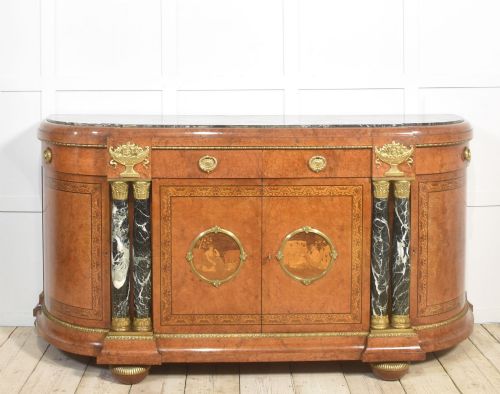


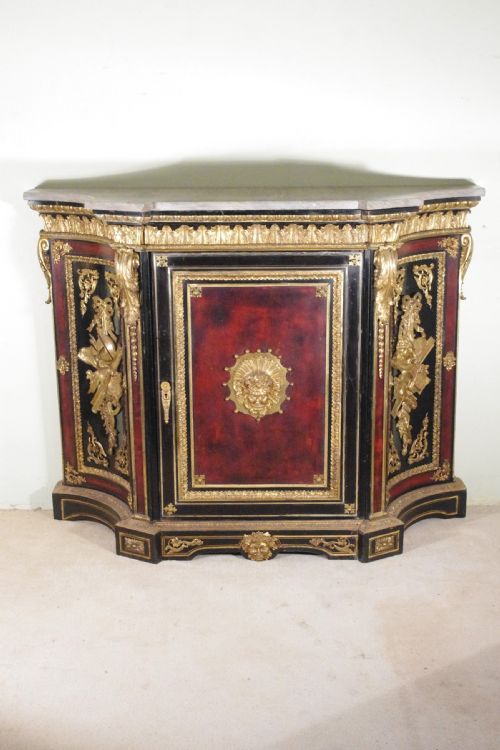


Empire Style Credenza
These empire style credenza pieces bring formal neoclassical presence to a room, offering grand storage through mounted ormolu and figured mahogany.

Empire Style Credenza
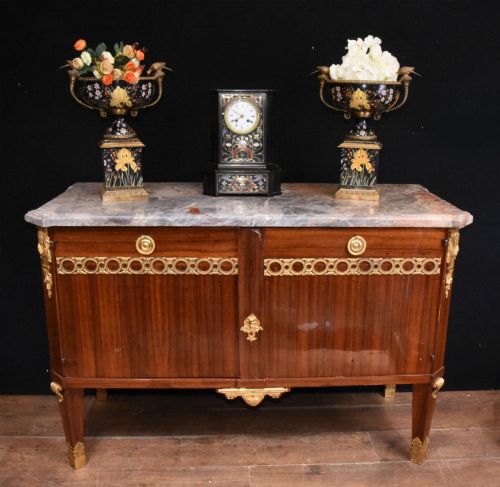
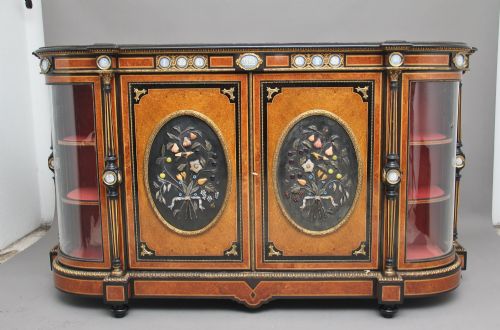
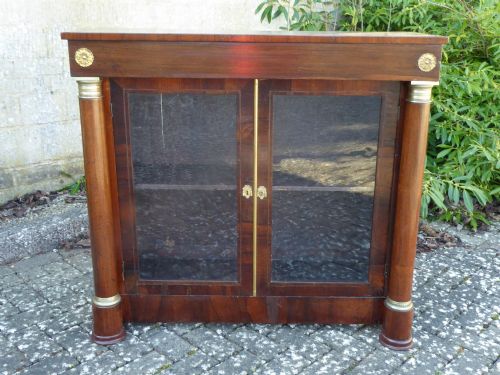
When you search for empire style credenza, you look at heavy architectural storage furniture spanning the nineteenth century alongside later revivals. These items take the form of side cabinets, chiffoniers, bookcases, and enfilades built for formal entertaining spaces.
You are most likely to meet French Empire and Napoleon III variants on this page, alongside Regency and nineteenth-century English interpretations. They frequently feature marble tops and heavy timber construction intended to anchor a room.
Makers drew on classical vocabulary, producing sideboards and commodes that combine structural presence with display capacity. The form serves as both a practical surface and a monumental focal point in a reception room.
How they were made
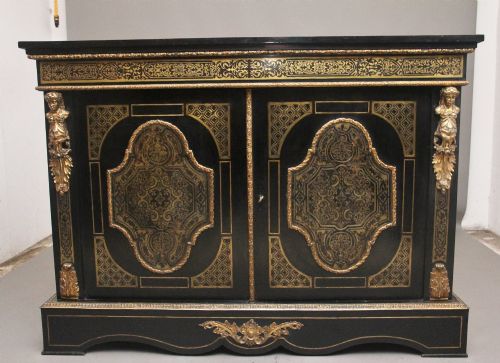
Makers built these pieces using dense timbers like mahogany, rosewood, and ebonised wood as a foundation, often applying intricate brass and ormolu mounts. Ormolu and gilt bronze elements highlight structural corners and door panels.
Surface treatments include marble slabs fitted to the top surface, alongside porcelain plaques and marquetry inlays. Cabinetmakers combined timber framing with cast metal mounts to achieve the characteristic heavy architectural weight.
Empire Style Credenza Retail Price Guide 2026
Typical asking prices for empire style credenza among the pieces listed under this phrase on Sellingantiques today, from the lower quarter to the upper quarter. They describe what is for sale here now, not the wider market.
Listings feature mahogany, rosewood, and ebonised wood alongside marble tops and brass mounts across nineteenth-century periods.
What varies in quality
Quality rests in the weight and crispness of the ormolu mounts and the selection of figured mahogany or rosewood veneers. Finer pieces demonstrate precise casting in the metalwork and careful matching of timber grain across doors and drawers.
The integration of heavy marble tops and the execution of parcel gilt or ebonised details separate standard production from superior workshops. Construction integrity in the carcase and the retention of original mounts dictate the standing of each piece.
S. Jamar
The Empire Style Credenza Glossary
- Ormolu
- Gilded bronze used for decorative mounts on furniture. It provides bright metallic contrast against dark timbers.
- Enfilade
- A long suite of rooms or a long cabinet designed for formal placement. This form offers extended storage across multiple doors.
- Chiffonier
- A tall sideboard or cabinet fitted with doors and shelves. It acts as a compact storage unit for dining or living spaces.
- Commode a porte
- A commode cabinet featuring enclosed doors rather than open drawers. It provides secure interior shelving.
- Boulle
- A form of marquetry using brass and tortoiseshell inlay. It creates an ornate metallic pattern across ebonised surfaces.
Empire Style Credenza: Frequently Asked Questions
What is an empire style credenza used for?
These cabinets serve as principal storage units in formal reception rooms and dining spaces. They hold tableware, books, and display items while anchoring the room's decorative scheme.
The flat top surface provides space for lamps, candelabra, and decorative objects. Enclosed cupboards keep items concealed behind timber or glass doors.
How do I identify French Empire pieces?
French Empire pieces rely on classical architectural proportions, dark mahogany timbers, and prominent gilt bronze mounts. Look for columns, pilasters, and strict symmetrical lines.
They frequently include marble tops and heavy bases that reflect Roman and Greek design motifs. The overall impression remains monumental and restrained.
Where should I place a heavy cabinet?
Position these substantial pieces against a primary wall in a dining room, hallway, or drawing room. Ensure the floor can support the weight of timber and marble construction.
Keep them away from direct sunlight to protect rosewood and mahogany veneers from fading. Leave adequate clearance for doors and drawers to open fully.
How do I clean marble top furniture?
Dust the marble surface regularly with a soft, dry cloth to prevent grit accumulation. Clean spills immediately using mild soap and warm water.
Avoid acidic cleaning agents or abrasive pads that can etch the polished stone. Treat timber frames with appropriate furniture wax as needed.