
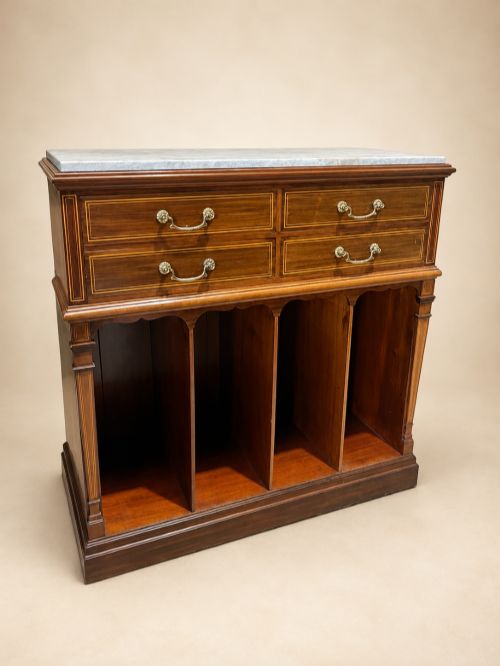
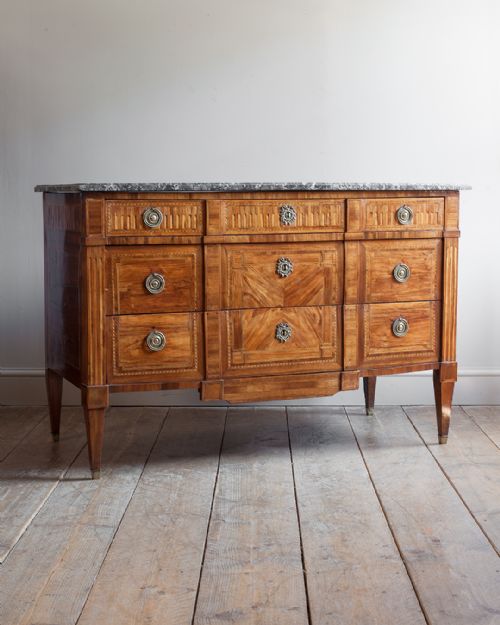
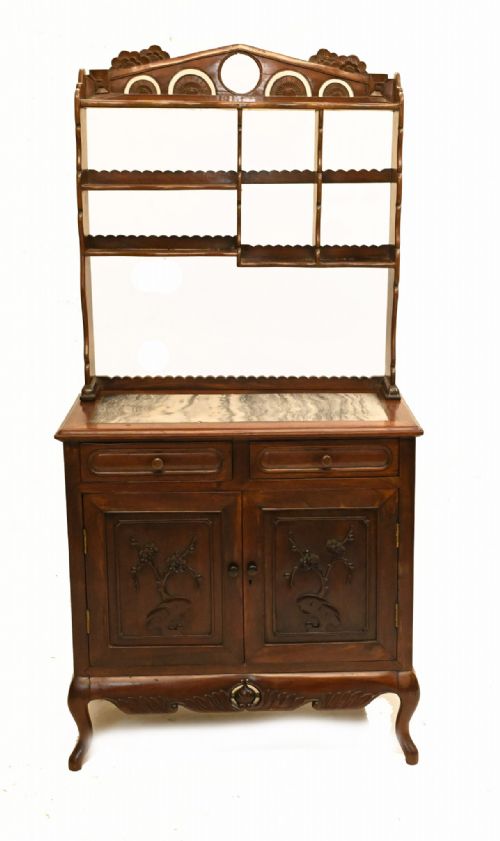
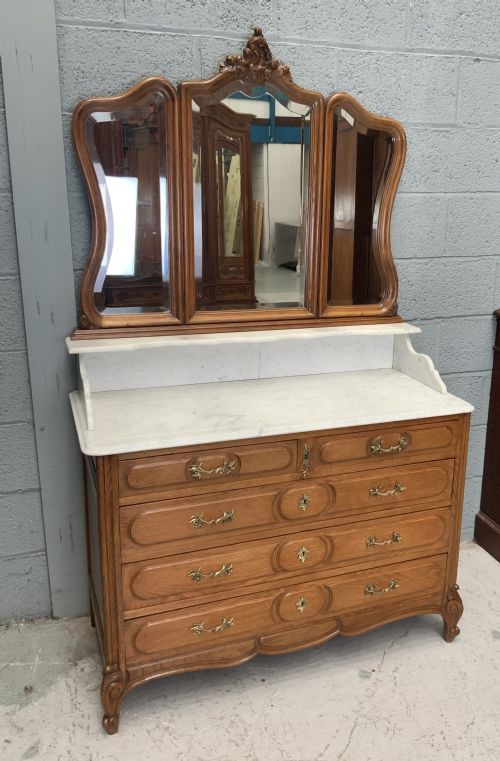
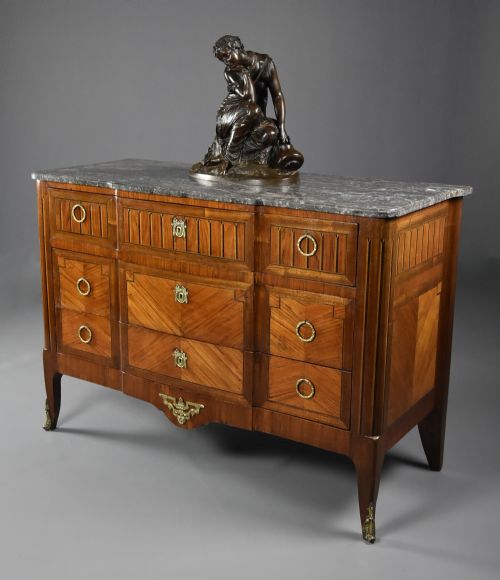


Brown Marble Top Sideboard
A brown marble top sideboard brings together heavy stone and figured timber, offering a durable surface above fitted storage.

Brown Marble Top Sideboard
A brown marble top sideboard combines substantial timber cabinetry with a polished stone slab, appearing across periods from the eighteenth century into the twentieth century. These pieces encompass commodes, washstands, and consoles alongside traditional dining buffets and servers.
French regional designs dominate the selection, particularly those influenced by Louis XV and Louis XVI styles featuring serpentine fronts or marquetry inlay. Walnut, mahogany, and kingwood carcasses frequently support the heavy stone slabs on this page.
Materials and construction
Cabinet makers utilised dense hardwoods such as mahogany, walnut, and kingwood, often applying intricate veneers or satinwood and tulipwood inlay over sturdy oak or fruitwood frames. Ormolu mounts, brass detailing, and tiled elements appear alongside the primary timbers to ornament the structure.
The stone surfaces are heavy marble slabs, shaped to follow the contours of the cabinet base, whether straight, breakfront, or curved in a bombé profile. These slabs sit directly upon the timber framework, secured by their own weight.
Listings feature items spanning from 1750 through the Art Deco era, constructed primarily in walnut, mahogany, and kingwood with marble.
Assessing the craftsmanship
The refinement of the timber marquetry and the precision of the veneer matching dictate the standard of the woodwork. Cabinet makers who invested time in hand-cut inlay and careful grain selection produced pieces with enduring visual depth.
Gillows·Germain Landrin
The Brown Marble Top Sideboard Glossary
- Commode
- A low chest of drawers or cabinet, often fitted with a stone top and decorative mounts. French examples frequently exhibit serpentine fronts.
- Marquetry
- Decorative patterns formed by inserting thin pieces of wood, ivory, or shell into a veneered surface. This technique creates pictorial or geometric designs across the drawer fronts.
- Ormolu
- Gilded bronze mounts applied to furniture for ornamentation. Makers cast and chased these metal elements to accent corners and feet.
- Bombé
- A swelling, outward-curved contour found on the front and sides of eighteenth century commodes. This shape requires advanced woodworking skill to achieve.
- Scagliola
- A composite material made from glue, plaster, and pigments, mimicking natural marble and stone. Artisans inlaid this mixture to create colourful decorative motifs.
Brown Marble Top Sideboard: Frequently Asked Questions
How do I clean the marble top?
Use a soft cloth dampened with warm water and mild, non-acidic soap to wipe the surface clean. Avoid harsh chemical cleaners or vinegar, which etch and dull the polished stone.
Dry the marble thoroughly afterwards with a soft towel to prevent water spots and maintain the natural lustre of the material.
Can I use these in a bathroom?
Many washstands and smaller commodes featured marble surfaces specifically to handle water usage in nineteenth century bedrooms. Ensure the timber framework remains protected from excessive humidity and standing water.
Treat the wooden surfaces with appropriate waxes and keep the room ventilated to preserve the antique structure over time.
How do I date a sideboard?
Examine the construction methods, timber choices, and hardware styles to determine the era of manufacture. Eighteenth century pieces often show hand-cut dovetails and distinct regional French framing techniques.
Later Victorian and Edwardian examples incorporate machine-sawn elements and revival styles such as Louis XVI or Sheraton patterns.
Are the marble slabs original?
Look for consistent weathering, matching edge profiles, and appropriate thickness that aligns with the period of the wooden base. Eighteenth and nineteenth century slabs typically show minor surface wear consistent with age.
Check how the stone rests on the frame and whether the rebates match the contours of the timber carcass beneath.