

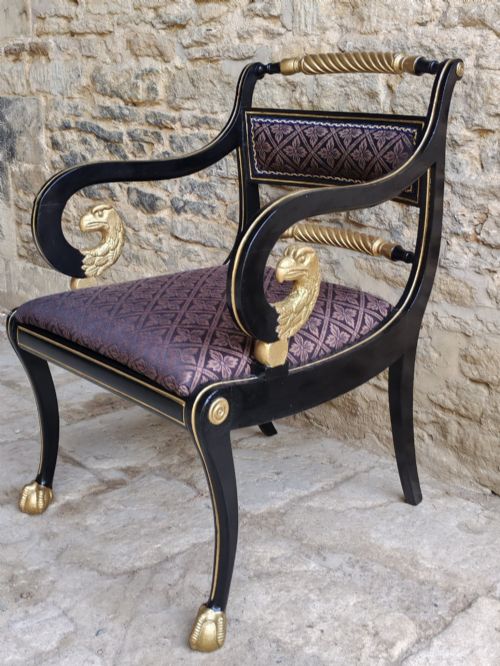
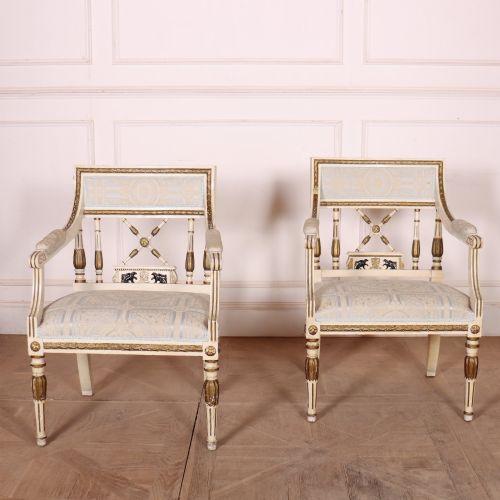
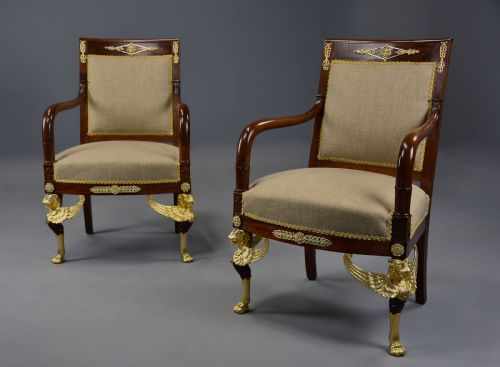
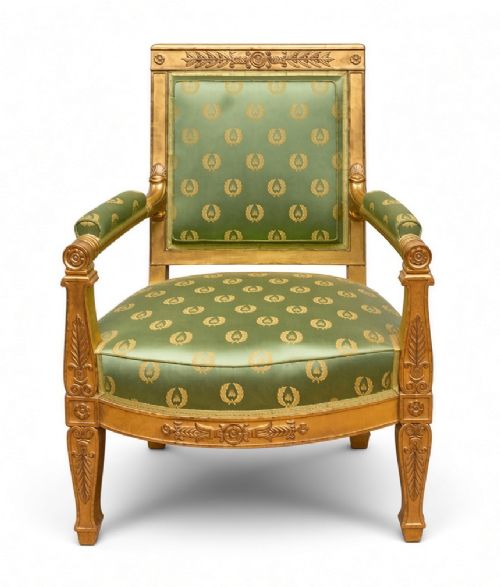

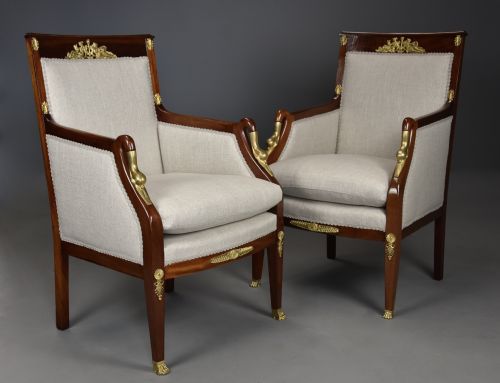

Empire Style Chairs
Empire style chairs bring classical proportion and architectural dignity to a room.
Empire Style Chairs
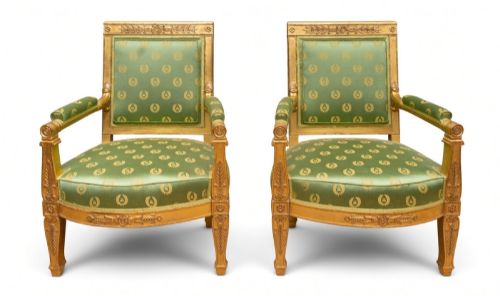
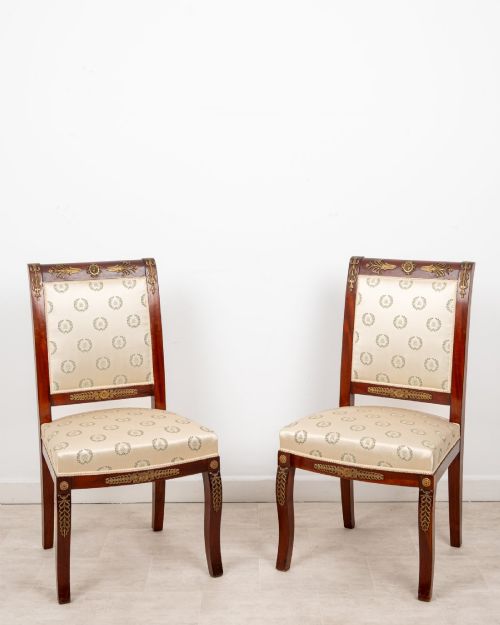
When you search for empire style chairs, you encounter seating shaped by classical antiquity, French imperial design and subsequent revivals. The form embraces strong vertical lines, scroll arms and curule bases that echo ancient Roman and Greek seats.
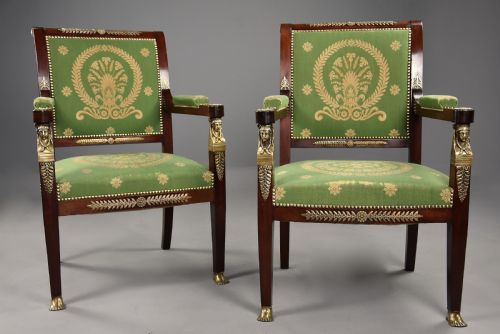
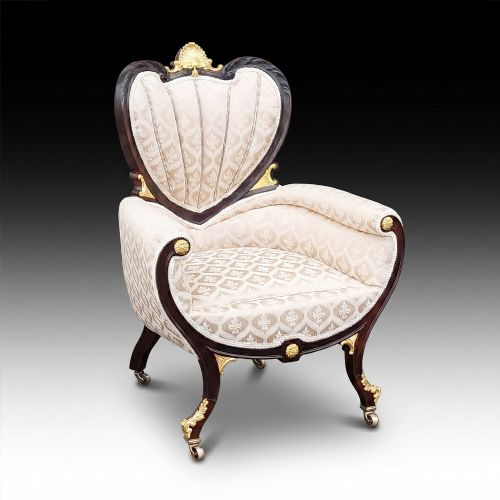
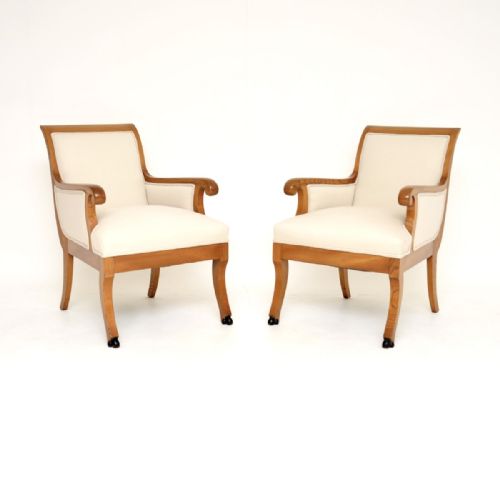
The selections available range from nineteenth-century French originals to later revival pieces from Sweden, Britain and Italy. Armchairs, side chairs and salon suites dominate the listings, often featuring show-wood frames and upholstered seats.
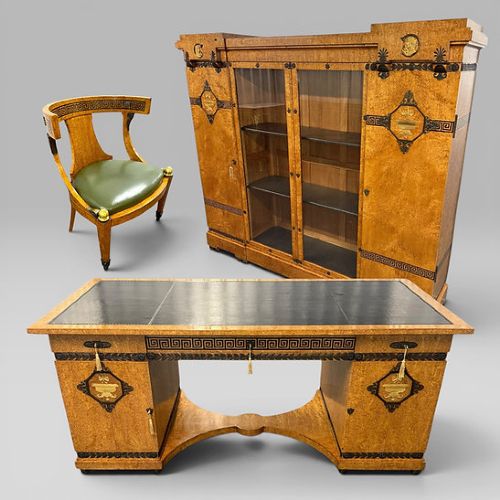
Mahogany remains the principal timber, frequently paired with lighter birch or elm in Scandinavian variants. Giltwood, painted surfaces and ormolu mounts appear regularly, anchoring the neoclassical aesthetic.
Materials and construction
Cabinetmakers constructed the frames primarily from dense hardwoods like mahogany, rosewood and birch, utilising traditional joinery to support heavy classical silhouettes. Solid timber carcases provided the strength needed for sweeping scroll arms and heavy backrests.
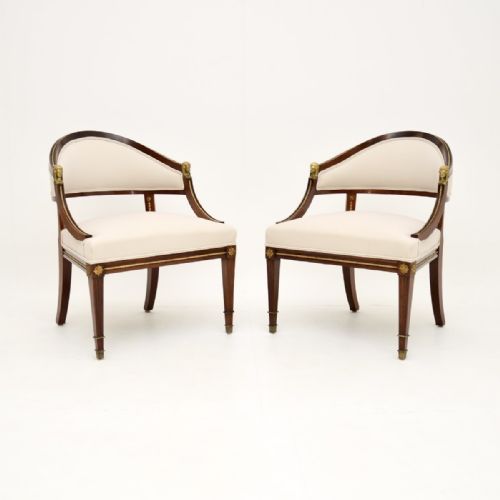
Gilt bronze, ormolu and brass mounts were cast and chased to embellish the wooden frames, highlighting structural intersections and classical motifs. Gilding and parcel-gilt finishes were applied to carved gesso over wood to achieve a brilliant metallic sheen.
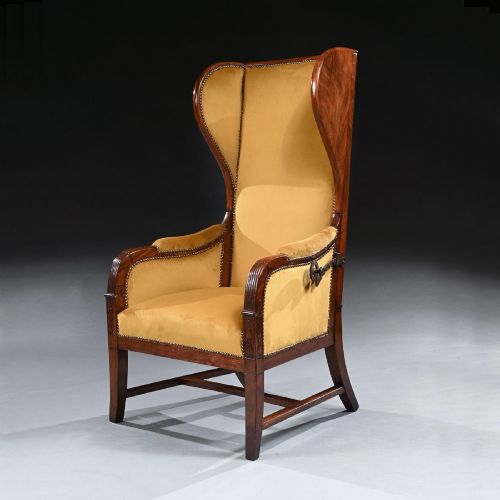
Upholstery relied on traditional webbing, springs and horsehair stuffing, covered in velvet, leather, silk fabric or patterned textiles. Edge trimming often involved brass nailheads or decorative gimp braids secured directly to the wooden frame.
Seating forms range from library armchairs and window seats to complete salon suites and compact desk chairs.
Assessing craftsmanship
The refinement of the carving separates standard production from exceptional work, particularly in the rendering of swan arms, acanthus leaves and classical figures. Crisp hand-chasing on ormolu mounts indicates a higher grade of manufacture than cast-metal components that lack definition.
Timber selection dictates structural integrity and visual depth, with figured mahogany and carefully matched veneers showing superior cabinetmaking standards. The integration of the mountwork into the wood frame reveals the precision of the original maker.
Upholstery execution and internal webbing determine the longevity and seating posture of the piece. Traditional hand-stitched stuffing preserves the intended contour of the barrel back or gondola shape better than modern foam replacements.
Jacob Desmalter·Mercier Freres·Holland and Sons·Henry Thomas Peters
The Empire Style Chairs Glossary
- Ormolu
- Gilt bronze mounted onto furniture surfaces for decorative effect. The technique involves applying a gold amalgam to bronze and firing it to drive off the mercury.
- Curule
- A distinctive X-shaped stool or chair design derived from ancient Roman magistrate seats. It employs crossed curved legs that support a central pivot.
- Gondola chair
- A seating form with a concave curved backrest resembling the hull of a Venetian boat. The continuous curve wraps around the sitter to form both the back and arm supports.
- Regency
- A British design period spanning the early nineteenth century defined by classical restraint and archaeological influence. It parallels the continental Empire style through heavy use of sabre legs and bronze mounts.
Empire Style Chairs: Frequently Asked Questions
How do I identify a true period piece?
Examine the timber shrinkage, joinery methods and the composition of the internal framing materials. Nineteenth-century examples display hand-cut joints and patination consistent with age.
Compare the mount quality and carving depth against documented examples from French and Swedish workshops of the era. Revival pieces from later decades often utilise machine-made screws and different secondary woods.
Where should I place these chairs at home?
Position them in formal reception rooms, libraries or hallways where their architectural lines can act as focal points. Pair an armchair with a small writing desk or place salon chairs around a central table.
Ensure the room humidity remains stable to protect antique veneers and delicate ormolu mounts. Avoid direct sunlight to prevent fading on silk or velvet upholstery fabrics.
What is the difference between French and Swedish Empire?
French Empire designs lean toward heavier mahogany frames accented with brilliant ormolu and martial motifs. They project a sense of grand imperial power and theatrical presence.
Swedish Empire and Neoclassical variants often employ lighter woods like birch or elm, resulting in a more restrained domestic character. Painted and parcel-gilt surfaces appear more frequently in Scandinavian interiors.
How do I care for antique upholstery and wood?
Dust wooden frames regularly with a soft, dry cloth and feed the timber with appropriate wax polish sparingly. Protect gilded surfaces from moisture and abrasive cleaning agents.
Vacuum fabric upholstery gently using a low-suction attachment with a soft brush guard. Consult a specialist conservator for traditional horsehair repairs or textile replacement.