

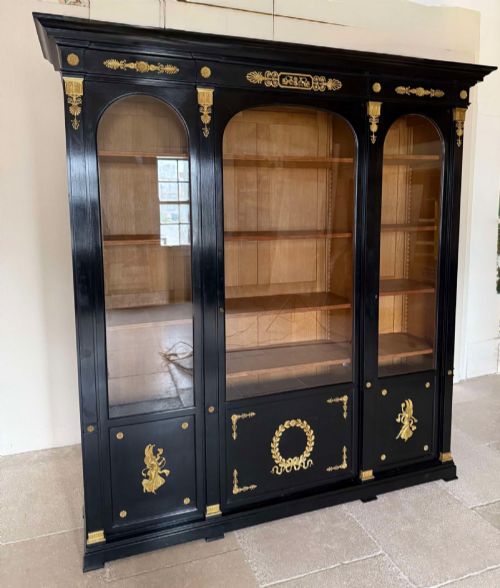
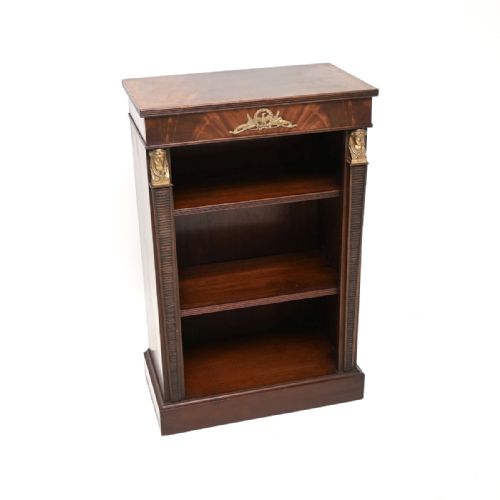
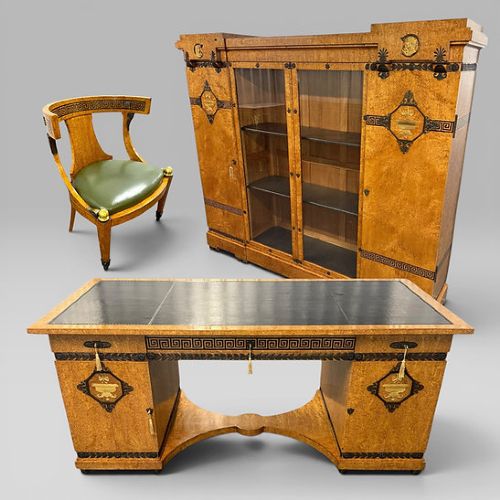
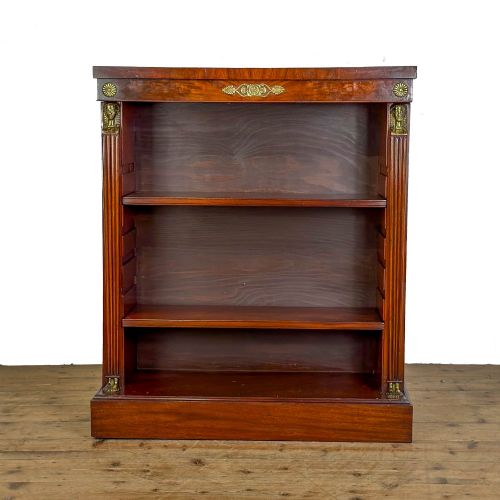


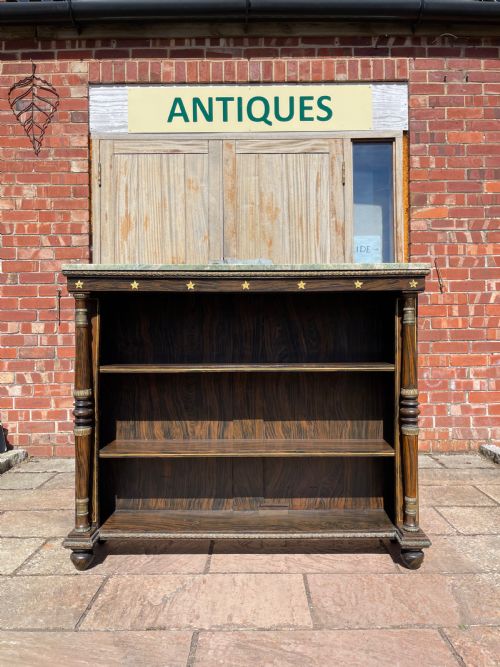


Empire Style Bookcase
An empire style bookcase brings architectural scale and rich timber to a room, offering both display space and classical presence.
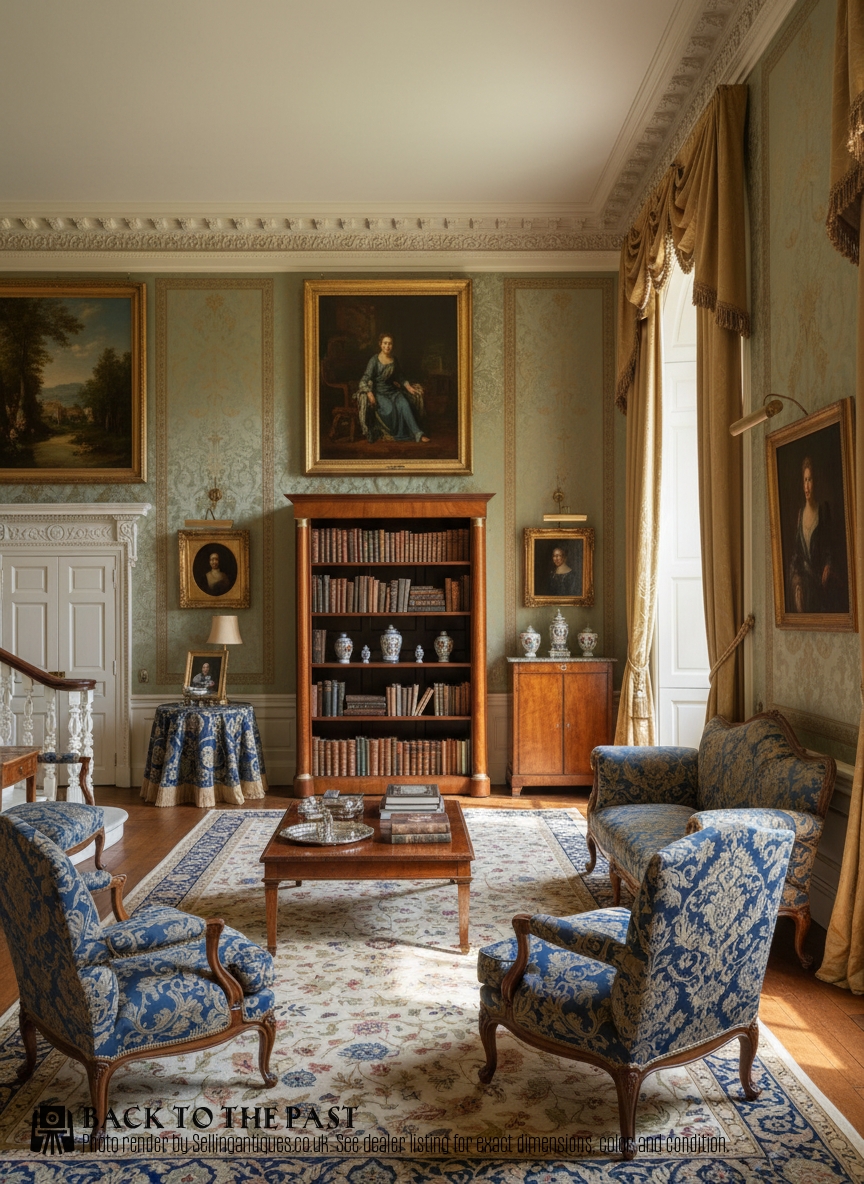
Empire Style Bookcase
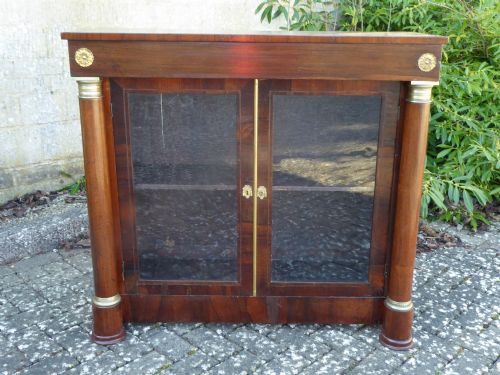
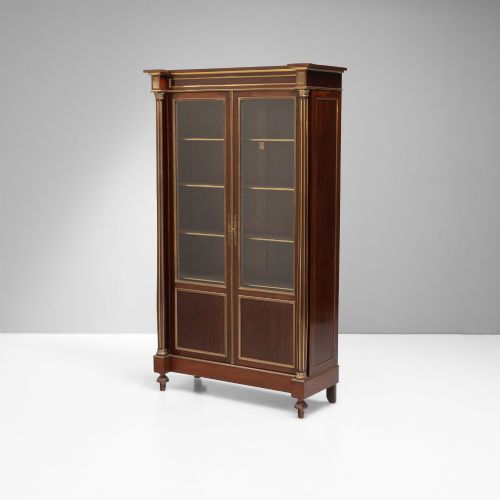
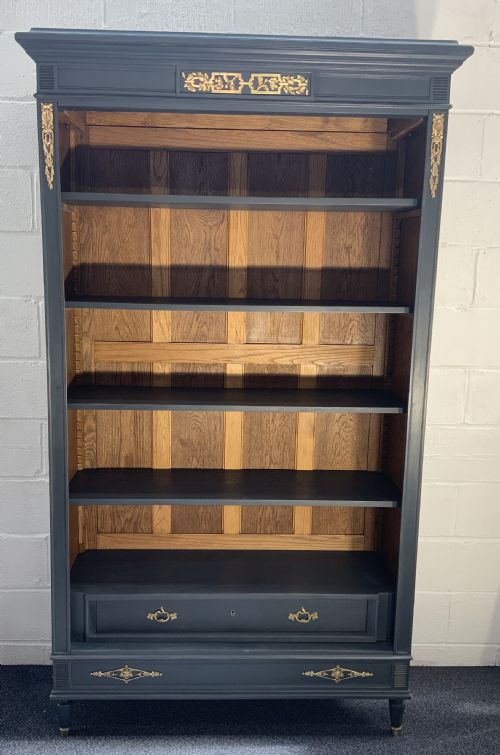
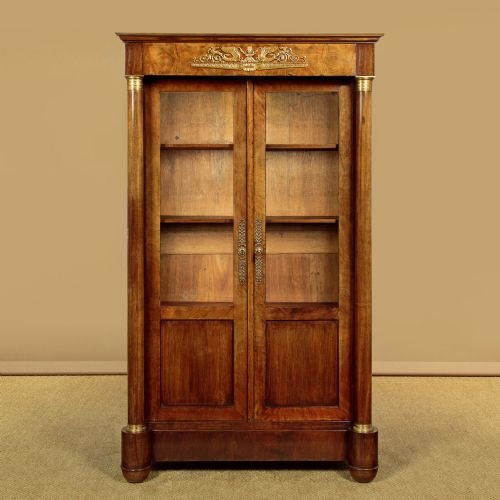
An empire style bookcase combines monumental classical proportions with functional shelving, frequently appearing as an open bookcase or a glazed cabinet. These pieces draw on Regency, French Empire, Neoclassical, and Charles X design traditions to anchor a room.
The version most commonly met on this page is constructed from mahogany, often in solid form or as mahogany veneer, accompanied by rosewood, burr maple, or walnut. Pieces range from grand floor-standing glazed cabinets to open bookcases suited for everyday libraries.
Origins span nineteenth-century workshops alongside later interpretations from around eighteen-ninety and nineteen-thirty. This mix provides both early nineteenth-century cabinet work and substantial twentieth-century iterations.
Materials and construction
Cabinet makers utilised dense hardwoods including mahogany, rosewood, burr maple, and walnut as the primary carcase structures. Timber surfaces frequently showcase figured mahogany veneers applied with precise grain alignment.
Decoration relies on cast and chased ormolu mounts, brass details, and occasional gold leaf highlights. Glazed doors and marble tops complete the construction repertoire recorded across these pieces.
Empire Style Bookcase Retail Price Guide 2026
Typical asking prices for empire style bookcase among the pieces listed under this phrase on Sellingantiques today, from the lower quarter to the upper quarter. They describe what is for sale here now, not the wider market.
Some nineteenth-century makers concealed their finest burr maple behind closed doors, saving the secret grain purely for the book lover.
Distinctions in quality
The upper tier of pieces demonstrates superior timber selection, where highly figured veneers and choice cuts of mahogany or rosewood are handled with exceptional grain continuity. Finer execution shows in the crispness of brass mounts and cast ormolu details.
Construction integrity defines the grade, distinguishing robust nineteenth-century joinery from simpler later builds. The integration of marble tops and balanced proportions separates standard utility cabinets from masterwork library furniture.
The Empire Style Bookcase Glossary
- Ormolu
- Gilded bronze mounts cast in classical motifs and applied to furniture. This decorative technique defines much of the French Empire aesthetic.
- Regency
- An English design period spanning the early nineteenth century. Pieces from this era often feature clean architectural lines and rosewood or mahogany construction.
- Charles X
- A French design style bridging the early nineteenth century. Burr maple and refined timber figures frequently characterise pieces from this period.
- Neoclassical
- A style drawing directly on classical Greek and Roman architecture. It prioritises symmetry, restraint, and formal decorative vocabulary.
Empire Style Bookcase: Frequently Asked Questions
What is an empire style bookcase?
An empire style bookcase is a large storage and display unit influenced by classical antiquity, French Empire, and Regency design principles.
These pieces typically feature architectural proportions, classical columns or pilasters, and rich timber surfaces.
How do I date a bookcase?
Dating relies on timber types, construction methods, and stylistic markers such as brass mounts or ormolu details.
Nineteenth-century examples utilise traditional joinery and dense hardwoods, whereas later interpretations from the twentieth century show distinct structural differences.
Are these bookcases open or glazed?
The selection includes both open shelf formats and enclosed cabinets with glazed doors.
Open versions suit accessible library storage, while glazed or two-door cabinets protect volumes behind glass panes.
What timbers were used?
Cabinet makers predominantly worked with mahogany, rosewood, walnut, and burr maple.
Timbers often appeared both as solid boards and as finely matched veneers across larger surfaces.