
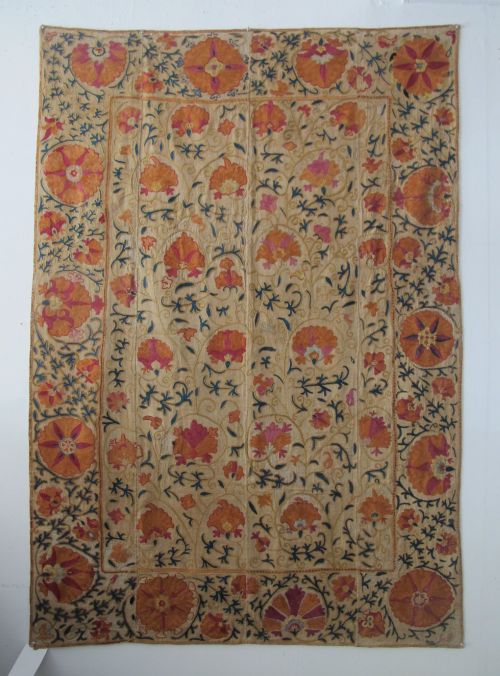
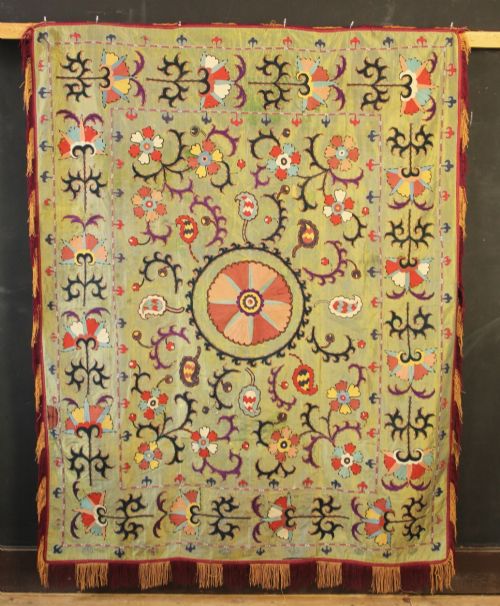


Embroidered Suzani Panel
When seeking an embroidered suzani panel, one finds textiles carrying Central Asian nomadic heritage through dense hand-stitched silk and wool.
Embroidered Suzani Panel
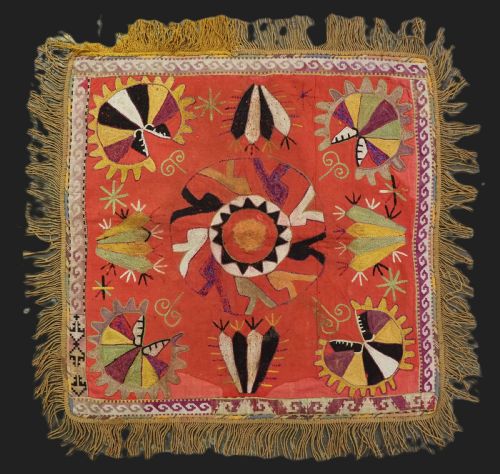
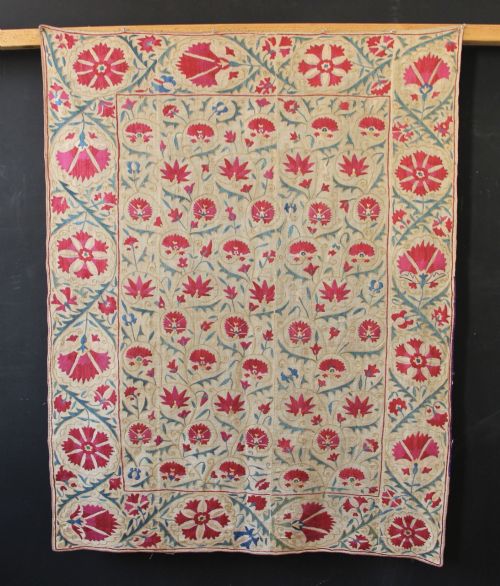
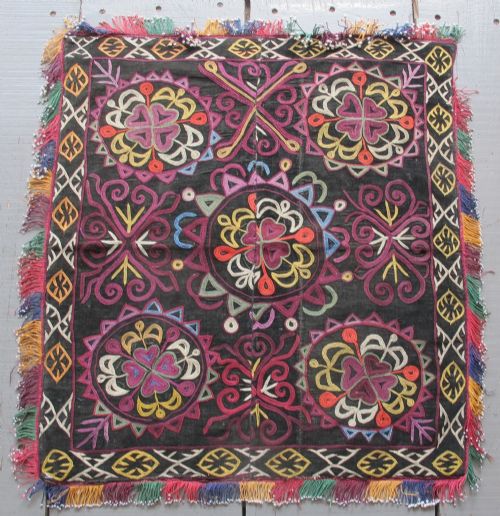
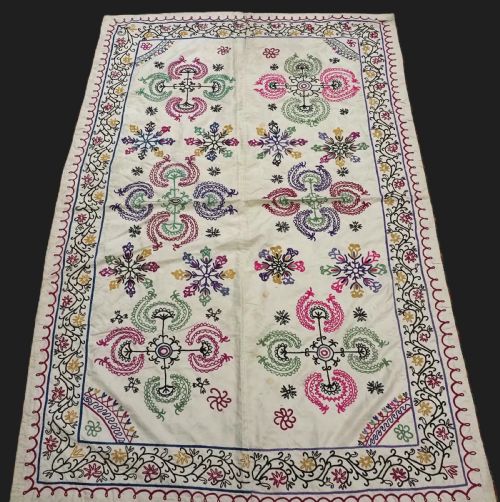
An embroidered suzani panel represents traditional Central Asian needlework, commonly originating from Uzbekistan and created by regional groups such as the Lakai, Tajik, and Bokhara communities.
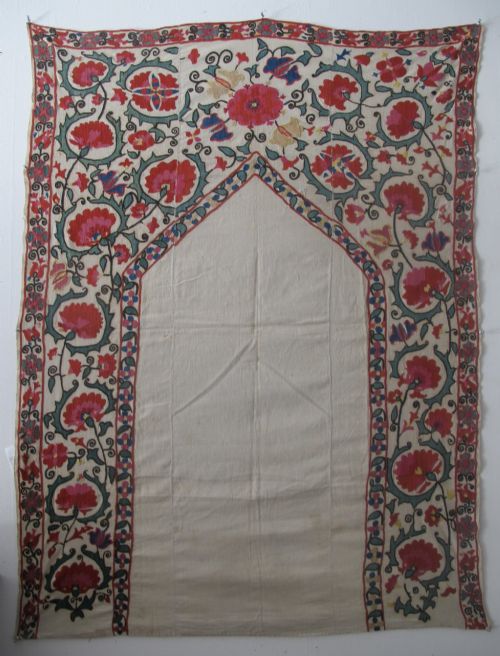
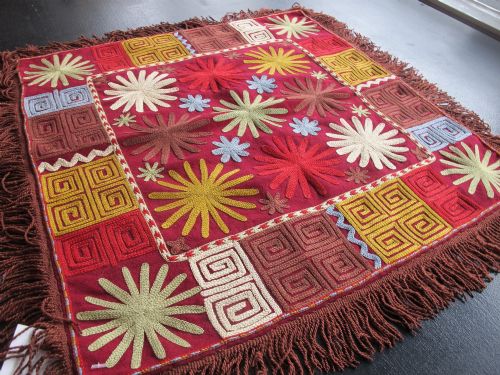
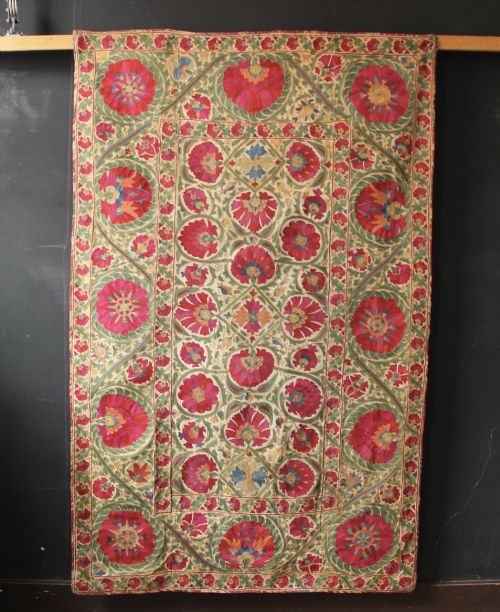
Buyers encountering this selection will frequently find wall hangings, dowry embroideries, prayer formats, and smaller nim suzanis spanning the mid nineteenth century through the early twentieth century.
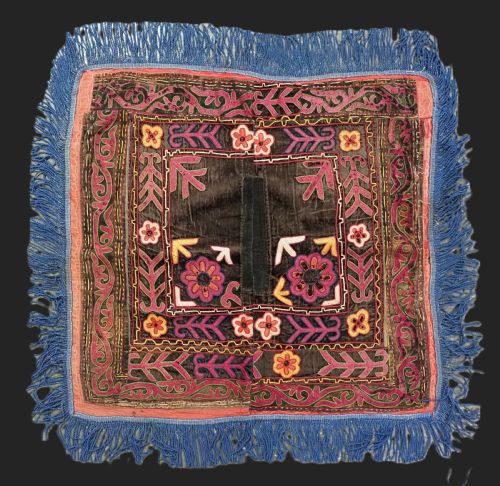
These textiles served ceremonial and domestic functions, including yurt furnishings, wedding components, and mirror covers, reflecting distinct tribal traditions across Central Asia.
How They Were Made
Artisans worked silk thread onto woven foundation grounds made from cotton, wool, velvet, linen, or adras, occasionally incorporating glass beads.
Needlework techniques involved dense surface stitching to build complex floral, architectural, and central star designs across panels of varying dimensions.
Materials recorded across these pieces include silk thread, cotton grounds, red wool, velvet, adras, and glass beads.
What Varies in Quality
Quality differences emerge in the complexity of the design, such as fully embroidered palak compositions versus simpler motifs, and the fineness of the silk threadwork.
The integrity of the foundation ground and the vibrancy of the dyed materials further distinguish standard domestic examples from masterworks.
The Embroidered Suzani Panel Glossary
- Suzani
- An embroidered textile panel originating from Central Asia, traditionally worked in silk on a cotton or linen foundation.
- Nim Suzani
- A smaller scale variant of the standard suzani panel, often measuring under half the dimensions of full-size examples.
- Ilgich
- A dowry embroidery or wall hanging produced by the Lakai tribe in Uzbekistan.
- Palak
- A fully embroidered Tashkent suzani style defined by a central star and dense overall patterning.
- Adras
- A traditional Central Asian fabric woven from a mixture of silk and cotton yarns.
Embroidered Suzani Panel: Frequently Asked Questions
How were suzani panels used?
These embroidered textiles functioned primarily as domestic wall hangings, dowry items, and ceremonial coverings within Central Asian nomadic and settled communities.
Specific forms like yurt hangings, horse covers, and mirror shields served both decorative and symbolic purposes in daily life.
What is a nim suzani?
A nim suzani is a smaller version of the standard wall hanging, offering a compact format for interior display.
These pieces share the same silk embroidery techniques and regional motifs found on larger nineteenth-century examples.
Where were these embroidered panels made?
The pieces originate primarily from Uzbekistan and surrounding regions, associated with cities and groups such as Bokhara, Samarkand, Tashkent, Nurata, and the Lakai tribe.
Each centre developed distinct design vocabularies, from architectural layouts to floral sprays.
How do I care for an antique textile?
Protect delicate silk embroidery and older cotton or wool grounds by mounting the panel away from direct sunlight and moisture.
Professional mounting helps distribute the weight evenly across the textile without damaging the historic foundation.