


Embroidered Cotton Wall Hanging
An embroidered cotton wall hanging brings rich Central Asian texture and bold floral motifs directly into a modern interior.
Embroidered Cotton Wall Hanging
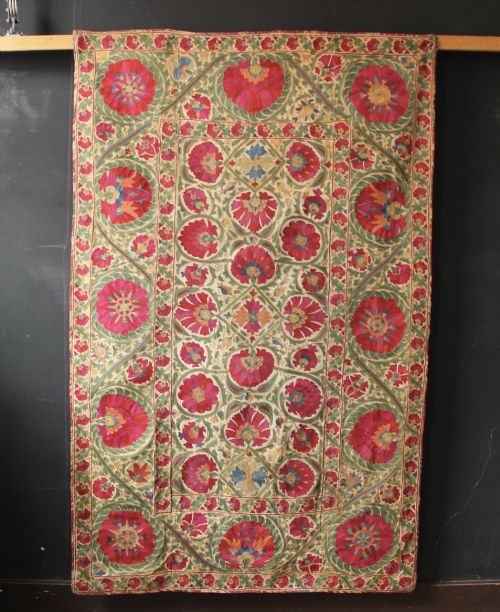
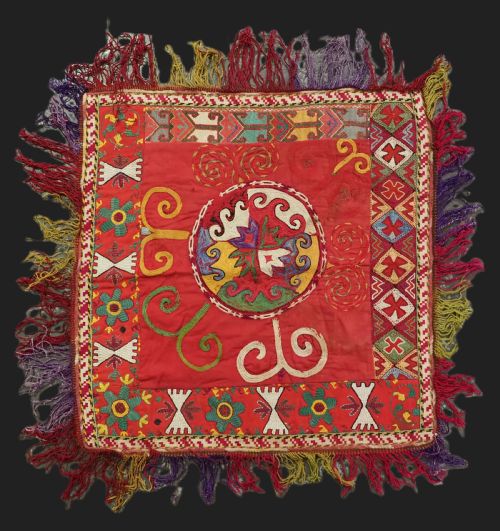
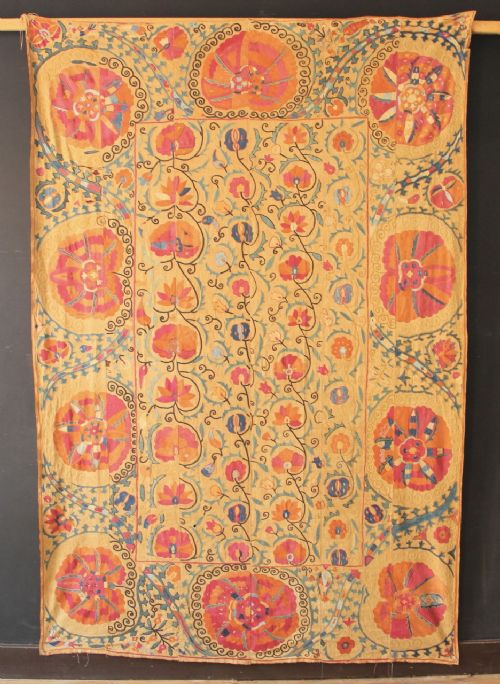
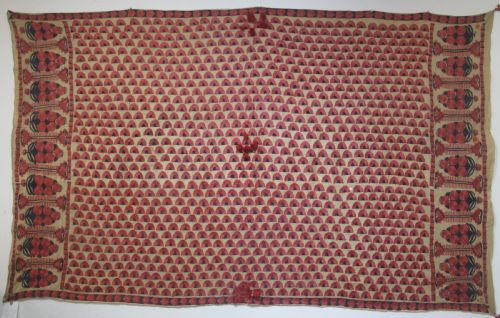
When searching for an embroidered cotton wall hanging, collectors encounter traditional Central Asian and Uzbek Suzanis, alongside tribal dowry embroideries and regional shawls. These pieces originate primarily from nineteenth and early twentieth-century workshops across historical regions such as Bukhara, Samarkand, Tashkent, and Shahrisabz.
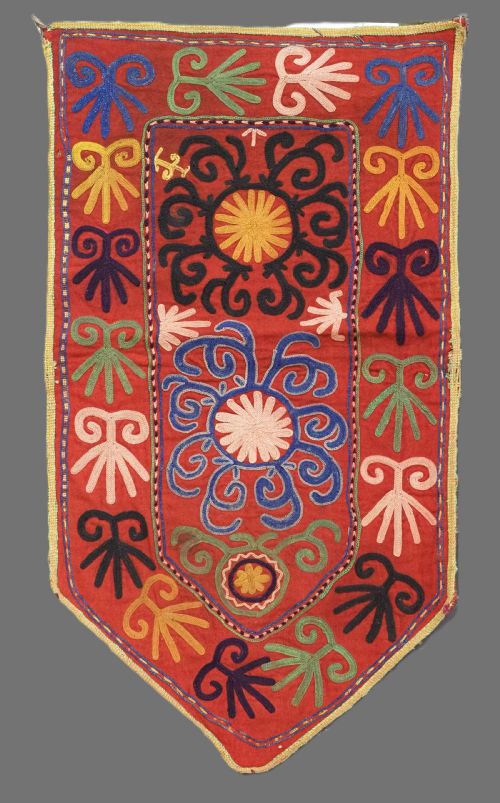
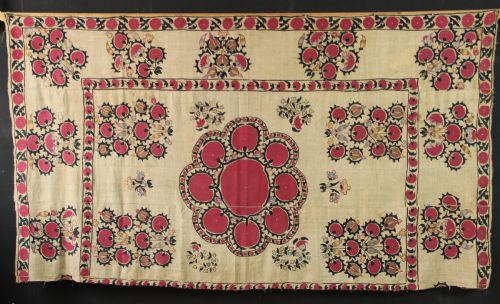
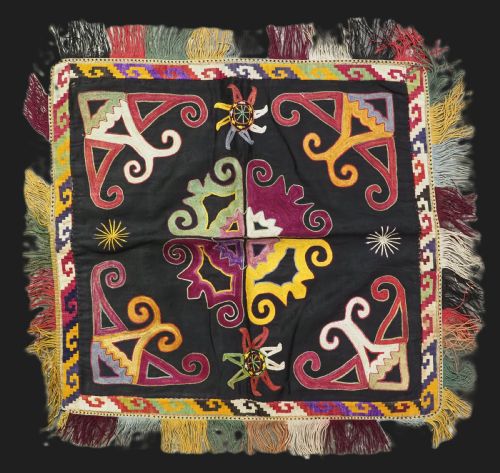
The selections on this page centre heavily on nineteenth-century and early twentieth-century Suzanis, which function primarily as large decorative panels or wall hangings. Many examples feature red, yellow, black, or natural cotton grounds densely worked with vibrant silk thread embroidery.
Buyers also meet specialised forms including prayer formats, smaller Nim Suzanis, and tribal pieces associated with Lakai or Banjara groups. Each object reflects distinct regional design vocabularies, ranging from medallion variants and palak star layouts to spontaneous folk art compositions.
How they were made
The foundation of these textiles typically relies on hand-woven cotton, occasionally blended with silk in adras grounds, providing a stable support for heavy needlework. Artisans stitch intricate floral, vine, and geometric motifs using fine silk thread, often worked in tambour or laid-and-couched stitch techniques.
Dyes derived from natural sources impart deep saturation to the silk threads, creating rich contrasts against pale or dark cotton foundations. Regional workshops employed specific compositional layouts, dividing large fields into modular panels or central medallions worked by multiple hands before assembly.
Current listings feature pieces dated from 1800 through the 1930s, highlighting cotton, silk thread, and adras grounds.
What varies in quality
The distinction between standard examples and the finest pieces rests upon the density of the needlework and the complexity of the design layout. Full-work panels, where the embroidery covers almost the entire cotton ground, demand significantly greater skill and time than open floral compositions.
Colour saturation, dye stability, and the precision of the silk thread placement further elevate individual pieces. Additionally, the survival of complete borders, original dimensions, and crisp regional motifs separates ordinary domestic textiles from exceptional collector specimens.
The Embroidered Cotton Wall Hanging Glossary
- Suzani
- A large, embroidered wall hanging or textile originating from Central Asia, traditionally worked in silk thread on a cotton foundation. These pieces served as dowry items and decorative covers in traditional households.
- Nim Suzani
- A smaller or half-sized version of the traditional Suzani wall hanging, often featuring reduced dimensions while retaining dense regional embroidery. They offer a versatile option for domestic display.
- Palak
- A specific type of Tashkent Suzani characterised by a fully embroidered ground dominated by a large central star or medallion motif. The term derives from the local word for sky or heaven.
- Adras
- A traditional mixed fabric woven from a combination of silk and cotton yarns, frequently utilised as a soft and lustrous ground for embroidery. It provides a distinct textural backdrop compared to plain cotton.
- Ilgich
- A smaller tribal embroidery piece associated with the Lakai people, typically created as a dowry item or wall hanging. These works display vigorous folk art designs and distinctive colour palettes.
Embroidered Cotton Wall Hanging: Frequently Asked Questions
How were these wall hangings originally used?
These textiles served primarily as dowry furnishings, created by families to mark significant life events and marriages in Central Asian communities. They were displayed on interior walls or used as decorative covers within traditional homes.
Over time, collectors adapted these functional textiles for modern interior display as wall art. Their generous proportions and vibrant botanical motifs allow them to anchor large architectural spaces.
What is the difference between a Suzani and a Nim Suzani?
A standard Suzani is typically a large, expansive wall hanging designed to cover a substantial wall surface. These full-scale pieces often display complex medallions or extensive repeating floral field patterns.
A Nim Suzani represents a smaller scale version, translating the same regional embroidery styles into more compact dimensions. This smaller format allows for easier placement in varied domestic interiors.
How can I identify a Tashkent Suzani?
Tashkent pieces often present distinctive design layouts, such as the full-work Palak pattern featuring a commanding central star motif. The embroidery on these works tends to cover the ground intensively with precise floral compositions.
Master embroiderers in this region utilised specific colour combinations and border arrangements that distinguish them from Samarkand or Bukhara output. Regional attribution relies on recognising these characteristic structural habits.
How do I care for an antique textile on my wall?
Mounting an antique textile requires professional framing or a secure sleeve method that distributes the weight evenly across the cotton ground. Direct sunlight must be avoided to prevent fading of the natural silk threads.
Keeping the textile away from excessive moisture and occasional gentle inspection ensures the preservation of both cotton and silk components. Professional textile conservators can advise on optimal mounting techniques for specific weights.