

Elm Wood Desk Chair
An elm wood desk chair brings the sturdy timber and honest joinery of the English countryside straight into a study.
Elm Wood Desk Chair
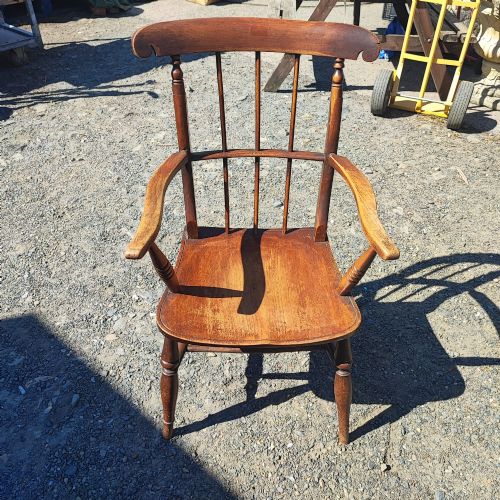
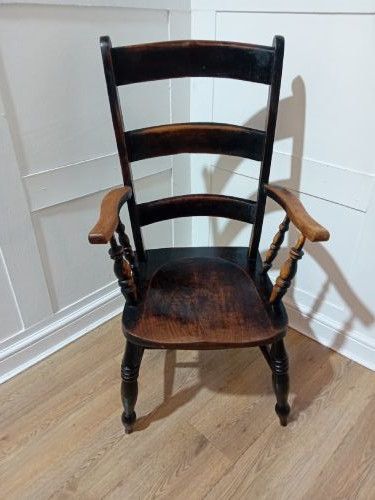
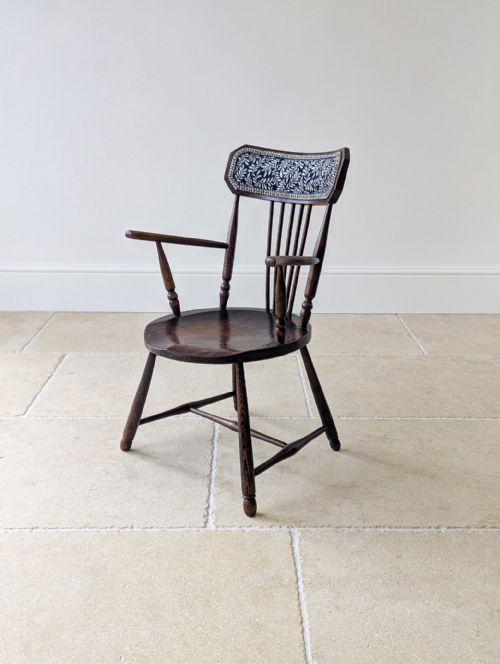
Every elm wood desk chair combines vernacular seating traditions with robust timber construction, drawing from English country houses, farmhouses and Thames Valley workshops.
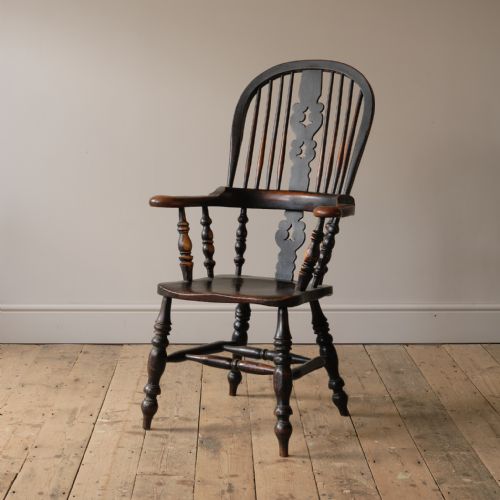
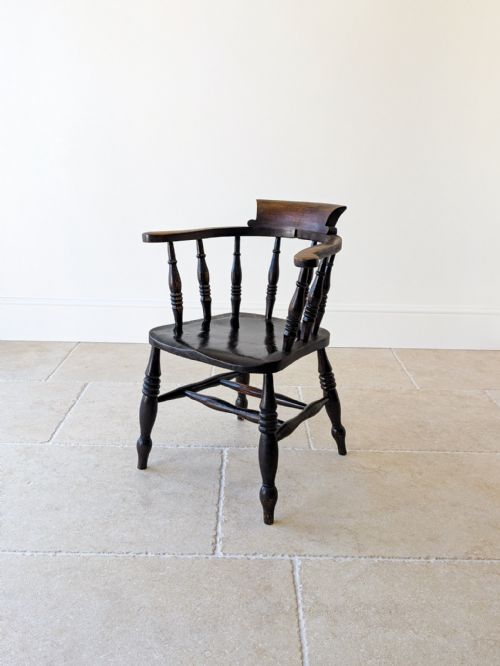
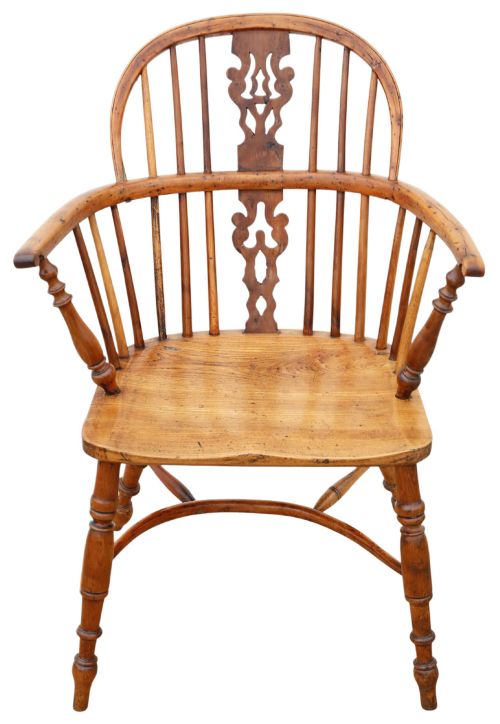
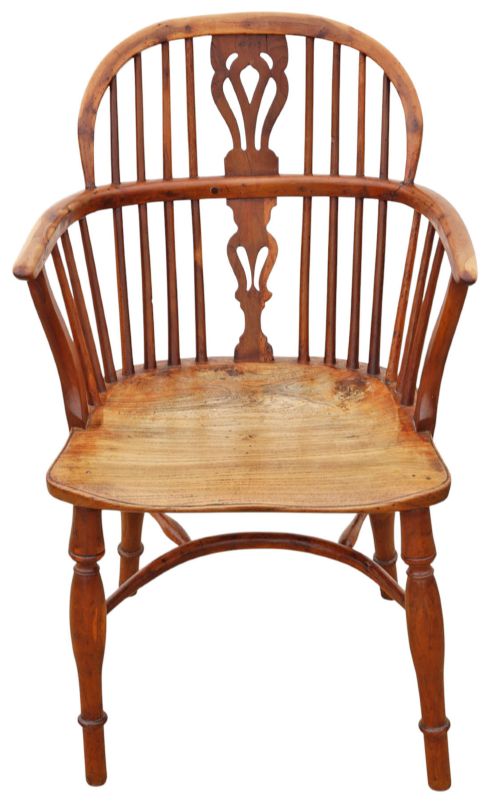
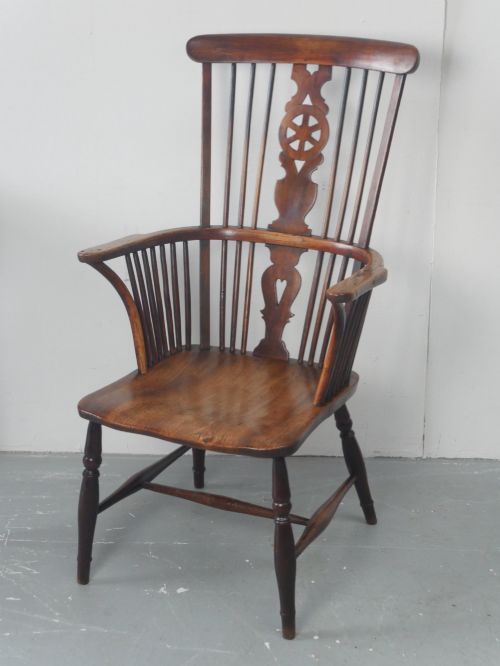
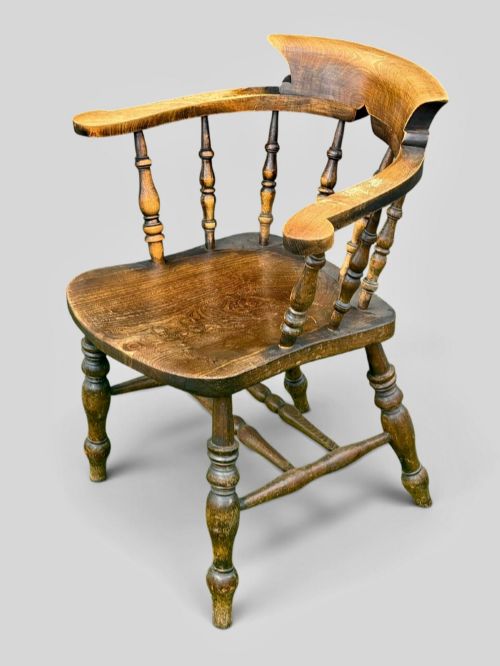
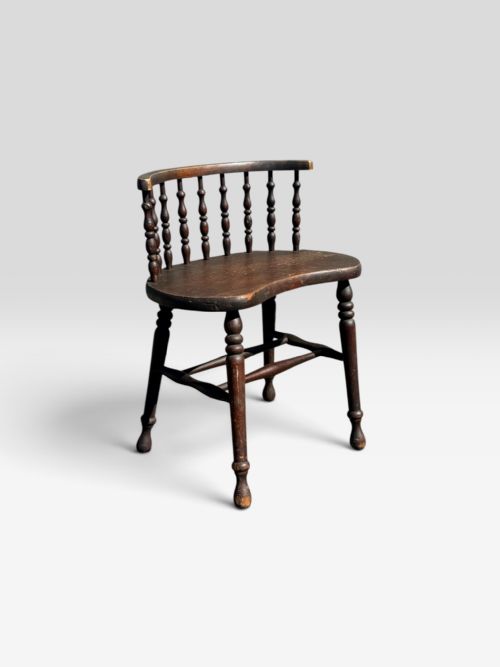
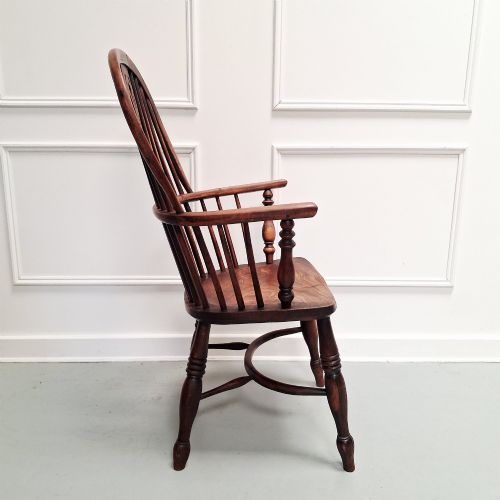
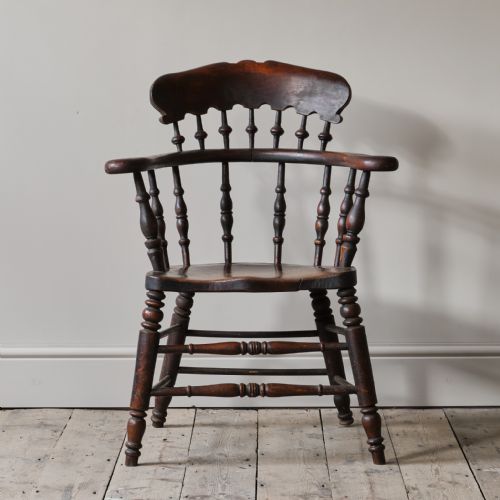
The selections here span the eighteenth, nineteenth and Victorian periods, taking structural cues from Windsor, captain's and smokers bow formats alongside wheel-back and comb-back designs.
Most examples function as armchairs, carver chairs or elbow-chairs, often pairing an elm seat with ash, beech, yew or fruitwood components for spindles, legs and bentwood hoops.
Materials and construction
Makers utilised dense, interlocking elm for the saddle-shaped seats, chosen because the grain resists splitting under pressure when shaped with an adze or scorper.
Bending green ash, beech or fruitwood for the bowed backs and armrests required steam-heating techniques, while spindles and legs were turned on pole lathes before being pegged into the solid seat.
Some nineteenth-century makers snuck local fruitwood into the undercarriage when the elm ran low, proving country carpenters wasted nothing.
Evaluating workmanship
Quality rests on the depth of the seat's contouring, the symmetry of the turned spindles and the tightness of the wedged tenon joints connecting the undercarriage.
Desirable pieces retain their original surface finish and honest proportions, whereas lesser examples suffer from mismatched timber replacements or excessive sanding that flattens the character of the grain.
J Spencer
The Elm Wood Desk Chair Glossary
- Windsor chair
- A chair built with a solid wooden seat into which the legs and back spindles are directly bored, rather than constructed around a separate frame.
- Smokers bow
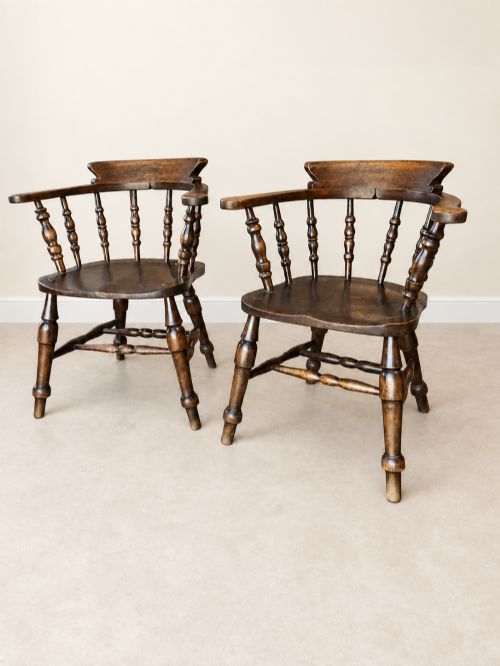
- A low-backed Windsor armchair with a continuous curved armrail, widely produced during the nineteenth century for domestic and tavern use.
- Comb back
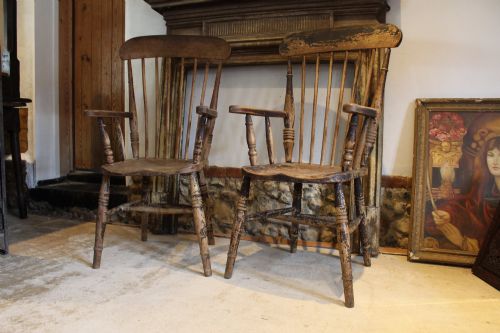
- A Windsor chair variation where the central vertical spindles extend upward to support a horizontal headrest resembling a hair comb.
- Crinoline stretcher
- An arched or bowed stretcher connecting the legs of a chair to provide rigidity, often shaped like the undergarment of the period.
- Vernacular
- An indigenous style of object made by local craftsmen following regional traditions rather than formal architectural patterns.
Elm Wood Desk Chair: Frequently Asked Questions
What is a smokers bow chair?
A smokers bow is a sturdy armchair featuring a low, rounded back and a thick bentwood rail that wraps around the arms. These seats became common in nineteenth-century offices, parlours and public houses.
They offer a compact seating profile while retaining the ergonomic comfort of traditional country chair design.
How do I identify an elm seat?
Elm timber displays a highly twisted, interlocking grain pattern that often shows distinct swirls and a warm honey-brown tone. Because of this interlocking structure, the wood resists splitting when seated upon heavily.
Cabinetmakers utilised this property specifically for the solid, carved saddles of country armchairs.
Are these chairs comfortable for daily desk work?
The saddle-shaped seats are carved to fit the human form, providing natural support during long periods of sitting. Their generous armrests and sturdy back spindles encourage an upright posture.
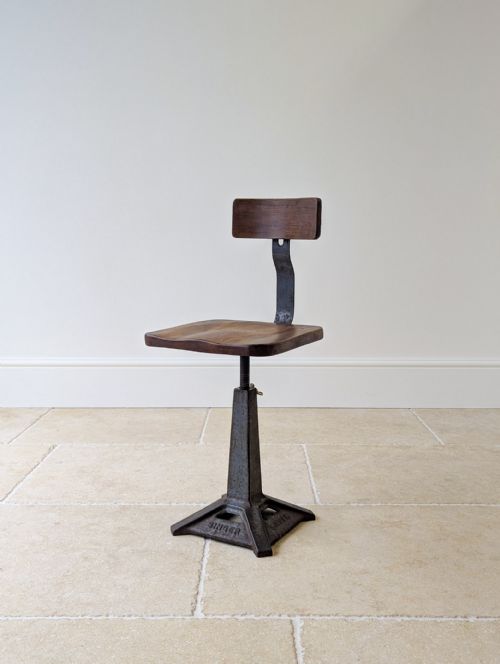
Many examples include swivel mechanisms or rotating bases suited for office environments.
How can I date an antique elm chair?
Dating relies on observing construction methods, such as the thickness of the seat board, the taper of the turned legs, and the presence of hand-cut wedges in the spindle tenons. Earlier eighteenth-century models tend to feature more archaic comb-back or high-back formats.
Victorian and later nineteenth-century pieces often incorporate steam-bent hoops and mixed secondary woods like beech.