
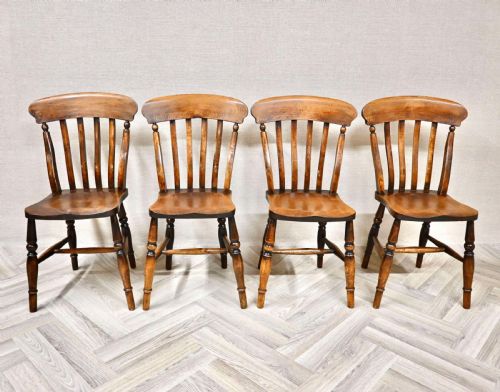
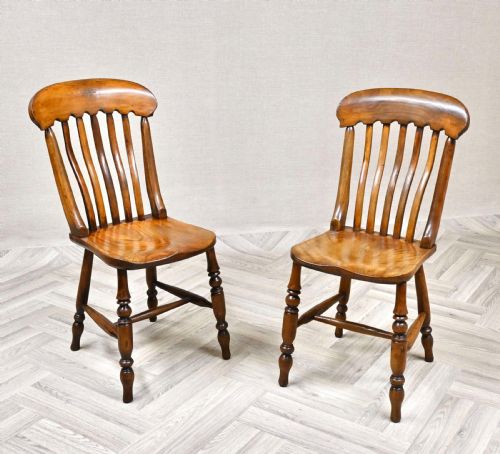
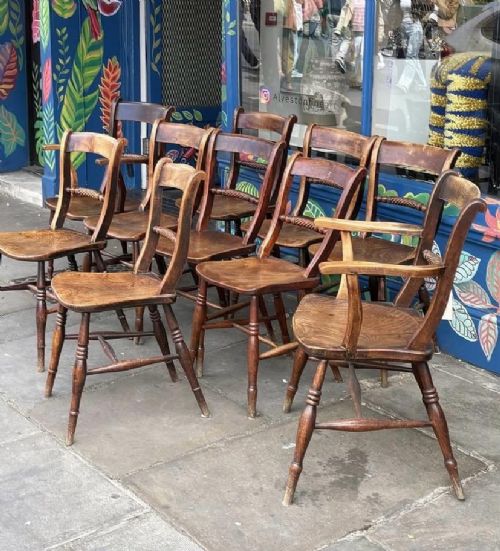
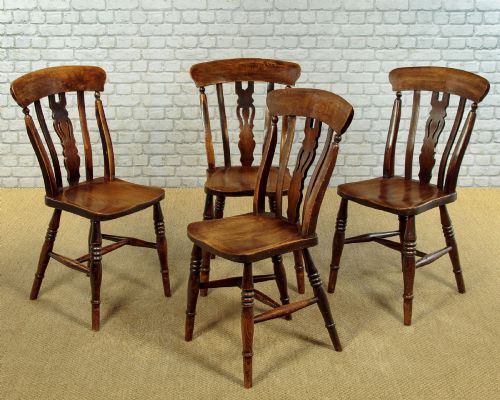
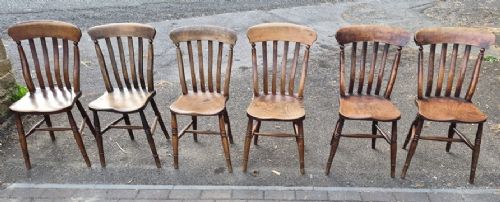
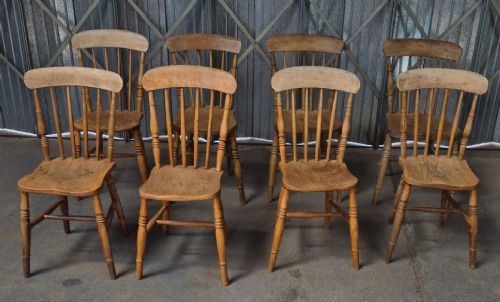

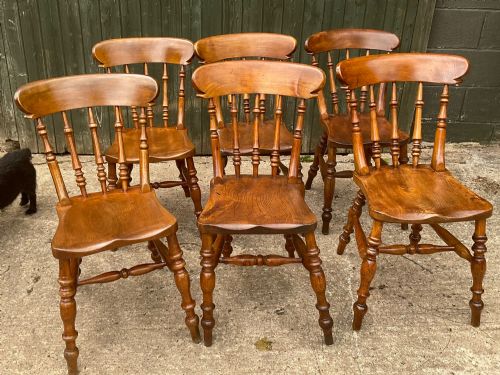
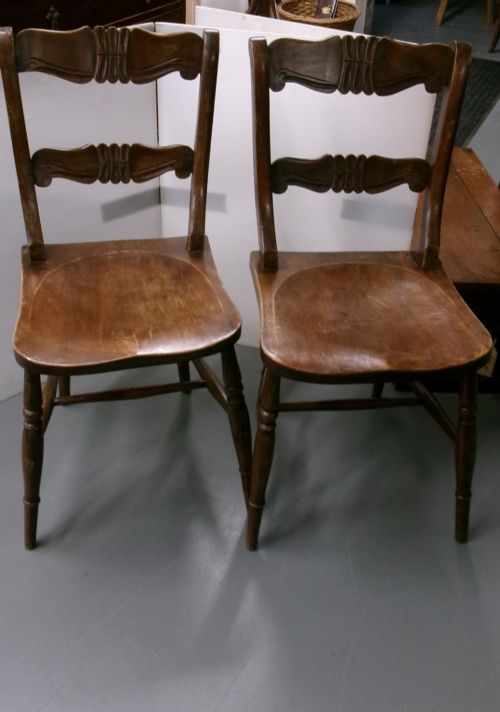
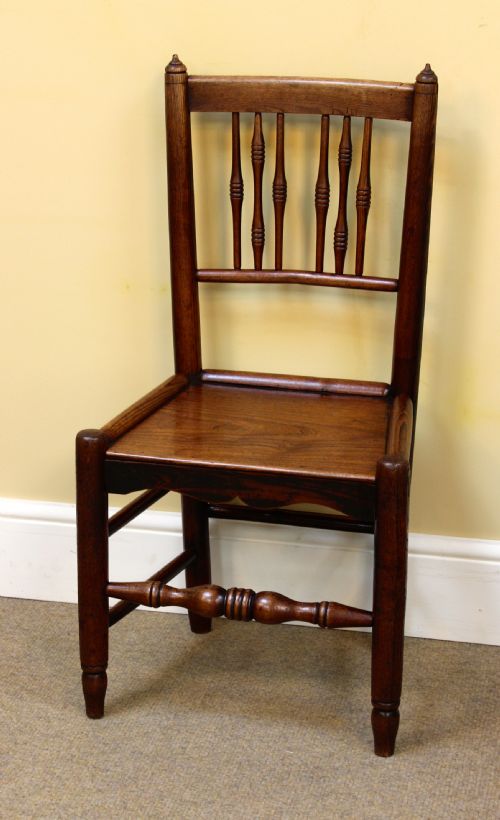


Victorian Cottage Chair
These Victorian cottage chair examples bring honest rural craft straight to your kitchen table.
Victorian Cottage Chair
A victorian cottage chair represents the everyday seating used in nineteenth-century rural homes and farmhouses. These pieces most often appear as Windsor styles, lathbacks, stick backs, and wheel backs designed for robust daily use around the kitchen or dining table.
Makers shaped these utilitarian seats in sets, pairs, or single forms using local timbers such as elm, ash, and beech. Buyers encounter variations ranging from simple rush-seated singles to substantial Thames Valley dining sets and nursing rocking chairs.
The aesthetic relies on vernacular traditions rather than formal court designs, offering sturdy spindles, turned legs, and saddled wooden seats. This category encompasses everything from low stools and child variants to extensive sets of ten or more dining chairs.
How they were made
Cabinet makers and rural joiners built a victorian cottage chair by combining solid plank seats with steam-bent wood and turned components. Elm frequently served for the carved saddle seat because its interlocking grain resisted splitting when subjected to the upward thrust of legs and spindles.
Ash and beech provided the flexible strength needed for bent hoops, bows, and slender spindles, while alder and pine appeared in specific regional builds. Joinery relied on wedged tenons and traditional wedging techniques that locked upright members securely into the main seat block.
Listings feature nineteenth-century seating constructed primarily from elm, ash, and beech with occasional alder and pine.
What varies in quality
Quality in a victorian cottage chair stems from the depth of the saddle shaping in the solid wood seat and the grace of the spindle turnings. Superior examples display balanced proportions, clean joinery, and matching timber grains across an entire set rather than mismatched replacements.
The integrity of the original construction separates fine survivors from heavily restored pieces, particularly where leg joints and back bows meet the seat. Retained surface patination and minimal replacement of vital components preserve the historical character valued by collectors.
Worksop Allsop
The Victorian Cottage Chair Glossary
- Windsor
- A chair built with a solid wooden seat into which the legs and back spindles are driven directly. This construction method provides exceptional durability and defines many rural English seating forms.
- Lathback
- A chair back featuring horizontal wooden slats rather than vertical spindles. These slats are typically steam-bent to curve comfortably against the sitter's back.
- Harlequin set
- A collection of chairs that match in general style and period but vary slightly in individual details and proportions. These groups were assembled over time rather than purchased as a single factory order.
- Scumbled
- A paint finish applied to imitate the natural grain of more expensive woods. Artisans dragged or combed translucent glazes over a base coat to create decorative patterns on basic timber.
- Rush seat
- A seating surface woven from dried marsh rushes twisted into cords. This traditional craft method yields a resilient, textured platform common in country chairs.
Victorian Cottage Chair: Frequently Asked Questions
How do I care for a rush seat?
Keep rush seats away from damp environments and excessive moisture to prevent the natural fibres from rotting.
Clean the surface gently with a dry brush and occasionally apply a very light coat of boiled linseed oil if the straw becomes brittle.
Are these chairs comfortable for daily dining?
Many nineteenth-century country chairs feature deeply saddled wooden seats carved to fit the human body. While lacking modern upholstery, their ergonomic wooden contours offer surprising support during long meals.
What is a Thames Valley chair?
Thames Valley chairs are regional nineteenth-century vernacular pieces known for fine timber selection and refined turning work. They often combine elm seats with ash or beech framing elements.
Can I mix different chair styles together?
Harlequin sets demonstrate that nineteenth-century households frequently used slightly mismatched chairs around the same table. Combining pieces with similar timber tones and heights creates an authentic country aesthetic.