


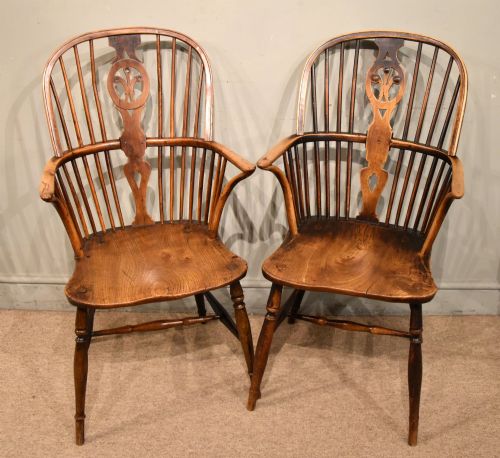
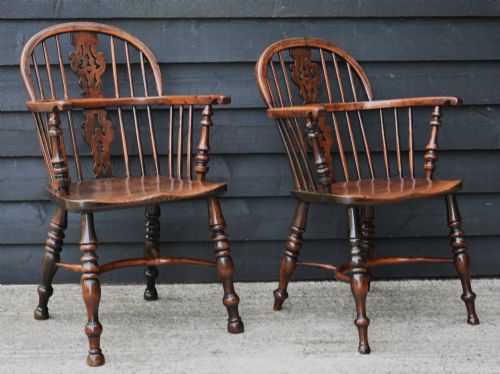
Elm Seated Armchairs
Elm seated armchairs offer rustic warmth and honest construction, connecting modern interiors directly to centuries of English country vernacular woodworking.
Elm Seated Armchairs
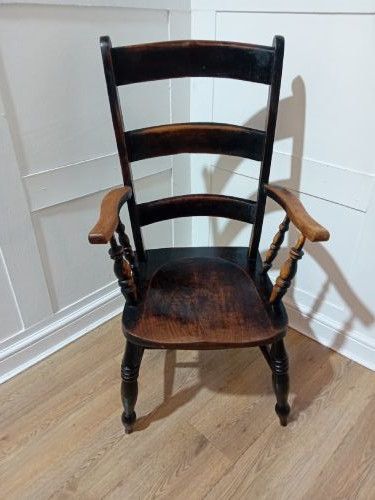
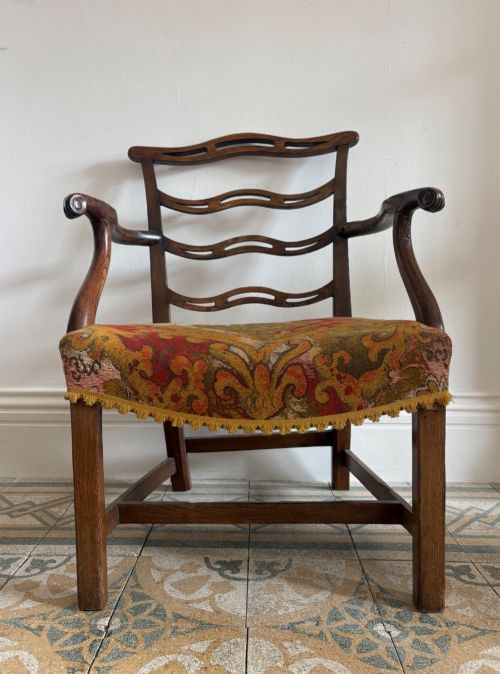
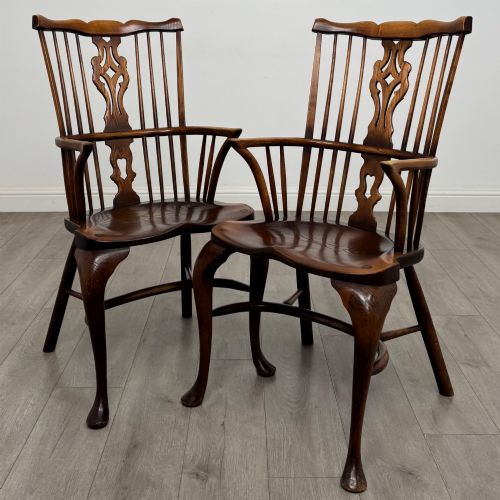
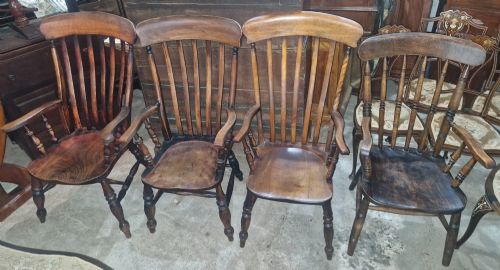
When you search for elm seated armchairs, you encounter robust seating built primarily for comfort and durability in rural homes and farmhouses. The selection spans centuries of regional craftsmanship, featuring distinct forms ranging from Windsor chairs to ladderbacks.
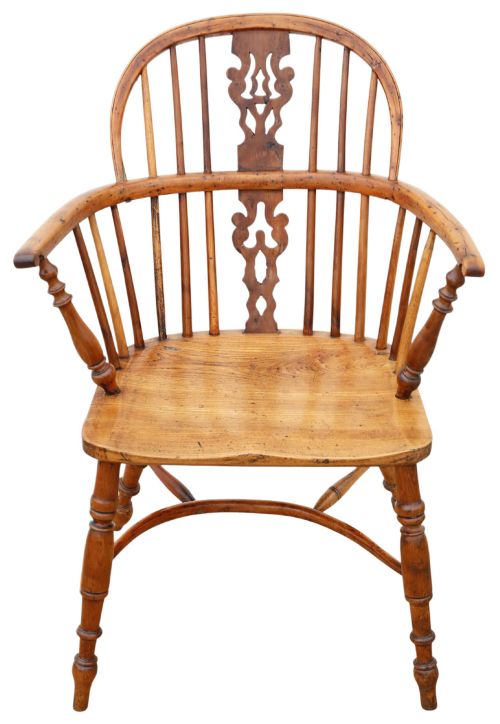
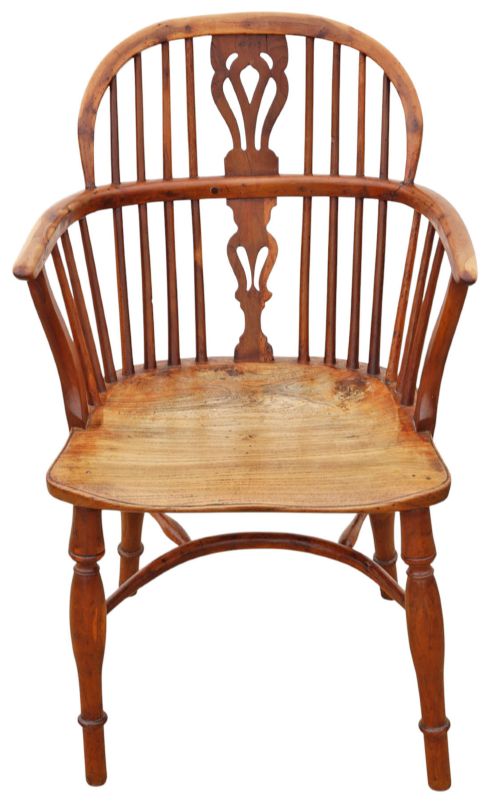
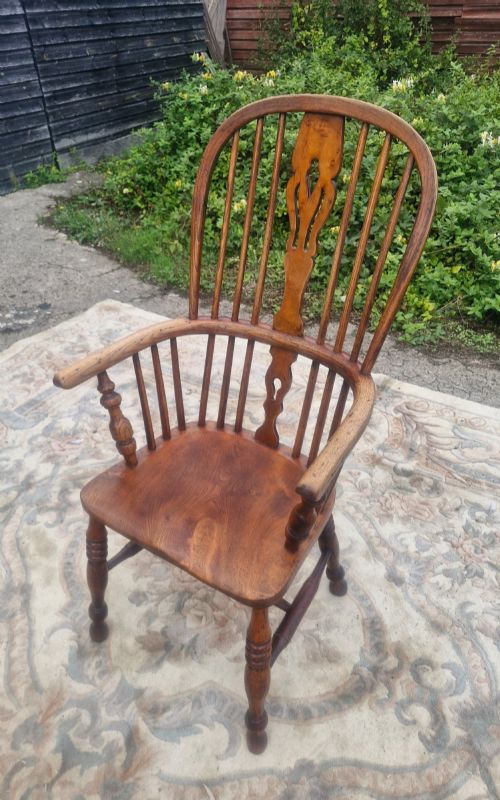
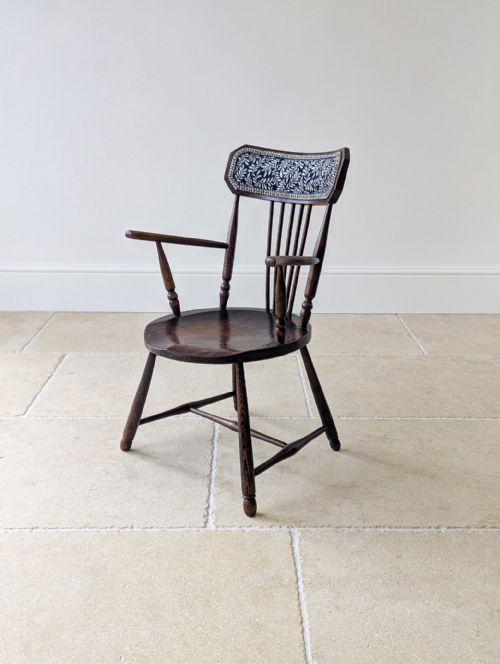
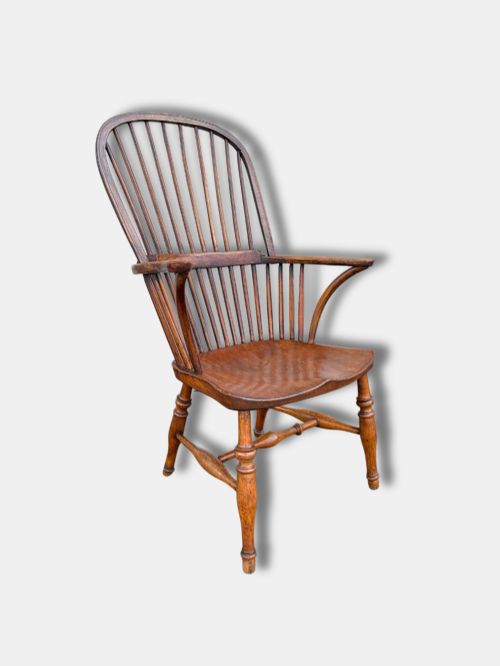
The most common examples on this page are Windsor armchairs originating from various English counties, often pairing an elm seat with ash, beech, or yew components. These pieces demonstrate how traditional makers utilised locally sourced timber to create practical seating.
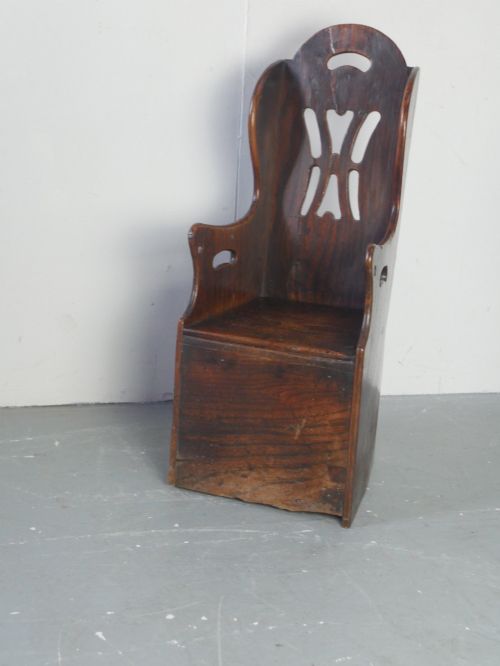
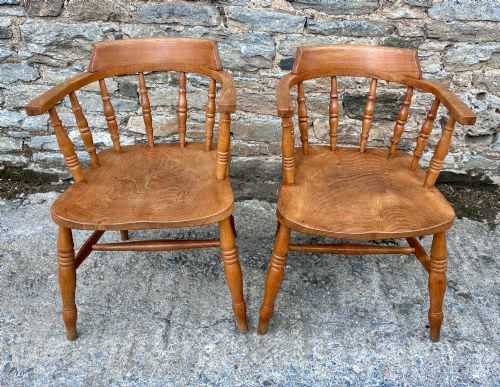
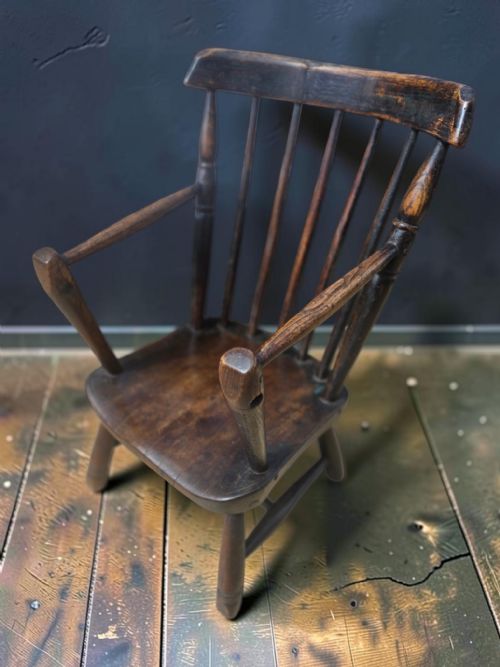
The inventory also includes smaller child chairs, rocking chairs, and captains chairs alongside grander high-back and comb-back variants. Each period brings subtle shifts in spindle arrangement and back design while retaining the solid elm seat.
Materials and construction methods
Makers built these armchairs by combining solid elm for the shaped seats with flexible timbers like ash and beech for bent parts and spindles. Elm resisted splitting under pressure, making it the ideal choice for a solid, carved seat slab.
Frameworks relied on traditional stick-back and Windsor construction, where spindles and legs fit directly into bored holes within the thick seat. Turnery lathes shaped the structural legs and arm supports, while steam-bending formed the hoops and bows characteristic of Windsor chairs.
Children's versions mirror full-size farmhouse Windsors precisely, proving that miniature ancestors sat in proper vernacular style.
Distinguishing quality and character
The separation between standard utility seating and superior examples rests on the balance of timber selection and the elegance of the turning. Yew wood additions, sophisticated comb-back profiles, and well-sculpted saddle seats elevate certain pieces above standard kitchen chairs.
Original surface finishes, good patination, and minimal replacement parts determine the integrity of a piece. Chairs retaining their original red lacquer, ebonised coatings, or honest waxed surfaces provide a clearer view of their historic origins.
The Elm Seated Armchairs Glossary
- Windsor chair
- A chair built with a solid wooden seat into which the legs and back spindles are driven directly. This design developed through regional English vernacular traditions.
- Comb back
- A Windsor chair variation where the top rail resembles the spine of a comb, with vertical spindles rising through a horizontal arm-rail.
- Smokers bow
- A low-backed armchair designed for domestic or tavern use, featuring a continuous curved arm rail supported by short spindles.
- Yew wood
- A durable, highly figured wood frequently paired with elm in superior regional armchairs for its rich colour and grain.
- Vernacular
- Objects made by regional craftsmen following local traditions and practical needs rather than academic architectural styles.
Elm Seated Armchairs: Frequently Asked Questions
What woods are used in these chairs?
Elm provides the primary solid seat material across these pieces due to its tough, split-resistant grain. Makers combined this with ash, beech, yew, and fruitwood for the spindles, legs, and bentwood bows.
Additional woods such as oak and laburnum appear in specific regional variations, reflecting the local timber available to the rural carpenter.
How do I identify a Windsor armchair?
Windsor armchairs feature a thick solid wooden seat that directly receives the legs below and the back construction above. They lack traditional upholstered frames and rely instead on exposed spindles or solid wooden backs.
Sub-types include hoop backs, comb backs, and stick backs, each displaying distinct regional joinery and turning styles.
Where were these armchairs made?
Many originate from rural English workshops, including the Thames Valley and various West Country regions. Local vernacular styles developed distinct characteristics depending on the county and the workshop.
Makers utilised available local timbers and traditional regional turning patterns to construct seating for farmhouses, cottages, and kitchens.
How should I care for an antique elm seat?
Maintain the wood by keeping chairs away from direct heat sources and sudden humidity changes to prevent timber movement. Regular dusting and occasional application of appropriate furniture wax preserve the historic finish.
Avoid harsh chemical cleaners that can strip original patination and dry out the aged wood fibres.