



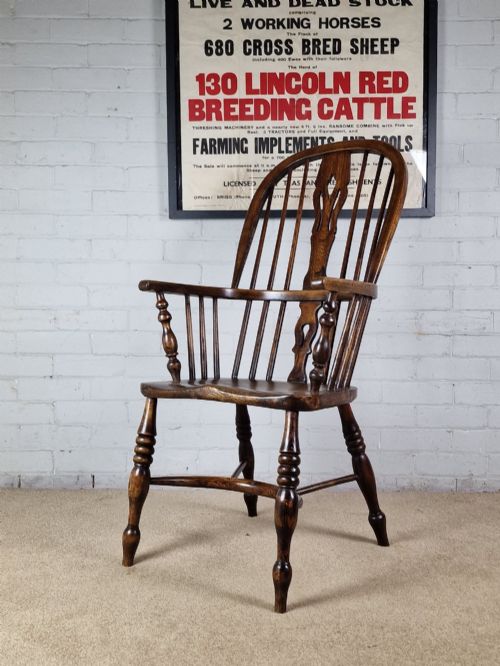
Antique Elm Windsor Carvers
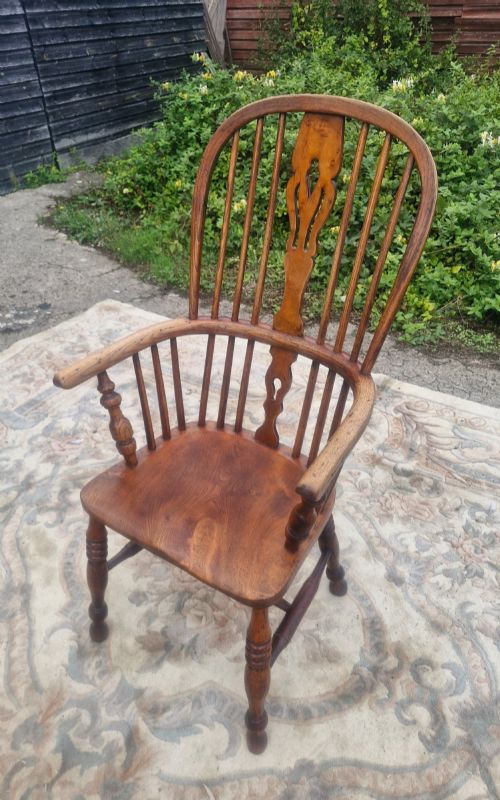
These antique elm windsor carvers combine sturdy timber construction with comfortable country seating, offering robust charm and enduring utility for any traditional interior.
Antique Elm Windsor Carvers
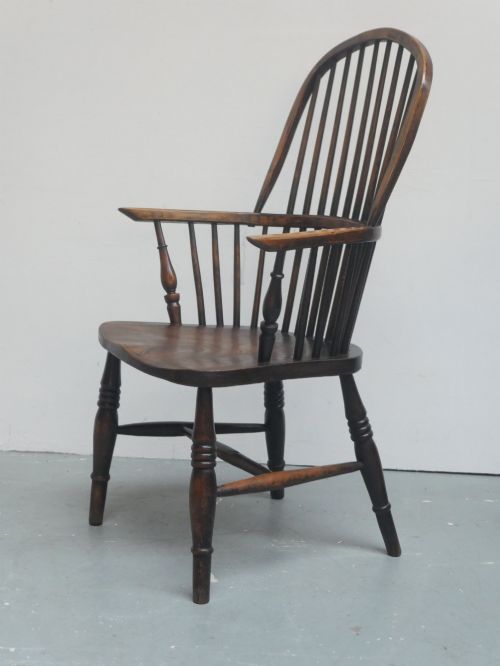
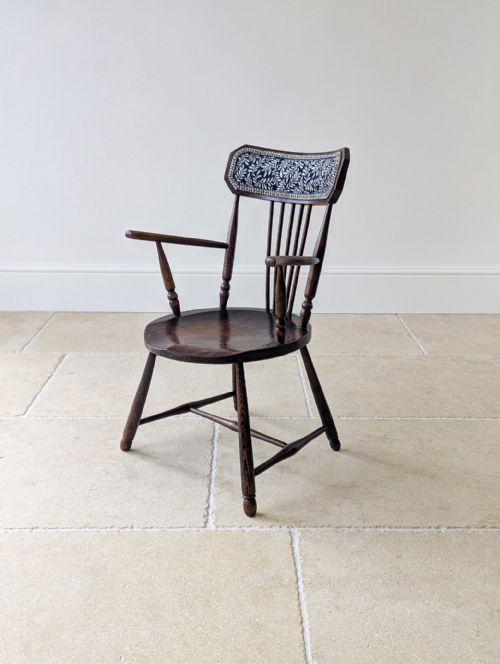
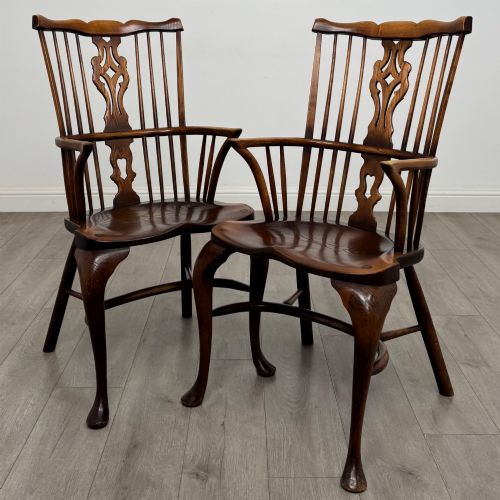
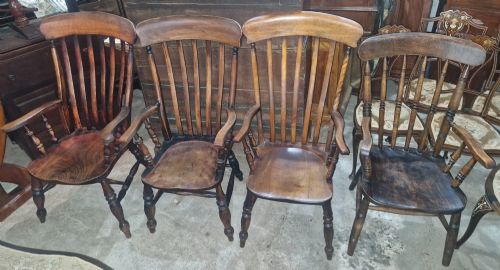
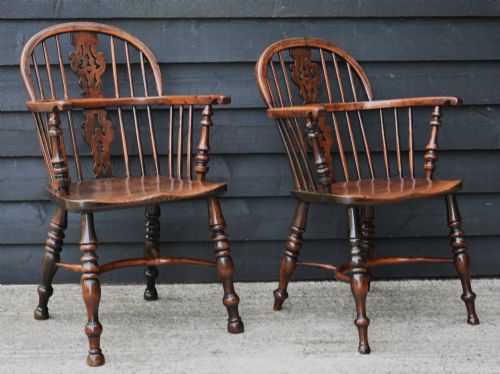
When searching for antique elm windsor carvers, buyers encounter solid seating pieces shaped by traditional rural joinery and constructed with distinct back designs. These armchairs appear across several distinct periods, most frequently originating from the eighteenth, nineteenth, and early twentieth centuries.
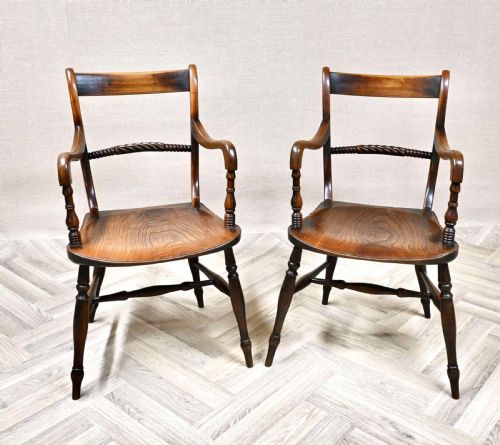
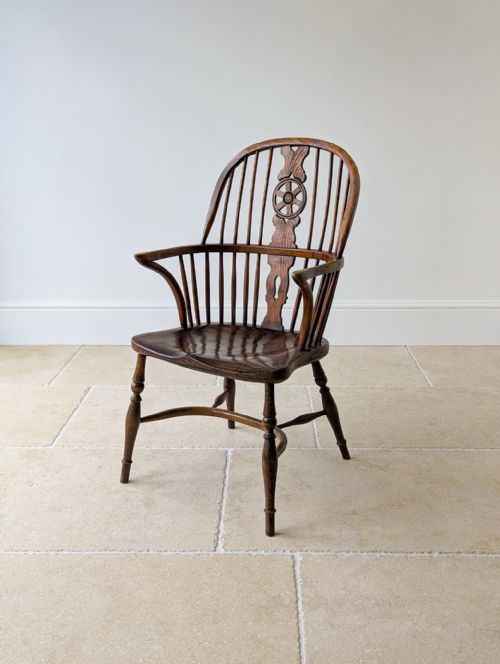
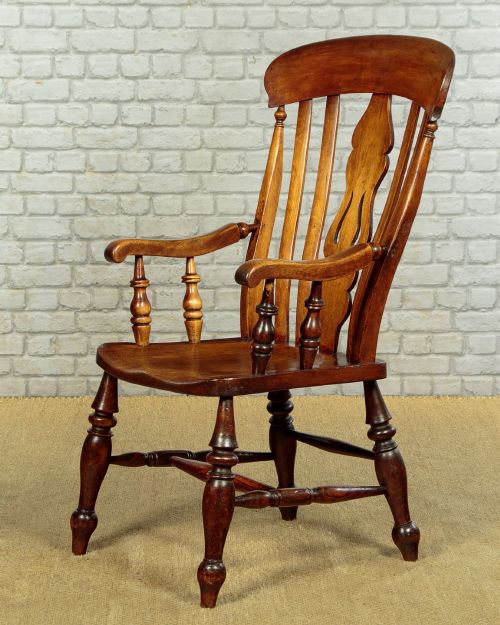
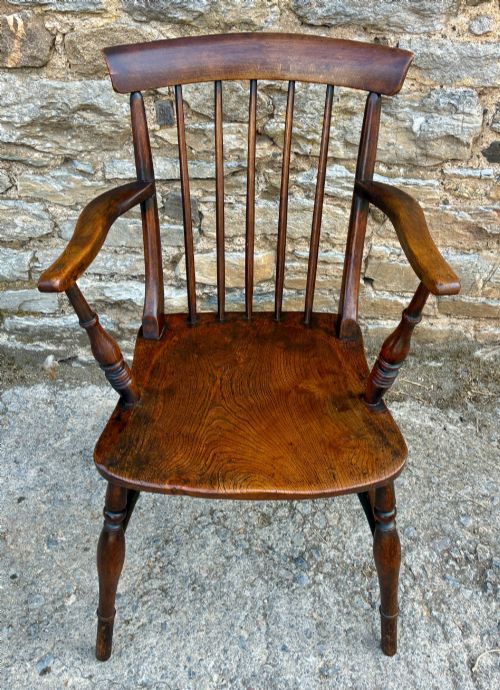
The examples available range from highback kitchen models and wheelback forms to comb back and barback variants. Most pieces combine a shaped elm seat with supporting timbers sourced from local woodlands, creating durable carver chairs suited to domestic use.
Assessing character and craftsmanship
Quality differences emerge in the depth of the seat excavation and the crispness of the turned components. Superior examples display carefully sculpted saddle seats and well-proportioned arms that balance comfort with structural integrity.
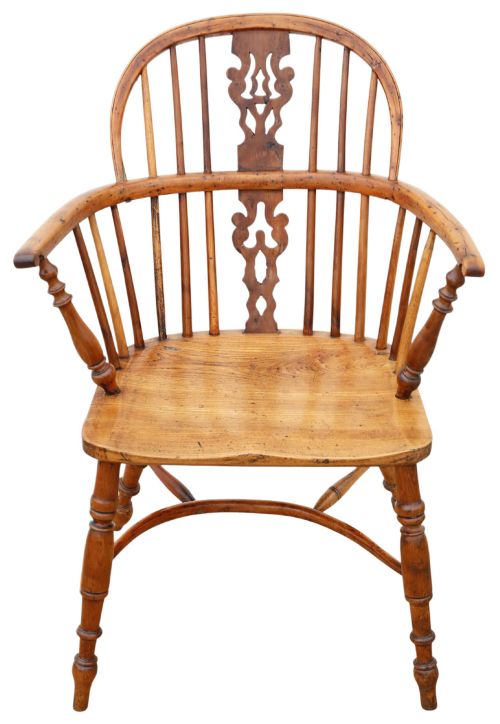
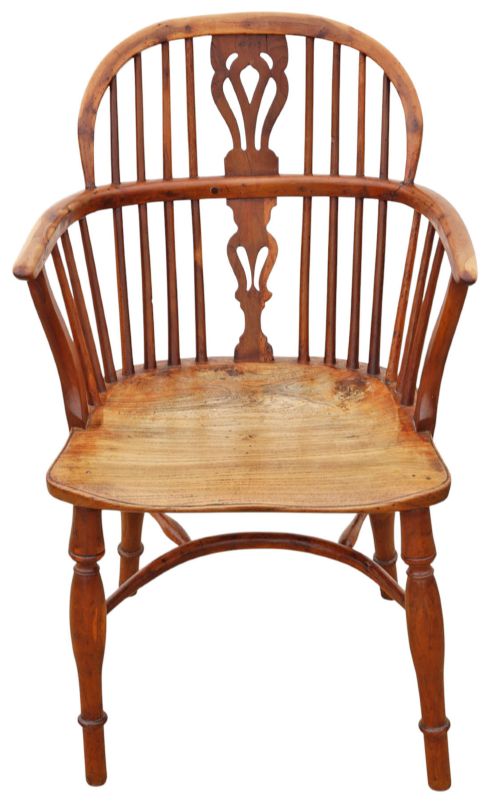
The selection of timber grain also dictates distinction, particularly where figured elm meets richly toned yew wood. Integration of original stretchers, such as crinoline braces, preserves the intended rigidity and historical authenticity of the piece.
Many elm seats show the subtle hollows worn by generations of sitters who sat comfortably before television was even a concept.
The Antique Elm Windsor Carvers Glossary
- Carver
- An armchair designed to match a set of dining chairs, usually placed at the table ends. These chairs provide supportive elbow rests and generous proportions.
- Comb back
- A Windsor chair design where the vertical spindles extend upward to support a horizontal top rail, resembling the teeth of a comb. This style frequently appears on eighteenth-century examples.
- Crinoline stretcher
- An arched underframe connecting the legs of a Windsor chair to provide extra stability. This hoop-shaped stretcher is typical of finer nineteenth-century country seating.
- Wheelback
- A Windsor chair variation featuring a pierced splat shaped like the hub and spokes of a wheel. This decorative motif gained popularity during the Georgian and Victorian periods.
- Lath back
- A chair back constructed with horizontal wooden slats rather than vertical spindles. These slats offer broad support across the upper back.
Antique Elm Windsor Carvers: Frequently Asked Questions
What is an antique elm windsor carver?
An antique elm windsor carver is a sturdy wooden armchair featuring a solid sculpted seat and a spindle or slat back. These seating pieces were traditionally used in farmhouses, kitchens, and country homes.
They combine multiple timber types within a single frame, utilising elm for the seat and contrasting woods for the turned legs and back bows. Their robust construction has allowed them to survive through centuries of daily domestic service.
How do I date an antique windsor chair?
Dating involves examining the combination of timber species, construction techniques, and backrest styles. Eighteenth-century models often feature comb backs or vernacular vernacular forms, while Victorian pieces frequently incorporate wheelbacks or lath backs.
Tool marks, the method of wedging leg tenons through the seat, and wear patterns also help establish the approximate period of manufacture. Comparing these elements with documented regional variations narrows down the timeframe.
Where were windsor carvers made?
These chairs were produced by regional country joiners and specialised urban workshops across England. Different counties developed distinct regional characteristics in their turning and back designs.
Local timber availability influenced material choices, leading to variations in the specific woods paired with the elm seats. Makers utilised whatever strong local hardwood was accessible in nearby forests.
How should I care for elm and yew furniture?
Maintain these wooden chairs by placing them away from direct heat sources and rapid temperature fluctuations. Such environmental stability prevents the timber from drying out or splitting.
Apply a traditional wax polish occasionally to nourish the surface and preserve the natural grain. Avoid harsh chemical cleaners that can strip the historic patina developed over generations of use.
Can I use windsor carvers at a dining table?
These armchairs function effectively as head-of-table seating or paired with larger dining arrangements. Their generous proportions provide comfortable support during meals.
Verify the seat height and arm clearance against your table dimensions to ensure a proper fit. Their sturdy build easily accommodates active everyday dining use.