
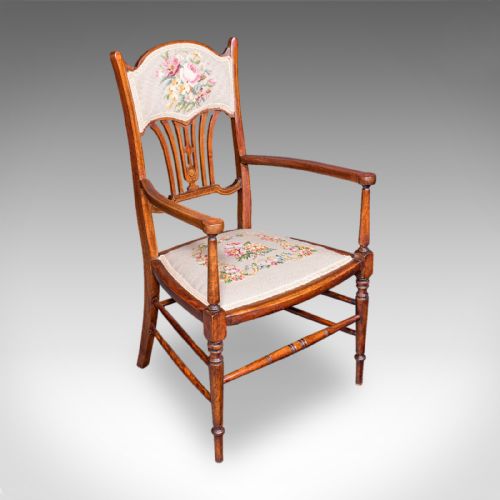


Pad Arm Carver Chairs
Pad arm carver chairs bring both structural presence and fitted comfort to a room, offering sturdy elbow supports alongside traditional seating design.
Pad Arm Carver Chairs
Pad arm carver chairs combine upright dining seating with supportive elbow rests, frequently appearing in forms such as Windsor chairs, elbow chairs, and library armchairs. These pieces emerge across the eighteenth, nineteenth, and early twentieth centuries, spanning periods from the Georgian era through to the Victorian age and Edwardian years.
The varieties on this page encompass English country craftsmanship alongside formal revival pieces. Buyers encounter vernacular high back Windsor formats as well as refined mahogany frames built in Sheraton Revival and Hepplewhite styles.
Makers utilised these armchairs in various domestic spaces, from morning rooms and studies to formal dining settings. The overarching characteristic remains the upholstered or padded arm rest, distinguishing them from standard side chairs.
How they were made
Carpenters constructed these frameworks using dense hardwoods including mahogany, beech, yew, elm, and oak. Solid timber components were shaped into vase splats, balloon backs, and high spindle backs depending on the regional workshop or urban cabinet maker.
Upholstery involved integrated leather or fabric pads fixed to the arms, often accompanied by brass detailing or textile seats. Turnings and joinery relied on traditional pegging and lathe work to secure the arms and legs under regular weight.
Listings feature mahogany, yew, beech, and elm across nineteenth-century and eighteenth-century periods.
What varies in quality
The selection of timber grain dictates much of the visual merit, particularly in figured mahogany and rich yew wood. Crisp carving on splats and well-proportioned arm supports separate standard utility seating from finer workshop productions.
Structural integrity depends upon the original tightness of joints and the retention of uncompromised timber sections in the arms and legs. Refinements in the upholstery padding and the retention of period leather contribute to the standing of each individual piece.
The Pad Arm Carver Chairs Glossary
- Carver chair
- A dining chair featuring arms, traditionally placed at the head of a table or utilised as a desk seat. These forms provide greater command of space than standard armless chairs.
- Pad arm
- An elbow rest featuring integrated padding covered in leather or fabric. This addition offers softer contact points for the sitter.
- Windsor
- A wooden chair construction method employing pegged spindles fitted into a solid saddle seat. High back versions frequently incorporate the padded arms native to specific regional workshops.
- Splats
- The vertical wooden strip positioned centrally within the backrest of a chair. Vase splats offer a distinctive shaped silhouette seen in eighteenth and nineteenth century seating.
- Elbow chair
- A domestic seating option fitted with low arms designed to support the arms while seated at a table. These pieces bridge the gap between heavy armchairs and simple side chairs.
Pad Arm Carver Chairs: Frequently Asked Questions
What is a pad arm carver?
A pad arm carver is a seated piece featuring built-in cushioned armrests and structural elbow supports, designed for use at a table or desk.
These chairs bridge the gap between standard dining seating and full armchairs, offering additional comfort through padded contact points.
Where were these chairs used?
Historically, these chairs served in morning rooms, libraries, and formal dining settings as head-of-table seating.
Country variations also appeared in vernacular domestic interiors, while mahogany and oak formats suited urban parlours.
How do I identify a Windsor carver?
Windsor carvers are identified by spindle backs socketed directly into a solid wooden seat rather than a continuous frame.
They often utilise regional timbers like yew, elm, and beech, combining turned legs with distinctive bentwood components.
Are these chairs suitable for daily dining?
These pieces function well for daily seating when the underlying timber frame and joints remain robust and stable.
Their sturdy construction supports regular use while providing the elevated comfort of padded elbow supports.