

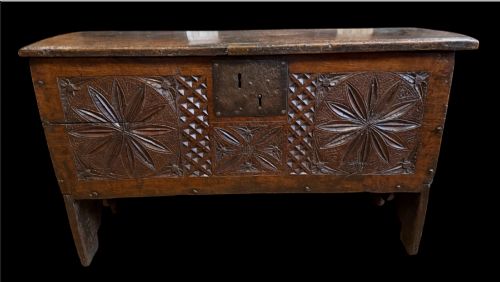


Elizabethan Oak Storage Trunk
An elizabethan oak storage trunk is a substantial domestic piece built to hold precious textiles and documents securely in sixteenth-century households.
Elizabethan Oak Storage Trunk
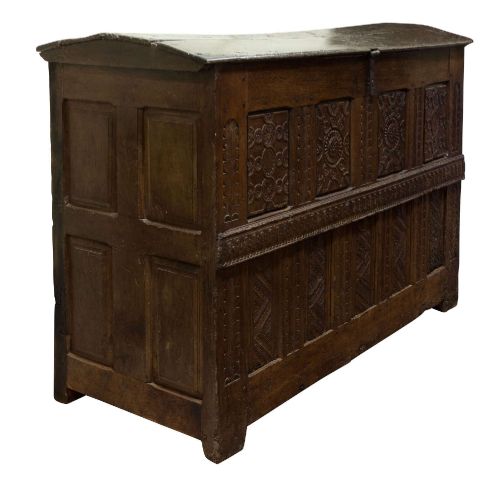
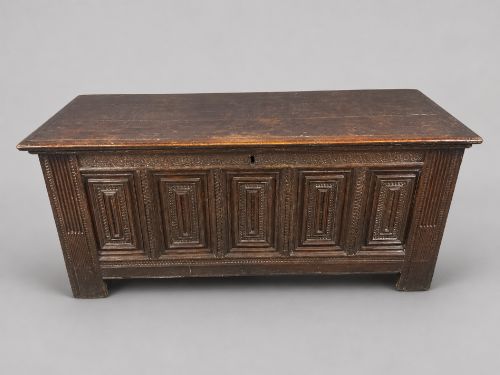
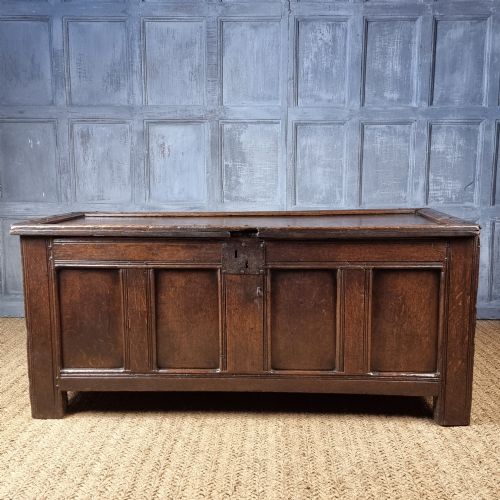
When buyers search for an elizabethan oak storage trunk, they encounter sturdy boarded coffers, plank chests, and panelled grain coffers dating primarily from the sixteenth century, alongside later Elizabethan Revival interpretations from nineteen hundred. These domestic strongboxes served essential storage functions in early households, designed to hold valuable textiles, church plate, and important documents safely under lock.
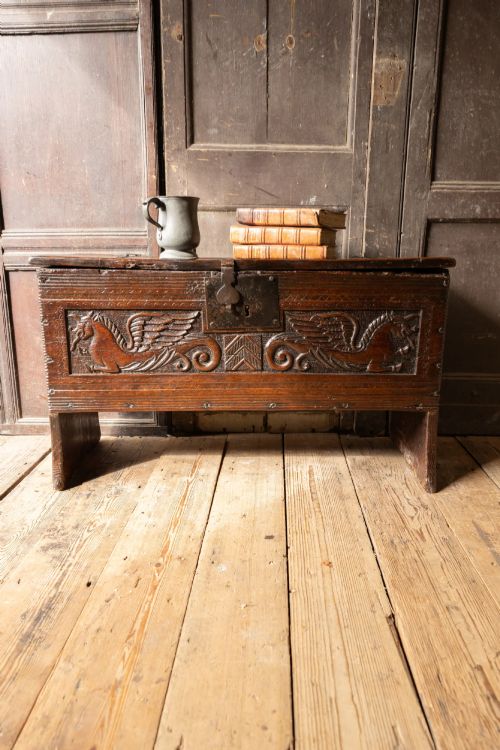
The regional origins and construction methods vary across the surviving examples, taking forms described variously as storage chests, coffers, and trunks. Welsh workshops produced notable boarded and carved examples, while West Country makers incorporated distinctive decorative motifs such as winged fantastic beasts into their panels.
Most pieces seen on this page belong to the sixteenth century, constructed with thick timber planks or framed panels that reflect the robust joinery traditions of the period. Alongside these antique items, occasional revival pieces demonstrate how later makers recreated sixteenth-century aesthetics using inlaid wood and fruitwood details.
How they were made
Makers utilised solid oak for the primary carcass of an elizabethan oak storage trunk, selected for its strength and local availability. Planks were joined using robust methods such as six-plank construction and boarded framing, which provided structural integrity without complex internal fixings.
Iron and wrought iron hardware, including heavy hinges and strapwork, reinforced the lids and corners of these chests. Decoration often involved hand carving directly into the timber or incorporating inlaid wood and fruitwood inlay to create geometric and figural patterns.
Elizabethan Oak Storage Trunk Retail Price Guide 2026
Typical asking prices for elizabethan oak storage trunk among the pieces listed under this phrase on Sellingantiques today, from the lower quarter to the upper quarter. They describe what is for sale here now, not the wider market.
Listings feature items spanning the sixteenth century, seventeenth century, and nineteen hundred, utilising oak, iron, wrought iron, inlaid wood, and fruitwood inlay.
What varies in quality
The distinction between standard utility boxes and finer domestic furniture rests upon the sophistication of the carpentry and the presence of decorative carving. Pieces featuring detailed relief work, such as carved panels or winged fantastic beasts, demonstrate greater artisan skill than plain plank coffers.
Material selection and the preservation of original timber surfaces also define the upper tier of pieces. Authentic sixteenth-century examples retain their structural honesty and period ironwork, whereas revival pieces rely on stylistic imitation from nineteen hundred.
The Elizabethan Oak Storage Trunk Glossary
- Boarded chest
- A simple storage box constructed from thick timber planks joined directly at the edges rather than set into a separate frame. These represent an early and robust form of domestic furniture.
- Cofer
- An alternative historical spelling for coffer, denoting a heavy wooden chest used for storing valuables and travel. They often featured domed or flat lids reinforced with iron bands.
- Fruitwood inlay
- A decorative technique where lighter or contrasting fruitwood timbers are inserted into recesses cut into an oak base. This creates ornamental patterns across the front panels.
- Six-plank chest
- A primitive form of box made from six distinct boards pinned or nailed together at right angles. They form the foundation of early domestic storage.
- Wrought iron
- Iron shaped by heating and hammering by hand to create durable hardware. In these pieces, it appears as strapwork hinges and lock plates.
Elizabethan Oak Storage Trunk: Frequently Asked Questions
What were elizabethan oak storage trunks used for?
These trunks served as secure receptacles for family valuables, including heavy woollen garments, table linens, and legal documents. Because homes lacked fitted closets, chests provided the primary lockable storage in a household.
They also functioned as seating or tables when space was limited, making them versatile items of furniture in sixteenth-century domestic interiors.
How do I date an antique oak coffer?
Dating relies on examining the construction methods, tool marks, and timber shrinkage visible across the boards. Sixteenth-century pieces exhibit hand-split oak and early joinery techniques rather than modern mechanical fixings.
Stylistic details like carved motifs, regional Welsh characteristics, and original ironwork further help historians place a piece within the Tudor and Elizabethan eras.
Are these chests heavy to move?
Solid oak construction and thick timber planks make these storage trunks exceptionally heavy and sturdy. They were built for permanence within a static household rather than frequent transport.
Moving them generally requires two people to ensure the historic joints and original iron hinges are not strained during relocation.
What is the difference between an Elizabethan and a revival piece?
Original Elizabethan pieces date from the sixteenth century and show the wear, timber oxidation, and hand craftsmanship of that period. They carry authentic historical patina accrued over hundreds of years.
Revival pieces, such as those from nineteen hundred, imitate the earlier Tudor and Elizabethan styles using older woodworking traditions combined with nineteen-century manufacturing contexts.