
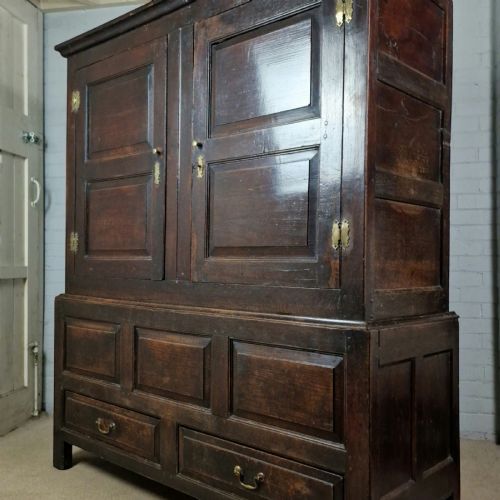
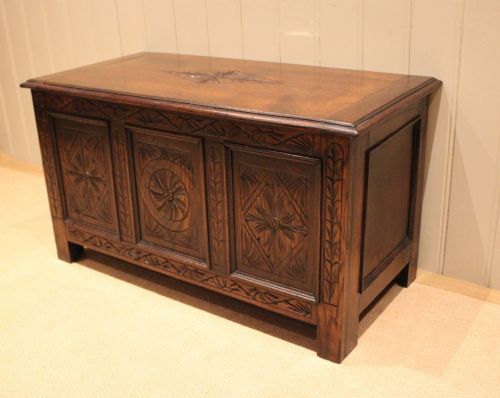
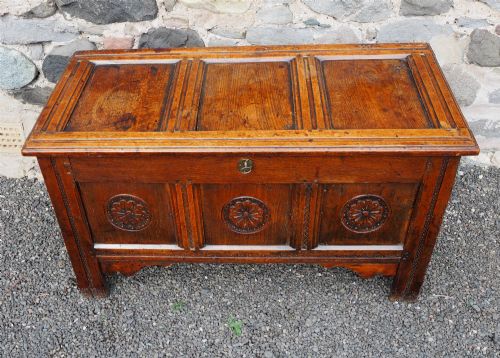
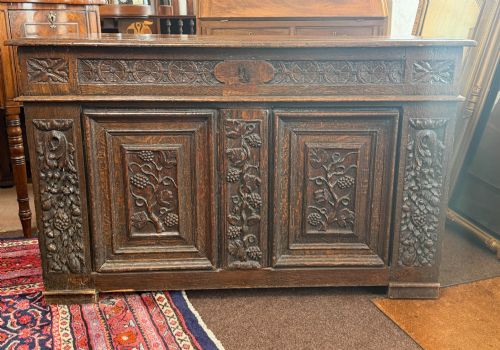

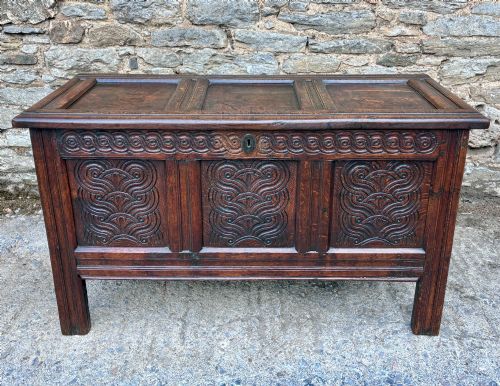
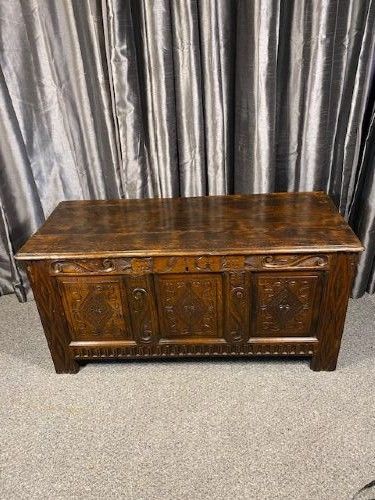
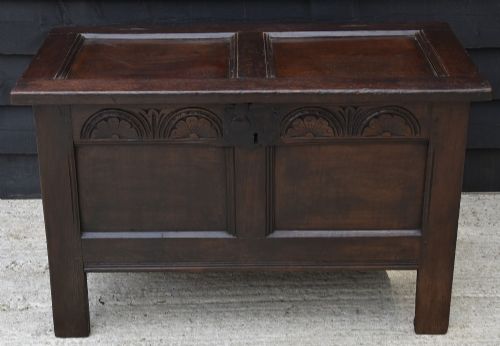
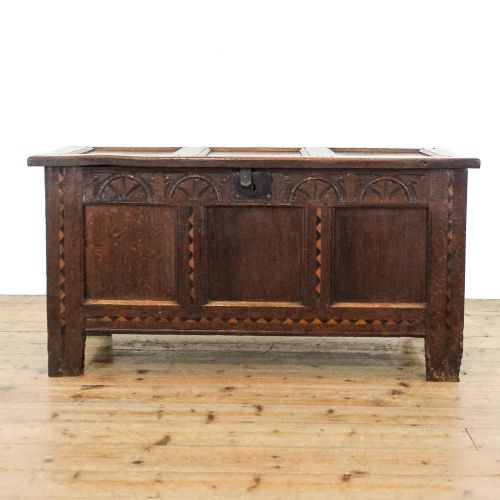
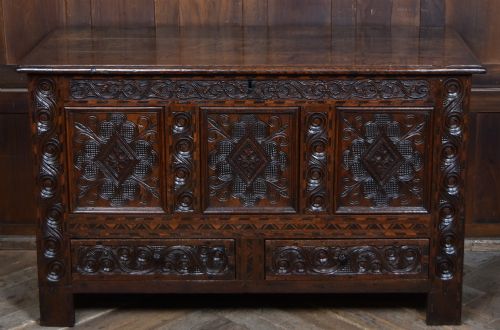
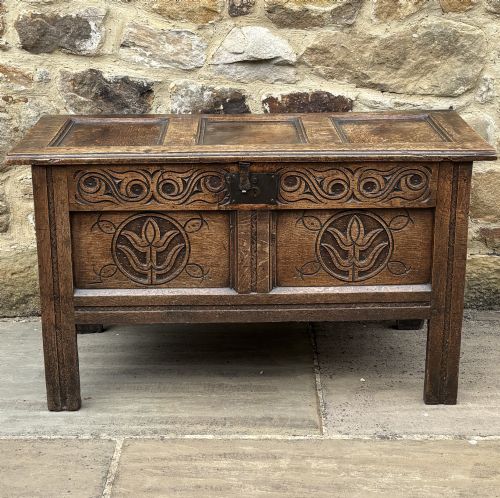
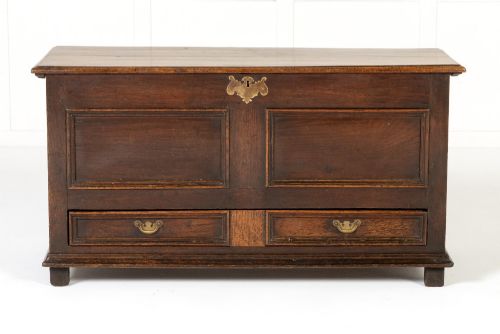
Panelled Oak Mule Chest
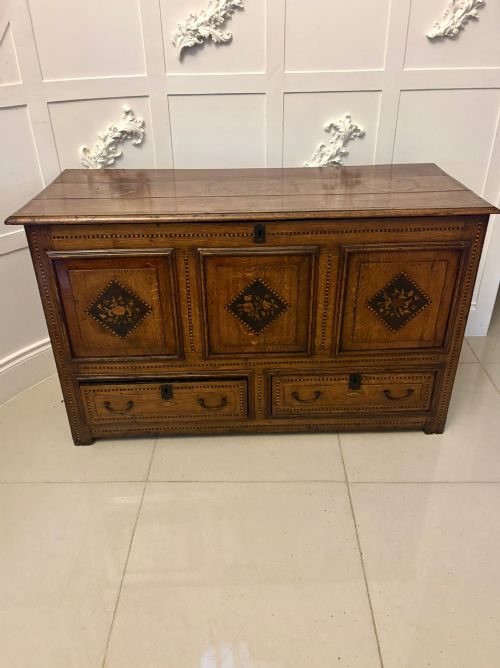
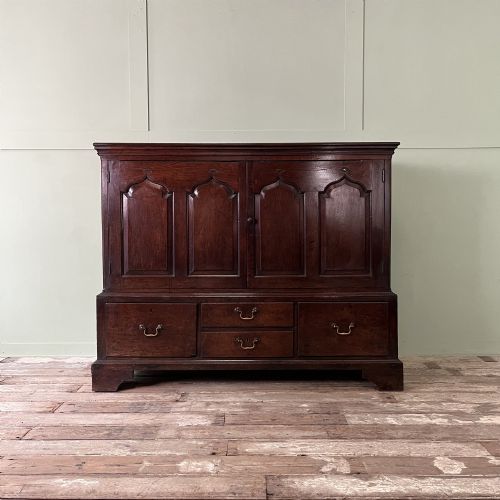
A panelled oak mule chest combines the deep storage of a traditional blanket box with the convenience of drawers beneath.
Panelled Oak Mule Chest
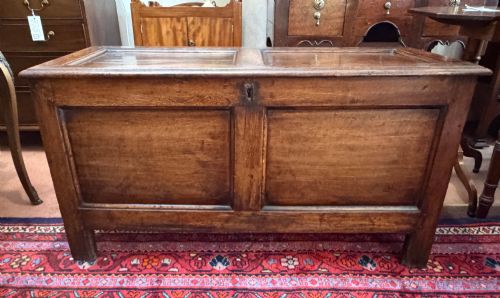
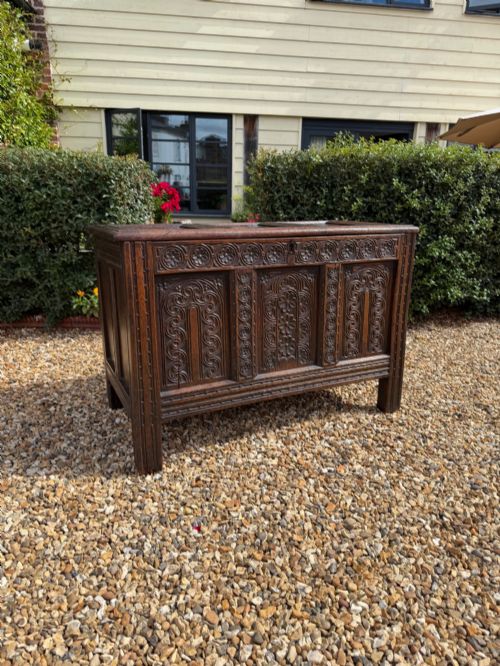
A panelled oak mule chest is a sturdy storage piece defined by its solid timber construction and distinct lower drawer section. When buyers search for this phrase, they encounter substantial oak furniture designed to hold linen, clothing, and household goods.
The versions most commonly met on this page span the 17th century, 18th century, and Georgian periods, alongside later 19th-century interpretations and revival pieces. These items often feature fielded panels, framed lids, and structural joinery typical of English and Welsh cabinet-making traditions.
What varies in quality
The standard of a piece is determined by the crispness of its hand-carved details and the finesse of its timber panels. Grain selection, particularly the use of figured oak or contrasting burr elm, elevates the visual appeal of finer examples.
Proportions and structural cohesion also define the grade of the item, distinguishing simple utility boxes from more ambitious regional pieces with fitted drawers. The integrity of the original joints and the retention of period hardware influence how well the piece represents its era.
Listings feature oak combined with materials like brass, iron, burr elm, fruitwood, and ebonised wood across multiple centuries.
The Panelled Oak Mule Chest Glossary
- Mule chest
- A storage chest featuring one or more drawers built beneath the main internal compartment. This form evolved from standard blanket chests by adding lower storage access.
- Panelled
- A method of construction where a frame holds floating wooden panels in place. This technique allows the timber to expand and contract naturally with humidity changes.
- Coffer
- A heavy wooden box with a lid, traditionally used for safekeeping valuables or textiles. Many examples display regional carving styles and early joinery.
- Marquetry
- The art of applying decorative veneer pieces to a structure to create pictorial designs. It appears on select high-status chests alongside timber inlay.
- Linenfold
- A style of carved wooden panelling that resembles folded fabric. This motif is frequently found on pieces dating from the 17th century.
Panelled Oak Mule Chest: Frequently Asked Questions
What is a mule chest?
A mule chest is a traditional storage box that incorporates one or more drawers beneath the main compartment. This design bridges the gap between a simple blanket chest and a chest of drawers.
The form emerged as makers sought easier access to stored textiles without needing to lift the heavy top lid every time items were required.
How old are these chests?
Most authentic examples date from the 17th century through the Georgian era and into the 19th century. Later revival pieces from the early 20th century also appear.
Construction methods, tool marks, and stylistic details help differentiate early period pieces from later country interpretations and revival items.
How were they used historically?
Households utilised these chests to store valuable textiles, household linen, and clothing before fitted wardrobes became common. The lower drawers kept smaller items organised and accessible.
They often served as marriage chests or family repository pieces, holding dowry items and inherited goods securely within the home.
Where were these chests made?
Production centred in regional workshops across England and Wales, with distinct local styles developing in areas such as Lancashire and Welsh counties. Welsh variants are sometimes known as coffer bach.
Local timber availability and regional carving traditions heavily influenced the final appearance of each piece.