
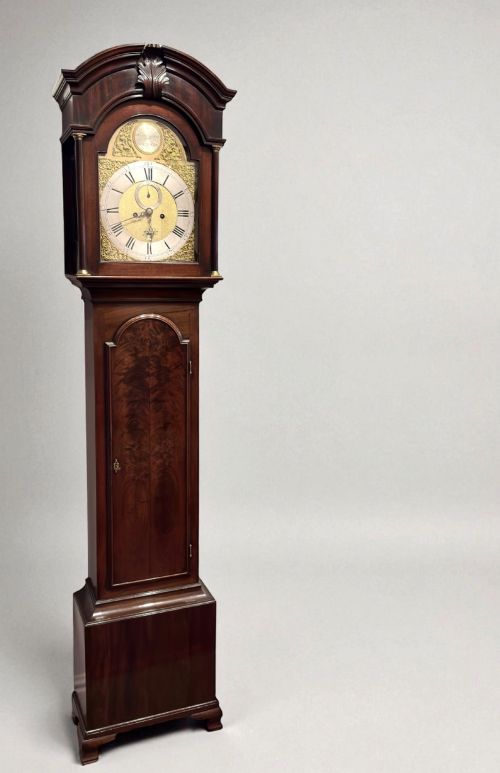
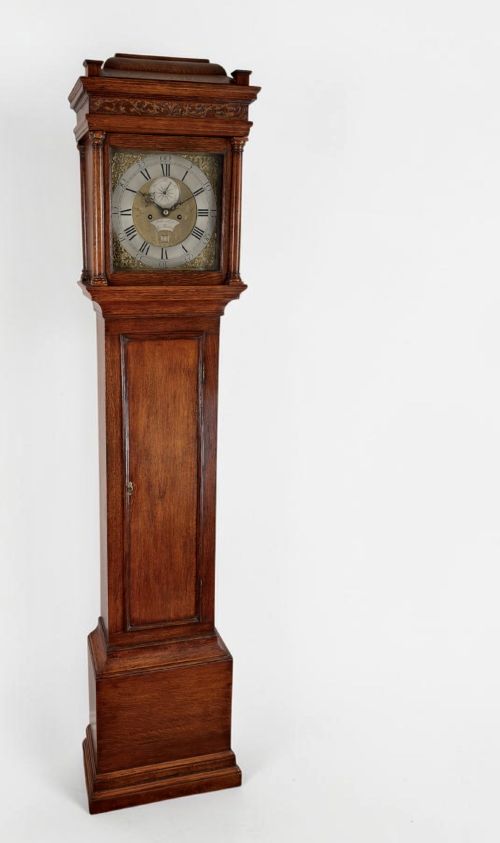
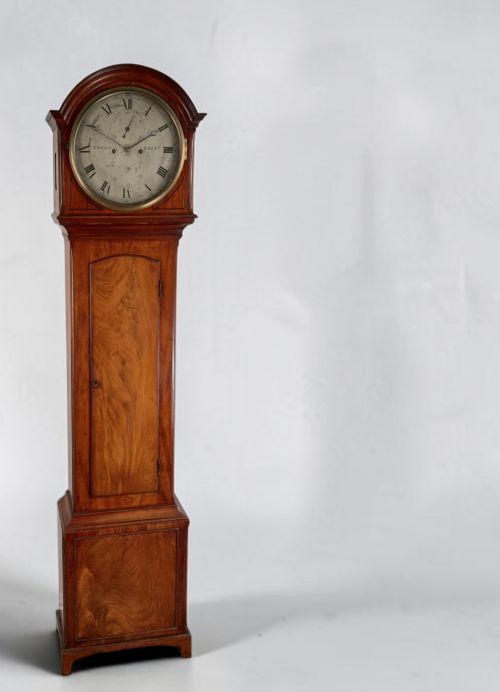
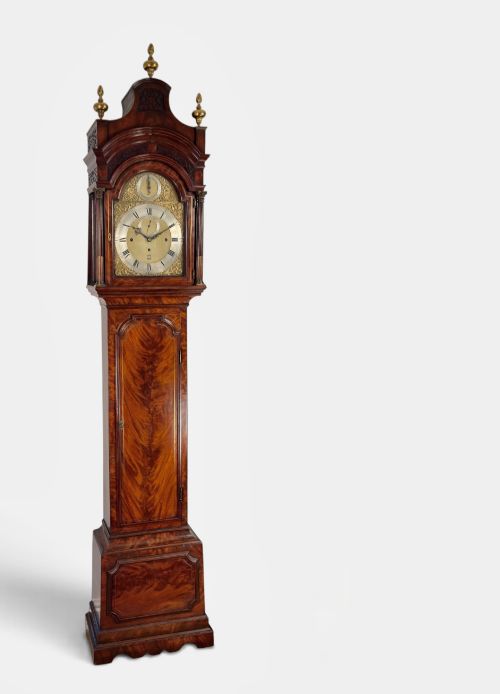


Eight Day Longcase
An eight day longcase clock keeps time through a weight-driven movement that requires winding weekly.
Eight Day Longcase
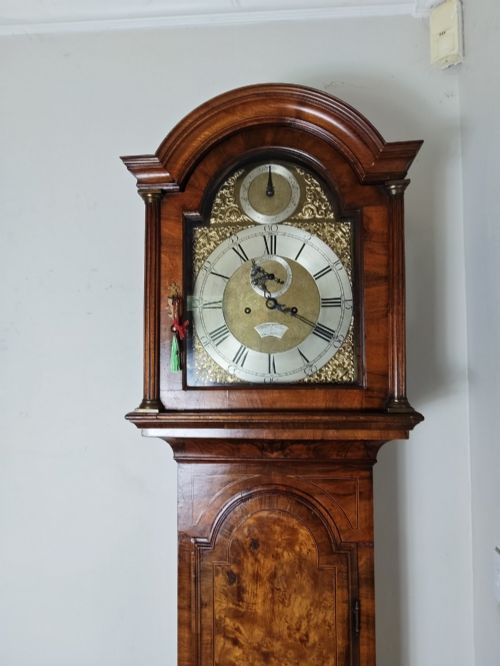
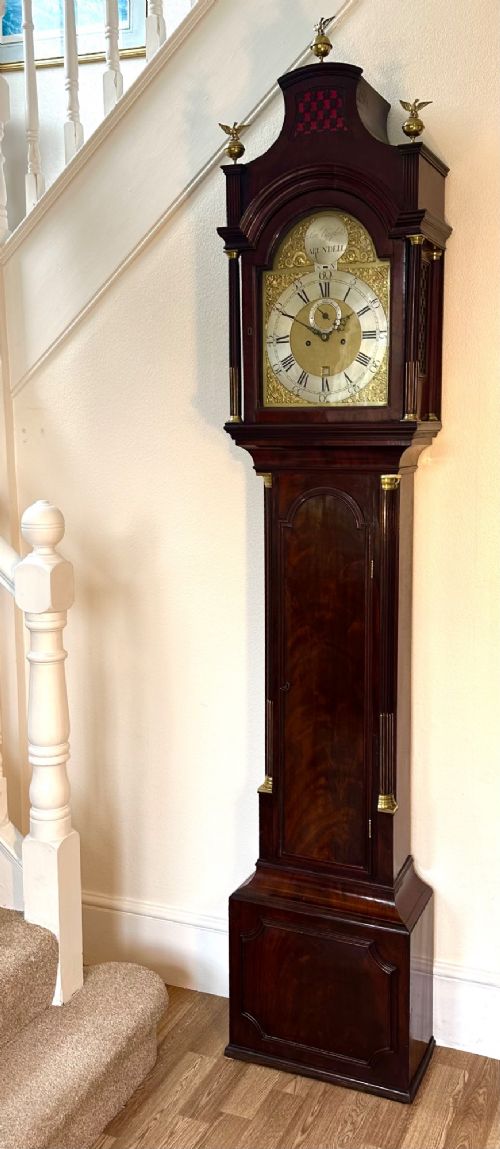
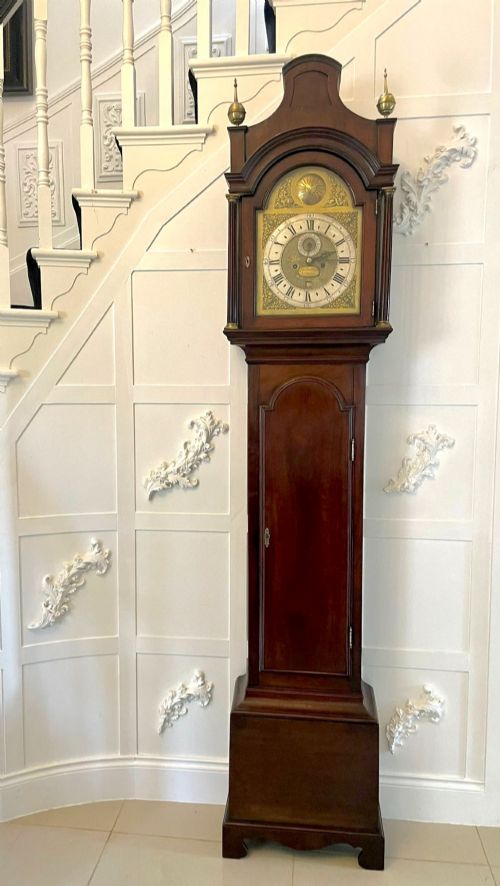
When you search for an eight day longcase, you are looking at tall floor-standing clocks that house precision mechanical movements inside timber cases. These pieces date primarily from the Georgian and Victorian periods, originating from English, Scottish and Welsh makers.
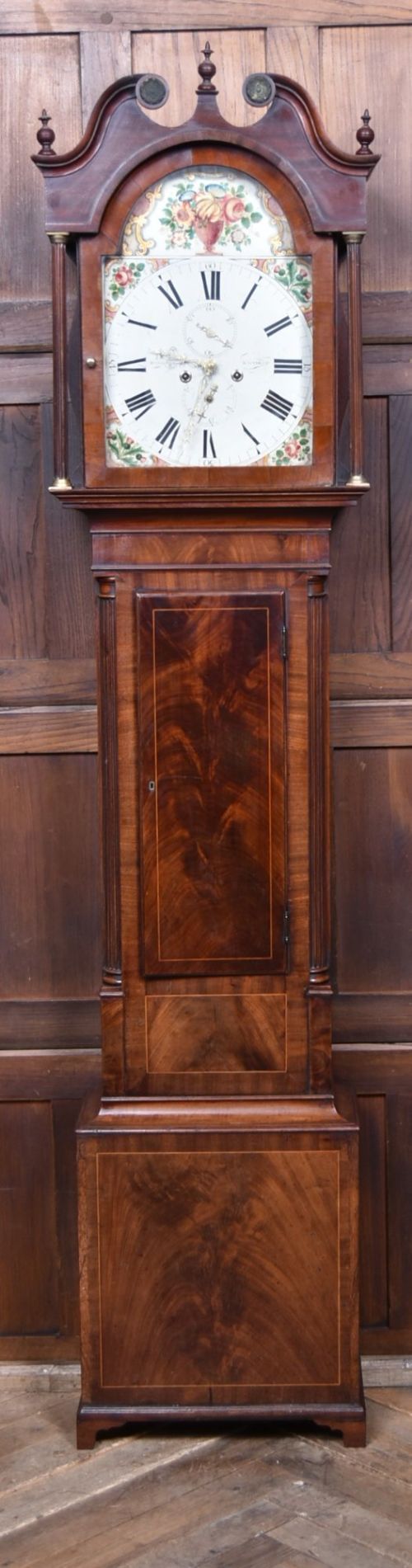
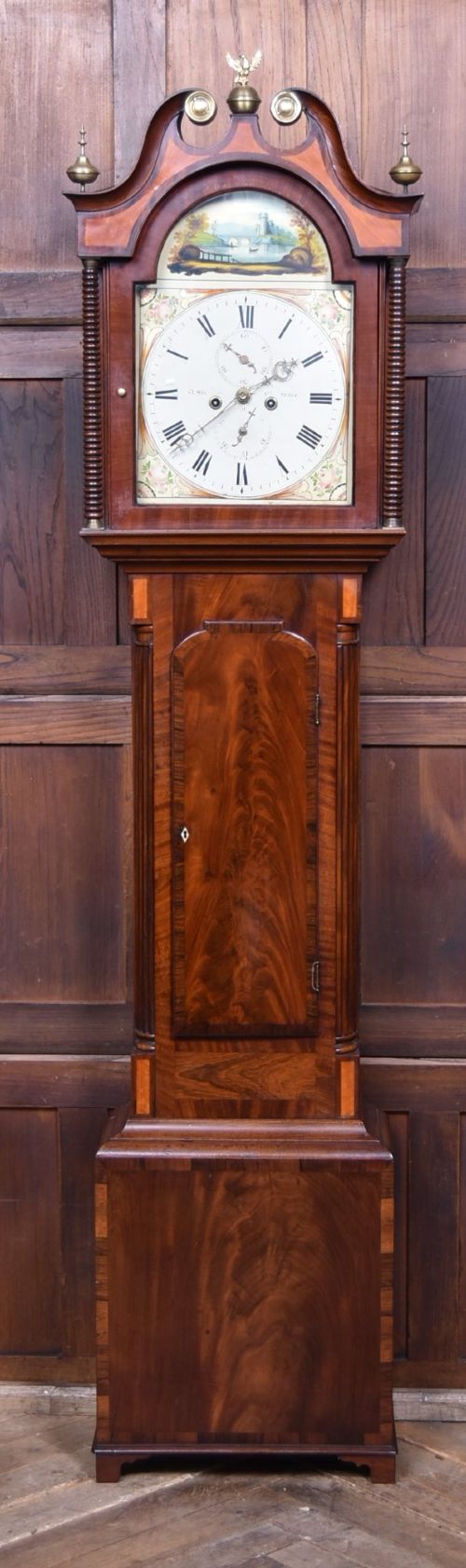
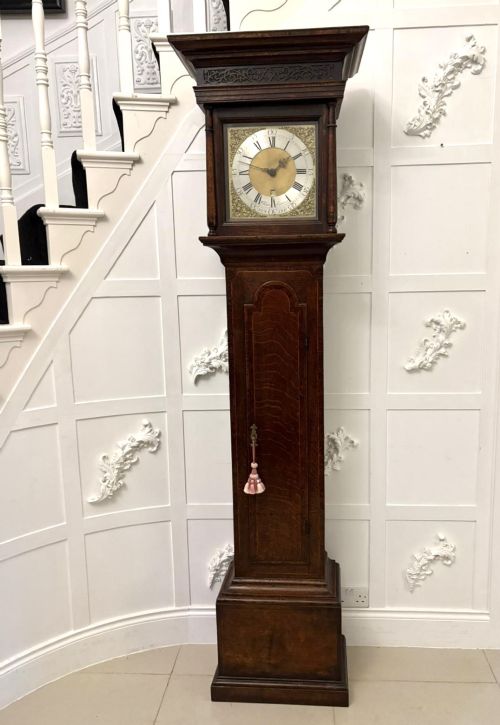
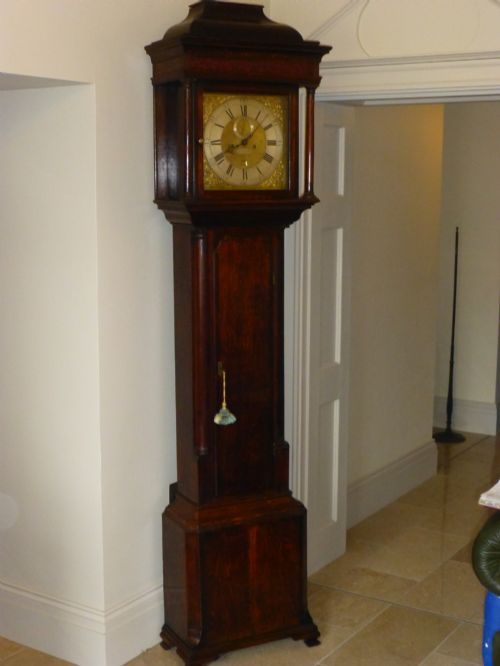
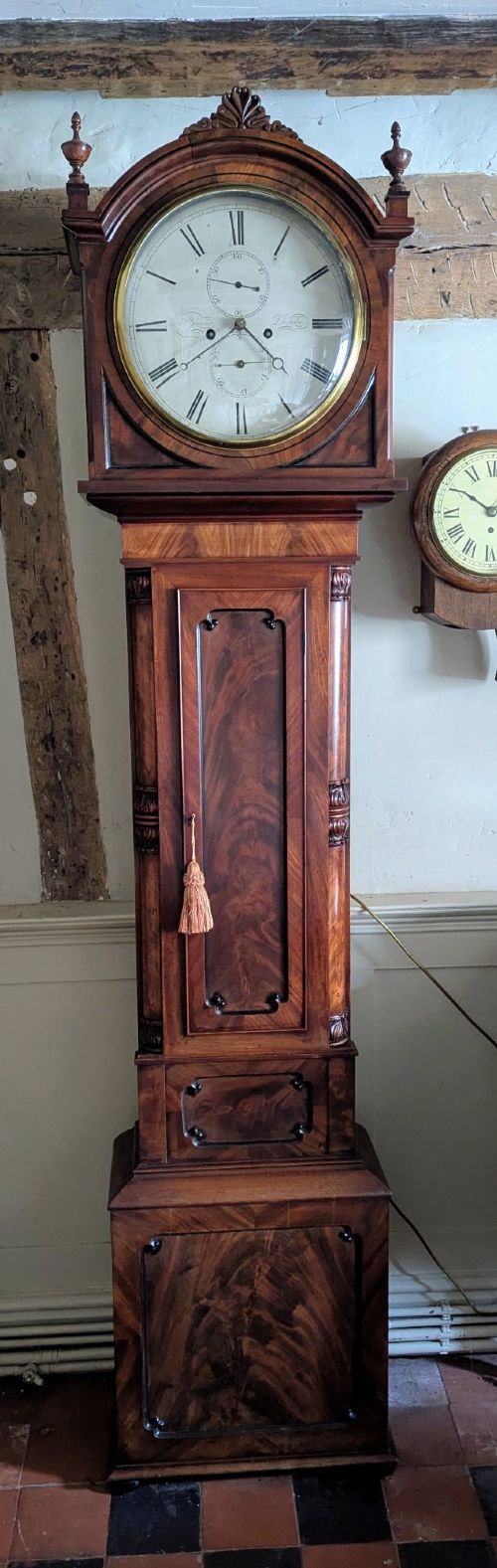
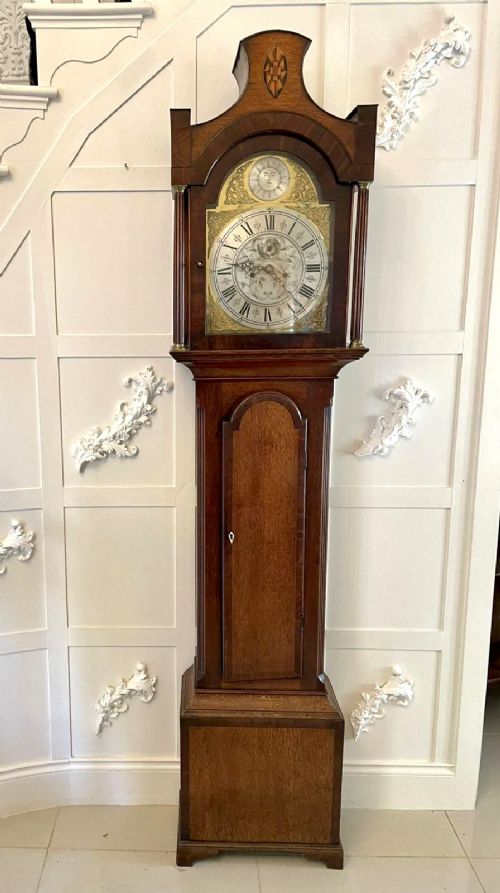
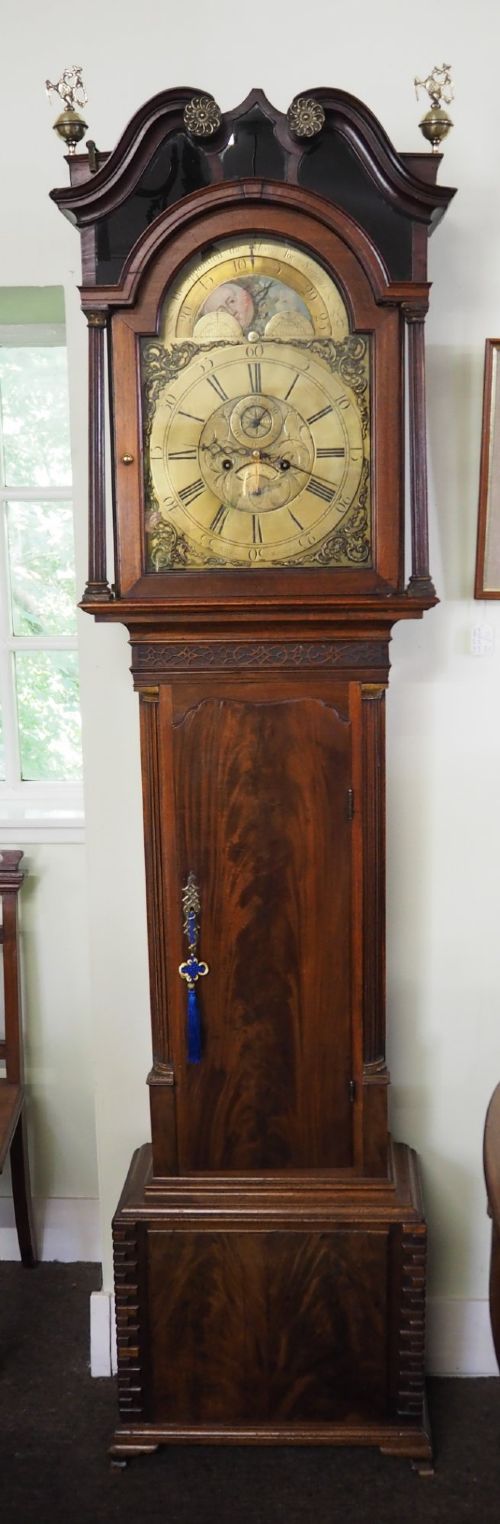
The version you are most likely to meet on this page is the mahogany or oak cased floor clock featuring either a brass face or a painted iron dial. Many examples display regional characteristics, such as Scottish longcases or provincial English models signed by local horologists.
How They Were Made
Cabinetmakers constructed the tall floor cases using native and imported hardwoods like oak, mahogany and walnut, frequently incorporating burr walnut veneers, flame mahogany panels or marquetry inlay. Glass doors protected the dial face while long trunk doors allowed access to the hanging weights and pendulum.
Horologists built the brass and steel movements by hand, incorporating gear trains, escapements and striking mechanisms that often featured moon phases or quarter-chimes. Dials were cast in brass with engraved silvered chapters or painted on iron sheets with detailed floral and nautical scenes.
Some provincial makers thoughtfully added duck egg blue paint to diminutive country oak cases, softening the solemn ticking in quiet hallways.
What Varies in Quality
The distinction between standard domestic timepieces and top-tier examples lies in the complexity of the movement and the refinement of the timber case. Elaborate quarter-striking systems, deadbeat escapements and regulating movements elevate a piece well above a simple hour-striking setup.
Cabinet work demonstrates clear hierarchies of craftsmanship, where secondary woods, thick mahogany veneers, carved architectural details and signed dials distinguish provincial workshop output from high-end London or regional master production.
Charles Shuckburgh·John Ellicott·James McCabe·Thomas Cartwright·Windmills and Wightman
The Eight Day Longcase Glossary
- Longcase clock
- A tall freestanding weight-driven pendulum clock enclosed in a vertical wooden case. These are frequently referred to colloquially as grandfather clocks.
- Moon phase
- A dial mechanism tracking the lunar cycle through a rotating disc showing the phases of the moon. This feature appears behind an arched aperture on the upper dial.
- Regulator
- A precision pendulum clock designed for extreme timekeeping accuracy. These movements typically utilise deadbeat escapements and maintaining power.
- Strike silent
- A mechanical function allowing the clock's striking train to be muted at night. Owners utilise levers or pull-strings to silence the hour chime.
- Quarter striking
- A mechanism that sounds the time on bells or gongs at each quarter-hour interval. Such movements require additional weight trains to operate the extra gear work.
Eight Day Longcase: Frequently Asked Questions
How do eight day longcase clocks work?
These clocks operate using heavy lead or cast iron weights suspended by cords or cables that drive the gear train as they slowly descend down the trunk. A pendulum regulates the release of this energy through an escapement, ensuring steady rotation of the hands.
Because the movement runs for eight days between windings, owners use a crank key to manually pull the weights back to the top of the case once a week.
Where should I place a longcase clock?
Longcases require a stable, dry interior location against a solid wall to prevent floor vibrations from interfering with the pendulum's swing. Hallways, landings and living rooms remain traditional positions for tall clocks.
Builders designed the tall cases specifically to accommodate long pendulums, meaning clearance from heating vents and direct sunlight is essential to protect the timber and veneers.
How do I identify the period of a clock?
Dial styles and cabinet timbers offer the clearest indicators of age, shifting from early square brass dials in oak cases during the seventeenth and early eighteenth centuries to arched painted iron dials and rich mahogany veneers by the Georgian and Victorian eras. Maker signatures inscribed on the dial plate often allow direct historical tracing.
Construction methods inside the trunk, such as secondary wood usage and hinge types, further support the dating of provincial and metropolitan pieces.
Why do some clocks have moon dials?
Moon phase displays served a practical purpose in agricultural and coastal communities by tracking lunar illumination for night travel and tides. Clockmakers painted rotating hemispheres with two moons to mirror the synodic month.
Over time, these complicated complications evolved into decorative artistic centerpieces on the arch of high-grade brass and painted iron dials.