

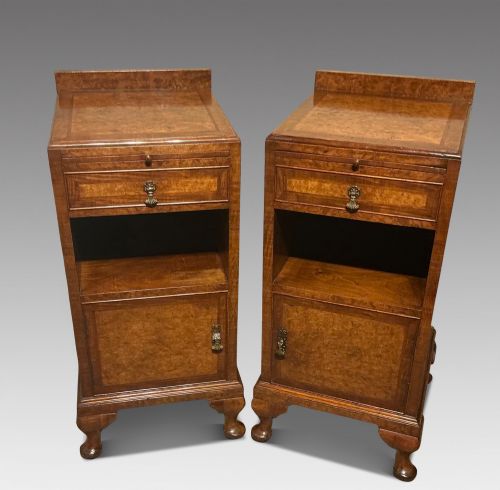

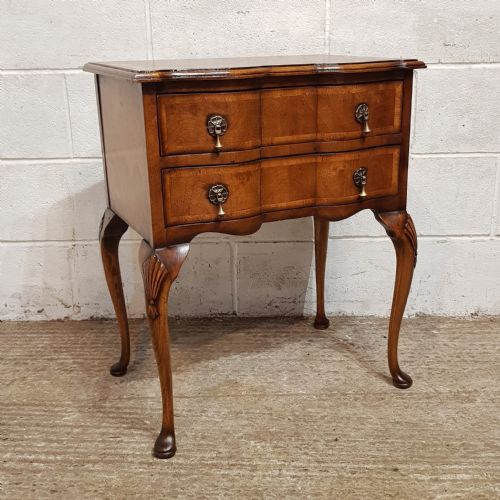


Edwardian Walnut Nightstand
An edwardian walnut nightstand brings warm timber figures and practical bedside storage to a room, drawing on decades of cabinetmaking skill from the late nineteenth and early twentieth centuries.
Edwardian Walnut Nightstand
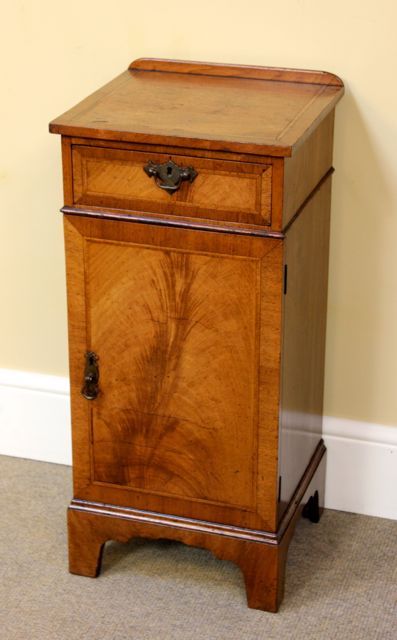
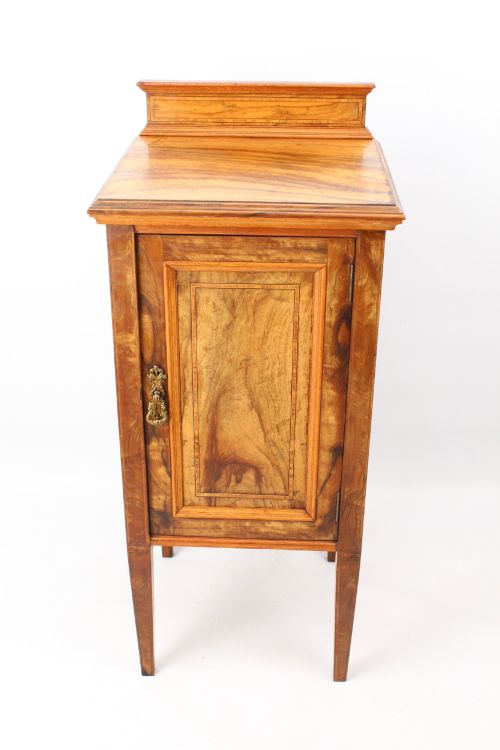
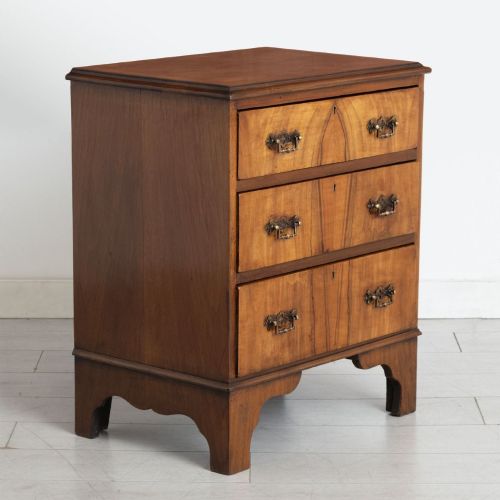
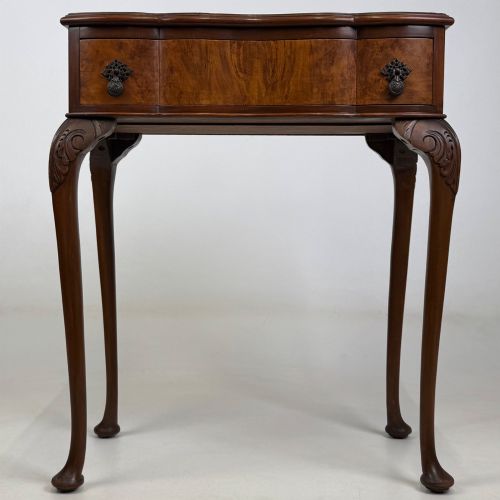
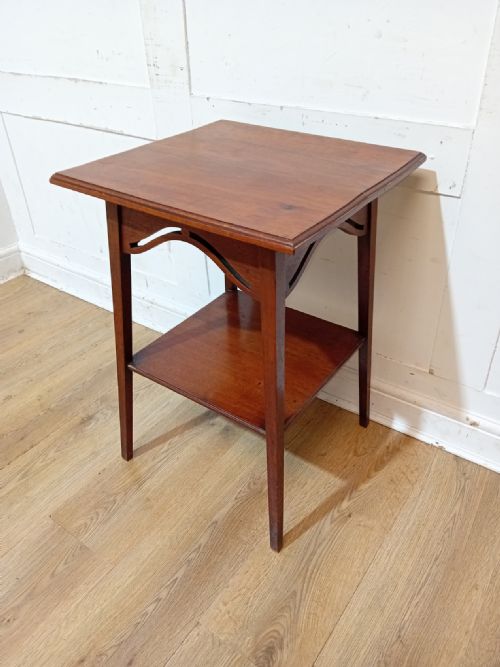
The edwardian walnut nightstand encompasses compact bedside cabinets, enclosed cupboards, small chests of drawers and occasional tables designed for the bedroom. Most pieces encountered here date from the Edwardian era and surrounding decades, utilising rich timber grains to bring utility and presence to domestic spaces.
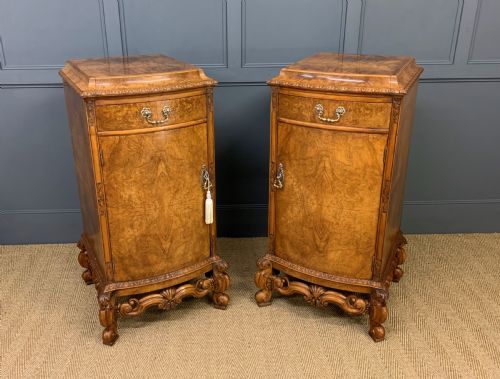
Makers produced these items in various configurations, including single door pedestal cupboards, open side tables and serpentine fronts fitted with marble tops or brass hardware. While the term nightstand is modern, period workshops labelled them as bedside cabinets, pot cupboards or occasional tables.
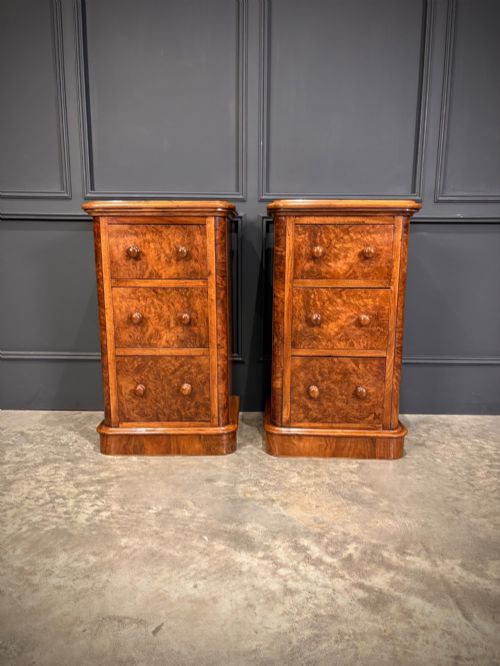
Examples range from solid timber constructions to veneered carcasses featuring intricate parquetry or burr patterns. Buyers find both individual items and balanced pairs suited for placement beside a bed.
Distinctions in Quality
Quality rests in the selection of the timber and the mastery of the veneer work, where book-matched burr walnut or complex parquetry creates a cohesive visual rhythm across the piece. Lesser examples rely on plain timber surfaces with minimal attention to grain alignment.
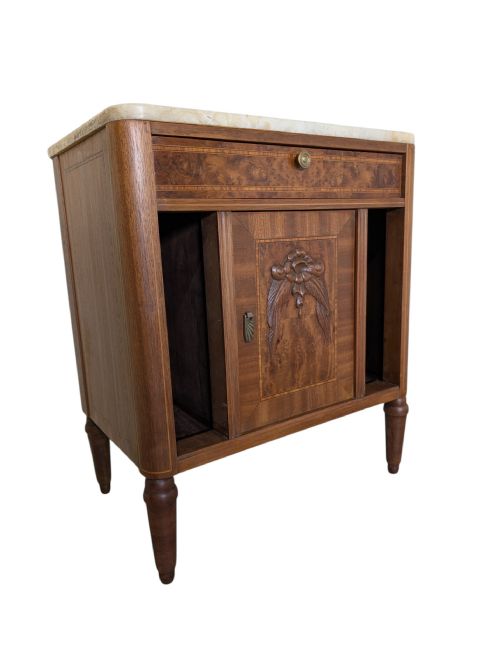
The integration of secondary materials such as heavy marble slabs and solid brass hardware elevates a piece from standard utility to superior craftsmanship. Construction integrity in the drawers and door hinges further separates workshop production from mass manufacturing.
The selection here demonstrates periods ranging from the mid-nineteenth century through the Edwardian era up to the nineteen-twenties, uniting walnut, brass and marble.
Maple and Co·Gill and Reigate·Liberty of London
The Edwardian Walnut Nightstand Glossary
- Burr walnut
- A figured wood grain obtained from walnut tree growths, prized for its swirling, organic patterns used in high-end veneering. It provides deep visual texture to cabinet doors and tabletops.
- Nightstand
- A modern descriptor for small bedside storage tables, historically catalogued as pot cupboards or bedside cabinets. These pieces held chamber pots or bedside water pitchers.
- Parquetry
- A geometric mosaic of wood pieces applied to a structure to form decorative patterns. It appears on tabletops and cabinet fronts of finer Edwardian items.
- Serpentine front
- A curved furniture front featuring a convex centre flanked by concave ends. This contour requires advanced woodworking skill to execute cleanly in walnut veneer.
Edwardian Walnut Nightstand: Frequently Asked Questions
What is an edwardian walnut nightstand used for?
These cabinets serve as bedside storage for books, lamps and personal items, combining enclosed cupboards or drawers with a sturdy top surface.
Their compact footprints make them adaptable as small occasional tables or lamp stands in living areas as well as bedrooms.
How do I tell an Edwardian nightstand from a Victorian one?
Edwardian pieces often feature lighter proportions and subtler decorative touches, reflecting a shift away from heavier Victorian styles towards revival forms like Queen Anne or Arts and Crafts.
Victorian predecessors tend to be heavier in build, sometimes incorporating cylindrical marble tops or darker finishes.
Are these nightstands usually sold as pairs?
Listings include both individual cabinets and matched pairs, depending on how the pieces survived together in domestic settings over the decades.
Pairs are particularly sought after for balancing symmetrical bedroom layouts.
Did nightstands always have marble tops?
Marble tops were a popular option for bedside cabinets because the stone offered a durable, water-resistant surface for jugs and washing equipment.
Many other variants featured plain walnut or burr walnut wooden tops instead.