

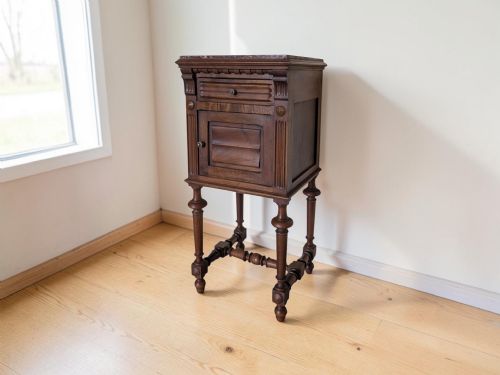
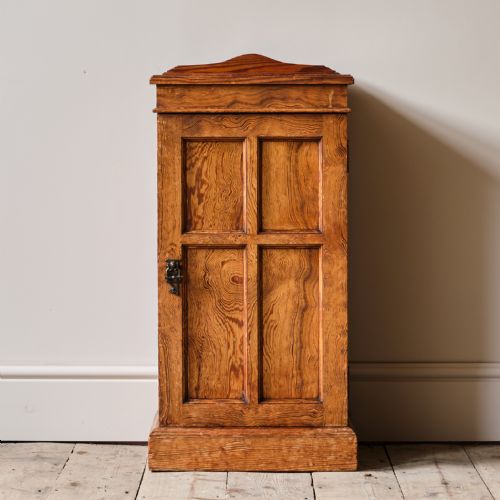
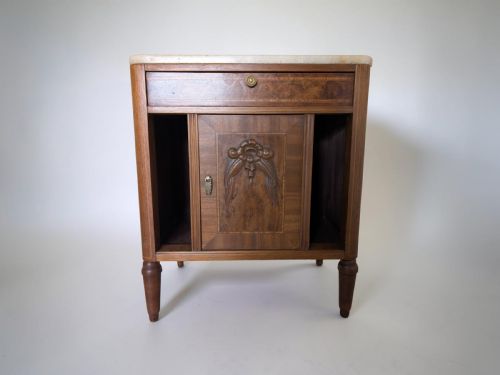
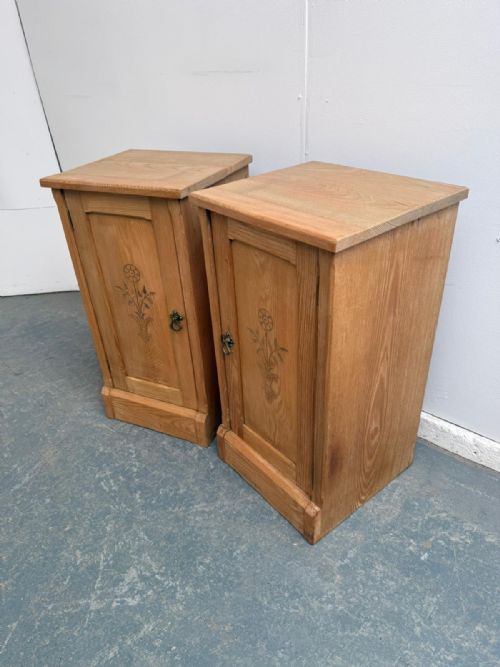
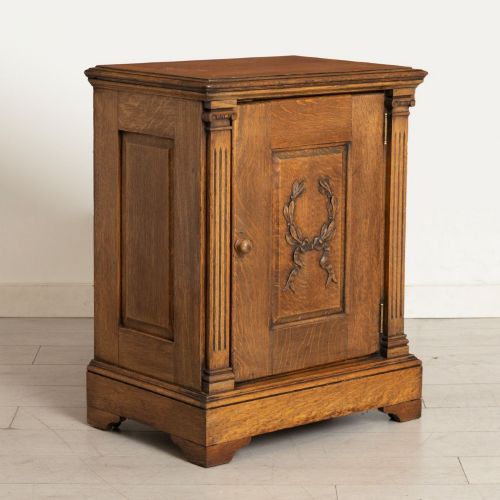
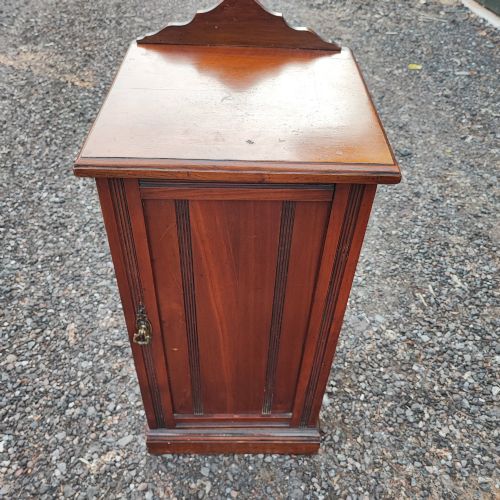
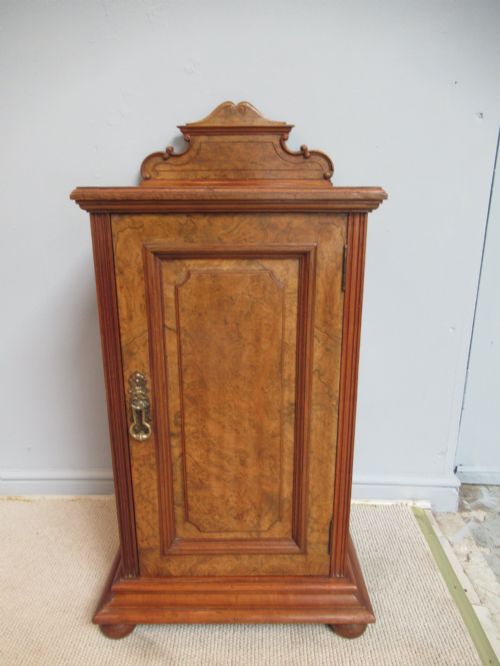


Carved Door Bedside Cabinet
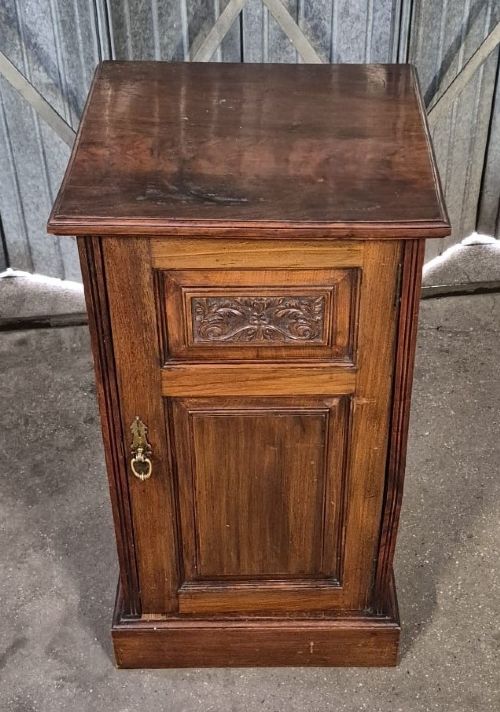
A carved door bedside cabinet brings period timber and intricate woodwork right beside the bed, offering hidden storage for night-time essentials.
Carved Door Bedside Cabinet
A carved door bedside cabinet functions as a compact bedside storage piece, appearing in forms such as pot cupboards and single-door pedestals. These items emerge across Victorian, Edwardian, Art Deco, and Gothic Revival periods, bringing historical utility to modern rooms.
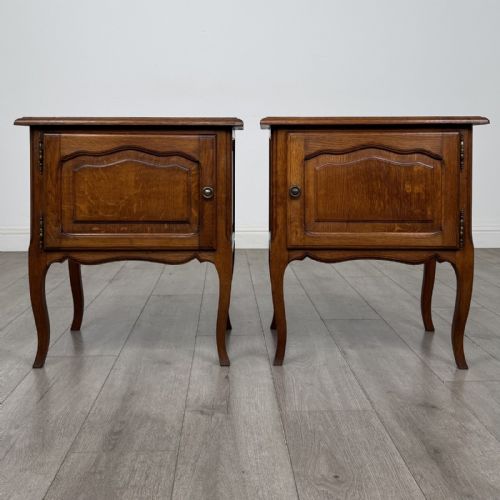
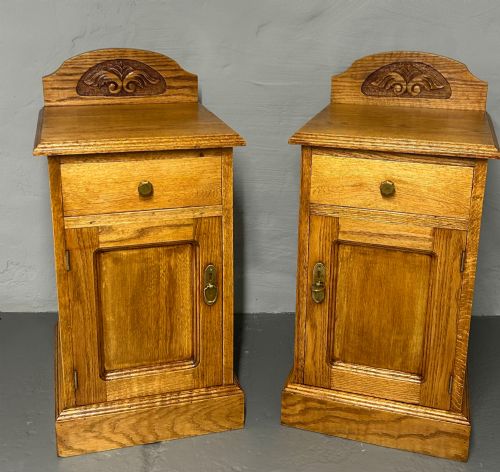
The materials span walnut, mahogany, oak, ash, and pine, often complemented by marble tops or brass hardware. Buyers frequently encounter Victorian mahogany examples alongside French style oak variants and Arts and Crafts ash pieces.
How they were made
Cabinet makers utilised solid hardwoods like mahogany, walnut, and oak for the primary structures, employing traditional joinery methods to build sturdy frames. Doors received hand-carved ornamentation, geometric panelling, or inlaid satinwood details depending on the prevailing style.
Surfaces were typically finished with wax or polish to highlight the natural grain of the timber. Some pieces incorporate fitted marble tops for durability, while others rely entirely on timber construction.
Carved Door Bedside Cabinet Retail Price Guide 2026
Typical asking prices for carved door bedside cabinet among the pieces listed under this phrase on Sellingantiques today, from the lower quarter to the upper quarter. They describe what is for sale here now, not the wider market.
What varies in quality
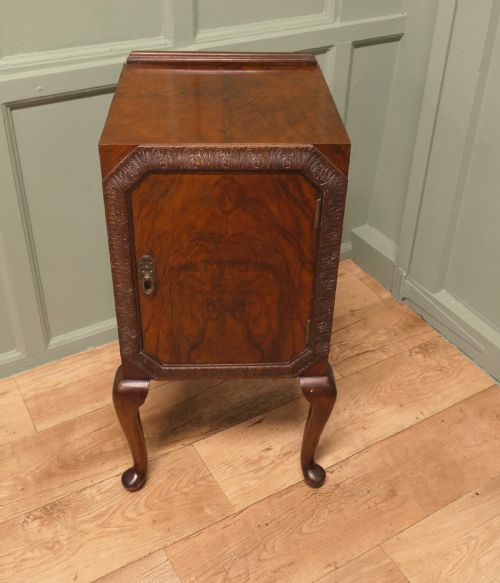
The selection of timber dictates much of the visual depth, with figured mahogany and burr walnut representing the more decorative end of the spectrum compared to plain pine or standard oak. Depth and crispness in the hand-carved door panels separate standard production items from finer workshop output.
Maker attribution and stamps provide a clear distinction in standing, as seen on pieces carrying signatures from established firms like Heals, Simpson Halifax, or Gillows. Structural integrity, original hardware, and supplementary materials like inset marble tops further influence the standing of an individual cabinet.
Heals·Simpson Halifax·Gillows
The Carved Door Bedside Cabinet Glossary
- Pot cupboard
- A small bedside cabinet originally designed to house a chamber pot behind a single enclosed door. These compact units evolved into standard nightstands.
- Burr walnut
- A highly figured timber veneer taken from the growth growths of a walnut tree. It creates swirling patterns prized for decorative cabinet doors.
- Cabriole leg
- A furniture leg that curves outward and then tapers inward, inspired by animal limbs. This form appears frequently on Art Deco and French style cabinets.
- Gothic Revival
- An architectural and decorative style drawing on medieval ecclesiastical motifs. Pieces feature pointed arches, heavy tracery, and dark oak.
Carved Door Bedside Cabinet: Frequently Asked Questions
What is a pot cupboard?
A pot cupboard is a small enclosed bedside cabinet that historically held a chamber pot behind its single door. Over time, the internal shelf arrangement adapted to general bedside storage.
Today, these cabinets function simply as compact nightstands with concealed storage space for books and personal items.
How do I date a bedside cabinet?
Dating relies on identifying the prevailing style, timber choices, and construction methods associated with specific decades. Victorian and Edwardian pieces often display distinct mahogany or walnut framing with specific carved motifs.
Maker stamps or inscriptions on the interior timber can also provide a precise year of manufacture or workshop origin.
Are marble top bedside cabinets practical?
Marble tops offer a resilient, wipe-clean surface that resists water rings from drinking glasses placed overnight. They add considerable weight to the cabinet but provide a durable landing space.
This material choice was common during the Victorian and Edwardian periods to protect the underlying wood from spills.
How do I style a wooden bedside cabinet?
Placing a carved timber cabinet beside a bed introduces warmth and texture through natural wood grains and carved door details. They pair well with contrasting modern lamps or simple decorative objects.
The compact footprint allows these pieces to fit comfortably in smaller guest rooms or principal bedrooms alike.