
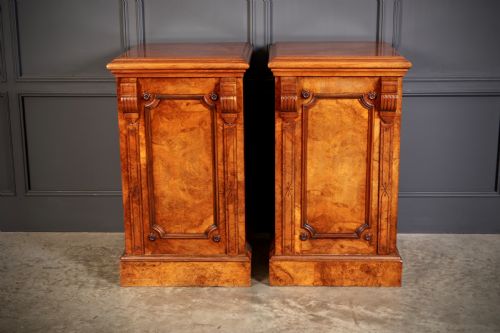


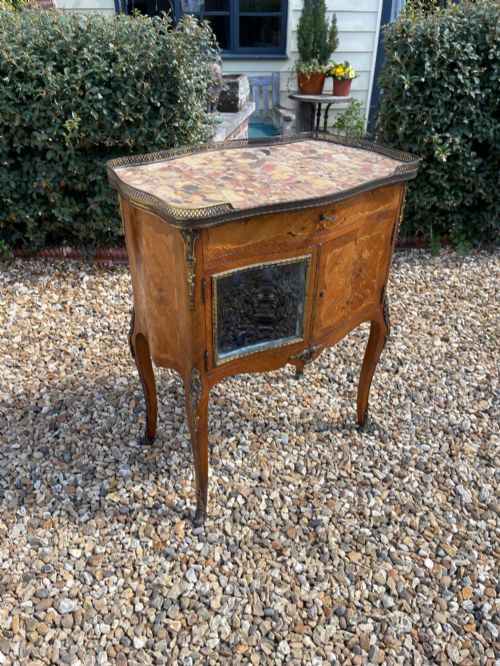
Victorian Walnut Side Cupboard
A Victorian walnut side cupboard brings rich timber figures and practical storage to a room, offering a distinct piece of nineteenth-century craftsmanship.
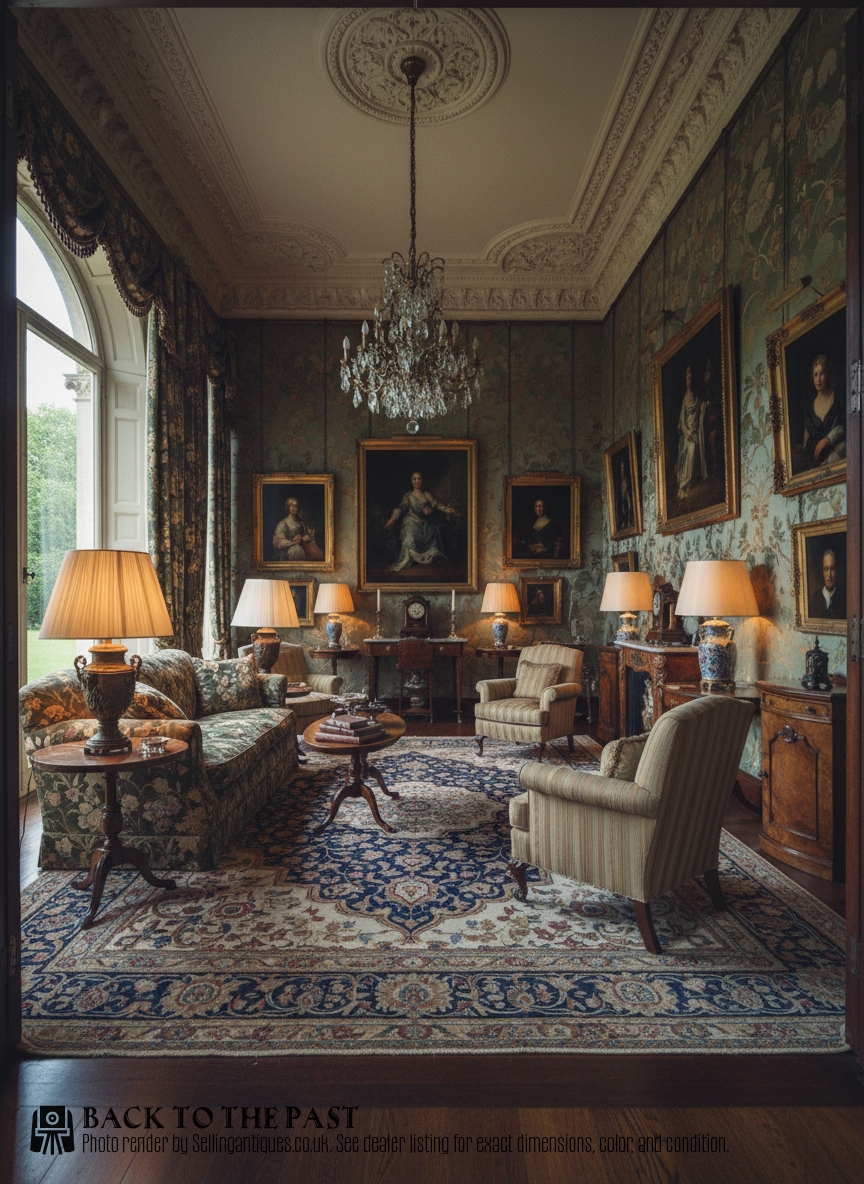
Victorian Walnut Side Cupboard
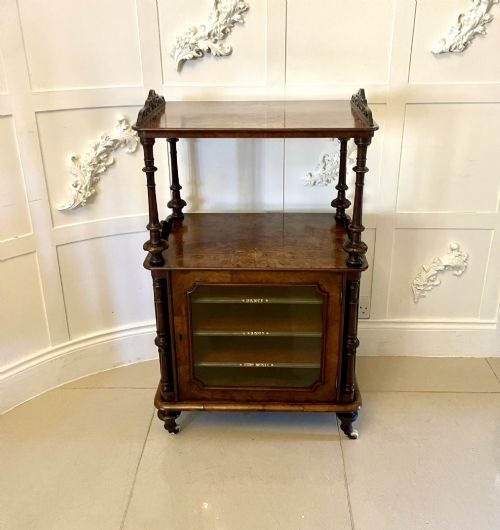
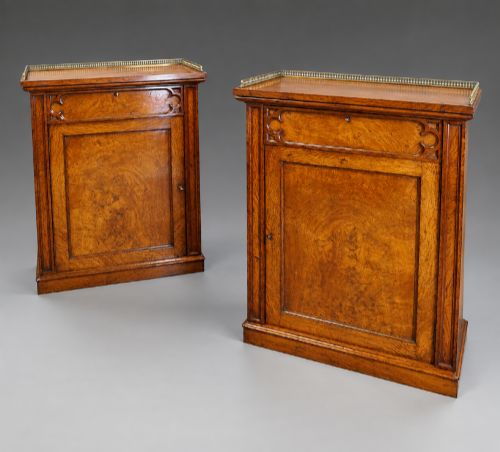
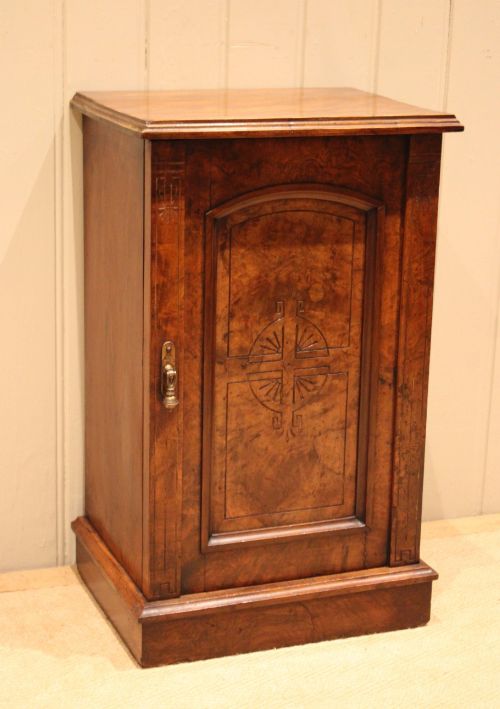
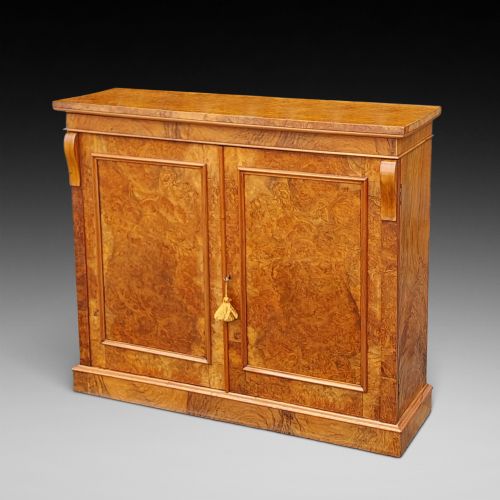
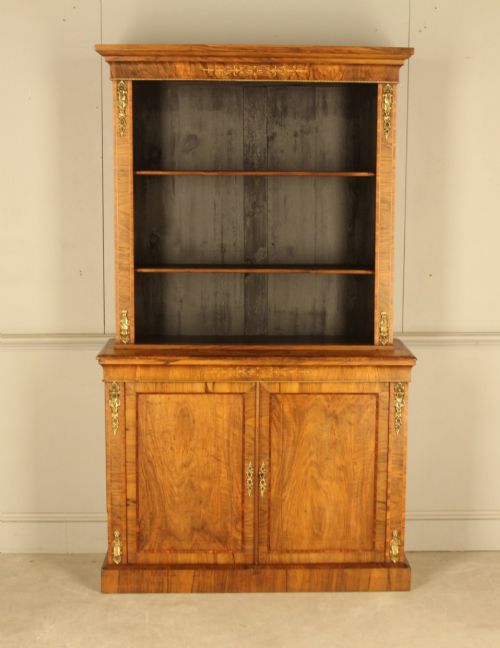
The search phrase victorian walnut side cupboard covers a varied group of nineteenth-century furniture, spanning compact bedside lockers and music cabinets to larger pier cabinets and credenzas.
Most examples date from the Victorian period, utilising rich timber veneers to create functional storage for the drawing room, salon or bedroom.
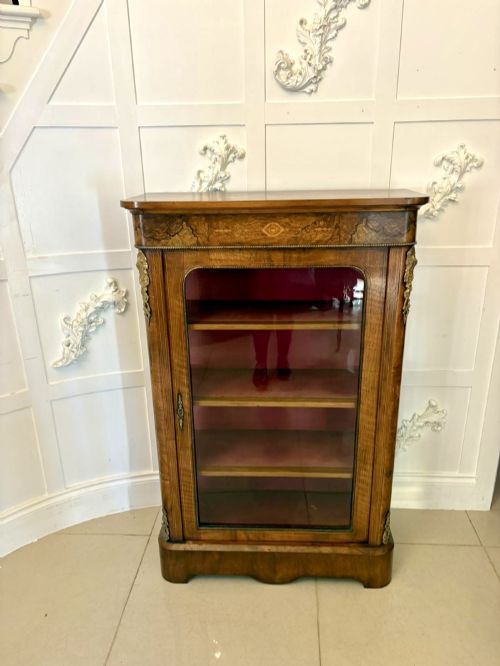
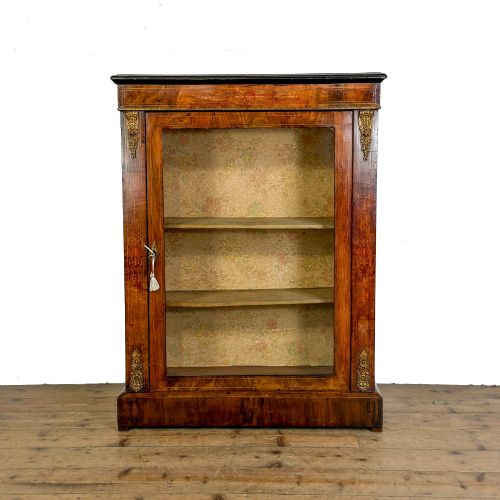
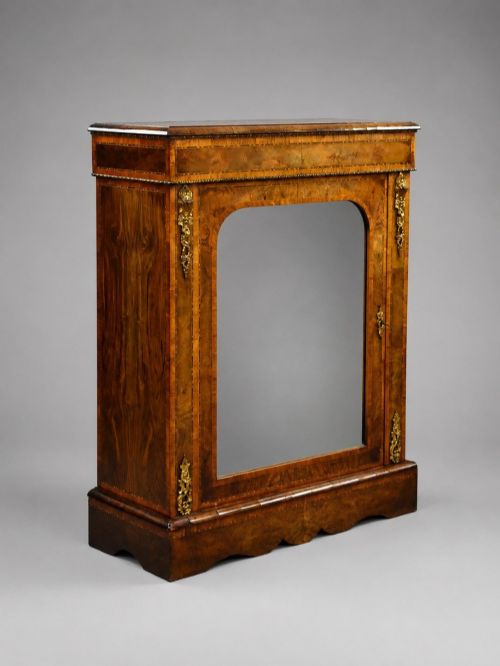
Buyers encounter distinct forms, including glazed display pieces, marble-topped nightstands and pedestal cabinets, originating from English workshops and continental makers influenced by French revival styles.
How they were made
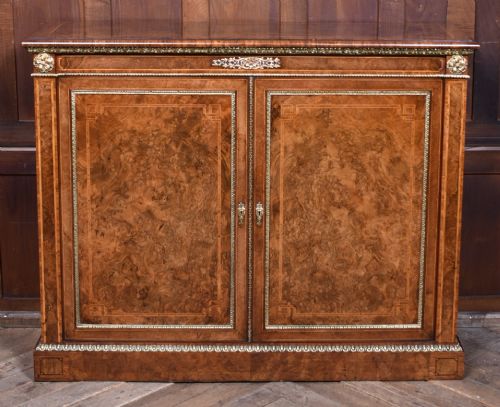
Cabinet makers selected figured walnut and burr walnut veneers for their swirling grain patterns, laying them over solid timber carcases to achieve striking decorative surfaces.
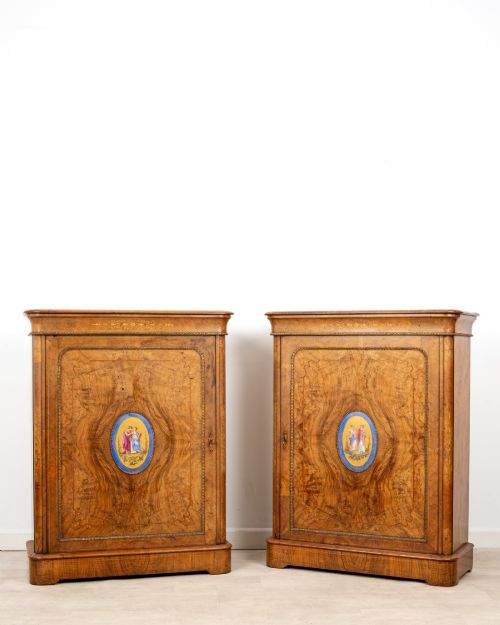
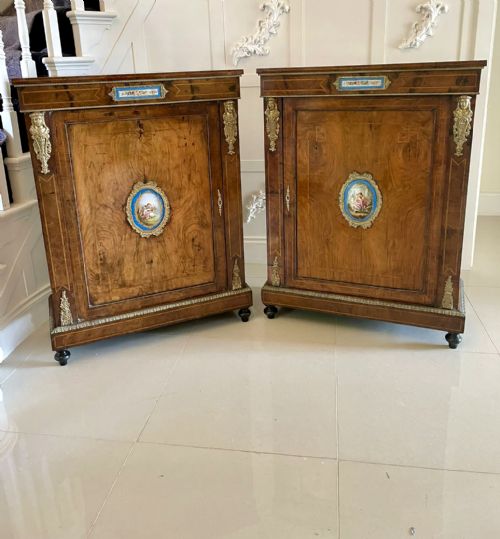
Construction frequently incorporated brass mounts, porcelain plaques and ormolu details, alongside inlaid marquetry work and delicate stringing.
Selected pieces integrated marble tops, glazed doors and velvet-lined interiors, reflecting the high standards of nineteenth-century joinery.
Pianists once stored sheet music behind glazed walnut doors while guests admired the porcelain plaques.
What varies in quality
Quality rests upon the selection and matching of the walnut veneers, where symmetrical burr patterns indicate superior cabinet making.
The refinement of decorative additions, such as hand-painted porcelain plaques, crisply cast brass mounts and intricate marquetry inlay, separates standard production from exhibition pieces.
Structural integrity and the retention of original glass, marble tops and key hardware dictate the standing of individual cabinets.
Trapnell and Gane·Holland and Sons·M. Woodburn
The Victorian Walnut Side Cupboard Glossary
- Burr walnut
- A highly figured veneer obtained from the knot growths of walnut trees, prized for its swirling grain and rich texture. It forms the primary decorative surface on many high-grade nineteenth-century cabinets.
- Pier cabinet
- A tall, narrow display cabinet designed to fit into the wall space between windows. These pieces often feature glass doors and velvet-lined shelves for ornaments.
- Pot cupboard
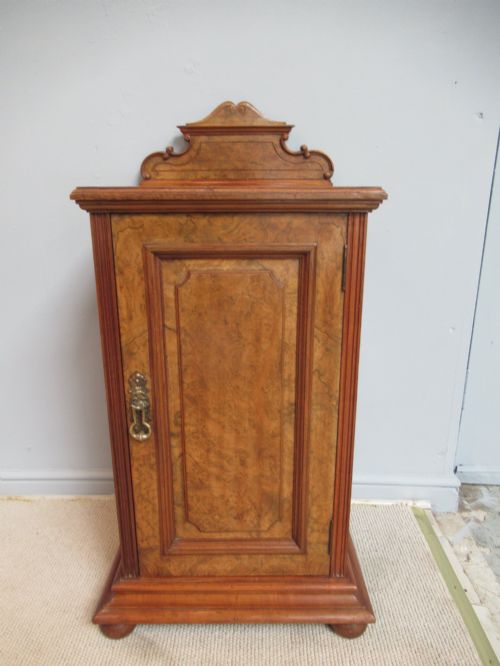
- A small bedside cabinet or nightstand originally designed to house a chamber pot. These practical items frequently feature a single door and a marble top.
- Marquetry
- The art of applying decorative pieces of veneer to a structure to form geometric or floral designs. Cabinet makers used contrasting timbers to create elaborate panels.
- Ormolu
- Gilded bronze ornamentation applied to furniture as mounts and feet. This technique added metallic contrast to dark walnut surfaces.
Victorian Walnut Side Cupboard: Frequently Asked Questions
What is the difference between a pier cabinet and a side cupboard?
A pier cabinet is typically a tall, narrow glazed display piece designed for specific wall spaces between windows. Side cupboards encompass a broader range of lower storage units with wooden or glass doors.
While pier cabinets focus on showcasing decorative objects, side cupboards provide general enclosed storage for living areas and bedrooms.
Were marble tops original to these cabinets?
Marble tops frequently appeared on bedside cabinets, nightstands and commodes to provide a durable, water-resistant surface. White and grey veined marble slabs were fitted directly into the timber carcase during manufacture.
Such additions protected the wood from water damage while adding weight and stability to smaller furniture forms.
How should I care for nineteenth-century walnut furniture?
Maintaining walnut cabinets requires stable room humidity and protection from direct sunlight to prevent veneer cracking and fading. Regular dusting with a dry cloth preserves the polish without introducing moisture.
Avoiding silicone-based polishes ensures the historic timber finish remains healthy and breathable over time.