



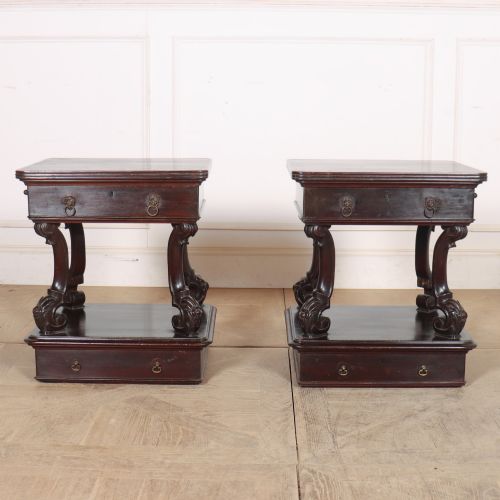
Antique Wooden Bedside Lockers
Antique wooden bedside lockers combine compact storage with period craftsmanship, offering practical bedside utility in mahogany, oak, and walnut.
Antique Wooden Bedside Lockers
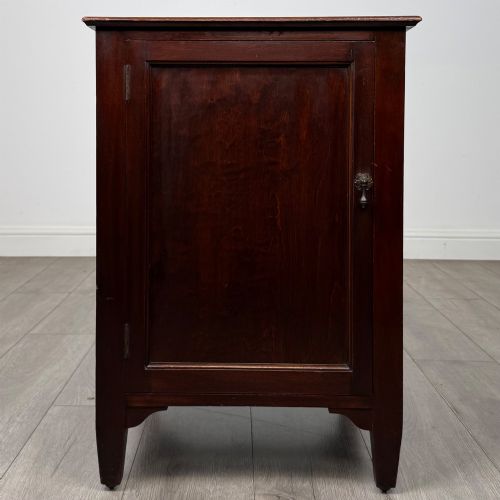
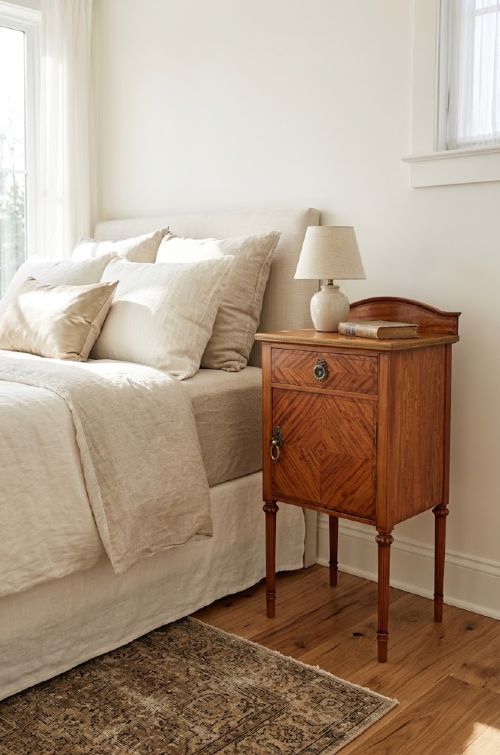
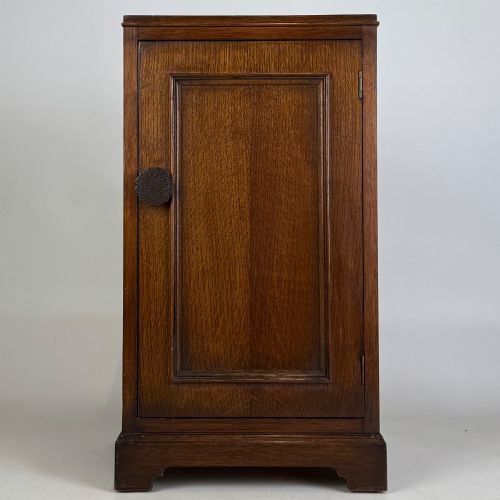
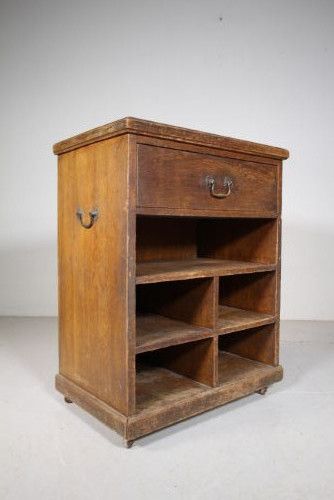
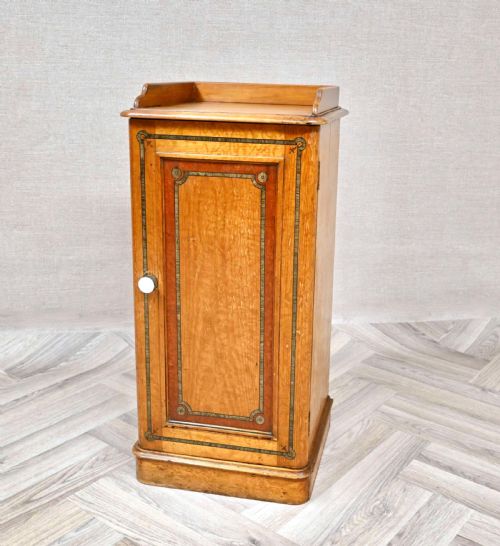
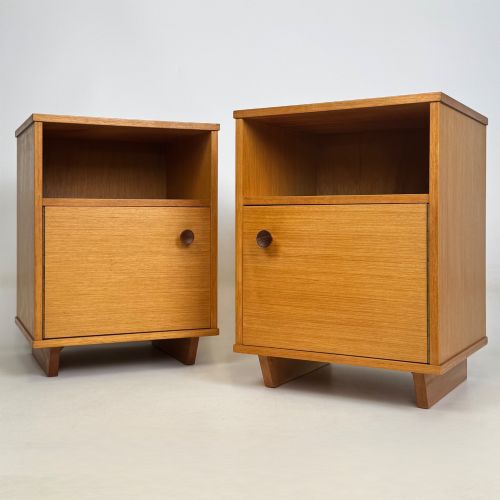
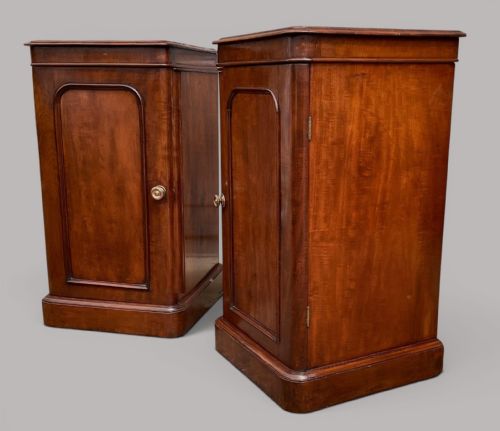
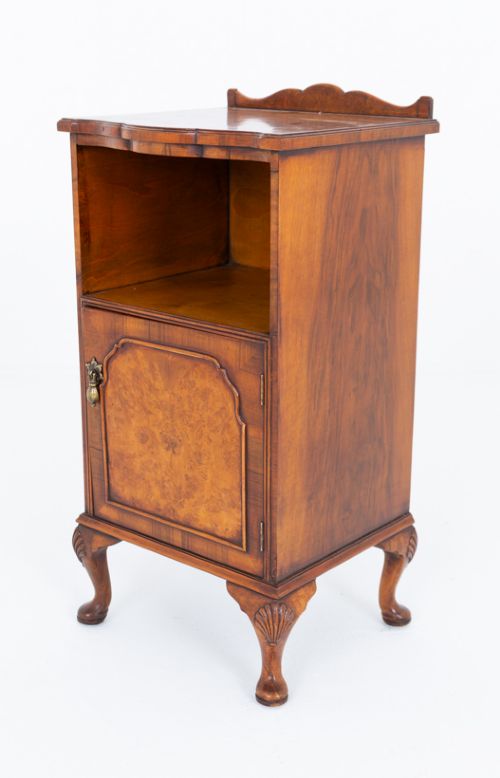
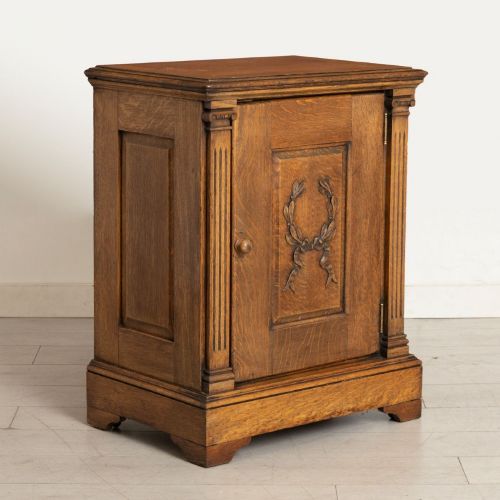
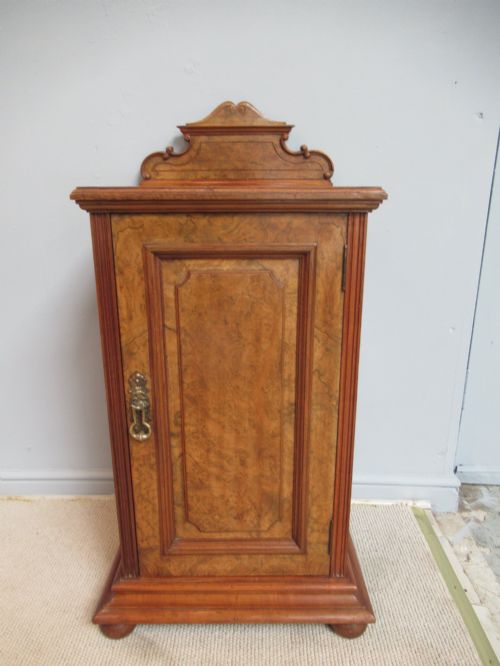
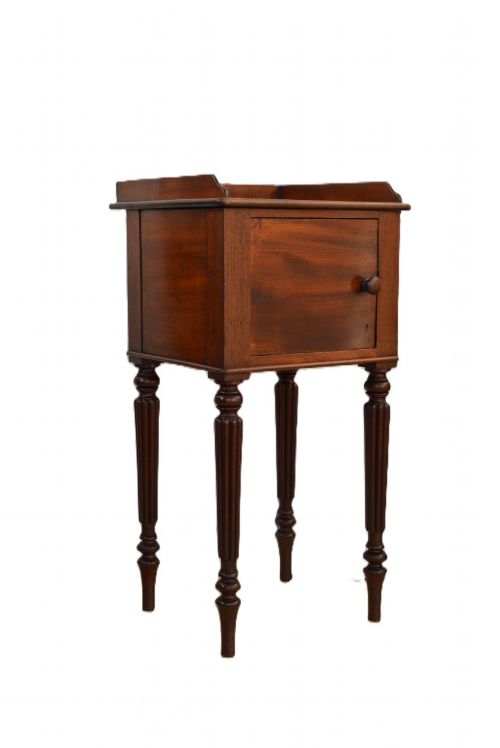
These antique wooden bedside lockers encompass enclosed cabinets, open tables, and pedestal cupboards designed to sit beside a bed. The selection spans the Georgian, Victorian, and Edwardian eras, leading through to Art Deco designs of the 1930s.
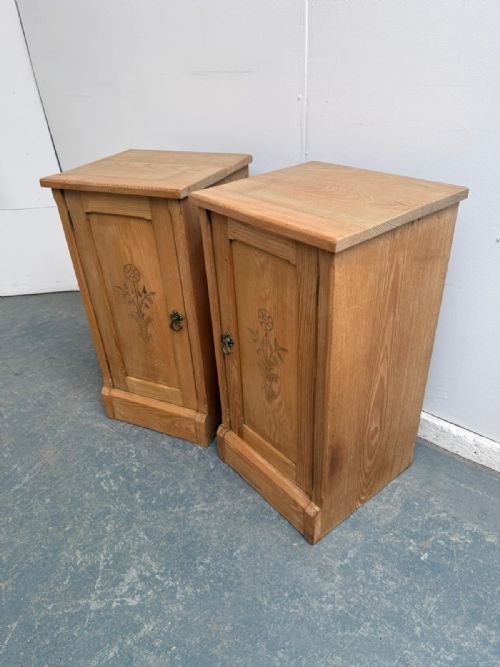
Mahogany and oak dominate the forms, supplemented by satinwood, burr walnut, and ash. Cabinets often feature panelled doors or small drawers, supplying enclosed space for night-time essentials.
Pairs appear frequently alongside single pieces, reflecting the evolution of bedroom furnishings across the nineteenth and twentieth centuries. Buyers encounter styles ranging from plain utilitarian pine to decorative inlaid satinwood and Gothic Revival architecture.
Materials and construction methods
Cabinet makers utilised solid hardwoods like mahogany and oak for structural integrity, often applying figured veneers such as burr walnut and satinwood to visible surfaces. Brass handles, hinges, and occasional campaign mounts provide functional hardware.
Joinery techniques included dovetailed drawer construction and mortise and tenon frames, ensuring durability across decades of daily use. Waxed, polished, or stained finishes protected the timber while highlighting natural grain patterns.
Listings feature pieces spanning from the 1800s Georgian era through Victorian, Edwardian, and Arts and Crafts periods, up to 1930s Art Deco.
Factors influencing quality
The refinement of timber selection and veneer matching distinguishes standard utility pieces from high-workshop production. Cabinets featuring secondary timbers of equal quality and crisp carving or delicate inlay demonstrate superior execution.
Structural originalities, such as intact brass fittings, uncompromised plinths, and well-fitted doors that hang true, separate well-preserved examples from those requiring extensive restoration.
Holland and Sons·Gillows·Heal s·Betty Joel
The Antique Wooden Bedside Lockers Glossary
- Pedestal cabinet
- A tall, single-door cupboard designed to stand at mattress height. These pieces typically conceal internal shelving or storage space.
- Campaign bedside cabinet
- Portable furniture constructed for travel, featuring recessed brass handles and protective corner brackets. These items originated for military use during the nineteenth century.
- Satinwood
- A light-coloured, lustrous timber frequently utilised for banding, stringing, and decorative veneers during the Georgian and Edwardian periods.
- Gothic Revival
- An architectural and decorative style drawing on medieval forms, characterised by pointed arches, trefoils, and heavy carved oak.
Antique Wooden Bedside Lockers: Frequently Asked Questions
What is a bedside locker?
A bedside locker is a small piece of bedroom furniture built to hold personal items close to the bed. They generally include a cupboard door, a drawer, or a combination of both.
Unlike modern bedside tables, antique versions were primarily designed as enclosed cabinets to keep private belongings out of sight.
Are pairs difficult to find?
Matching pairs of antique bedside lockers appear less frequently than single pieces because many were originally made as individual items or separated over time.
When pairs do survive together, they often originate from larger bedroom suites produced during the Victorian and Edwardian eras.
How do I date a locker?
Dating relies on observing the prevailing timber choices, construction methods, and stylistic details of the period. For instance, heavy Gothic carving points to the mid-nineteenth century, while clean geometric lines suggest Art Deco.
Secondary woods inside drawers and the style of hinges and handles also offer reliable clues to the decade of manufacture.
How do I care for antique timber?
Antique wooden lockers require placement away from direct heat sources and strong sunlight to prevent the timber from drying out or splitting. Routine maintenance involves gentle dusting with a dry cloth and occasional application of appropriate beeswax.
Avoiding excessive moisture protects delicate veneers like satinwood and burr walnut from lifting.