
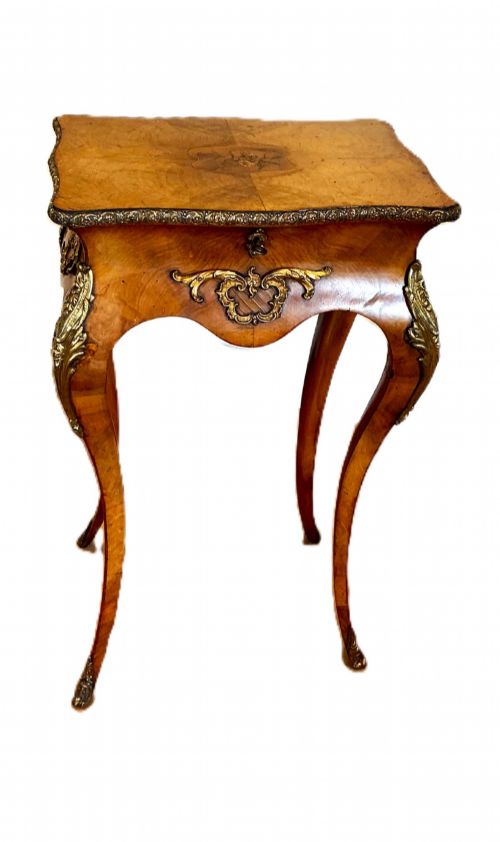


Golden Walnut Nightstand
A golden walnut nightstand brings rich grain and warmth to the bedroom, and these pieces range from Edwardian cabinets to Art Deco bedside chests.
Golden Walnut Nightstand
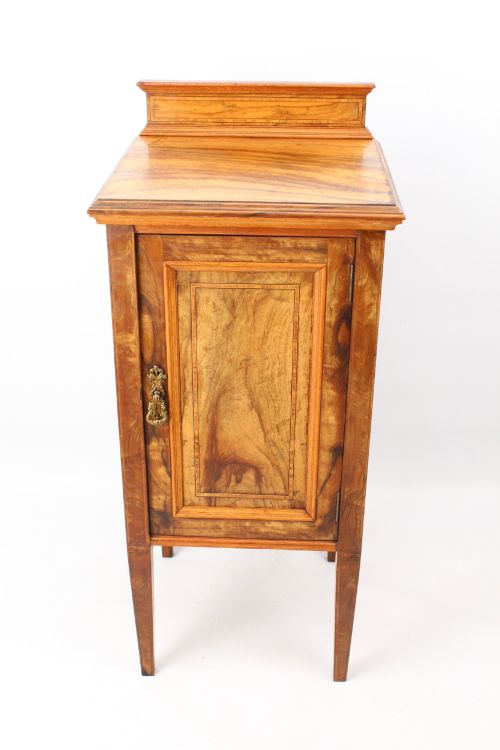
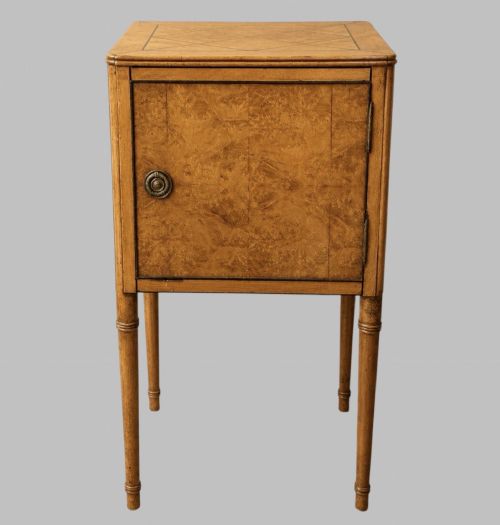
A golden walnut nightstand encompasses bedside cabinets, pedestal cupboards, and occasional tables designed to sit beside a bed. The selection here spans the 19th Century, Edwardian era, and the 1930s, offering various forms to suit different bedroom layouts.
Makers such as Maple and Co, Walter Carter, and Harrods created notable examples, alongside pieces styled in Art Deco, Queen Anne Revival, French Rococo Revival, and the Aesthetic Movement. These items function primarily as bedside storage or display surfaces.
Bedside chests and pedestal cupboards provide enclosed storage, while occasional tables and headboards with attached cabinets offer alternative configurations. The common thread is the use of walnut across these diverse stylistic periods.
How they were made
Makers utilised walnut, burr walnut, and walnut veneer to achieve striking grain patterns on the exterior surfaces. Satinwood and satin walnut often appear as contrasting timbers or secondary woods within the construction.
Metal mounts in brass, ormolu, and chrome provide functional hardware and decorative accents, particularly on Art Deco and French Revival pieces. Cabinetmakers shaped solid timbers and applied veneers to carcasses of varying proportions.
What varies in quality
The selection of timber grain, particularly the choice of burr walnut figures, defines the visual impact of each cabinet. Finer pieces demonstrate careful matching of veneer patterns across drawer fronts and doors.
Hardware choices, from cast brass handles to chrome fittings, indicate the standard of manufacture. The integration of secondary timbers like satinwood also separates standard production from superior workshops.
Maple and Co·Walter Carter·Harrods
The Golden Walnut Nightstand Glossary
- Burr walnut
- A figured wood grain obtained from the wart-like growths on walnut trees. It creates complex, swirling patterns highly prized by cabinetmakers.
- Pedestal cupboard
- A single-door cabinet standing on a base, often tall and narrow. This form provides vertical storage beside a bed.
- Satinwood
- A durable, yellowish timber used for banding and stringing. It contrasts richly with darker walnut surfaces.
- Ormolu
- Gilded bronze used for decorative mounts and handles. It appears frequently on French revival furniture.
- Aesthetic Movement
- A late 19th Century design style emphasising visual beauty over narrative content. Pieces from this era often feature clean lines and honest construction.
Golden Walnut Nightstand: Frequently Asked Questions
What periods do these pieces cover?
The selection includes pieces from the 19th Century, the 1880s, Edwardian eras around 1900 and 1910, and 1930s Art Deco designs.
Each period brings distinct stylistic traits, from Aesthetic Movement chests to streamlined Art Deco bedside tables.
Are pairs commonly available?
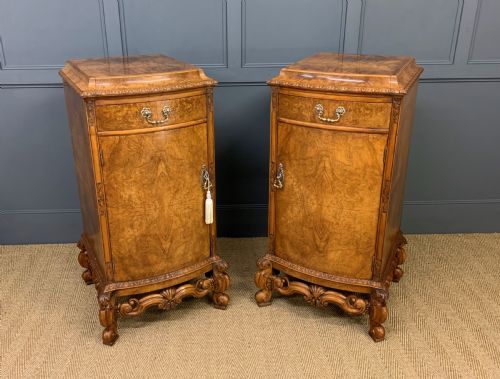
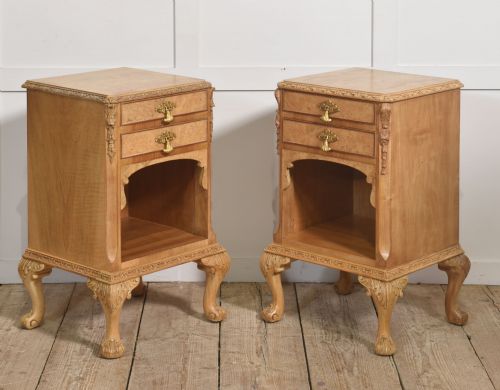
Several listings feature matched pairs of pedestal cupboards and bedside cabinets. These offer symmetrical storage for either side of a larger bed.
Single tables also appear, originating from various decades and design traditions.
What materials are used besides walnut?
Cabinetmakers incorporated satinwood, satin walnut, brass, ormolu, and chrome into these designs. These materials appear as veneers, secondary woods, or decorative hardware.
The combination of burr walnut with contrasting timbers creates the characteristic golden tone.
How do bedside cabinets differ from bedside tables?
Bedside cabinets and pedestal cupboards generally feature enclosed doors or drawers for concealed storage. Bedside tables and occasional tables often provide open surfaces or simpler tiers.
Both forms serve the same domestic function next to the bed.