
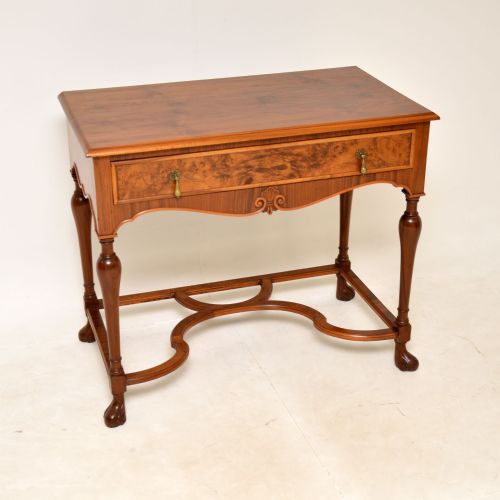


Edwardian Walnut Dressing Table
An edwardian walnut dressing table brings warmth and refined grain to a bedroom, combining practical mirrors with fitted drawers for daily grooming.
Edwardian Walnut Dressing Table
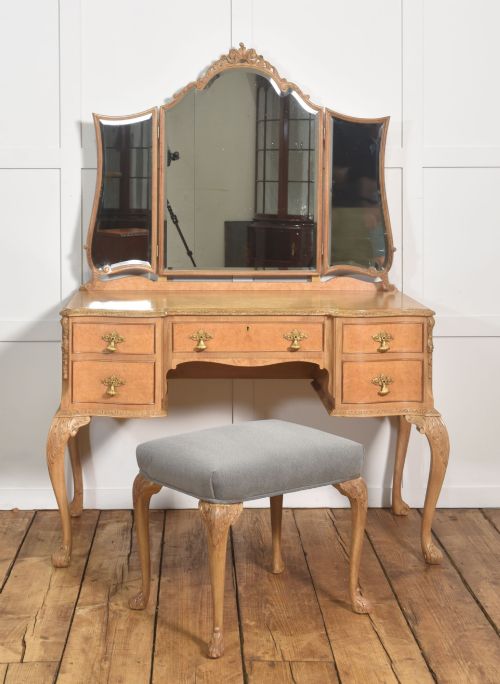
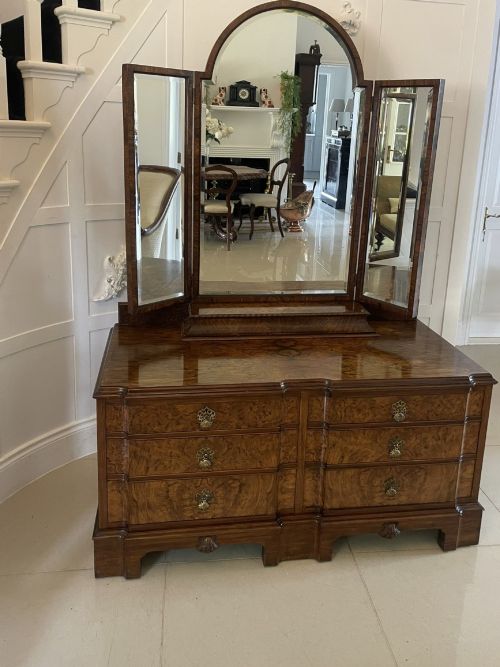
An edwardian walnut dressing table is a dedicated bedroom furnishing designed for personal grooming, typically featuring an arrangement of upright or swing mirrors above a low writing-style base fitted with drawers. Buyers search for these pieces to anchor a traditional bedroom scheme with period character.
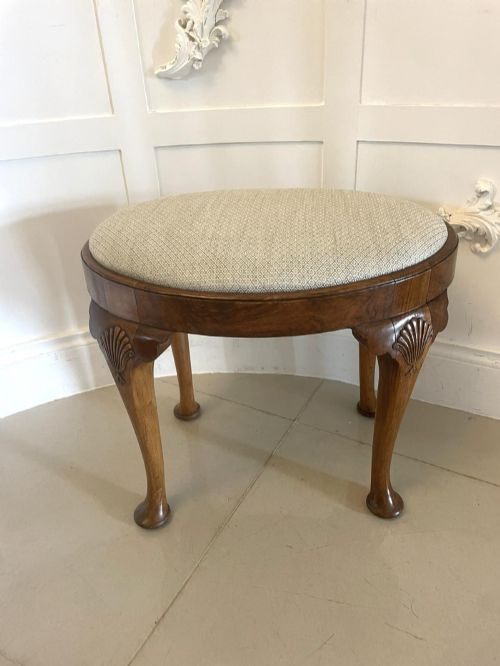
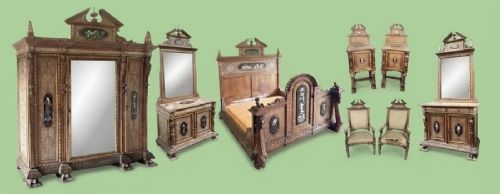
The versions most commonly met on this page date from the Edwardian era, though survivors frequently span the Victorian period through to the nineteen-twenties. These pieces often arrive alongside matching accessories such as low stools, separate cheval mirrors, or larger bedroom suites.
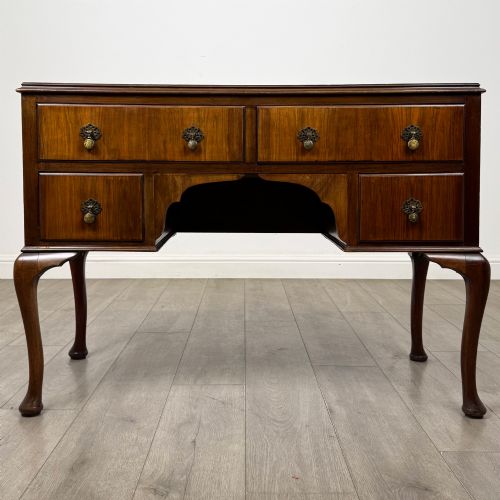
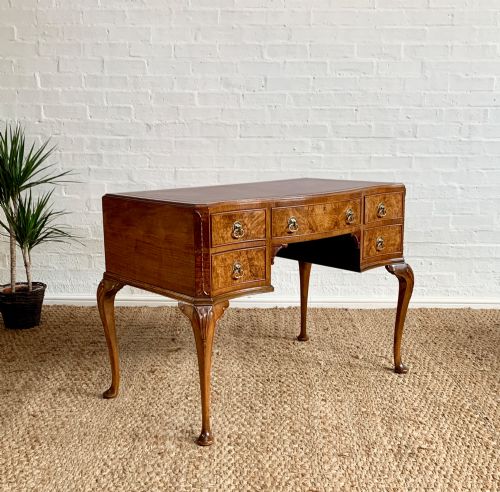
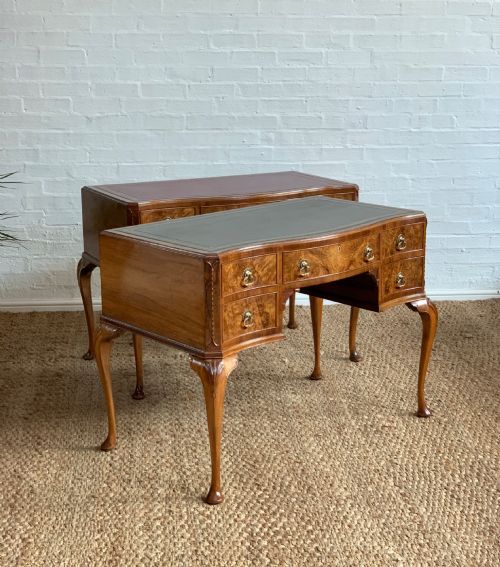
Makers and cabinetmakers produced these dressing tables in various stylistic revivals, notably Queen Anne style with its characteristic cabriole legs, alongside Sheraton and Georgian interpretations. The form adapts from compact pedestal models to expansive serpentine shapes equipped with triple mirror glass.
Materials and Construction
Cabinetmakers utilised solid walnut and decorative walnut veneers, often selecting burr walnut or figured timber for drawer fronts and tabletops to display rich grain patterns. Secondary construction woods such as satin walnut, mahogany, and various softwoods appear in internal drawer framing and structural supports.
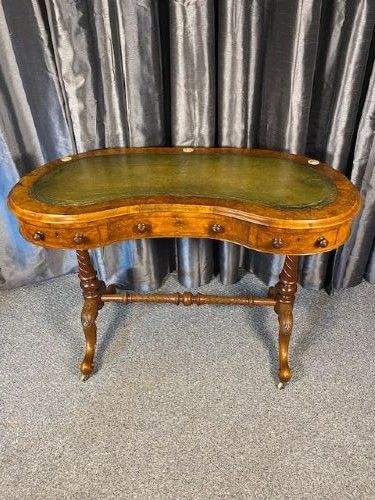
Glass forms the pivotal element of these pieces, appearing as heavy bevelled mirror plates within adjustable wooden frames, whilst brass handles, hinges, and occasional mounts provide functional hardware. Leather inserts occasionally line related writing surfaces, and textiles cover associated dressing stools.
Several small glove boxes lined in velvet survive alongside these tables, ready to house delicate evening accessories.
What Varies in Quality
The standard of an edwardian walnut dressing table rests largely on the selection of the timber veneers and the intricacy of the cabinetwork. Pieces displaying matched burr walnut figures across the drawer tiers occupy a higher tier than plain timber surfaces.
Construction details such as dovetailed drawer joints, original brass hardware, and heavy bevelled mirror glass that retains its silvering elevate a piece. The presence of makers' stamps from notable workshops further distinguishes superior examples from standard commercial production.
Wylie & Lochhead Glasgow·Waring & Gillows·maples of London·Lamb of Manchester·Maurice Adams·Maple and Co.
The Edwardian Walnut Dressing Table Glossary
- Burr walnut
- A figured wood grain derived from the growths on walnut trees, highly prized for its swirling patterns on tabletops and drawer fronts. Cabinetmakers sliced this timber into thin veneers to create decorative symmetrical patterns.
- Cabriole leg
- A furniture leg that curves out in an arc and tapers inward to a foot, frequently seen on Queen Anne style pieces in this category. This form mimics the natural shape of an animal's leg.
- Crossbanding
- A decorative border technique where strips of veneer are laid running perpendicular to the main grain of the panel. This frames the primary timber surface on drawers and tabletops.
- Cheval mirror
- A full-length mirror mounted on a vertical swivel frame that allows the glass to tilt. These freestanding units often match the design of the dressing table.
- Pedestal dressing table
- A form featuring two banks of small drawers flanking a central kneehole space beneath the main tabletop. This configuration provides substantial storage capacity.
Edwardian Walnut Dressing Table: Frequently Asked Questions
How do I care for antique walnut wood?
Dust surfaces regularly with a soft, dry cloth and avoid placing the furniture near direct heat sources or strong sunlight that can dry the timber.
Apply a quality beeswax polish occasionally to nourish the grain and protect the finish from moisture damage.
Can the mirror be removed safely?
Most mirrors on these tables attach via side screw posts and support arms that detach easily from the base structure.
Removing the mirror glass helps reduce weight and balance when transporting the dressing table between rooms.
Where should I place a dressing table?
Position the piece near a natural light source, such as a window, to maximise the reflection in the mirrors during daily grooming routines.
Ensure adequate clearance behind the table if the swing mirrors require space to pivot and adjust angles.