
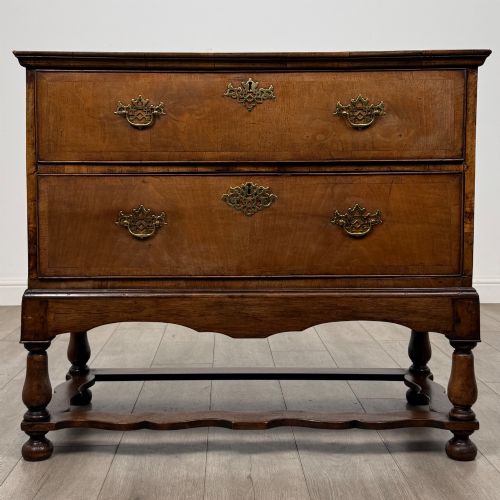
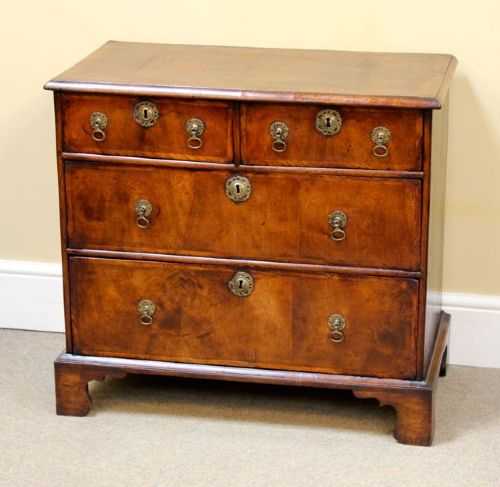
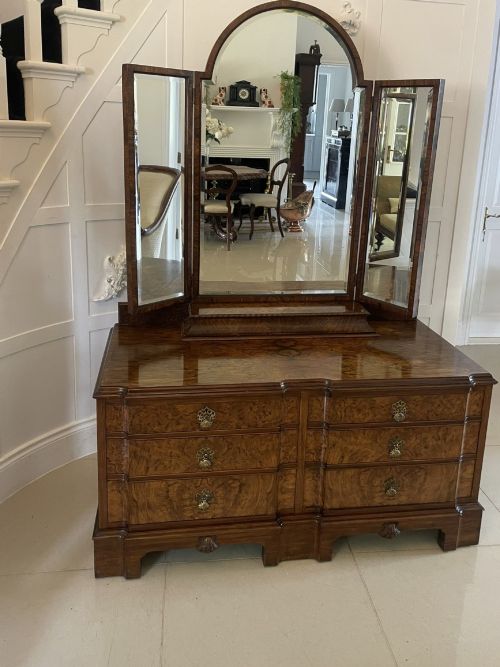
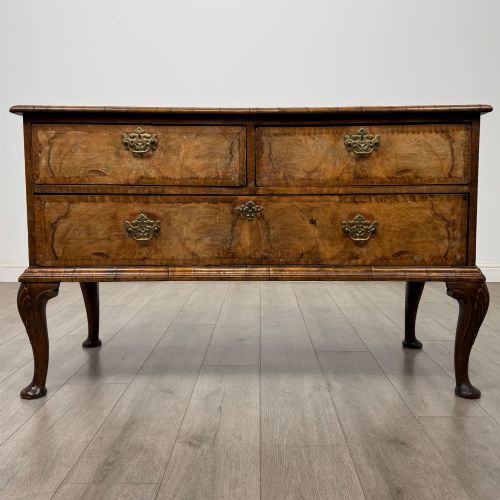
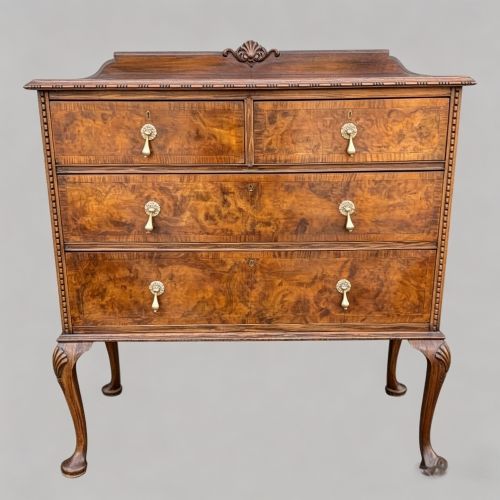
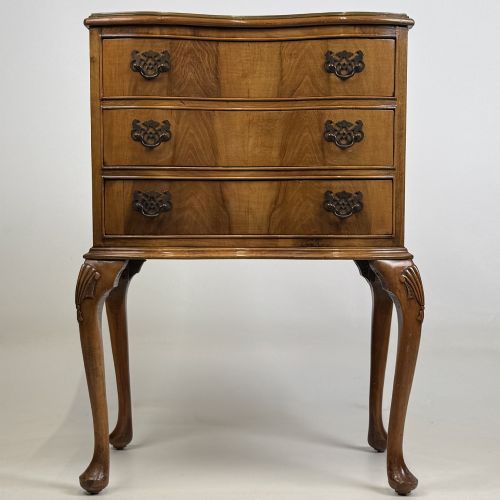
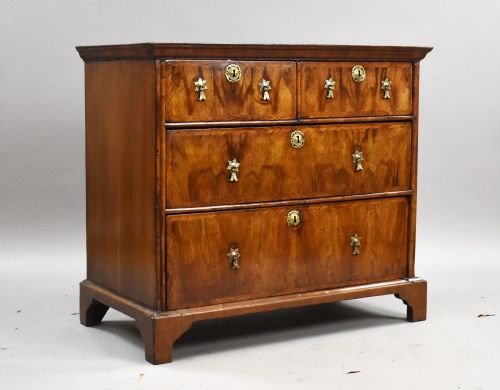


Walnut Lowboy Chest Drawers
These walnut lowboy chest drawers combine compact storage with graceful proportions, offering a practical yet decorative surface for any room.
Walnut Lowboy Chest Drawers
When you search for walnut lowboy chest drawers, you are looking at low tables and compact chests fitted with drawers, often raised on slender legs. These versatile pieces function equally well as dressing tables, side tables, or small storage units in hallways and bedrooms.
The examples found here span several centuries and stylistic revivals, with Georgian originals sitting alongside 19th-century interpretations and 20th-century revival pieces. Most of the pieces meeting this description are constructed from figured walnut or burr walnut veneers over secondary timbers.
Originating primarily from English workshops, these items range from formal 18th-century forms to later Edwardian and Victorian adaptations. Buyers will encounter various drawer configurations, from single-drawer lowboys to deeper chest formats.
What varies in quality
Quality in these items depends heavily on the selection and matching of the walnut veneer, where thoughtful grain placement elevates the visual impact of the piece. Finer examples display meticulous timber preparation and harmonious proportions between the body and the supporting legs.
The integrity of the construction and the retention of original brass hardware and surface patination further distinguish higher-grade pieces from simpler commercial work. Differences in secondary wood selection and the crispness of any carved elements also mark the distinction across the range.
Listings feature walnut lowboy chest drawers spanning the 18th century, Georgian period, and 20th-century revivals.
Shoolbred and Co
The Walnut Lowboy Chest Drawers Glossary
- Lowboy
- A small table with one or more rows of drawers, typically standing on four tall legs. This form gained popularity in the late 17th century and served various domestic functions.
- Burr walnut
- A veneer sliced from the deformed growth or wart on a walnut tree, yielding a swirling, highly figured grain pattern. Cabinetmakers prized this material for decorative drawer fronts and tabletops.
- Dresser base
- A low-standing piece of furniture featuring drawers and sometimes cupboards beneath a flat top, historically used for food preparation and storage. Mid-18th-century examples form part of the broader lowboy tradition.
- Escutcheon
- A protective plate surrounding a keyhole, usually fashioned from brass. These small mounts contribute to the decorative scheme of drawer fronts.
- Secondary wood
- The internal or structural timber used in cabinetmaking where it remains largely hidden from view, such as drawer linings and backboards. Oak and pine frequently serve this purpose in walnut furniture.
Walnut Lowboy Chest Drawers: Frequently Asked Questions
What is a lowboy used for?
A lowboy functions as a versatile small table with drawers, historically placed in bedrooms for grooming or in reception rooms as a side table.
Today, buyers use them as compact desks, hallway tables, or dressing units where space is restricted.
How do I date a walnut lowboy?
Dating relies on examining the construction methods, secondary timbers, and characteristic hardware styles of the period. Georgian pieces show different joinery and leg profiles compared to later Edwardian or 1920s revivals.
Timber choice and veneer thickness also provide reliable indicators of age, distinguishing 18th-century originals from 19th-century interpretations.
Are burr walnut and walnut the same?
Burr walnut is a specific type of walnut veneer taken from the knotted growth of the tree, creating highly decorative, swirling patterns. Standard walnut timber displays a straighter, more uniform grain.
Cabinetmakers reserved burr walnut for prominent decorative surfaces like drawer fronts and tops.
Where should I place a lowboy at home?
These compact pieces fit well in narrow hallways, living room corners, or as bedroom dressing tables due to their shallow depth and slender legs. Their drawers offer discreet storage for small household items.
Pairing a lowboy with a simple mirror creates an effective dressing or writing station.