
Edwardian Vanity Table Mirror
An edwardian vanity table mirror brings practical glass and polished timber together to reflect dressing spaces from the early twentieth century.
Edwardian Vanity Table Mirror
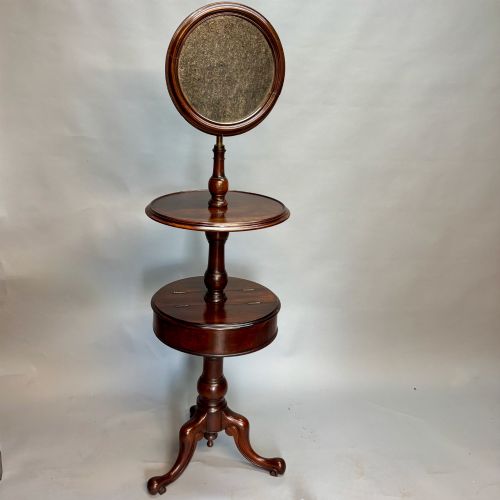
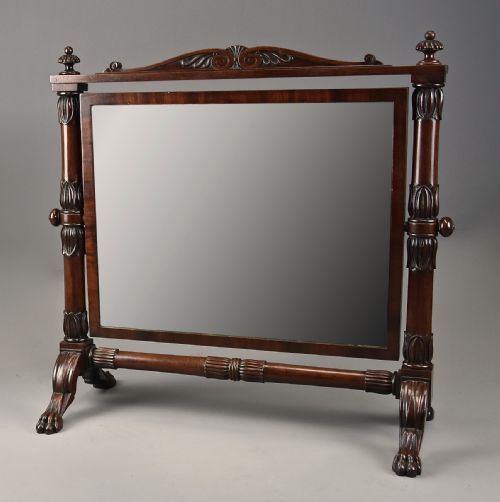
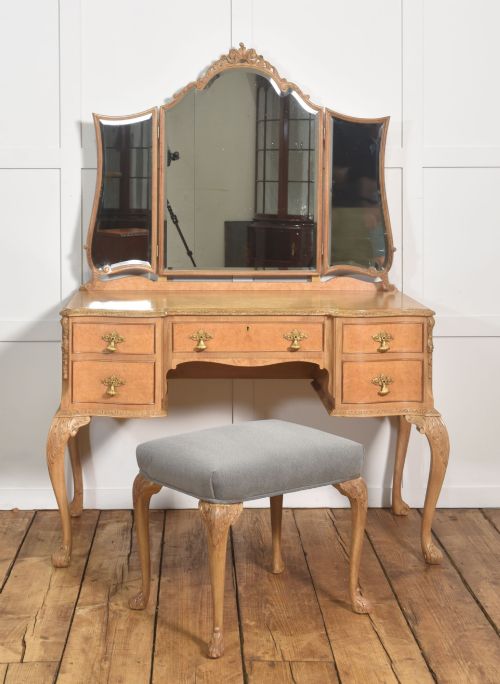
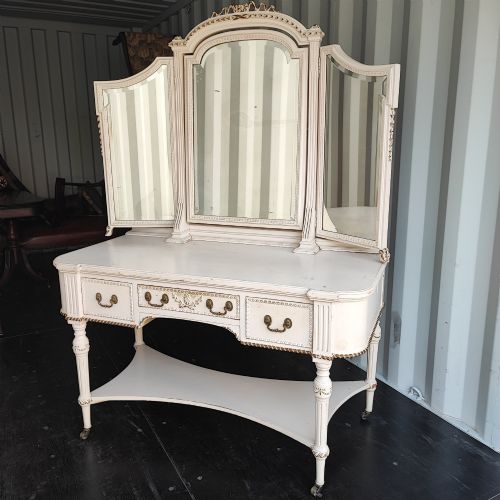
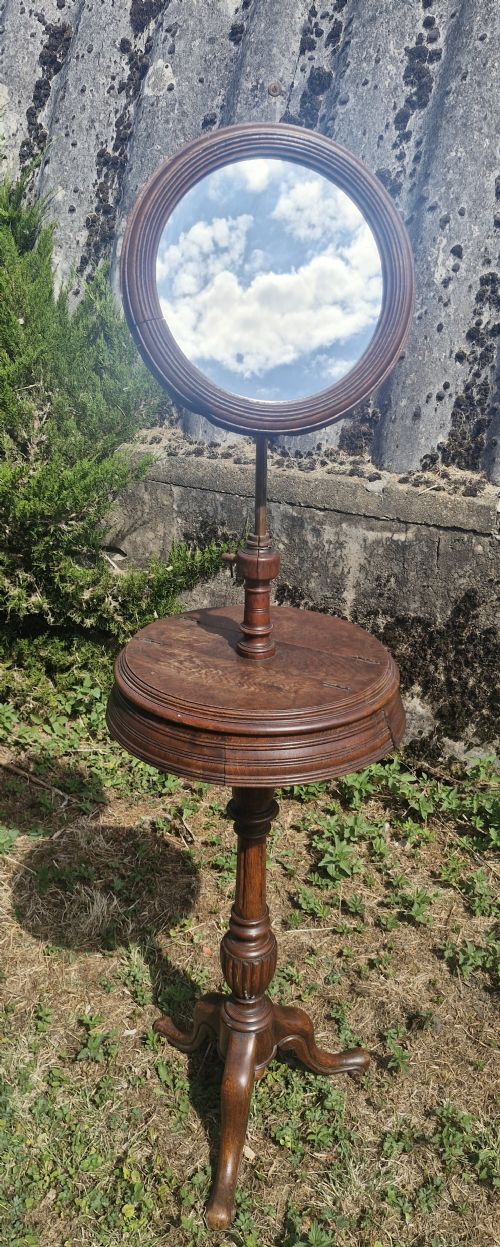
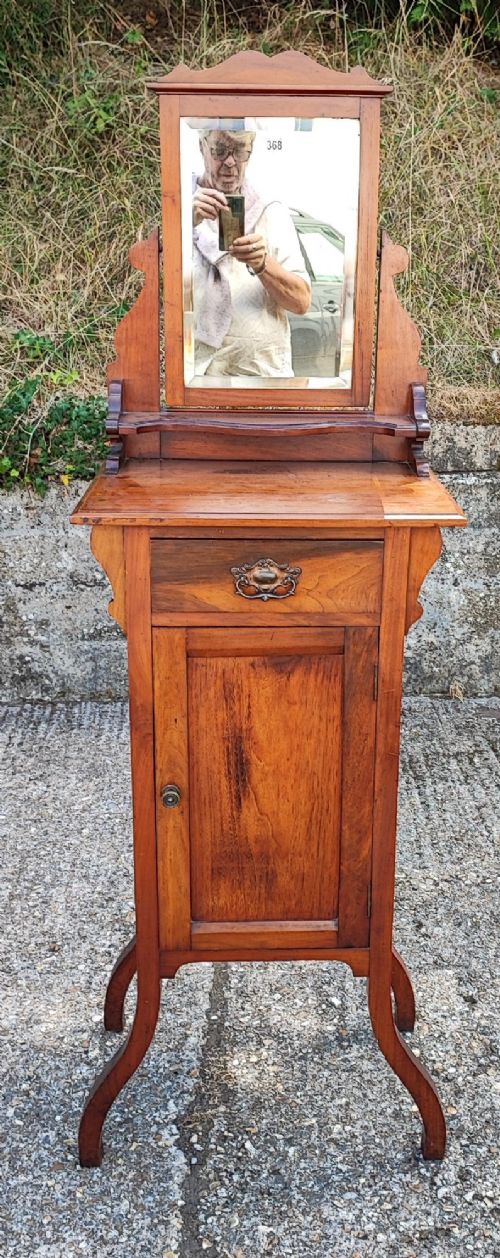
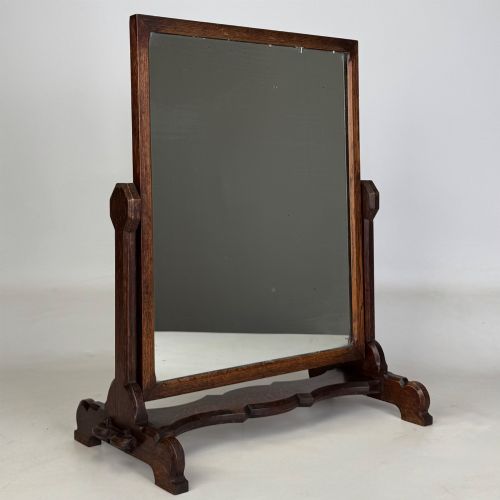
When buyers search for an edwardian vanity table mirror, they encounter a variety of forms including dressing table mirrors, cheval mirrors, and toilet mirrors designed for placement on furniture.
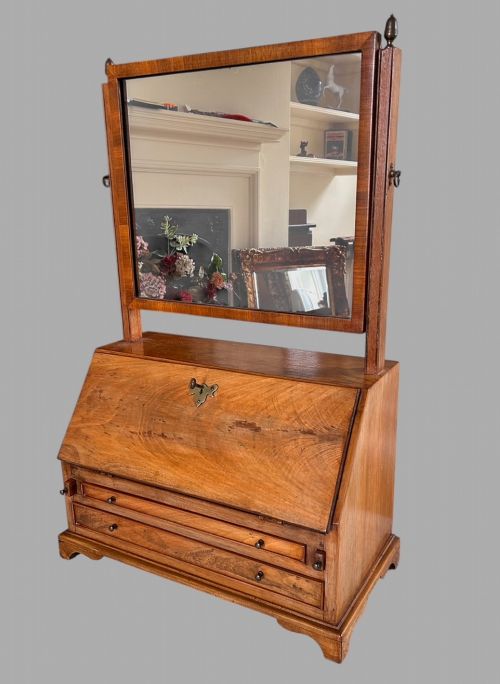
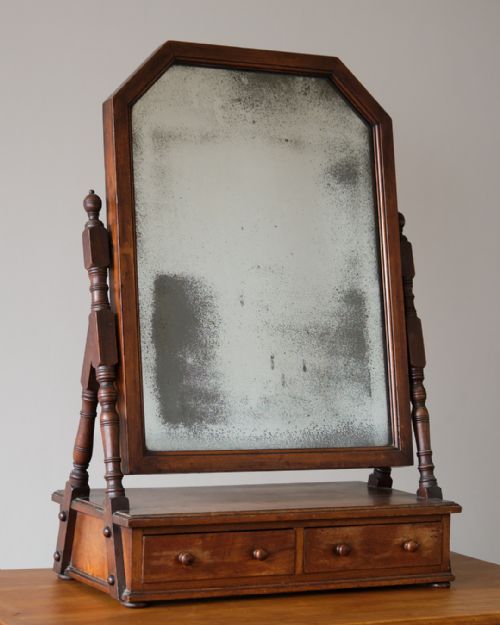
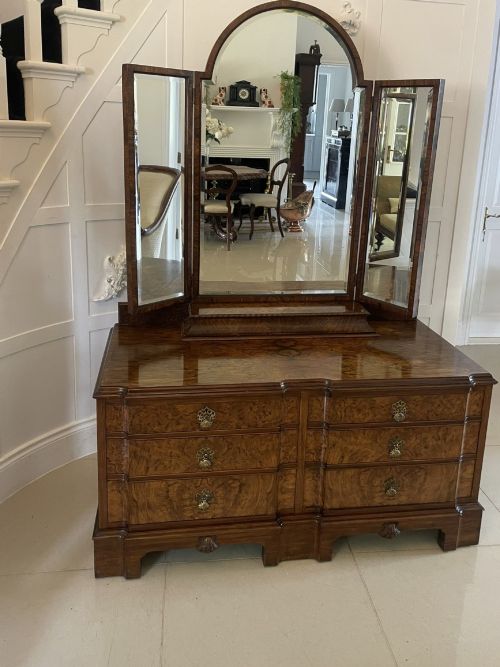
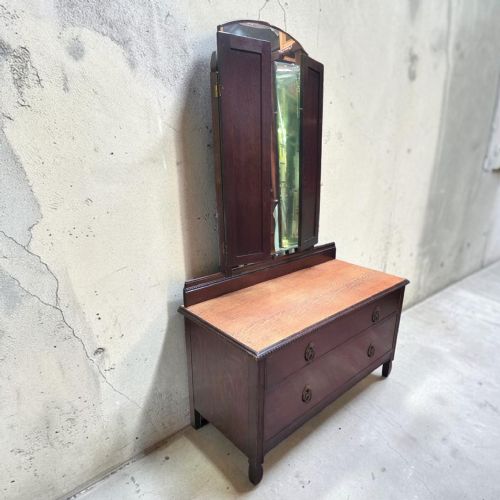
The selections span compact table-top pieces made for personal grooming alongside larger adjustable shield mirrors attached to chests of drawers or integrated into dressing tables.
While Edwardian examples dominate, related pieces stretch back to the Victorian, Georgian, and Regency periods, utilising timber and metal frames constructed for domestic use.
Materials and Construction
Cabinetmakers constructed the frames using mahogany, oak, walnut, and satinwood, frequently employing fine inlays or polished finishes to highlight the grain of the timber.
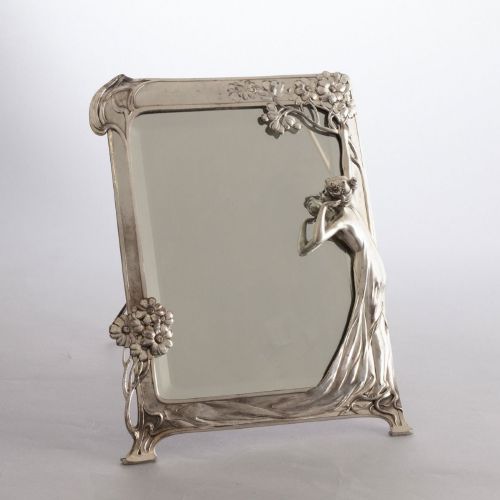
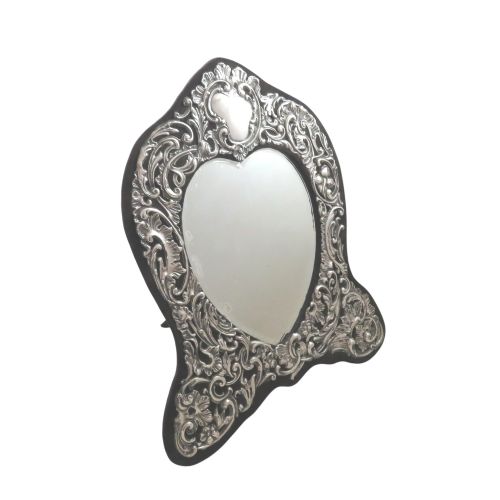
Metal elements incorporate brass, sterling silver, and pewter, often shaped through repoussé work, embossing, or casting to form decorative easel backs and hand mirrors.
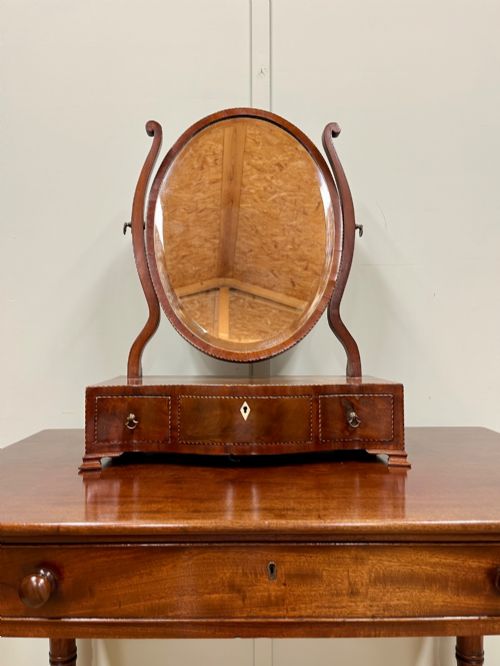
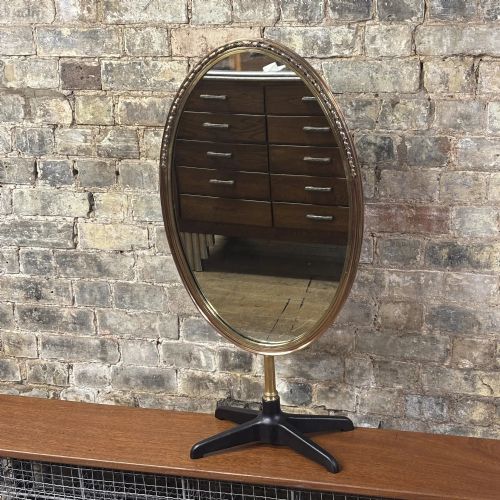
Mirror glass is fitted into pivoting or adjustable frames supported by upright arms or tripod bases, allowing the user to alter the angle of reflection.
Many Edwardian dressing mirrors secretly doubled as jewellery cabinets, hiding tiny velvet-lined compartments behind the pivoting glass.
Defining Quality
Quality rests on the selection of timbers and the precision of the joinery, distinguishing straightforward utility items from pieces designed with elaborate satinwood veneers and hand-painted details.
The refinement of the metalwork and the clarity of the mirror glass separate standard workshop output from marked pieces produced by established retailers and cabinetmakers.
Proportion and the smoothness of the adjusting mechanisms dictate the overall standard, showing how well the frame balances its weight during daily use.
Maples of London and Paris·Heal And Sons·P And MA Nicholson·WMF·George Walton·Charles Boyton·S Blanckensee And Son·Lamb Of Manchester·Shapland And Petter·Maurice Adams
The Edwardian Vanity Table Mirror Glossary
- Cheval mirror
- A freestanding full-length mirror mounted on a swivel frame between four upright pillars. This design allows the entire glass to tilt for viewing full outfits.
- Repoussé
- A metalworking technique where the artisan hammers the design from the reverse side to form a raised pattern on the front. It appears frequently on brass and silver mirror frames.
- Satinwood
- A durable exotic timber known for its pale golden colour and lustrous sheen. It was widely utilised during the Edwardian period for fine inlaid furniture and dressing pieces.
- Shield mirror
- A glass plate cut into the shape of a heraldic shield and mounted on pivoting pins within a wooden frame. These swing freely between two supporting uprights.
- Strut mirror
- A portable mirror supported by a hinged prop or leg on the reverse. This allows the glass to stand upright on a table without fixed wall mountings.
Edwardian Vanity Table Mirror: Frequently Asked Questions
Where should I place a table mirror?
These mirrors sit comfortably on top of dressing chests, sideboards, or dedicated tables where the height matches your seating.
Ensure the surface is stable and allows room to adjust the tilt of the glass without obstruction from nearby objects.
How do I adjust a swivel mirror?
Most swinging mirrors rely on tension screws or brass pivot pins set into the upright support arms.
Gentle tightening of these side fixtures secures the glass at the desired viewing angle during daily use.
What is the difference between an Edwardian and Victorian mirror?
Victorian examples tend to feature heavier carved mahogany or walnut frames with deep, dark finishes and robust proportions.
Edwardian pieces often display lighter satinwood, inlaid details, or simpler oak designs influenced by the Arts and Crafts movement.
Can these mirrors be mounted on walls?
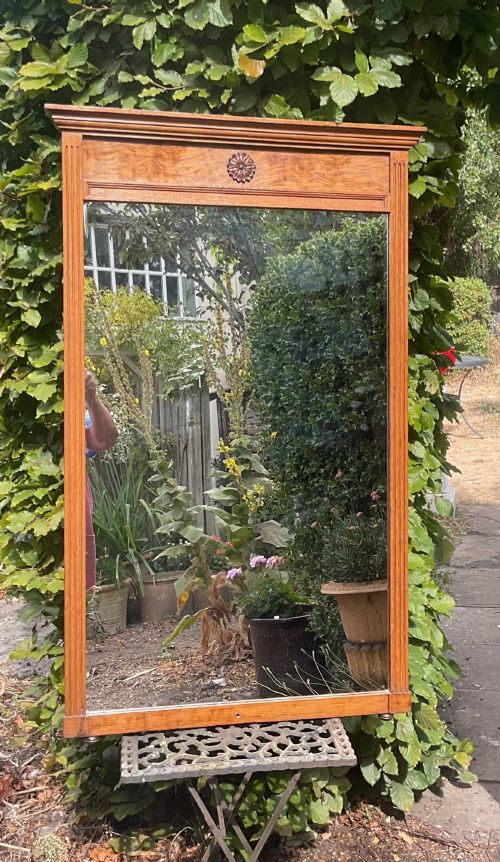
The majority of these pieces are built as table-top or freestanding items equipped with sturdy bases, easel struts, or mounting arms designed for furniture.
Altering them for wall hanging requires specialist hardware to support the weight of the timber frame safely.
How do I clean antique mirror glass?
Wipe the glass gently with a soft cloth dampened lightly with water or a mild glass cleaner, avoiding harsh ammonia solutions.
Keep moisture away from the wooden edges and the silvered backing behind the glass to prevent gradual deterioration.