
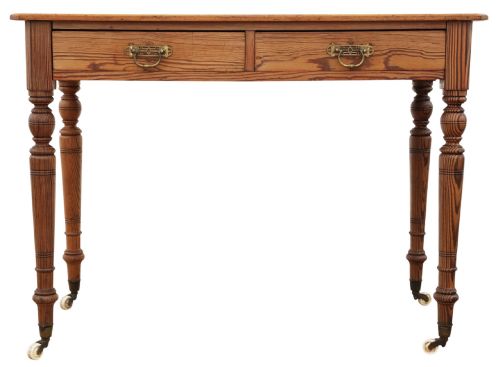
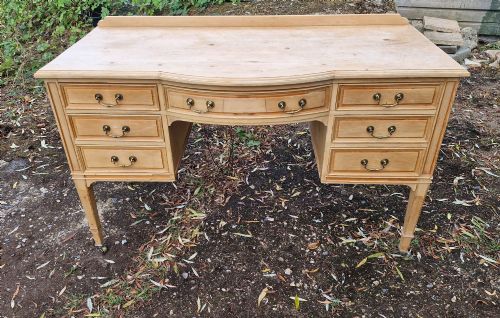
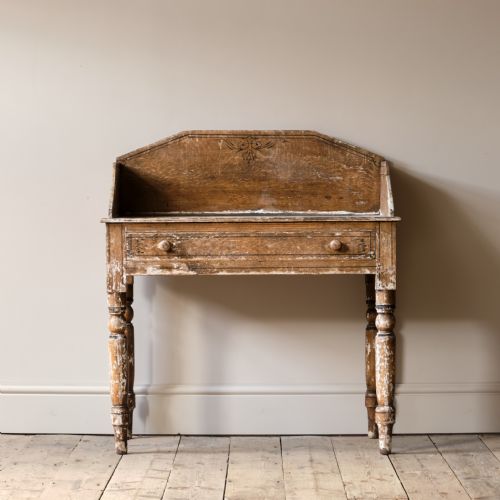
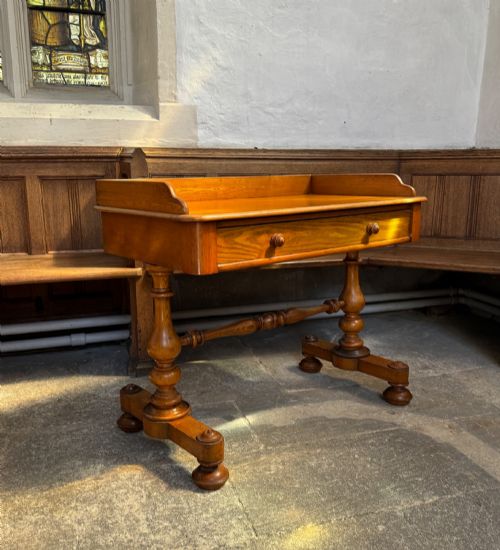
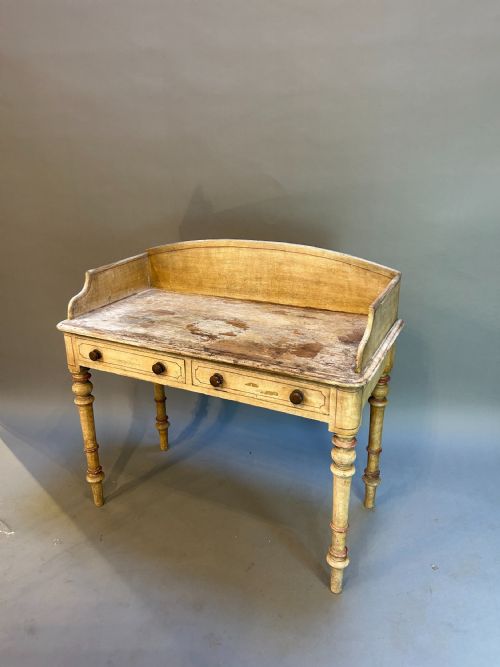
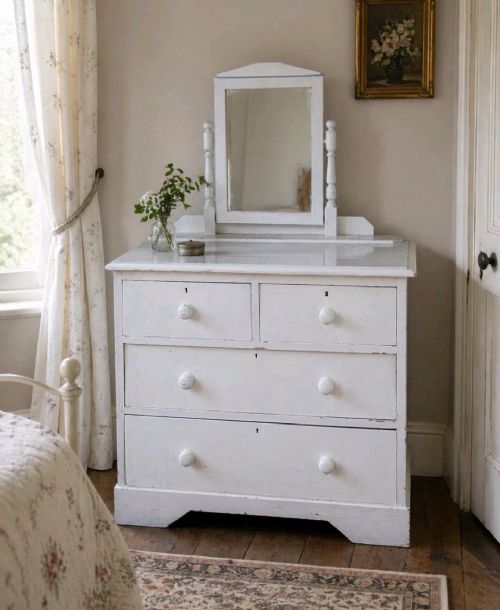
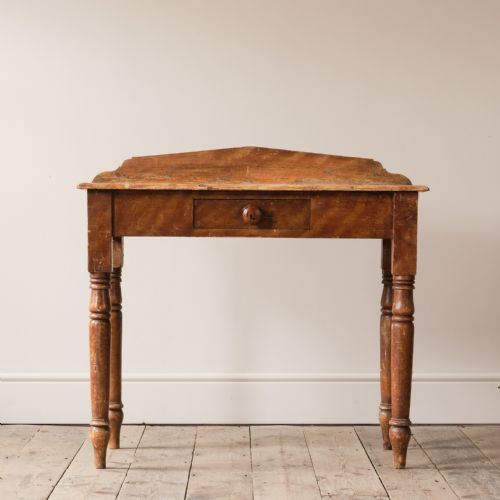
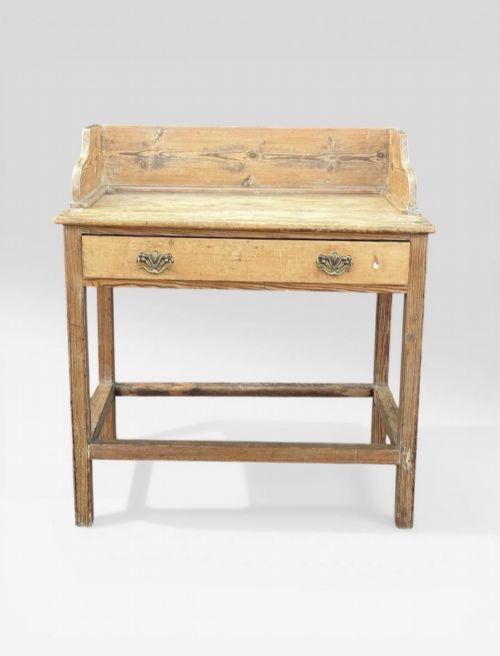
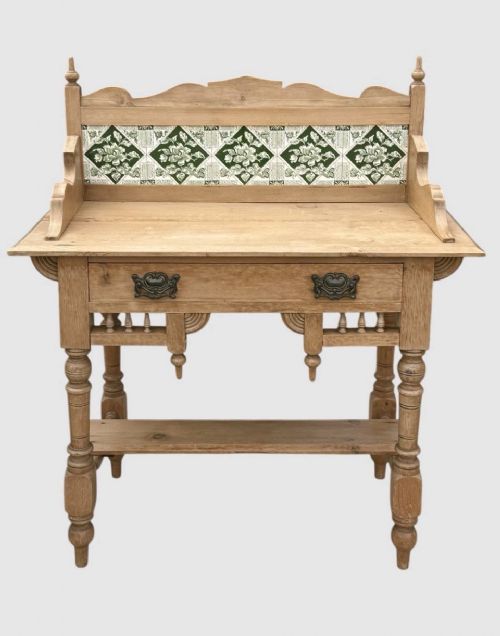

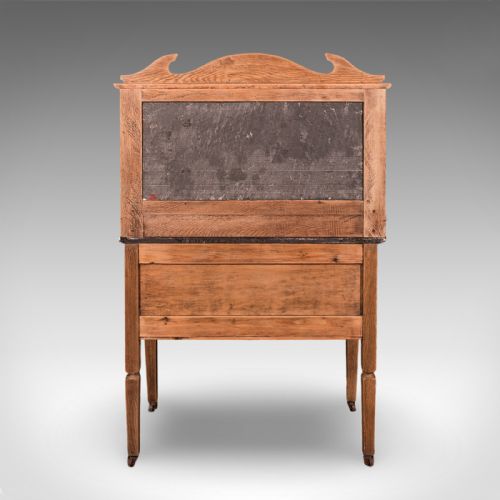


Vintage Pine Dressing Table
These vintage pine dressing table pieces bring sturdy utility and honest grain to a bedroom, offering practical surface space and drawers shaped by over a century of domestic life.
Vintage Pine Dressing Table
A vintage pine dressing table combines functional drawer storage with a dedicated surface, often appearing alongside related forms like washstands, writing tables and dressing chests in the listings. Pieces span the Georgian, Victorian and Edwardian eras, as well as the Regency period, capturing utilitarian country furniture alongside more formal urban designs.
Makers utilised both standard pine and pitch pine, sometimes applying paint finishes, scumble glaze or stencilled decoration to alter the natural wood appearance. Formats range from simple kneehole desks and drop-leaf side tables to bowfront sideboards and compartmented washstands adapted for modern bedroom use.
Materials and construction methods
Makers constructed these tables primarily from solid pine and dense pitch pine, pairing the timber with brass handles, glass mirrors and occasional marble tops. The wood was frequently left in its natural state, waxed, or coated in layers of paint and scumble glaze.
Joinery methods reflect the working practices of nineteenth and early twentieth-century workshops, relying on pegged joints, hand-cut dovetails for drawers and turned wooden supports. Decorative flourishes such as faux bamboo turnings and original stencilled patterns indicate regional workshop variations and shifting domestic tastes.
Listings feature pieces spanning the Georgian, Victorian and Edwardian eras, executed in pine, pitch pine, glass, brass and marble.
Factors influencing quality
The standard of a piece rests upon the selection of the timber, particularly where dense pitch pine or well-figured boards are chosen over knot-heavy utility wood. Superior examples retain original surface treatments, such as untouched paint, scumble glazes or stencilled decoration, rather than later stripped finishes.
Structural integrity sets apart finer items, evident in smooth drawer action, tight joints and retaining original brass hardware or glass components. Pieces demonstrating careful turning, such as faux bamboo detailing or balanced proportions, represent more accomplished workshop production.
The Vintage Pine Dressing Table Glossary
- Pitch pine
- A dense, resinous pine variety often selected for its pronounced grain pattern and durability in nineteenth-century furniture. It yields a heavier, tougher frame than standard softwoods.
- Scumble glaze
- A decorative translucent paint technique dragged or brushed over a base coat to simulate finer hardwoods like oak or grain patterns. It protects the softwood beneath while adding visual depth.
- Kneehole
- A desk or dressing table configuration featuring a central recess for the legs, flanked by pedestals of drawers. This layout became common during the Victorian period.
- Washstand
- A utilitarian piece designed to hold a basin and jug, frequently serving alongside or functioning as a dressing table in bedroom settings. Examples often incorporate marble or tile splashbacks.
Vintage Pine Dressing Table: Frequently Asked Questions
How do I date a pine dressing table?
Dating relies on construction details, timber choice and stylistic markers such as turned legs or stencilled decoration. Georgian and Regency pieces show different proportions and joinery compared to later Victorian and Edwardian examples.
Examining drawer linings, backboards and fixings provides further clues to a piece's exact period of manufacture.
Were these tables originally painted?
Many pine pieces received coats of paint, scumble glaze or stencilled patterns to imitate costlier woods or simply to brighten a domestic interior. Original paint finishes survive on several examples from the nineteenth century.
Buyers should assess whether a painted surface dates to the period of manufacture or represents a later decorative layer.
Can I use a washstand as a dressing table?
Washstands share similar dimensions and drawer configurations with dressing tables, making them practical alternatives for modern bedrooms. Their surface space accommodates daily grooming items effectively.
Historical utility pieces adapt readily to contemporary living spaces without losing their original character.
What is pitch pine?
Pitch pine is a heavier, harder variety of pine containing high resin content, prized by nineteenth-century makers for its durability and distinct grain. It resists wear better than standard softwoods.
Furniture built from this timber tends to feel heavier and displays a warmer, more pronounced linear grain.