
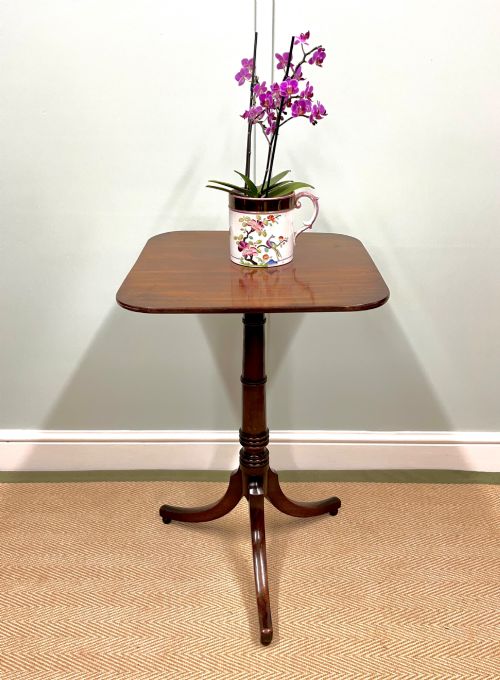
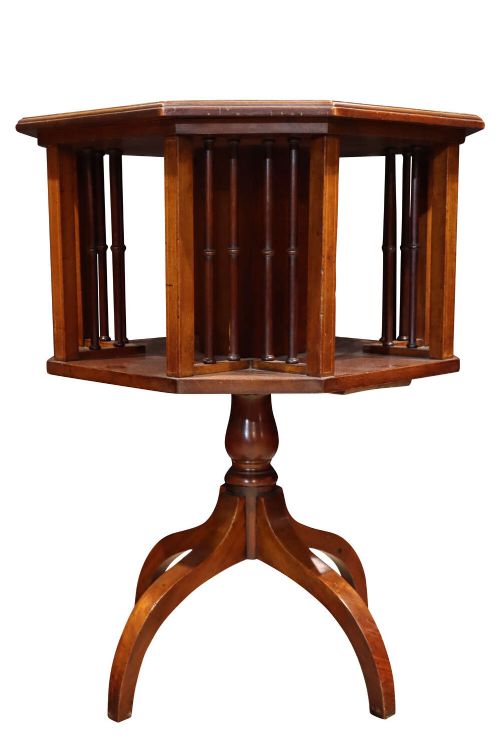
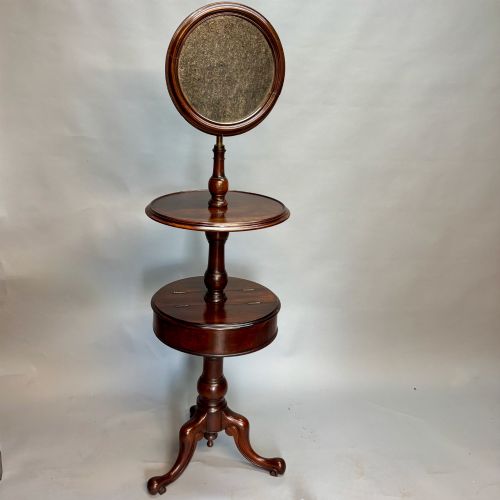
Edwardian Tripod Stand
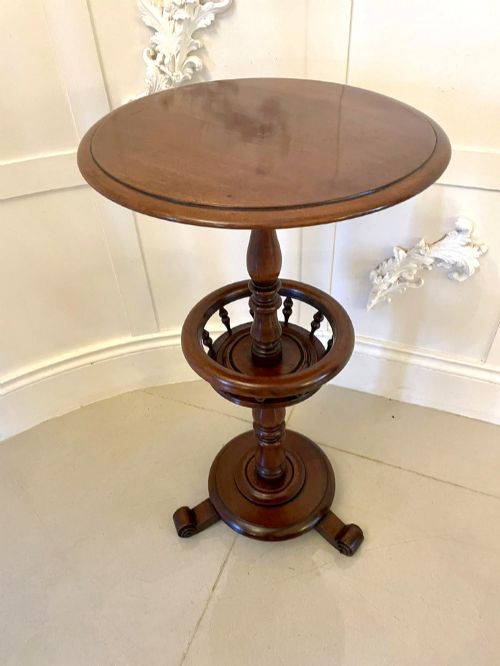
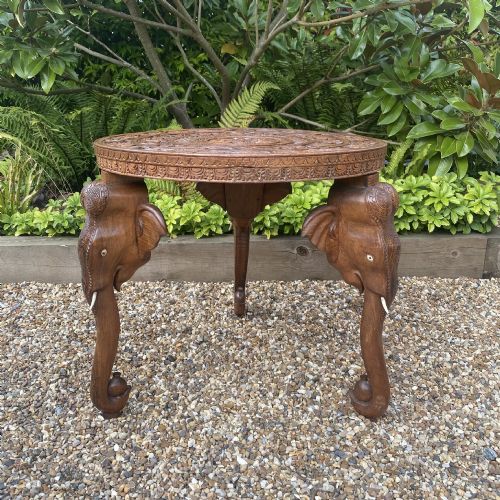
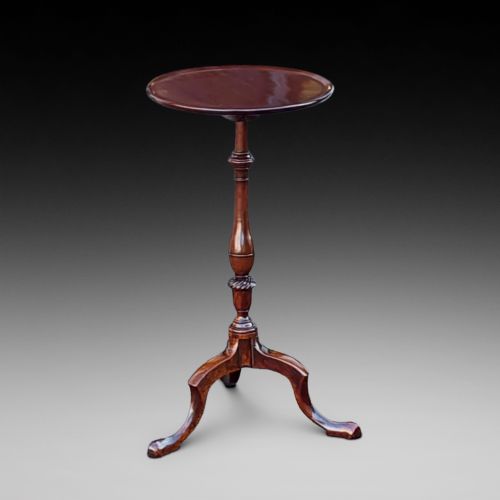
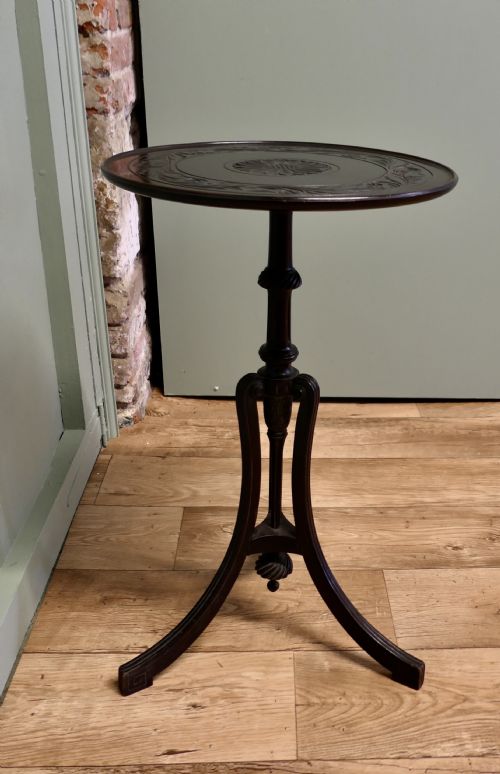
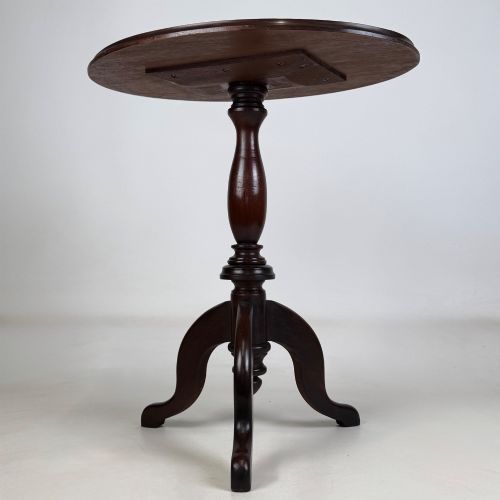
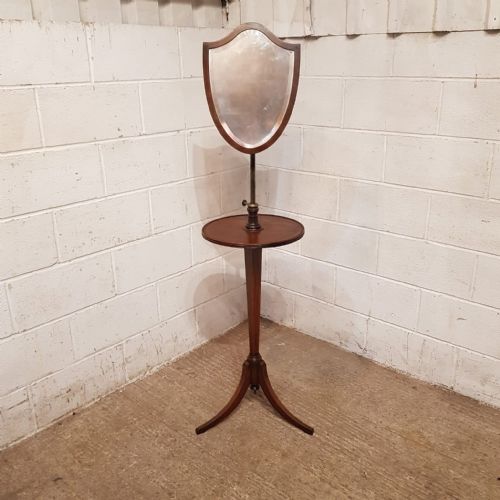
An edwardian tripod stand balances functional utility on three slender legs, offering a refined perch for plants, lamps, or small personal items.
Materials and Construction
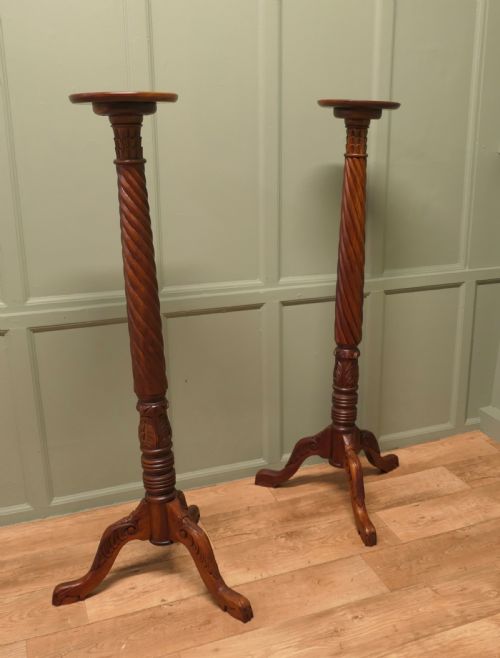
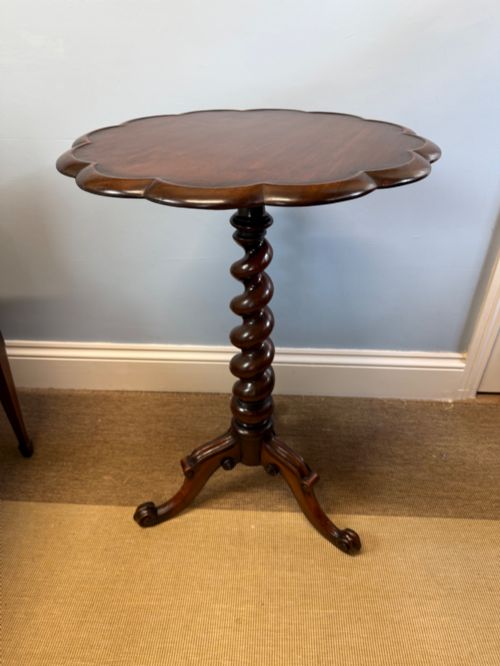
Cabinetmakers utilised timber such as mahogany, walnut, and oak to build the shafts and circular or shaped table tops, frequently adding boxwood inlay or gilt details. Turned columns and barley twist shafts demonstrate standard lathe techniques common to the workshops of the era.
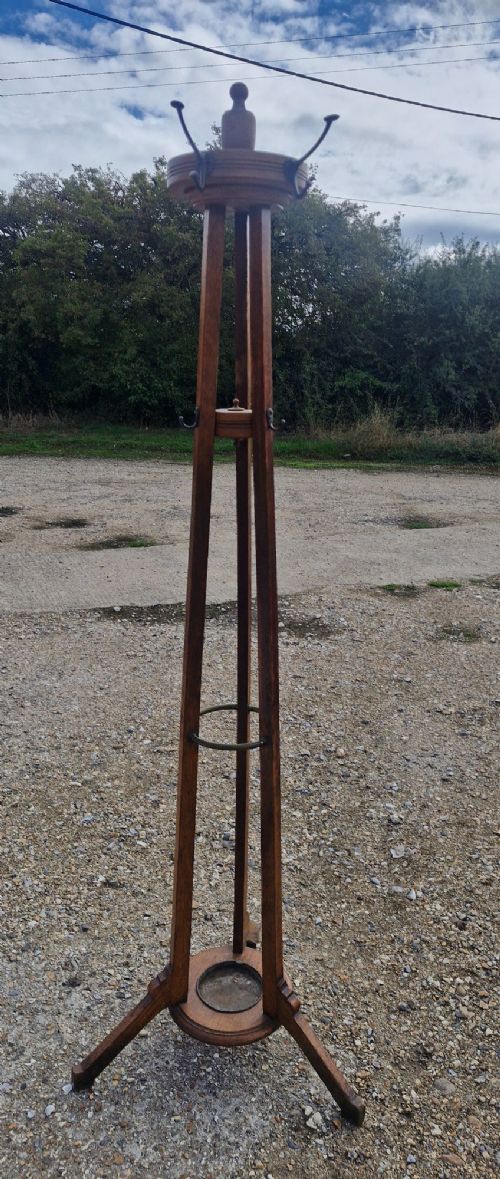
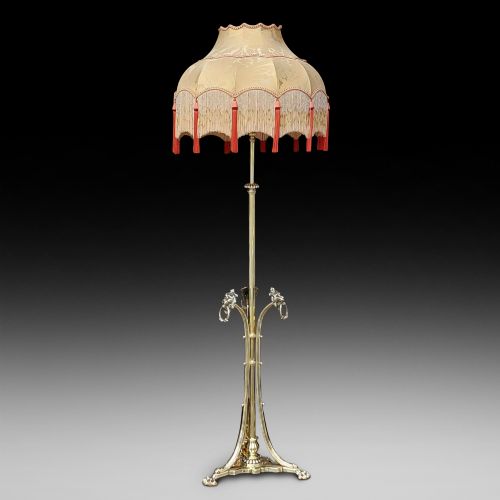
Metal components appear frequently, particularly in floor lamps, standard lamps, and plant stands forged from brass, copper, cast iron, and silver plate. Telescopic mechanisms and adjustable brass brackets allow these stands to alter in height according to domestic requirements.
Design and Execution
Superior examples of an edwardian tripod stand display thoughtful timber selection, such as burr walnut or figured mahogany, paired with crisp hand-carved details or delicate inlay. Lesser pieces rely on plain timber stocks with minimal decorative ambition and simpler turned joints.
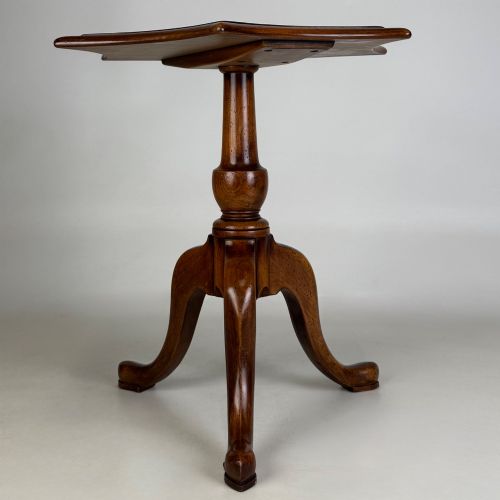
The integrity of the tripod base dictates the structural success of the object, with finer pieces possessing splayed legs that fit securely into a central column without wobble. Original brass fittings, working telescopic adjustments, and intact patination elevate the standing of any piece within this category.
Listings feature mahogany, oak, and walnut timbers alongside brass, cast iron, and fabric elements across various nineteenth and twentieth-century periods.
Bleriot
The Edwardian Tripod Stand Glossary
- Tripod table
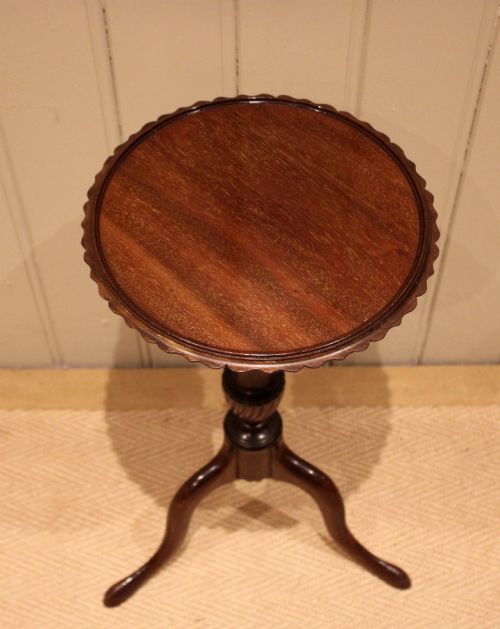
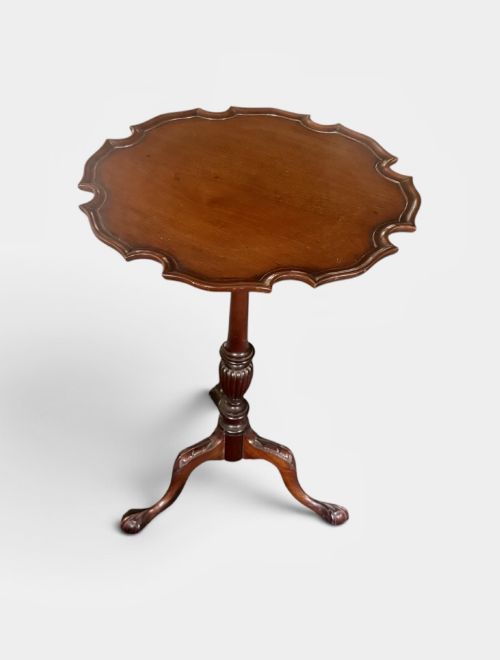
- A small occasional table supported by a pillar on three legs. These tables often feature tilt-top mechanisms or pie crust rims.
- Jardiniere
- An ornamental pot or stand designed to hold a plant or floral arrangement. Tall wooden or brass versions elevate greenery within interior spaces.
- Standard lamp
- A tall floor-standing lamp base designed to support an oil reservoir or electric fitting. They frequently utilise weighted tripod bases for stability.
- Torchere
- A tall ornamental stand intended to carry a candle, lamp, or plant. Examples in this category employ carved wood or brass construction.
- Pie crust rim
- A raised, decoratively carved edge on a tabletop resembling pastry work. This technique requires skilled hand-carving from solid timber.
Edwardian Tripod Stand: Frequently Asked Questions
What is an edwardian tripod stand used for?
These versatile stands serve multiple domestic functions depending on their original design and top configuration. Many act as plant stands or jardiniere holders, whilst others support reading lamps, pocket watches, or small decorative items.
Shorter tripod tables function well beside armchairs as wine tables or occasional surfaces for drinks and books. Taller standard lamp versions illuminate corners of a room through adjustable brass or wooden shafts.
How do I distinguish Edwardian from Victorian stands?
Edwardian stands generally display a lighter, more restrained aesthetic with slender proportions and subtle inlay work. Walnut and mahogany woods feature prominently, often accompanied by delicate boxwood stringing.
Victorian pieces tend to be heavier and more robustly carved, frequently utilising barley twist columns and darker finishes. Late Victorian examples bridge this gap by adopting simpler lines just prior to the turn of the century.
Are these stands stable on modern floors?
The three-legged design naturally accommodates uneven historical floorboards by distributing weight across three points of contact rather than four. Properly constructed joints ensure the central pillar remains plumb and secure.
Floor lamps and tall plant stands utilise weighted bases or wide-splayed legs to prevent tipping during everyday use. Buyers should check that the leg tenons fit tightly into the central block to maintain this structural stability.
What metals are found on these pieces?
Brass and copper appear regularly in floor lamps, standard lamps, and adjustable reading stands. Silver plate and cast iron also feature in specialised lighting and photographic equipment stands.
These metals often retain their original patination, showing warm tones developed over a century of handling and polishing. Telescopic mechanisms within brass standards allow the height to be adjusted smoothly.