

Edwardian Tray Table
An Edwardian tray table brings domestic utility and refined surface design together into a single portable piece of furniture.
Edwardian Tray Table
An Edwardian tray table serves as an adaptable piece designed for serving refreshments or displaying decorative items within the home. These items typically combine a detachable or fixed tray top with a folding or static wooden stand, emerging frequently in domestic spaces around the start of the twentieth century.
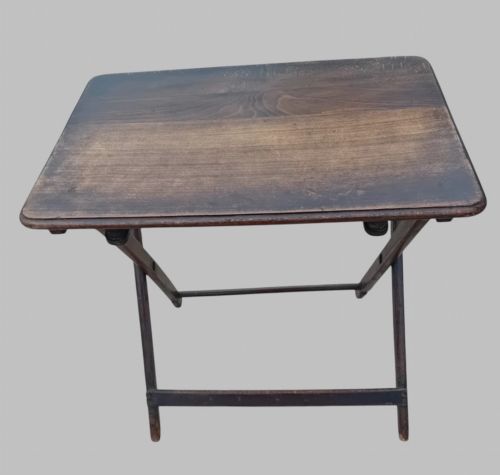
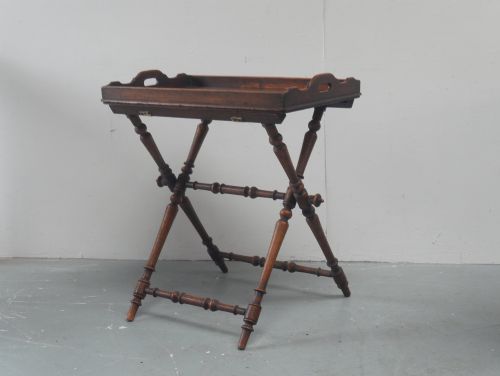
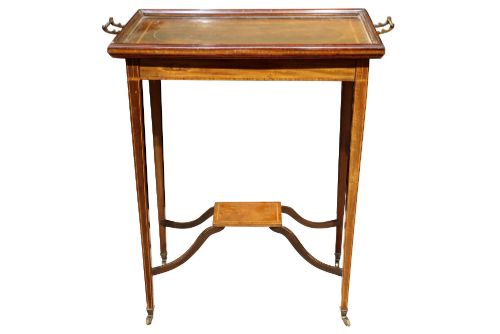
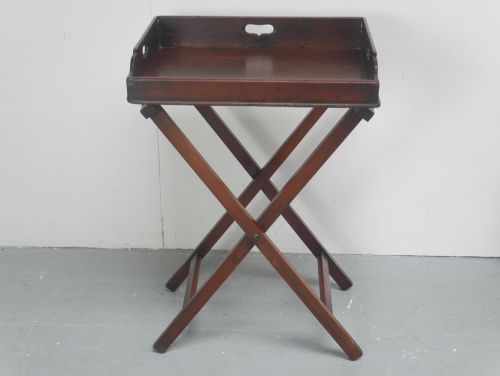
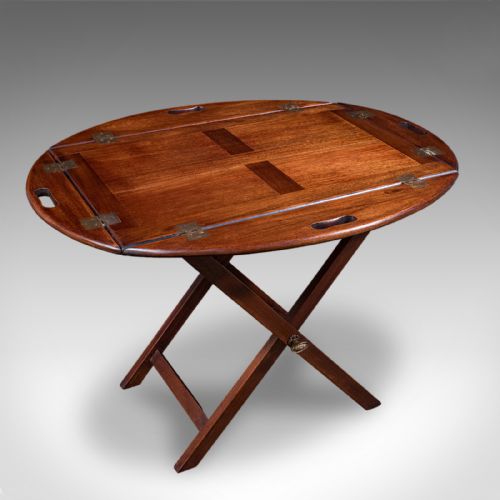
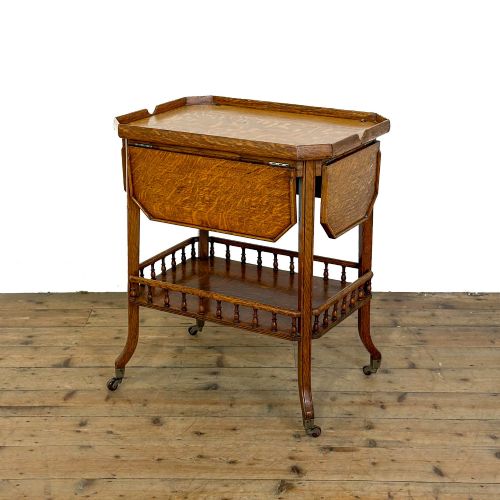
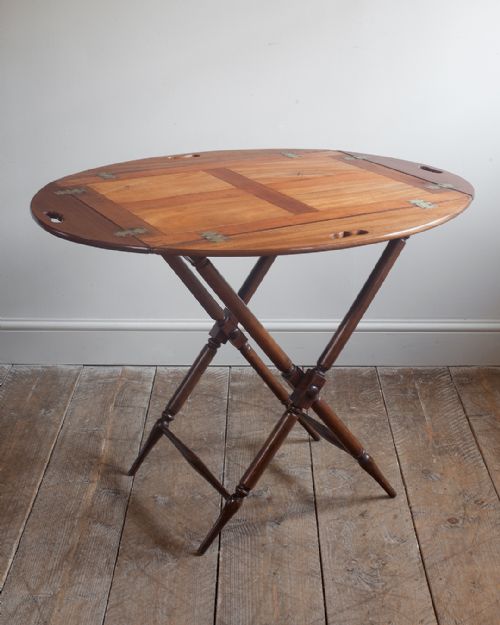
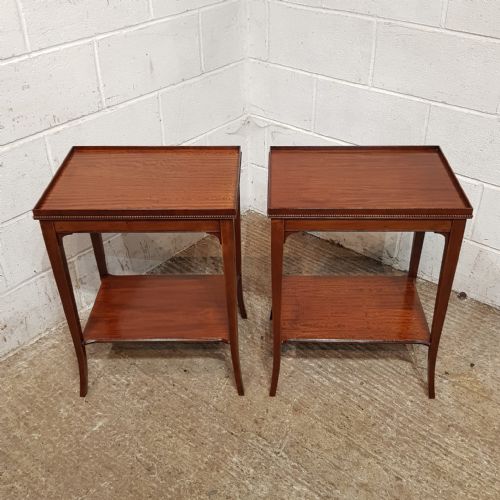
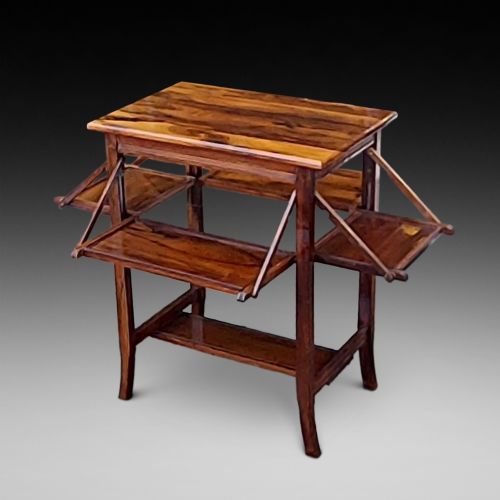
The versions most commonly met on this page feature solid mahogany or satinwood construction, often enhanced by delicate boxwood stringing or Sheraton Revival inlay. Formats range from oval occasional tables and circular tiered stands to traditional butler trays resting upon X-frame folding supports.
Makers of the period also adapted styles from earlier eras, producing pieces that mirror George III proportions alongside campaign-inspired folding designs. Such versatility explains why these tables suit modern living rooms and studies just as effectively as they did Edwardian drawing rooms.
Materials and Construction
Makers constructed these tables primarily from dense hardwoods like mahogany and walnut, frequently selecting satinwood for contrasting veneers and tabletops. Cabinetmakers applied boxwood and ebony stringing to outline geometric panels, incorporating brass handles and hinges where folding mechanisms or serving trays required functional hardware.
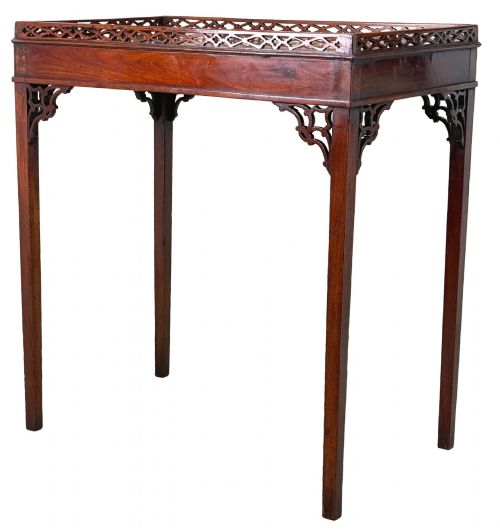
Joinery techniques relied upon traditional mortise and tenon frames to ensure stability, particularly for stands designed to fold flat for storage. Tray edges often featured raised galleries shaped from solid timber or steam-bent rails secured with dovetail joints to contain glassware during service.
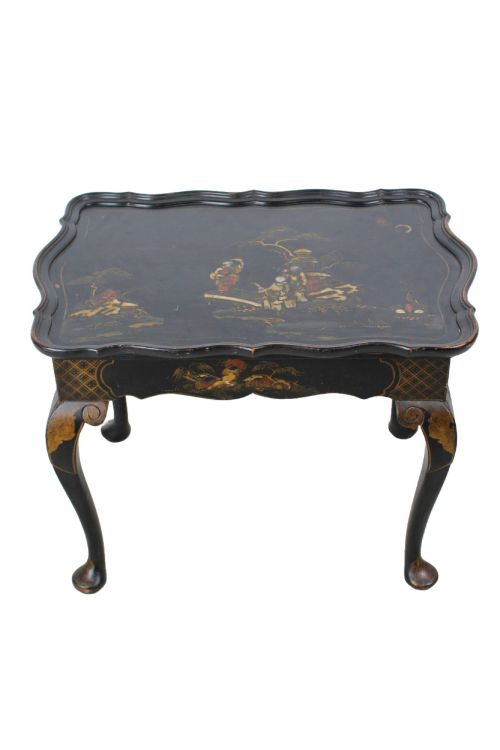
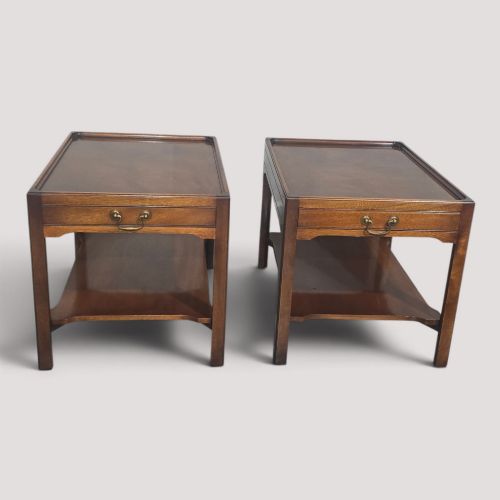
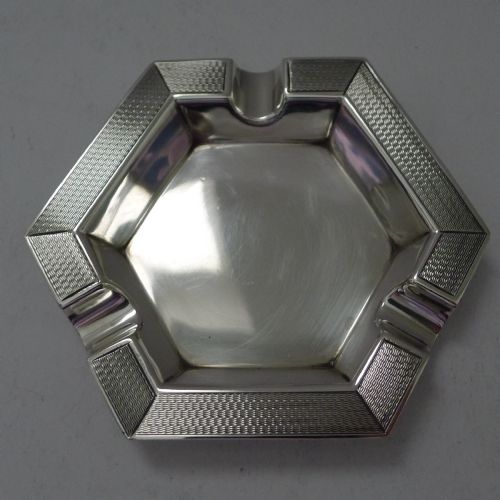
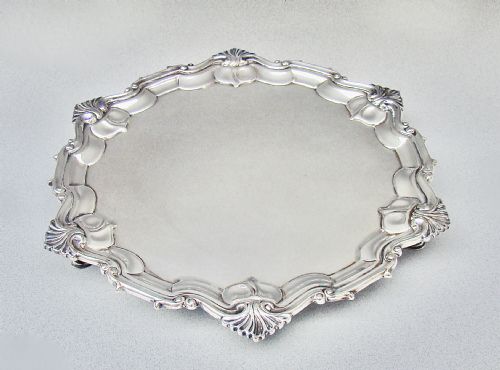
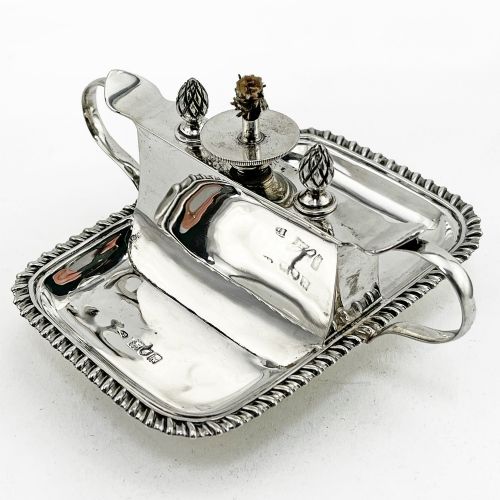
Listings feature Edwardian tray tables constructed primarily from mahogany, satinwood, and oak, alongside brass and silver-plated serving accessories.
Evaluating Craftsmanship
The distinction between standard commercial output and superior craftsmanship rests upon the choice of timber and the precision of the inlay work. Finer examples display figured mahogany with balanced grain patterns and meticulous hand-cut stringing rather than printed or painted substitutes.
Structural integrity also separates the grades, where well-balanced stands fit securely into their corresponding tray bases without excessive wobble or loose joints. The crispness of carved gallery edges and the quality of original brass fittings indicate the level of care invested by the original cabinetmaker.
William Neale·William Hutton And Sons·Mappin And Webb
The Edwardian Tray Table Glossary
- Tray top
- A tabletop featuring a raised edge or gallery designed to prevent items from sliding off during use. This profile appears frequently on occasional tables and serving stands.
- Butler tray
- A shallow rectangular wooden tray, often fitted with hinged drop-flaps, originally intended for carrying dining service. When paired with a folding stand, it functions as a portable table.
- Stringing
- Thin inlaid lines of contrasting timber, such as boxwood or ebony, set into the surface of furniture to create geometric borders. This decorative technique defines much of the Sheraton Revival style.
- Campaign style
- Furniture engineered to fold or dismantle easily for transport during military travel. Pieces built in this manner utilise brass corners, recessed handles and folding X-frames.
- Sheraton Revival
- A late nineteenth and early twentieth-century design movement inspired by the neoclassical furniture of Thomas Sheraton. These items favour light satinwood, painted motifs and tapered legs.
Edwardian Tray Table: Frequently Asked Questions
What is an Edwardian tray table?
An Edwardian tray table is a piece of portable furniture consisting of a removable or fixed serving tray supported by a wooden stand. These items were designed for serving tea or drinks in domestic reception rooms.
Most examples date from the early twentieth century and utilise mahogany or satinwood, often featuring raised gallery edges and folding bases for convenient storage.
How do you use a tray table today?
These tables function well as flexible side surfaces for holding books, lamps or drinks beside a sofa or armchair. Their lightweight construction allows them to move easily between rooms as needed.
Models with removable trays also provide practical service utility when entertaining guests, combining historic decorative appeal with everyday functionality.
How do you distinguish Edwardian from Georgian styles?
Edwardian reproductions of earlier styles often display lighter wood selections, such as satinwood, alongside machine-cut veneers and subtle interior stamps or labels. True Georgian pieces exhibit heavier timber densities, hand-cut joinery methods and patination acquired through extended age.
Examination of the secondary woods used in drawer linings and interior framing also helps clarify the actual period of manufacture.
Are tray tables stable enough for daily use?
Solidly constructed hardwood examples provide adequate stability for standard daily tasks like holding drinks or displaying decorative objects. Regular use requires checking that folding stands and hinge mechanisms remain secure.
Avoid placing excessive weight on folding models to preserve the original joinery and prevent strain on the supporting X-frames.