

Vintage Serving Tray Table
These vintage serving tray table pieces combine removable serving surfaces with folding or static stands, offering practical hospitality furniture from past centuries.
Vintage Serving Tray Table
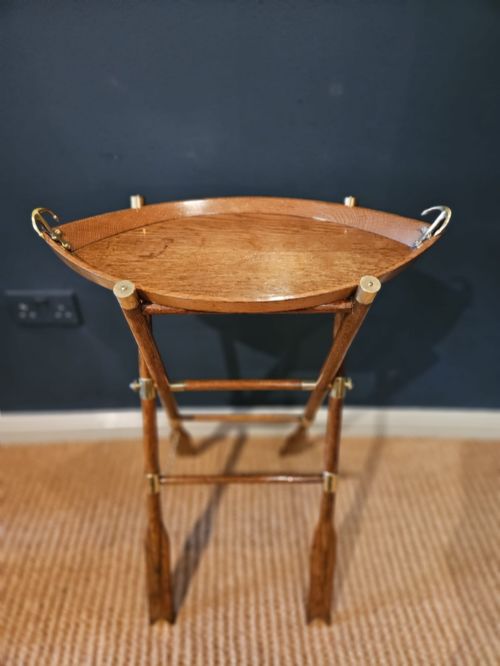
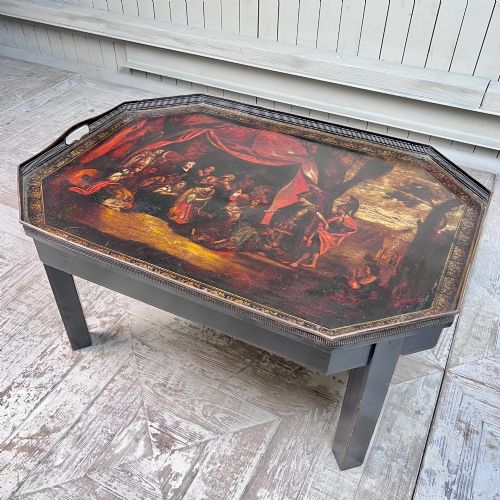
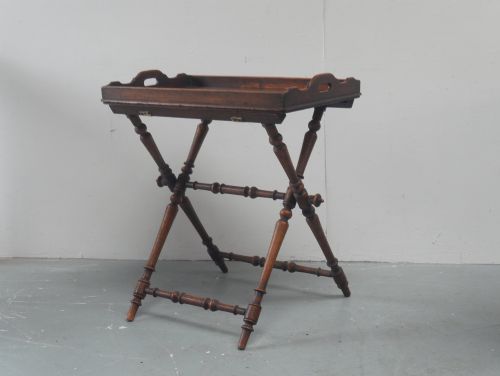
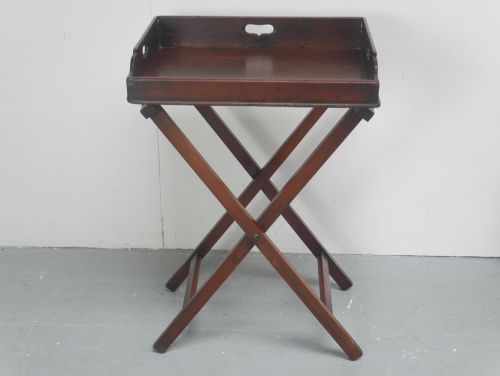
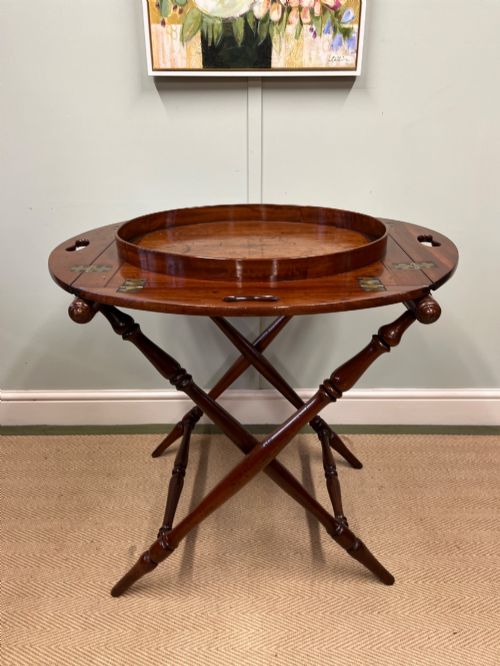
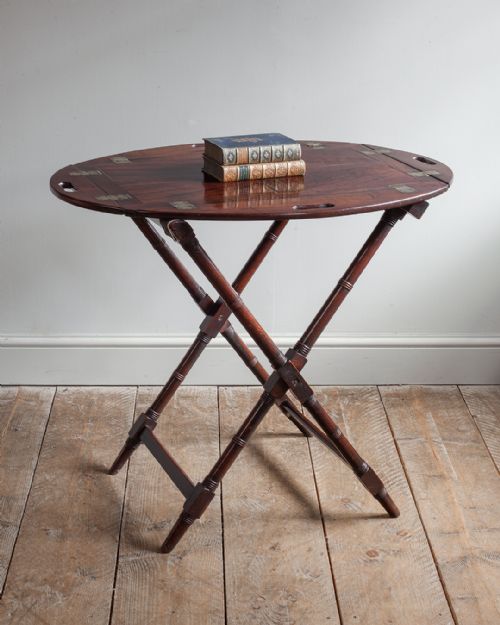
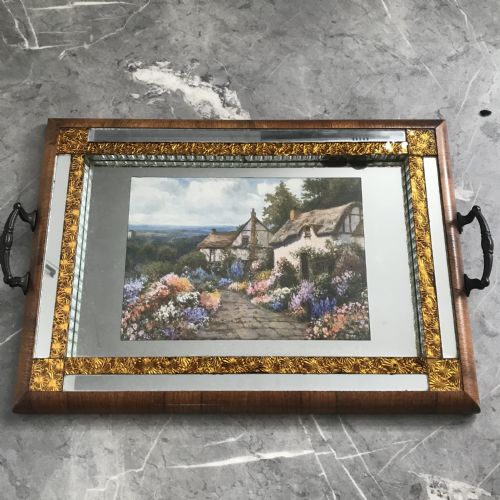
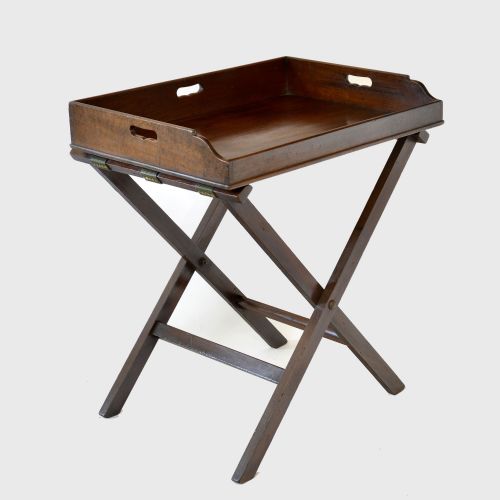
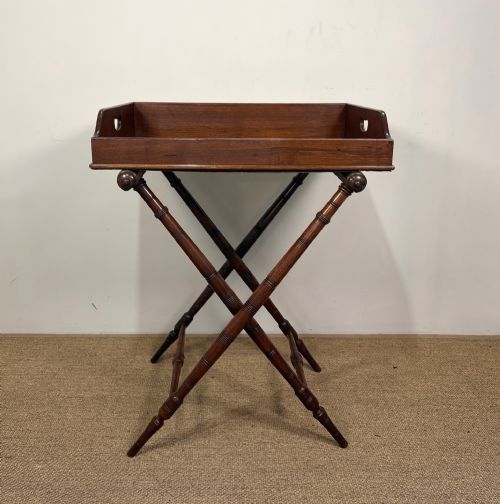
A vintage serving tray table typically takes the form of a removable tray resting upon a folding or rigid wooden stand, often referenced as a butler's tray.
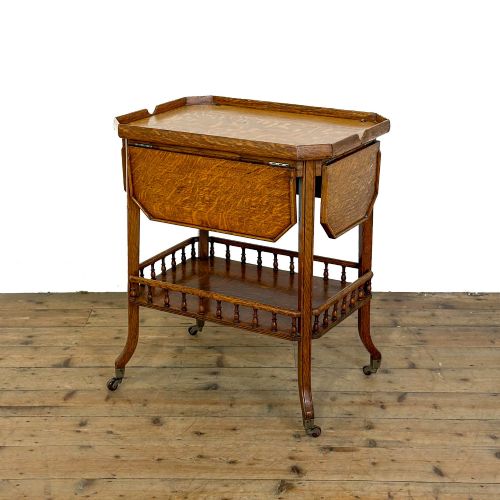
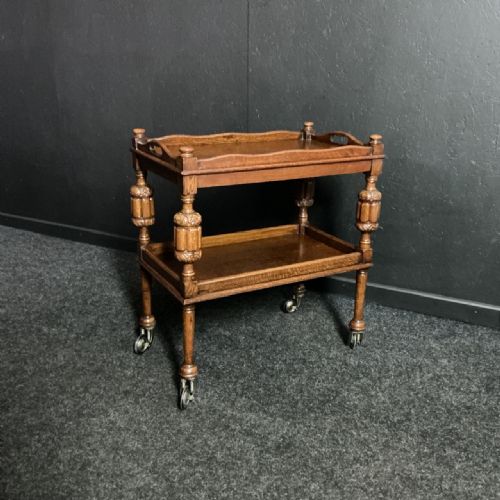
The selection ranges from 18th century Georgian mahogany models to Victorian and Edwardian oak examples, alongside later 1920 and 1930 iterations including tea trolleys and dumb waiters.
Buyers most frequently encounter 19th century and Edwardian mahogany or oak versions equipped with folding X-frame stands or integrated side tables.
Materials and construction
Cabinet makers utilised dense timbers such as mahogany and oak for trays and stands, often employing hinged sides and raised gallery edges to secure glassware during service.
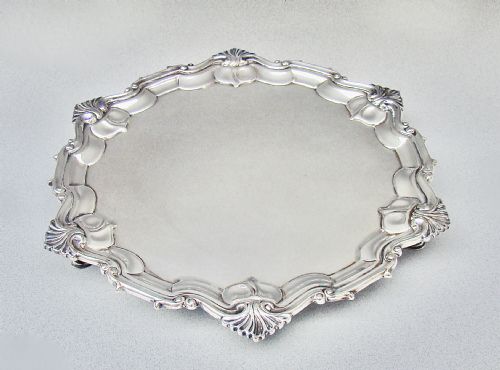
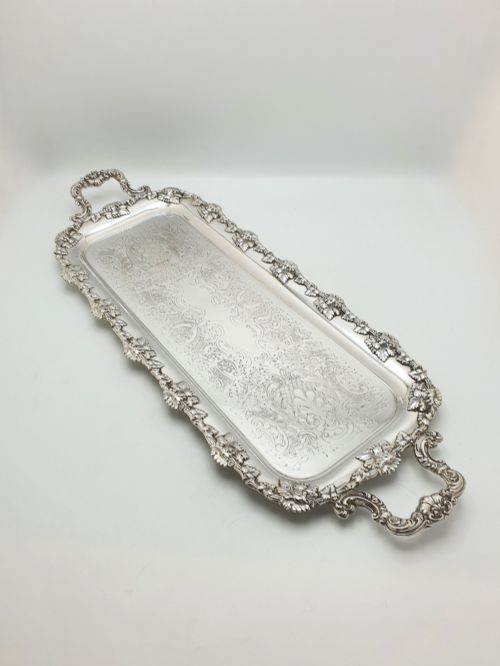
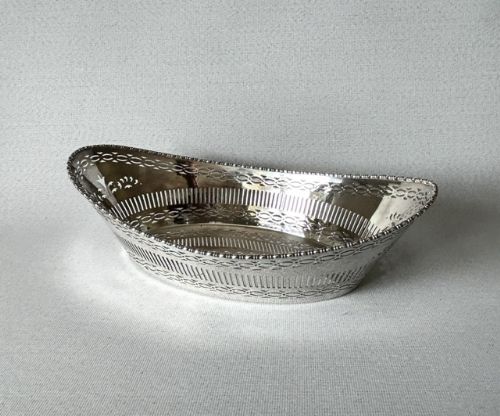
Listings span from the 18th century through to the 1930s, featuring mahogany, oak, brass, and silver plate.
Assessing craftsmanship
Quality rests in the precision of the joinery where the tray meets its folding stand, and the retention of original brass hinges or handles rather than later replacements.
Timbers exhibit superior grain figure and depth of polished finish in earlier Georgian and Victorian pieces compared to utilitarian later production.
William Hutton And Sons·Mappin And Webb·Creswick·Tiffany And Co
The Vintage Serving Tray Table Glossary
- Butler's tray
- A portable rectangular wooden tray with hinged sides that fold flat, designed to fit a matching folding stand. These items allowed servants to transport courses from kitchens to dining rooms.
- Dumb waiter
- A tiered serving stand with revolving or stationary shelves used for holding dishes without requiring extra attendants. These pieces often feature multiple levels supported on a central column or wheeled frame.
- Lazy Susan
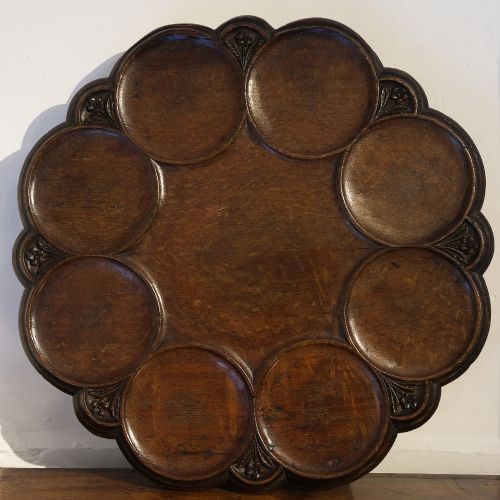
- A rotating circular tray placed upon a table to distribute food easily among diners. They appear in carved wood from the 19th century onwards.
- Old Sheffield plate
- A composite material made by fusing a thin layer of silver to a copper base before rolling and shaping. This technique preceded modern electroplating methods.
Vintage Serving Tray Table: Frequently Asked Questions
How were butler tray tables originally used?
Servants used them to carry food and drink from the kitchens to the dining areas, placing the removable tray directly onto a folding wooden stand upon arrival.
This design allowed staff to clear rooms quickly by folding the frame and tucking the tray away when the meal ended.
Can these tables support heavy items today?
Solid mahogany and oak examples with robust folding stands remain sturdy enough to function as everyday coffee tables or serving surfaces.
It pays to check the alignment of the X-frame hinges to ensure the stand locks securely before placing heavy objects on top.
How do I distinguish Victorian from Edwardian pieces?
Victorian models tend to feature darker, heavier timbers with hand-carved details, brass carry handles, and robust structural framing.
Edwardian examples often present lighter oak or mahogany construction with simpler lines, reflecting a shift towards domestic convenience and tea trolley designs.
Are the trays permanently fixed to the stands?
Traditional butler trays lift off their stands entirely, allowing the wooden base to fold flat for compact storage when not in use.
Later Edwardian and 1920s trolley variants often feature lift-off trays combined with permanent lower shelves or wheels.