

Edwardian Tea Stand
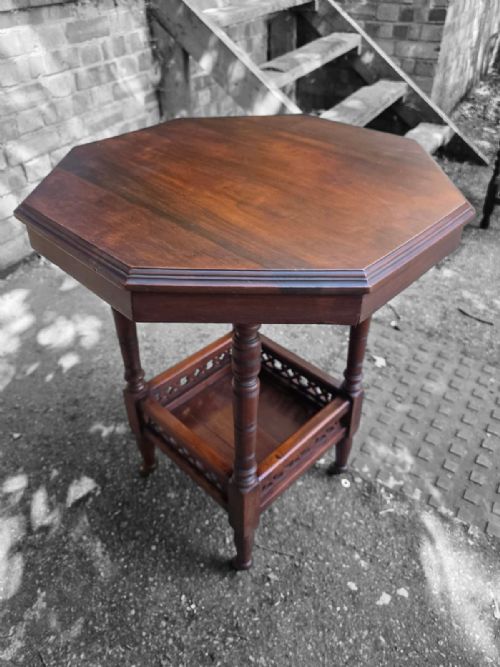
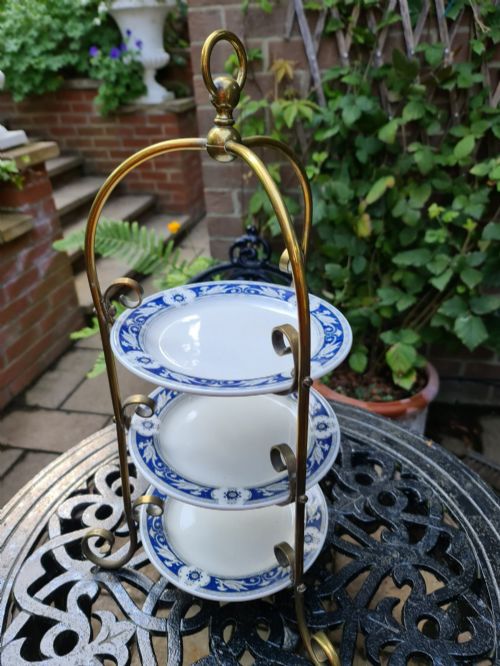
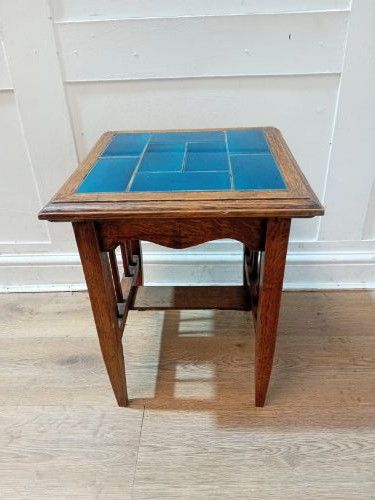
These pieces for an Edwardian tea stand bring afternoon entertaining into the sitting room with folding tiers, heavy trays and low side tables.
Edwardian Tea Stand
An edwardian tea stand encompasses multi-tiered cake stands, folding serving tables, and occasional furniture designed for the parlour. The selections here span the Edwardian period alongside late Victorian and early twentieth-century examples, capturing the social rituals of the era.
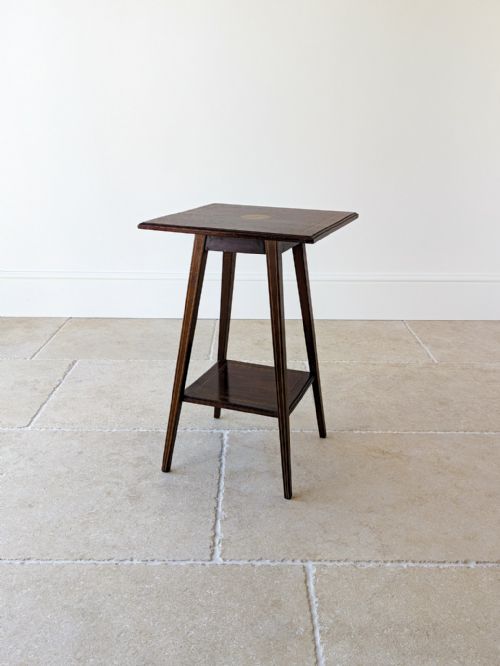
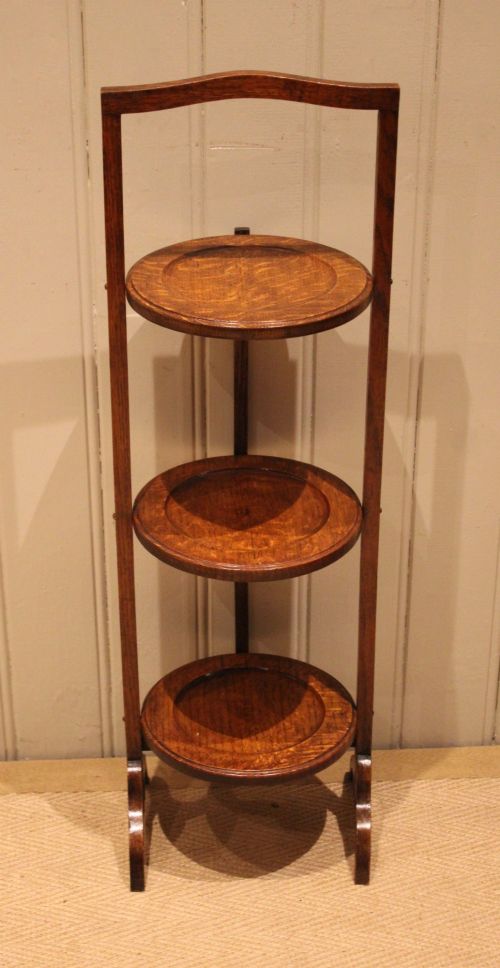
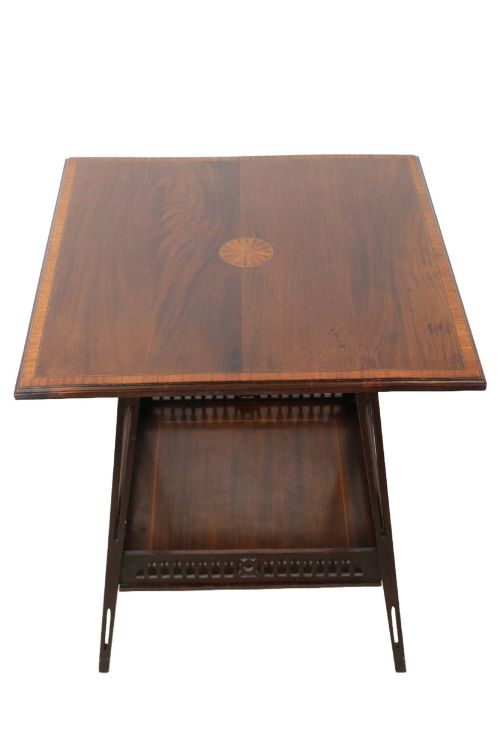
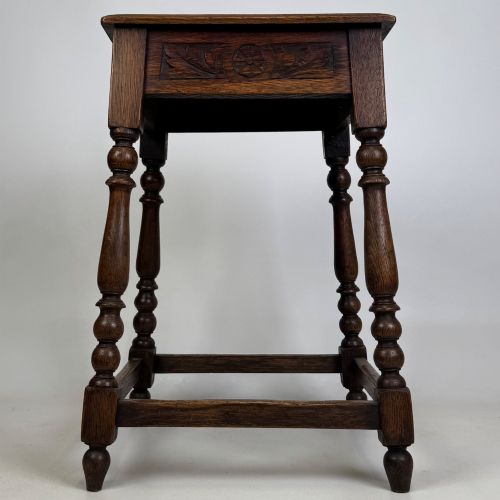
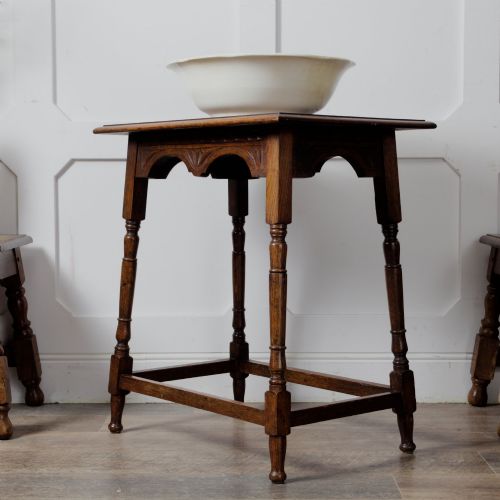
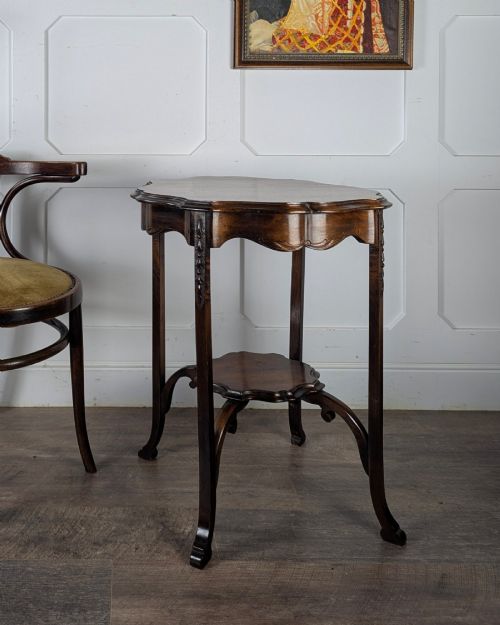
Forms vary from three-tier wooden cake stands and folding monoplane designs to low side tables, lamp tables, and spirit kettles on stands. Walnut and mahogany appear frequently alongside carved oak and occasional inlaid satinwood or boxwood details.
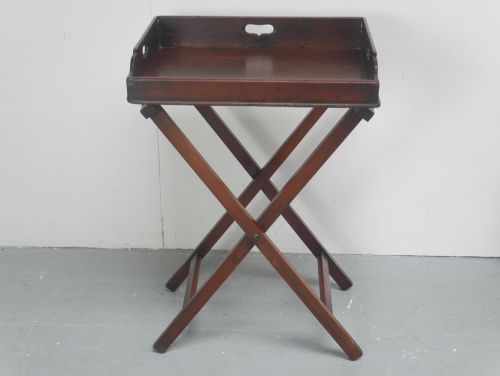
Pieces frequently overlap with related forms like butler trays, serving trolleys, and occasional tables intended for holding silver tea services, cups, and cakes during afternoon gatherings.
How they were made
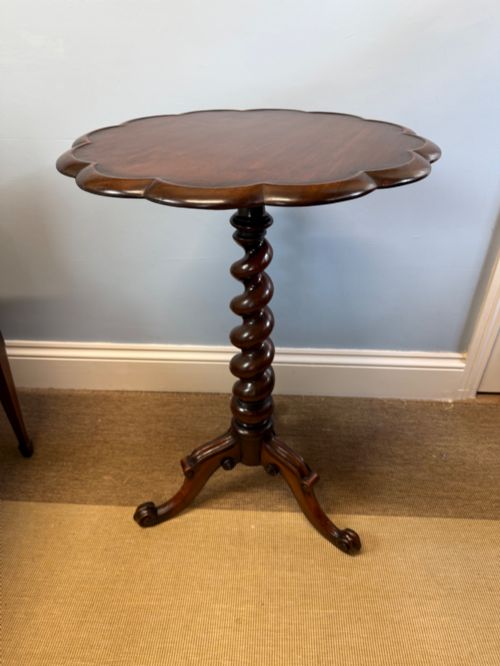
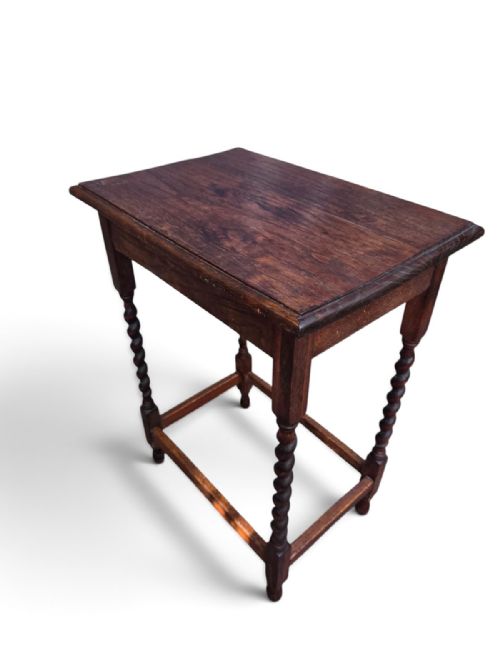
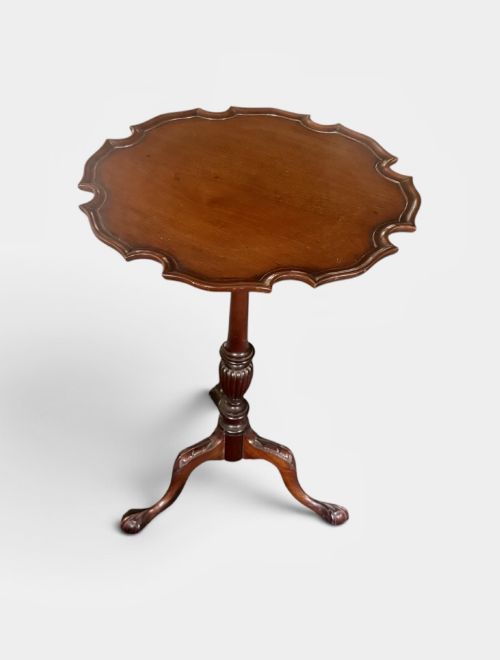
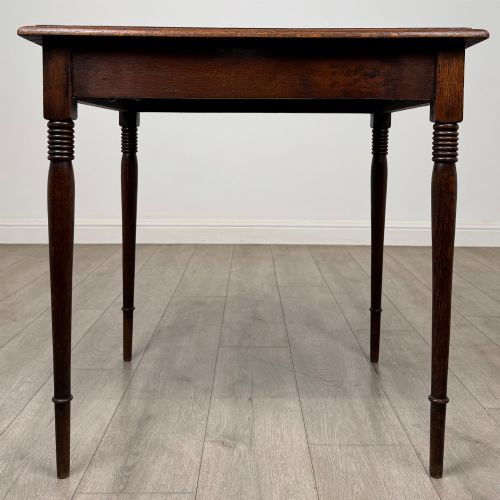
Cabinet makers utilised solid and veneered timbers including mahogany, oak, and walnut, often shaping them with barley twist supports, pie crust rims, or turned legs. Inlaid decoration incorporates satinwood and boxwood banding to define table tops and tiers.
Folding mechanisms rely on clever pivoting joints and hinges that allow cake stands and tray tables to collapse flat when not in use. Metal components such as brass fittings, silver plate, and sterling silver add functional mounts and handles to kettles and stands.
Listings feature oak and mahogany predominantly, alongside walnut, brass, and silver-plated accessories spanning the late nineteenth and early twentieth centuries.
What varies in quality
The standard of a piece depends on the choice of timber figure, such as well-matched figured mahogany or cleanly quarter-sawn oak, coupled with crispness in carved details like barley twists and applied mouldings. Subtle string inlay and tight joints set finer cabinet work apart from simpler utility items.
Makers' marks and stamps from established firms add documented provenance, while bespoke hardware, intact silver plating, and smoothly operating folding mechanisms elevate the execution of functional tea furniture.
Harrods Ltd·Trevor Page & Co·Shapland and Petter·Liberty & Co
The Edwardian Tea Stand Glossary
- Cake stand
- A multi-tiered piece of furniture designed to hold plates of cakes and pastries during afternoon tea. These items frequently feature folding frames for easy storage between uses.
- Barley twist
- A type of turning shaped to resemble a spiral rope or twist of barley, commonly found on the upright supports of oak and walnut tables from this era.
- Pie crust rim
- A raised, decoratively carved edge on a table top that resembles the fluted pastry edge of a pie. This detail prevents small items from rolling off the surface.
- Occasional table
- A small, movable table designed for specific, intermittent uses around a room such as holding a lamp, books, or tea accessories.
- Spirit kettle
- A water kettle mounted on a metal stand above a small spirit burner, used to keep water hot for tea service away from the main kitchen.
Edwardian Tea Stand: Frequently Asked Questions
What is an edwardian tea stand used for?
These stands served tea services, cakes, and cups during formal afternoon gatherings in domestic parlours. Multi-tiered versions allowed hosts to present various baked goods without crowding the main seating area.
They also functioned as mobile surfaces for spirit kettles and teapots, bringing hot water directly to guests seated away from the fireplace.
How do folding cake stands work?
Folding stands utilise pivoting wooden arms or hinged vertical columns that let the circular or oval tiers swing inward or collapse downward. This mechanism allowed servants or hosts to tuck the furniture away neatly when tea service concluded.
Collectors should check that the pivot pins and hinge joints move freely without excessive wobble or friction in the wood.
What woods are typical for these stands?
Mahogany and oak form the vast majority of surviving examples, with walnut appearing in select pieces. Finer versions incorporate satinwood or boxwood string inlay along the edges and table tops.
Earlier transitional pieces may feature Victorian ebonised finishes or heavy carved oak, while Edwardian models lean towards lighter figured mahogany and inlaid motifs.
How do I distinguish an edwardian stand from a later copy?
Authentic pieces show period construction methods, such as hand-cut joinery, appropriate timber shrinkage, and period hardware like brass fixings. Look at the wear patterns on the feet and the patina accumulated on the wood surfaces over decades of use.
Makers' stamps, retailer marks, and registration numbers can also help confirm the production era and link the piece to documented workshops of the time.