
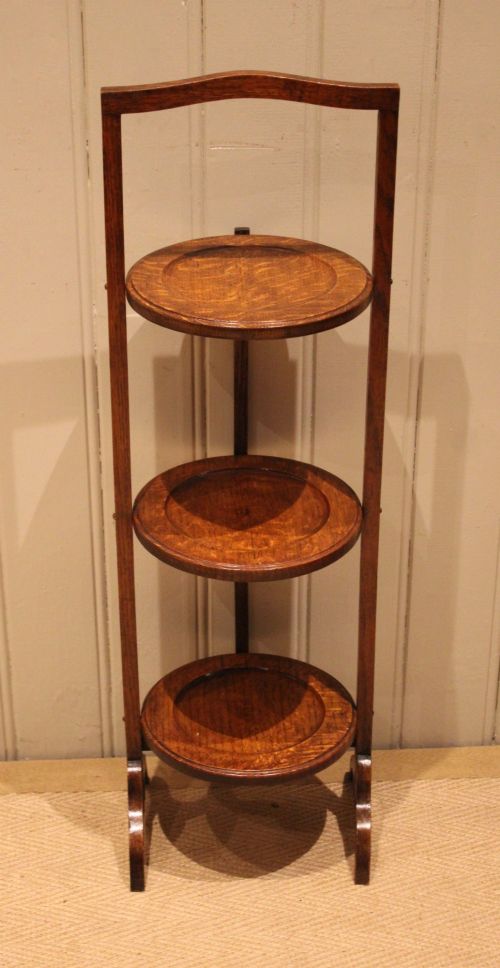
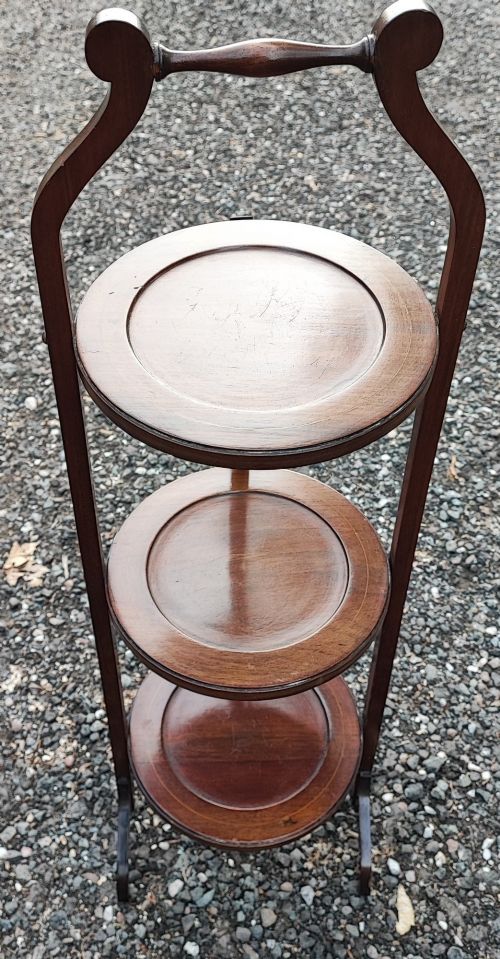
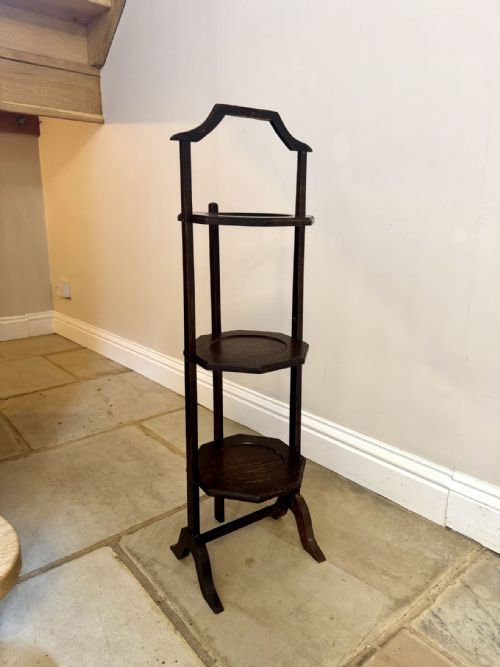


Vintage Wooden Afternoon Tea Stand
These vintage wooden afternoon tea stands are tiered pieces designed to serve cakes, bringing practical display and Edwardian charm to a room.
Vintage Wooden Afternoon Tea Stand
When you search for a vintage wooden afternoon tea stand, you encounter tiered items intended for presenting food during social gatherings. These tiered stands mostly date from the Edwardian era, spanning the early decades of the twentieth century.
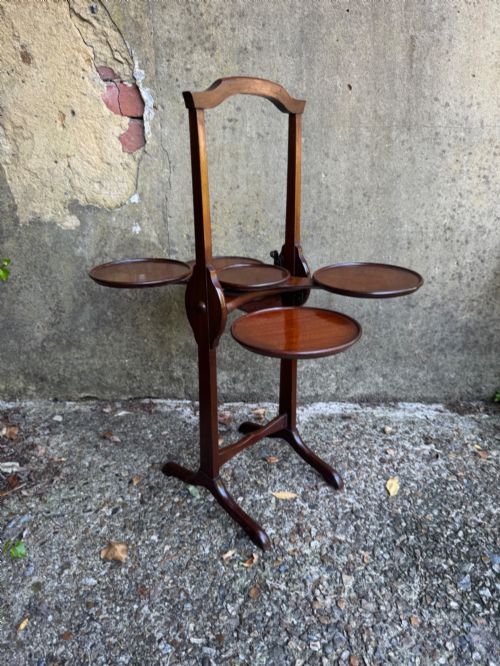
The objects take the form of cake stands, tiered stands, and folding tea tables. Most examples feature multiple levels connected by a central upright, often designed to collapse flat when not in use.
The pieces appearing on this page belong primarily to the Edwardian period, with construction styles reflecting the tastes of 1900, 1910, and 1920. Their primary purpose remains the vertical display of small items, saving table space while adding traditional character.
How they were made
Makers constructed these stands using solid timbers and veneers, relying principally on mahogany and oak as structural foundations. Selected pieces incorporate satinwood alongside boxwood inlay to create decorative contrast on the tiered surfaces.
Hardware components commonly involve brass and iron, utilised for hinges, joints, and folding mechanisms that allow the tiers to collapse. Joinery techniques connect the shelves securely to the central stem while maintaining stability across multiple levels.
The listings exclusively feature wood materials including mahogany, oak, satinwood, and boxwood inlay, combined with brass and iron hardware.
What varies in quality
Quality differences emerge in the selection of timber and the precision of decorative elements such as boxwood inlay. Superior examples display carefully matched grain patterns across the tiers and refined execution in Sheraton Revival styling.
The durability of the folding mechanism and the rigidity of the upright structure distinguish finely made pieces from simpler utilitarian stands. Heavier gauge brass hardware and tight joints contribute to a sturdier construction overall.
The Vintage Wooden Afternoon Tea Stand Glossary
- Edwardian
- A stylistic period spanning the reign of King Edward VII, characterised by lighter furniture designs and revived classical motifs. Pieces from this era often utilise mahogany or oak with subtle inlay work.
- Sheraton Revival
- A furniture style drawing inspiration from late eighteenth-century neoclassical designs, featuring symmetrical forms and decorative stringing. It appears on select stands through contrasting wood veneers.
- Boxwood Inlay
- A technique where small pieces of pale boxwood are inserted into recesses within a darker wood surface to form decorative borders. This ornamentation adds visual depth to the shelves.
- Folding Tea Table
- A dual-purpose furniture form combining a surface for serving beverages with a collapsible frame for easy storage. Certain monoplane variants integrate this concept into tiered cake stands.
Vintage Wooden Afternoon Tea Stand: Frequently Asked Questions
What is a vintage wooden afternoon tea stand used for?
These pieces function primarily as tiered display furniture for serving cakes, pastries, and afternoon tea items. Their vertical design saves space on dining or side tables while presenting food across multiple levels.
Beyond dining use, people often place them in living spaces to display decorative items, plants, or books. The folding capability allows them to be stored compactly when not in active use.
How do you date an Edwardian cake stand?
Dating relies on stylistic markers, construction methods, and recorded production periods typically associated with the early twentieth century. Pieces from this era often exhibit Sheraton Revival influences or specific Edwardian timber choices.
Examining the hardware, such as brass hinges and iron folding brackets, helps confirm the manufacturing era. Most examples date between nineteen hundred and nineteen twenty.
Are these tiered stands sturdy?
The stability of each stand depends on the tightness of its joints and the condition of the folding mechanism. Solid oak and mahogany frames generally provide a stable base for the tiers.
Stands equipped with brass hardware and well-fitted hinges maintain their alignment when opened. Proper placement on a level surface ensures secure everyday use.
What woods were used for these stands?
Makers predominantly employed mahogany and oak to build the frames and tiers of these stands. These durable timbers offered sufficient strength to support multiple shelves while taking a polished finish.
Secondary woods and decorative elements included satinwood and boxwood inlay for contrast. Iron and brass components provided the necessary metalwork for folding joints.
Can these cake stands fold away?
Many examples incorporate folding frames designed to collapse the tiers together for convenient storage. Hinged mechanisms allow the vertical supports to fold flat against one another.
This collapsible design made them practical for occasional use during gatherings. When needed, the stands lock back into an upright position for display.