
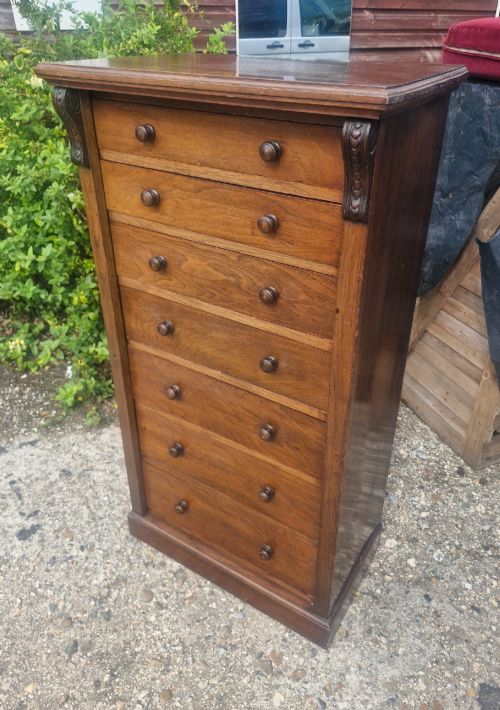


Edwardian Tallboy
When hunting an edwardian tallboy, buyers encounter stately vertical storage pieces designed to maximise bedroom capacity while occupying minimal floor space.
Edwardian Tallboy
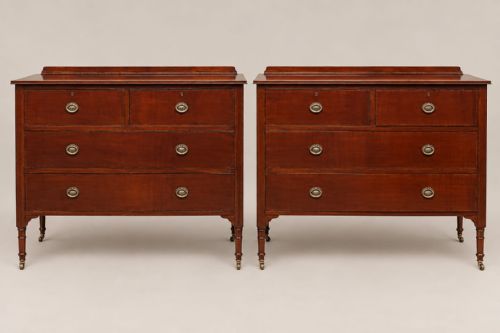
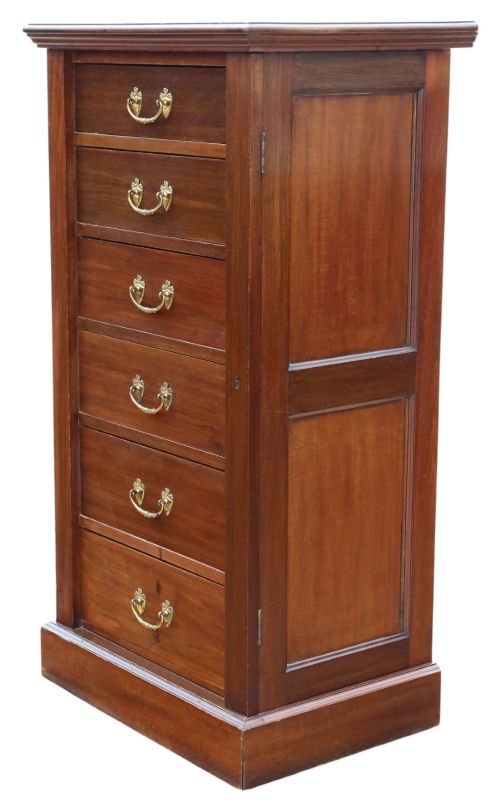
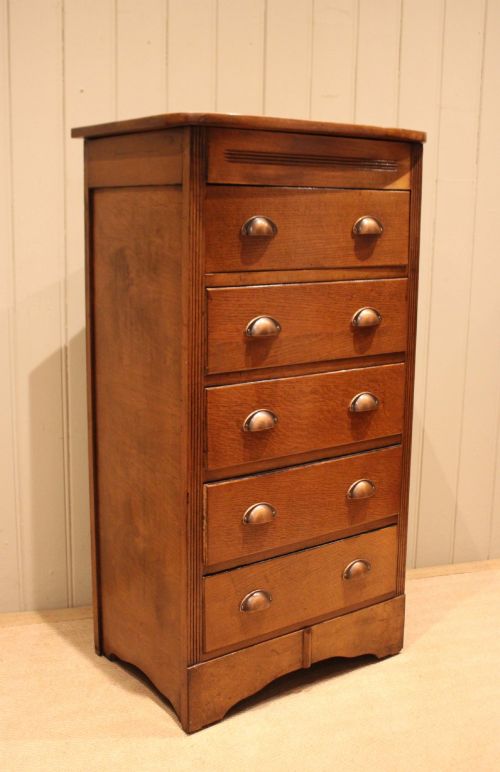
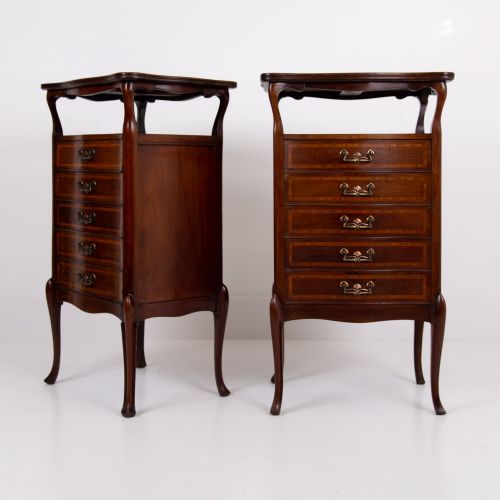
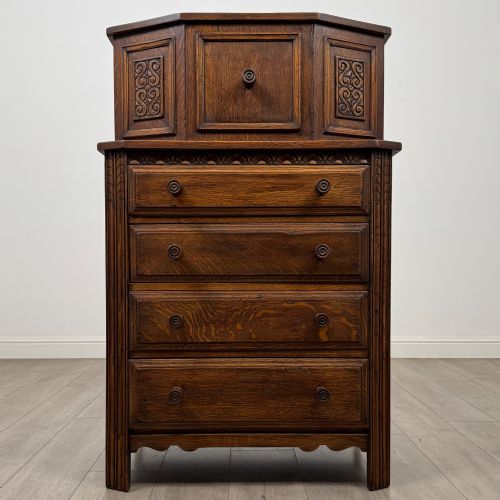
An edwardian tallboy typically combines stacked drawer configurations into a commanding vertical silhouette, often reaching higher than standard bedroom chests. These pieces emerge predominantly from the Edwardian period and adjacent early twentieth-century decades, though Victorian antecedents also appear.
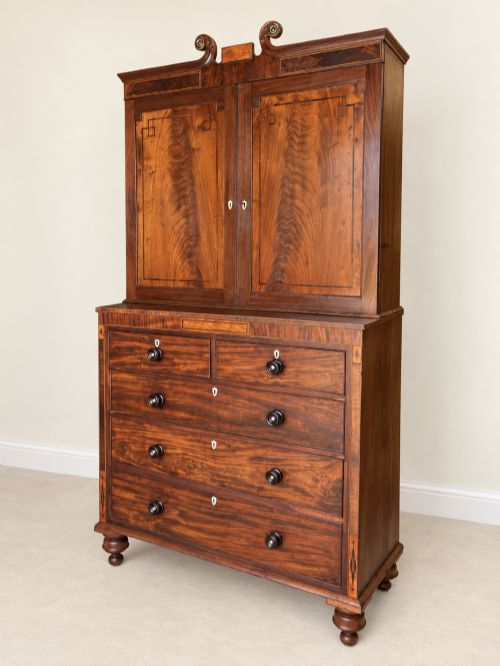
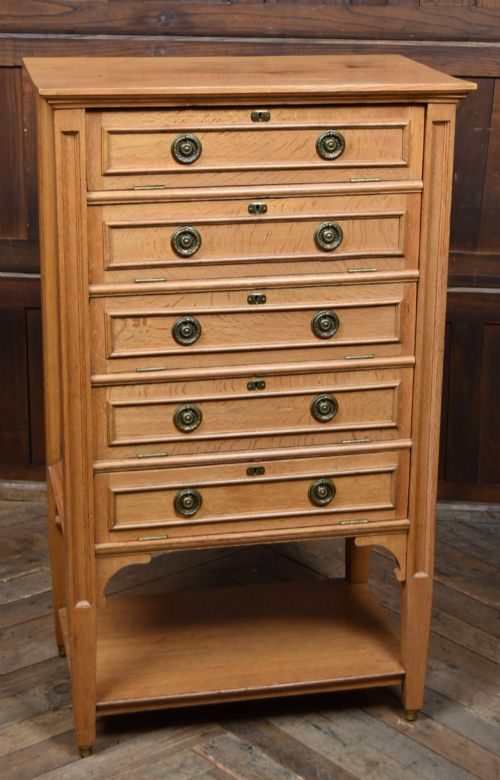
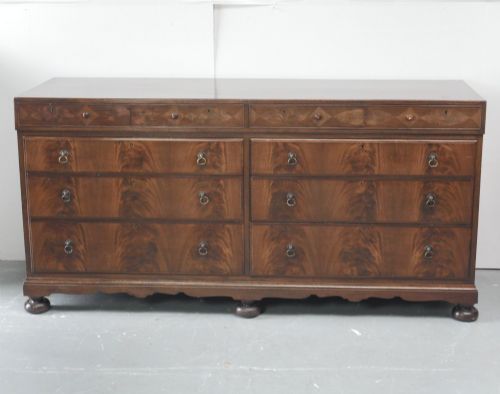
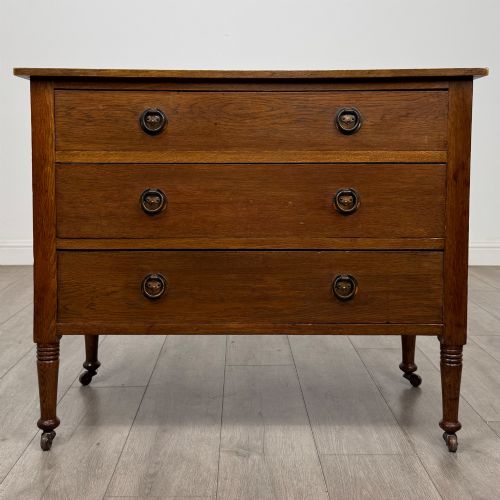
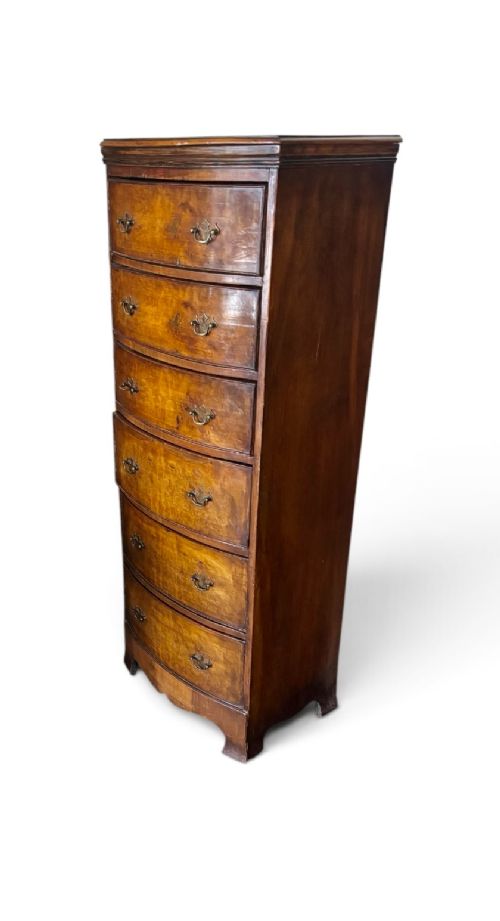
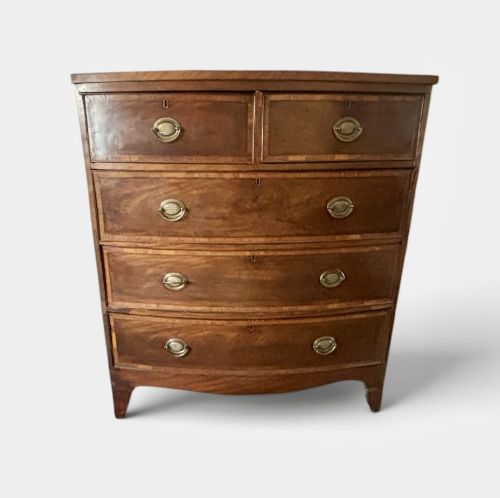
The form adapts to various domestic needs, ranging from narrow bow-fronted drawer arrangements to compactum wardrobes and linen presses. Oak and mahogany serve as the primary structural woods, frequently enhanced by figured veneers or satinwood banding.
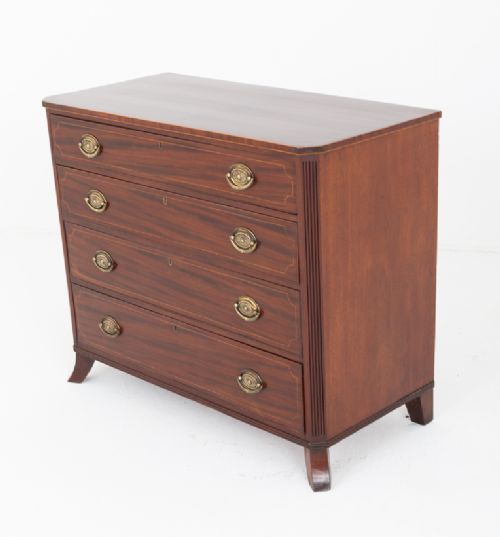
Buyers frequently encounter variations that reflect both Edwardian production methods and earlier Georgian Revival design influences. The resulting pieces balance practical storage utility with the refined proportions characteristic of the era.
Materials and construction
Cabinet makers constructed these tallboys using solid hardwoods like oak and mahogany, supplemented by decorative surfaces of walnut, satinwood, and flame mahogany veneer. Brass handles, escutcheons, and occasional candle sconce mounts provided functional hardware and metallic contrast.
Joinery techniques focused on stability for tall, narrow frames, utilising precision drawer dovetails and internal bracing to support multiple tiers of heavy timber drawers. Timber selection prioritised figured grain patterns, particularly on drawer fronts and top panels, to create visual depth.
Certain Victorian tallboys feature built-in candle sconce mounts, illuminating the dresser when morning light proved insufficient for selecting attire.
Assessing quality
Quality differences emerge in the selection and application of timber veneers, where highly figured walnut, satinwood, or flame mahogany distinguish superior examples from plain oak utility pieces. The precision of the drawer construction and the original integrity of brass hardware further elevate a piece.
Proportion and stylistic restraint separate standard production items from finer workshop output. Well-executed serpentine fronts, subtle string inlay, and balanced vertical scaling indicate careful design provenance.
Whytock And Reid·Sir Clough Williams Ellis·Jas Shoolbred·Warings Liverpool·Heals Of London
The Edwardian Tallboy Glossary
- Tallboy
- A tall chest of drawers or a wardrobe-chest combination arranged vertically to save floor space.
- Wellington chest
- A tall, narrow chest of drawers secured by a hinged vertical locking side bar that fastens with a key.
- Bow front
- A convex curved cabinet or drawer front that projects outward in a smooth arc.
- Satinwood
- A durable, lustrous timber with a yellowish colour, often used for decorative banding and inlay.
- Linen press
- A tall cupboard traditionally used for storing folded textiles and garments on internal sliding trays.
Edwardian Tallboy: Frequently Asked Questions
What is an edwardian tallboy used for?
These tall cabinets provide high-capacity vertical storage for clothing, linens, and personal items within domestic bedrooms.
Their stacked drawer configuration and compact footprint allow owners to store substantial wardrobes without sacrificing valuable floor space.
How do I tell an edwardian tallboy apart from a Victorian one?
Edwardian examples generally exhibit lighter timber tones, refined inlay work, and influences from Georgian Revival or Arts and Crafts styles.
Victorian predecessors tend to feature heavier proportions, darker finishes, and more robust architectural mouldings.
Where should I place a tallboy in a room?
Because of their elevated vertical profile, tallboys suit corners or wall spaces where horizontal furniture would crowd the room.
Their slender proportions ensure they integrate smoothly into bedrooms and dressing areas of varying dimensions.
What woods were used for these cabinets?
Cabinet makers utilised structural timbers including mahogany and oak, often incorporating decorative surfaces of walnut, satinwood, and flame mahogany.
Brass hardware frequently completed the construction details.