





Edwardian Oak Commode
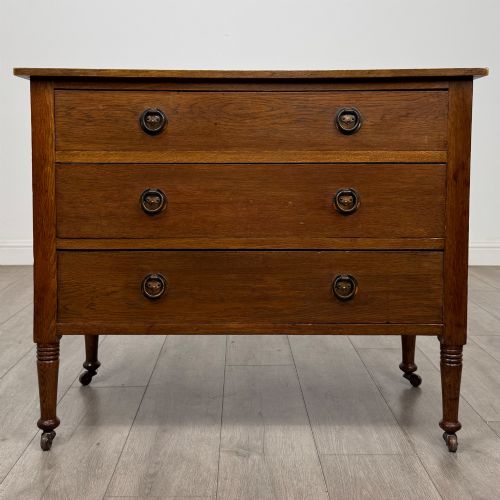
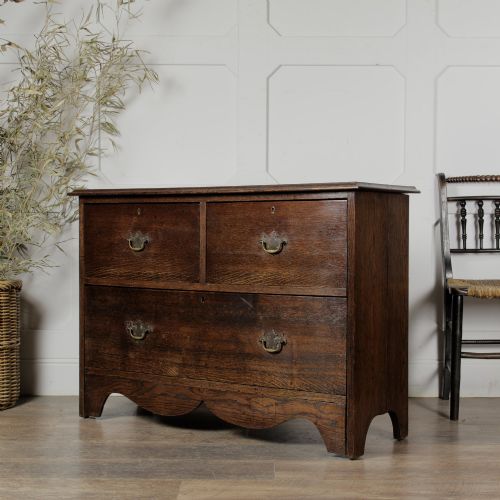
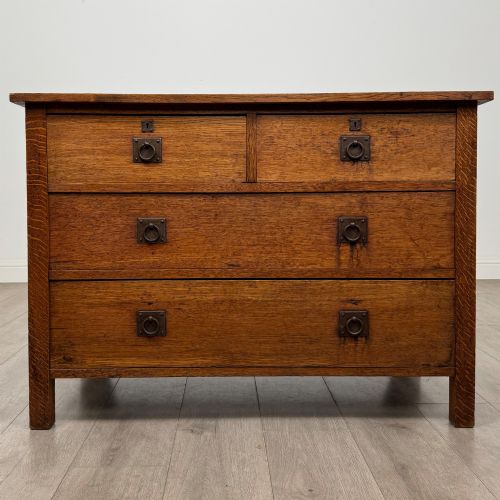
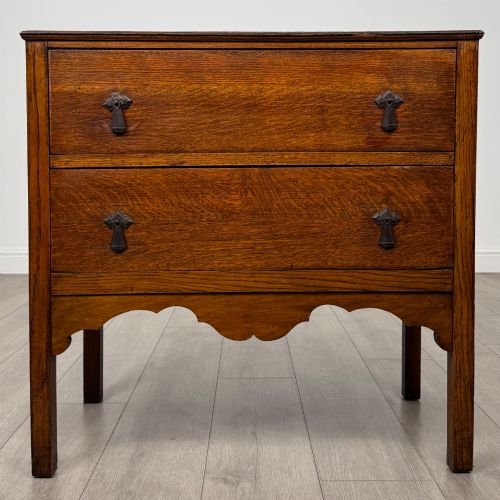
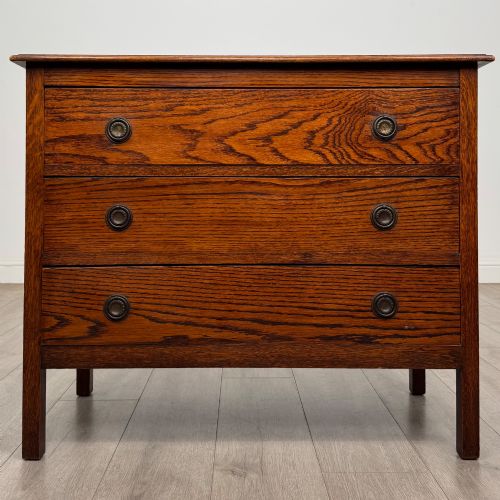
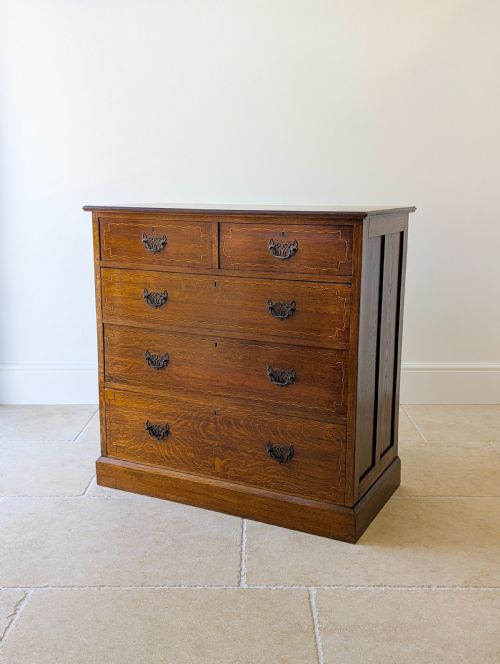
An Edwardian oak commode, taking the form of a sturdy chest of drawers, brings practical storage and honest timber grain into a bedroom.
Edwardian Oak Commode
The edwardian oak commode most frequently appears as a solid chest of drawers shaped by the early twentieth century, offering robust proportions and straight lines. These pieces serve as dependable storage furniture built from timber rather than modern board.
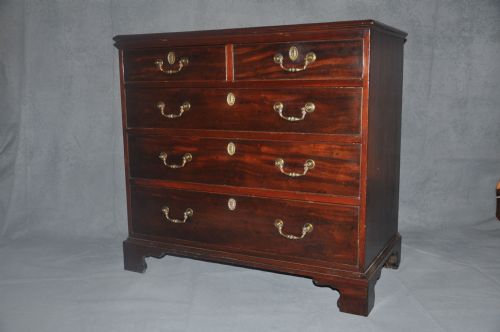
While the core inventory centres on the edwardian period, variations stretch from earlier georgian mahogany forms with sliding shelves to victorian gothic interpretations in oak. Buyers also encounter bow front designs and arts and crafts movements alongside standard rectangular carcases.
Construction and materials
Makers relied upon solid oak and mahogany as the primary structural woods, sometimes adding burr oak veneers and marquetry inlay for decorative contrast. Boxwood stringing and brass handles or escutcheons complete the metalwork details on these case pieces.
Joinery techniques focus on sturdy drawer construction and carcase framing designed to endure daily use. The application of golden oak finishes and polished surfaces protects the natural grain while highlighting the character of the timber.
Listings span multiple eras from the eighteenth century to the twentieth, featuring oak, mahogany, and brass.
Judging the pieces
Quality rests upon the selection of timber and the precision of the joinery, distinguishing plain utilitarian boxes from finer arts and crafts or georgian examples. The thickness of the oak and the crispness of any inlaid details reveal the maker's hand.
Proportion and the retention of original brass hardware elevate certain items above standard production. Pieces that maintain their untouched timber surfaces and smooth-running drawers represent the stronger end of the range.
The Edwardian Oak Commode Glossary
- Commode
- A low chest of drawers or cabinet designed for domestic storage. In these listings, the term describes case furniture with multiple drawers.
- Bow front
- A cabinet front that curves outward in a convex arc. This shape softens the profile of standard rectangular chests.
- Marquetry inlay
- Decorative patterns formed by fitting small pieces of wood veneer into the carcase surface. It adds contrasting tones and geometric designs to the timber.
- Slide
- A pull-out shelf positioned above the top drawer of a chest. It acts as a temporary surface for folding garments or placing small items.
- Arts and crafts
- A design movement favouring handcraftsmanship and simple construction over mass production. Pieces from this style often feature exposed joints and plain oak surfaces.
Edwardian Oak Commode: Frequently Asked Questions
What is an edwardian oak commode?
An edwardian oak commode is fundamentally a chest of drawers constructed during the early twentieth century using solid oak timber. These practical items were designed for bedrooms to hold clothing and personal belongings.
They combine straightforward storage capacity with the warm grain of natural wood, fitting easily into traditional and modern interiors alike.
How do I spot an edwardian piece?
Edwardian pieces generally display lighter oak tones, simpler hardware, and a focus on utility without heavy ornamentation. They often lack the darker finishes and elaborate carvings found in earlier victorian furniture.
Checking the drawer construction and timber thickness helps confirm the early twentieth-century period of manufacture.
Where should I place a chest of drawers?
These chests work well in bedrooms, hallways, or living spaces where surface area and enclosed storage are both required. Their solid timber construction makes them durable enough for daily domestic service.
Keep them away from direct heat sources and strong sunlight to protect the polished oak surfaces and prevent timber movement.
What is the difference between oak and mahogany?
Oak is a native British hardwood known for its prominent grain pattern, durability, and golden-brown tone. Mahogany is a denser, darker imported timber prized for its smooth texture and rich reddish-brown colour.
Both materials were utilised across different periods, with oak dominating the edwardian items and mahogany frequenting the georgian pieces.