

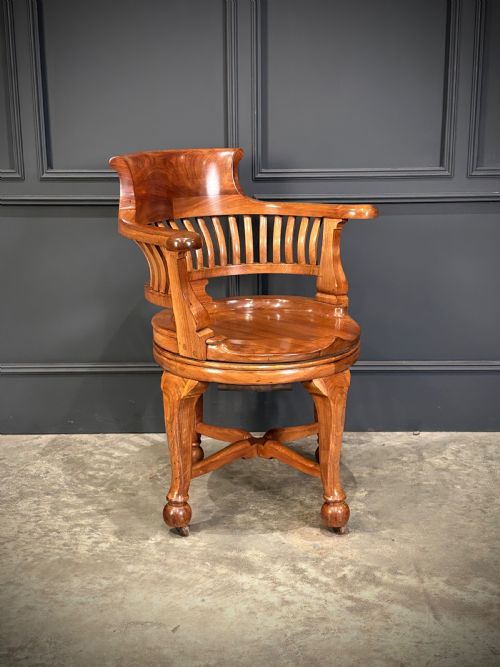
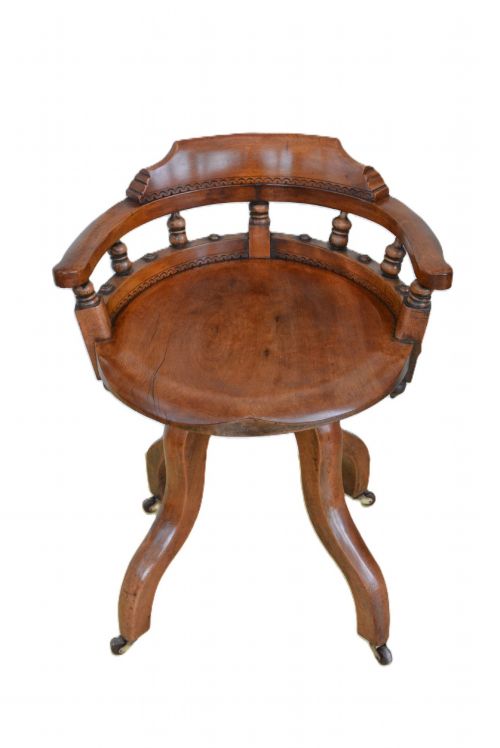


Edwardian Swivel Chair
An edwardian swivel chair brings functional rotation and period craftsmanship together for daily administrative use.
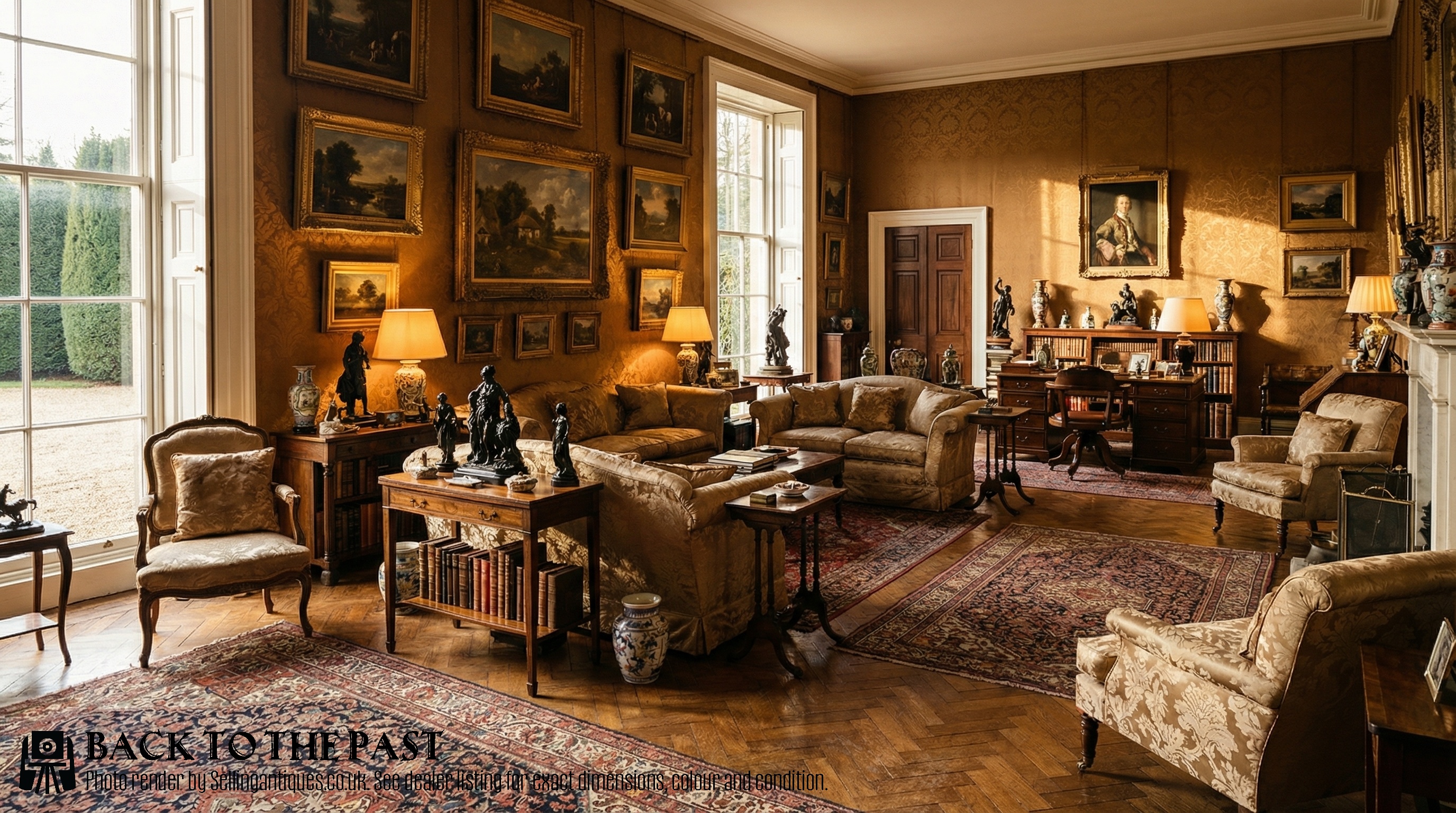
Edwardian Swivel Chair
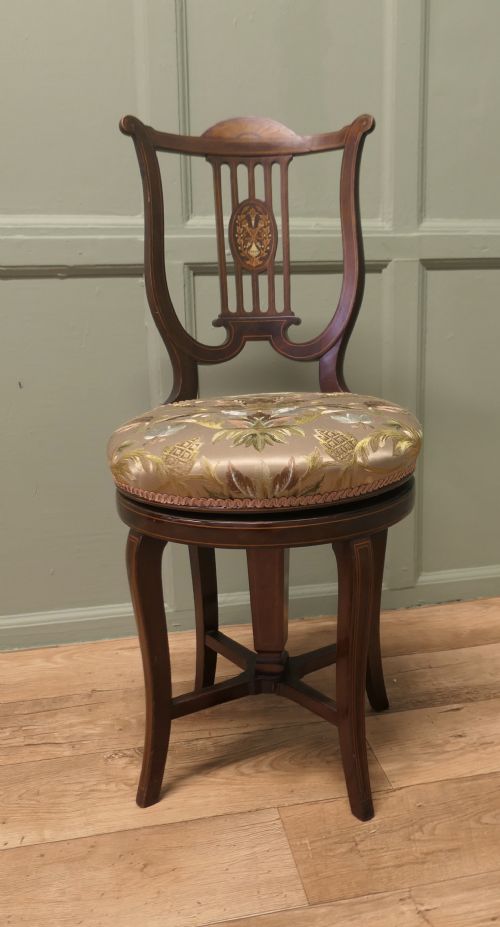
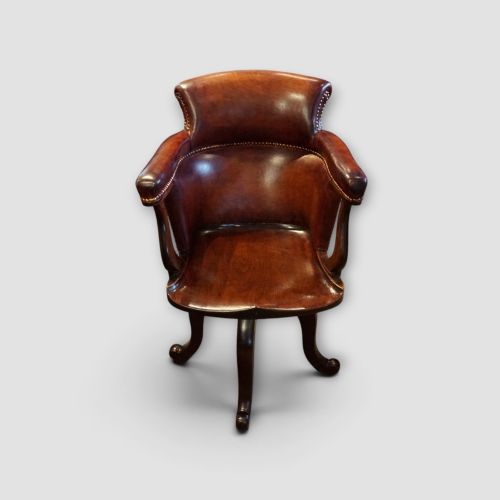
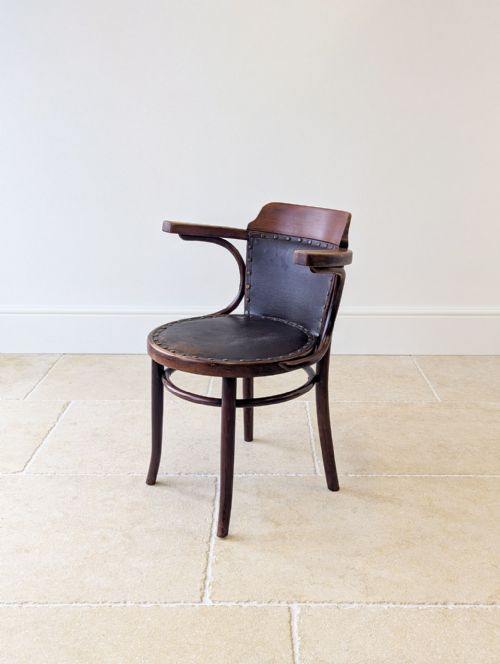
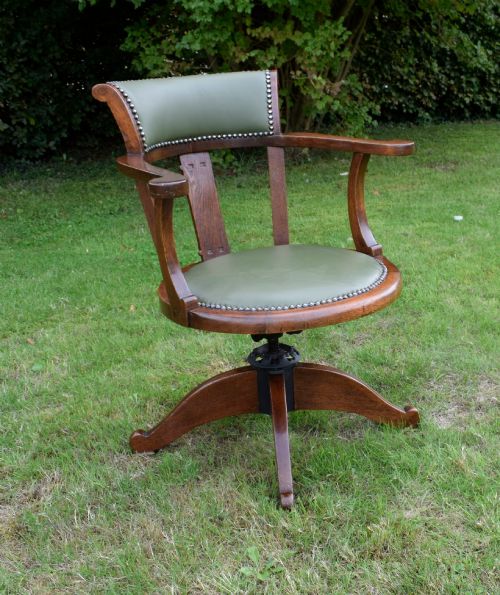
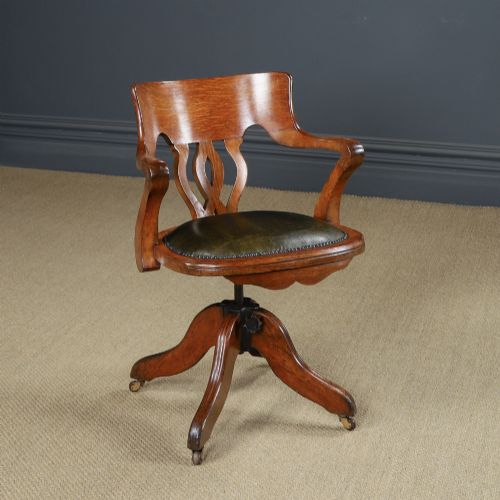
The edwardian swivel chair encompasses revolving desk chairs and office seating produced around the turn of the twentieth century, bridging late Victorian heavy timber design and more streamlined early twentieth-century office furniture.
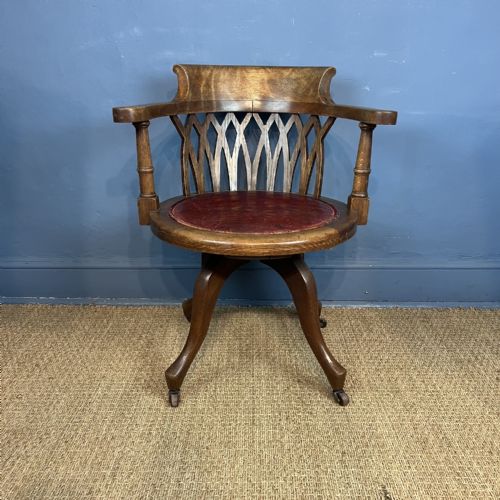
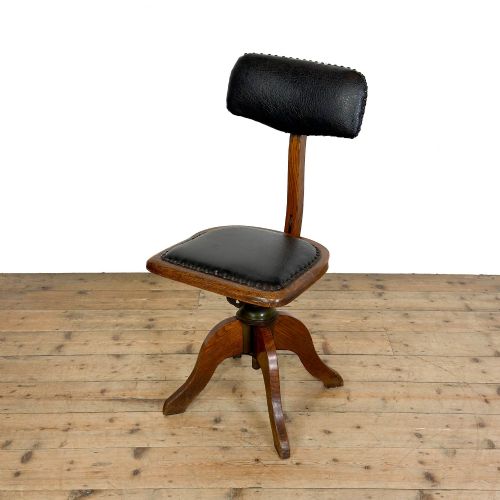
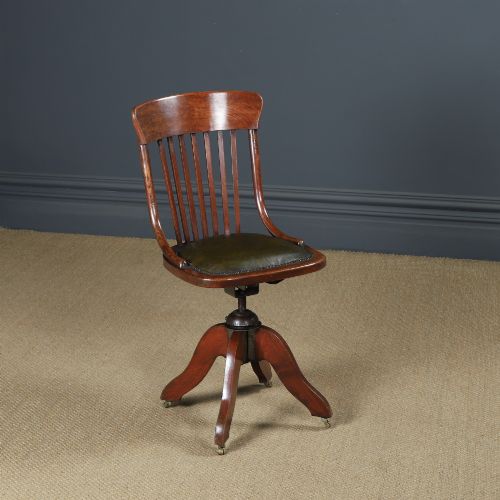
Most examples found in this category consist of solid oak or mahogany frames equipped with central revolving mechanisms, often featuring leather upholstered seats or bentwood slats designed for sustained workspace posture.
Materials and Construction
Frames rely predominantly on seasoned hardwoods like oak, mahogany, walnut and beech, shaped through steam-bending or joinery to form sturdy spindle backs and supportive armrests.
Cast iron and brass swivel mechanisms provide the rotational and height-adjustable actions, joined to wooden spider bases fitted with castors for mobility across office floors.
Maritime offices aboard passenger ships utilised weighted revolving chairs so clerks could stay upright during rough Atlantic crossings.
Quality and Build
Construction standards depend on the integrity of the under-seat iron mechanism and the rigidity of the revolving spindle, where minimal lateral wobble indicates superior original engineering and preserved joinery.
The selection of timber, the depth of manual carving on the crest rails, and the quality of secondary woods determine whether a piece belongs to standard commercial production or higher-tier workshop output.
Kendrick & Jefferson·James Shoolbred
The Edwardian Swivel Chair Glossary
- Swivel mechanism
- The central iron or brass assembly allowing the seat to rotate fully on its vertical axis. This hardware often incorporates threaded screws for height adjustment.
- Spindle back
- A seat back composed of numerous turned vertical wooden rods. These elements provide slender yet strong support without excess weight.
- Rise and fall
- An adjustable height mechanism operated by a threaded column or screw action. It allows the seat level to be raised or lowered relative to the desk.
- Captain's chair
- A sturdy wooden armchair featuring a rounded enclosing back rail supported by spindles. They were widely adapted for office and desk use during the late nineteenth and early twentieth centuries.
Edwardian Swivel Chair: Frequently Asked Questions
How do I adjust the height on these chairs?
Many examples feature a threaded iron spindle beneath the seat, allowing the upper chair portion to be wound up or down by hand. Other models utilise lever-operated tilt mechanisms introduced during the early twentieth century.
Care should be taken not to unscrew the spindle beyond its intended stop point to prevent damage to the internal thread.
Can I use an antique swivel chair daily?
These pieces were built for commercial office environments using durable hardwoods and robust iron hardware, making them well-suited for modern study or desk use.
Routine maintenance involves checking the under-seat fixings and occasionally lubricating the central revolving pivot to ensure smooth operation.
What is the difference between Victorian and Edwardian office chairs?
Victorian office seating tends to feature heavier proportions, darker woods, and more elaborate carved ornamentation. Edwardian versions often display lighter construction, simpler spindle arrangements, and restrained use of inlay.
Both periods share the mechanical innovations of the revolving base and adjustable tilt functions.
How do I clean the leather seat pad?
Original or period-replacement leather benefits from gentle cleaning using a damp cloth and mild soap, avoiding harsh chemical solvents that dry out the hide. Applying a neutral leather balm helps maintain flexibility and preserves the surface sheen.
Wooden frames require only occasional dusting and waxing to protect the polished finish.