




Edwardian Style Mantel Clock
An edwardian style mantel clock brings formal proportion and classic timekeeping to a room, combining brass, wood and enamel in enduring domestic forms.
Edwardian Style Mantel Clock
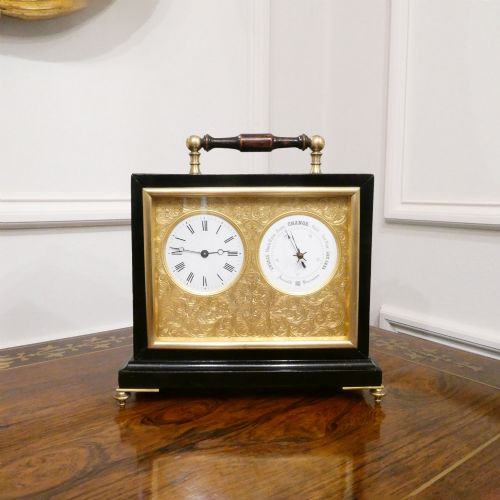
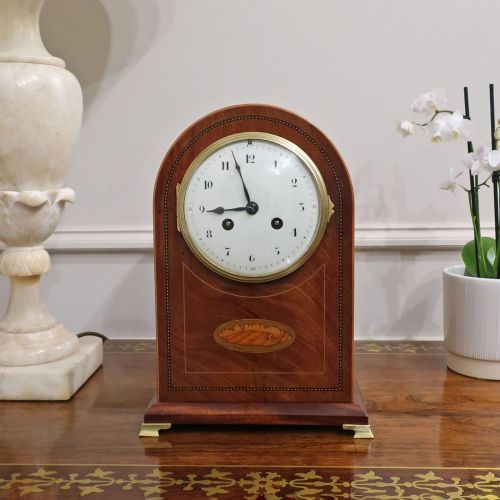
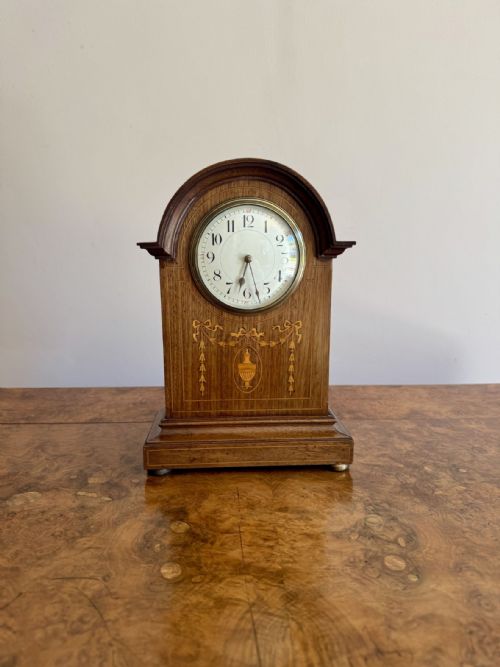
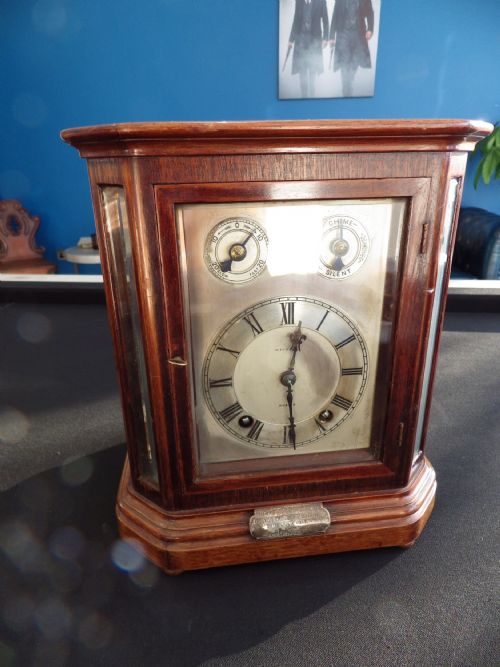
An edwardian style mantel clock encompasses portable timepieces and striking clock forms designed to sit upon furniture surfaces. The selection leans heavily toward bracket clocks, balloon cases and smaller desk variations.
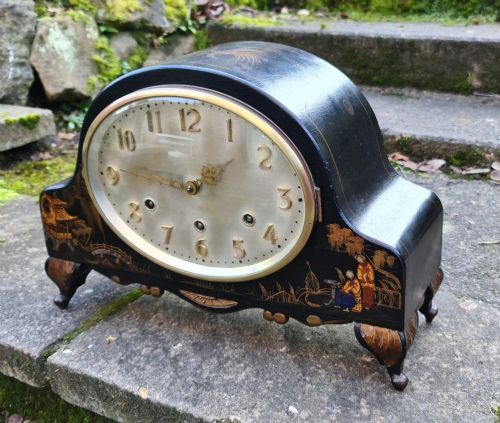
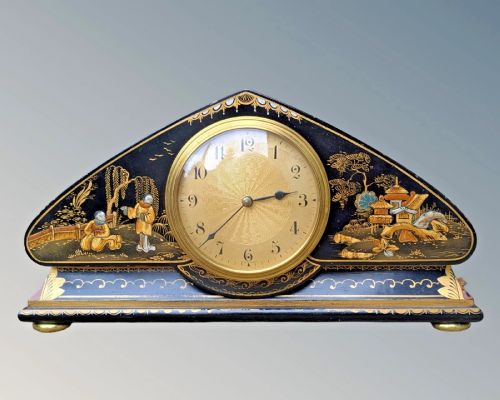
Makers drew on diverse historical aesthetics, ranging from Chinoiserie lacquer and neoclassical inlay to ornate Belle Epoque gilt bronze. Pieces span original Edwardian manufacture alongside Victorian antecedents and later revival items.
The objects serve primarily as working timepieces with distinct decorative presence, often featuring silvered dials, glass panels and specialist chime movements.
Materials and Construction
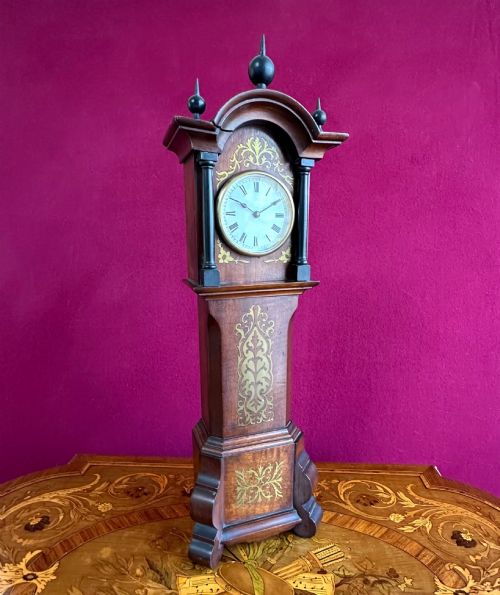
Cabinet makers utilised dense timbers such as mahogany, satinwood, burr walnut and ebonised wood, frequently incorporating delicate inlay work or hand-painted porcelain panels.
Metal components relied on cast brass, gilt bronze and silvered elements, complemented by glass viewing panels and vitreous enamel dials with dark numerals.
Distinctions in Quality
Superior items separate themselves through the crispness of timber inlay, the weight and gilding quality of brass mounts, and the integration of specialised movements like eight-day or quarter-striking mechanisms.
Finishing touches dictate the upper tier, seen in hand-painted porcelain details, bevelled glass and robust case construction rather than simple surface decoration.
J C Vickery London·Baldwin of Loughborough·Liberty s London·Asprey Of London
The Edwardian Style Mantel Clock Glossary
- Bracket clock
- A portable spring-driven clock originally designed to sit on a wall bracket. These pieces typically feature arched wooden cases and carrying handles.
- Fusee movement
- A mechanical drive system utilising a conical pulley to maintain even tension on the mainspring as it unwinds. This mechanism improves timekeeping consistency.
- Balloon case
- A clock case shaped with a curved, swelling upper profile reminiscent of early hot air balloons. The form appears frequently in mahogany and satinwood.
- Chinoiserie
- European decorative style imitating Chinese artistic traditions. Items often feature painted lacquer finishes in green, cream or dark tones.
- Crystal regulator
- A timepiece enclosed predominantly by bevelled glass panels held within a brass framework. This design displays the internal movement from multiple angles.
Edwardian Style Mantel Clock: Frequently Asked Questions
How do I wind my mantel clock?
Most mechanical models utilise a small key inserted into specific dial holes to tension the spring. Care must be taken not to overwind the movement.
Quarter-striking and eight-day variants require steady, measured turns until resistance meets the hand.
What is a fusee movement?
A fusee is a conical pulley connected to the mainspring via a chain or cord. It compensates for the decreasing power of the spring as it unwinds.
This system ensures the clock delivers consistent force to the gear train for accurate timekeeping.
Where should I place a bracket clock?
These clocks sit securely on stable horizontal surfaces such as mantelpieces, desks or sturdy side tables. Level placement helps the pendulum or balance wheel maintain an even beat.
Avoid locations subject to direct sunlight or damp conditions to protect wooden veneers and enamel dials.
How do I date an Edwardian clock?
Dating relies on stylistic clues, timber choices, dial materials and any inscribed maker signatures. Edwardian pieces often combine mahogany cases with satinwood inlay or brass bracket feet.
Comparing movement types and hallmark details provides further chronological context.