





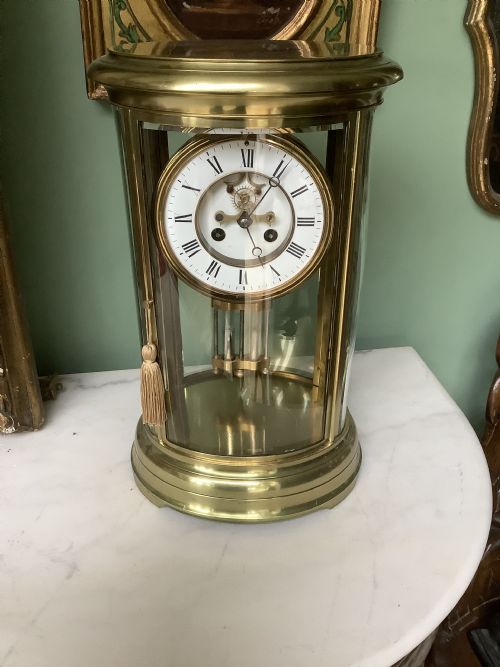




Antique Mechanical Clockwork
Antique mechanical clockwork brings together brass, glass, wood and enamel in pieces that measure time and move by hand.
Antique Mechanical Clockwork
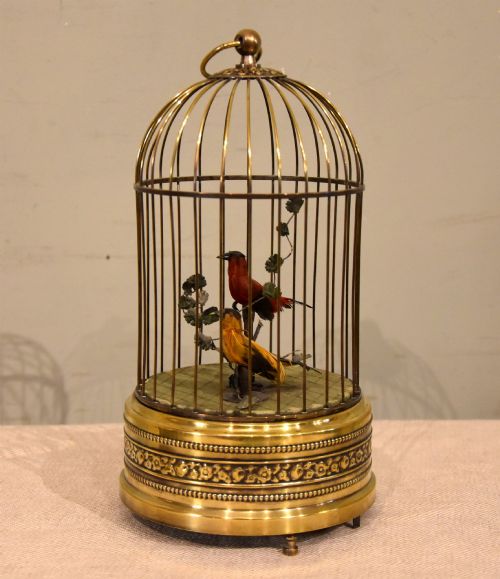
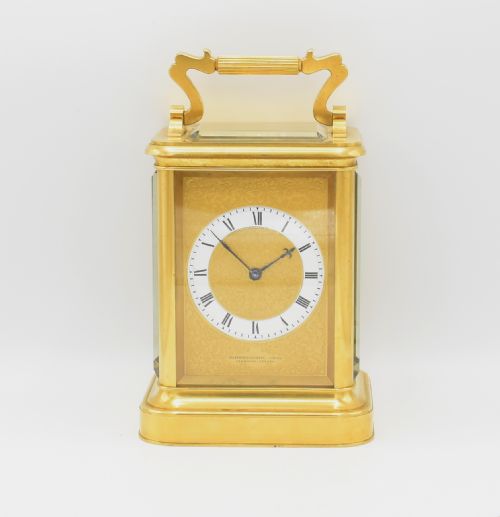
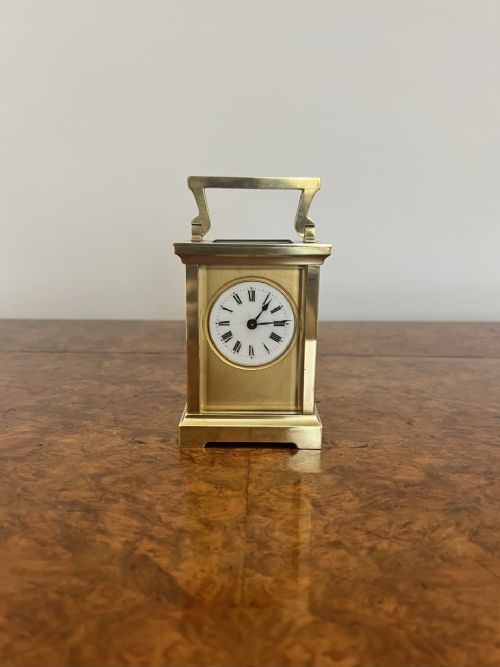
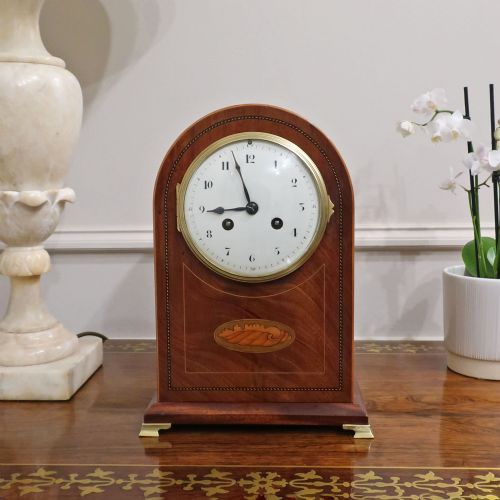
Antique mechanical clockwork covers items driven by spring and gear rather than electricity, spanning mantel clocks, carriage clocks, wall clocks and automata. You will encounter carriage clocks in brass, skeleton clocks under glass domes, and musical boxes or singing bird cages.
The objects originate from Victorian Britain, Belle Epoque France, and the Black Forest in Germany. They range from dial wall clocks to complex mechanical dioramas and singing bird automata.
Each piece relies on wound springs, fusee movements or gear trains to tick, chime or animate figures. The selection here reflects domestic timepieces and novelty pieces spanning the nineteenth and early twentieth centuries.
Materials and construction
Brass provides the plates, wheels, bezels and escapements of the movements, often paired with gilt finishes or housed inside glass cases. Wood appears in mahogany, walnut and papier-mâché for cases, brackets and wall dials.
Enamel serves for dial faces with painted Roman or Arabic numerals, while glass domes protect delicate skeleton clocks and singing bird cages from dust. Metal components are cut, turned and assembled by hand to mesh within the gear trains.
Antique Mechanical Clockwork Retail Price Guide 2026
Typical asking prices for mechanical clockwork among the pieces listed under this phrase on Sellingantiques today, from the lower quarter to the upper quarter. They describe what is for sale here now, not the wider market.
A French bulldog automaton by Roulett & Decamps waits inside to twitch its ears.
What separates the examples
Quality rests in the crispness of the engraving on carriage clock cases and the precision of the wheel work in skeleton movements. Finer gear cutting and finished brass plates mark out better workshop production.
Case materials show distinction through figured walnut veneers, polished mahogany and heavy cast brass frames rather than thin pressed metal. The complexity of the mechanism, from quarter striking to automated movement, dictates the standard of the piece.
Goldsmiths Alliance Ltd·Karl Griesbaum·Delépine Barrois·Rudge Swindon·Piggin Norwich·Baveux Jacot·James Grohé·Roulett Decamps
The Antique Mechanical Clockwork Glossary
- Fusee
- A conical pulley used in clocks to maintain even power from the mainspring as it unwinds. This maintains consistent timekeeping across the winding cycle.
- Skeleton clock
- A timepiece with open plates that expose the gear train and movement to view. They sit beneath glass domes to protect the delicate wheel work.
- Automaton
- A mechanical device made to imitate human or animal action. Examples include singing birds in cages and moving dioramas driven by clockwork.
- Carriage clock
- A portable spring-driven clock with a carrying handle, developed for travel in the nineteenth century. They usually feature brass and glass construction.
- Striking clock
- A timepiece that chimes the hours or quarters automatically using a separate gear train and hammer system.
Antique Mechanical Clockwork: Frequently Asked Questions
How do I wind a mechanical clock?
Use the matching key on the winding arbor and turn it gently until you feel resistance. Do not overwind, as this can snap the mainspring.
Keep track of whether the movement is an eight-day or fourteen-day train so you know how often maintenance is required.
Why does a fusee clock keep better time?
The conical fusee pulley compensates for the declining power of the uncoiling spring. This delivers equal force to the escapement throughout the run.
Simple spring-driven clocks lack this device and tend to lose accuracy as they wind down.
Where should I place a skeleton clock?
Keep it on a stable surface away from direct sunlight, drafts and damp air. The glass dome must remain in place to keep dust away from the exposed brass wheels.
Level the surface carefully so the pendulum or balance wheel swings true.
How do mechanical singing birds work?
A spring-driven motor rotates a small brass cylinder with pins that lift levers connected to bellows and whistles. This creates the varied notes and throat movements of the bird.
Feathers cover a papier-mâché or metal body housed inside a brass cage or box.