
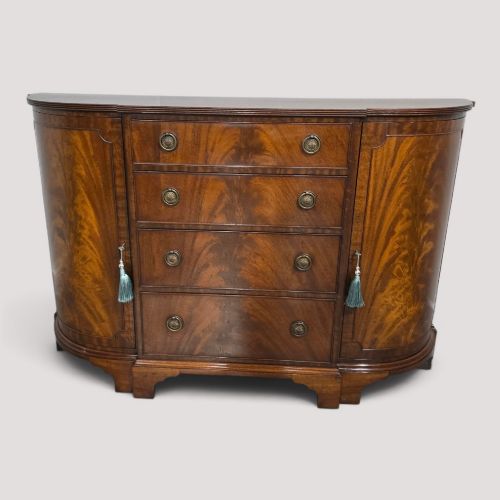
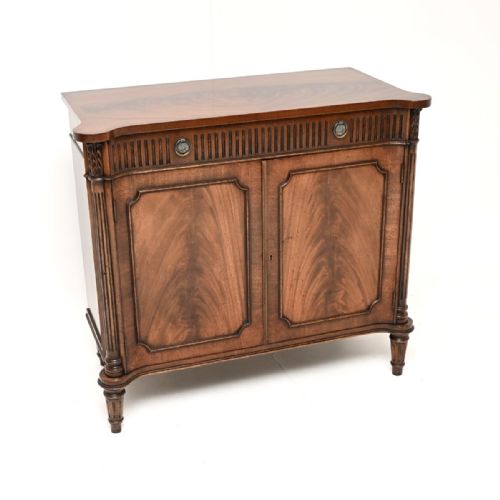
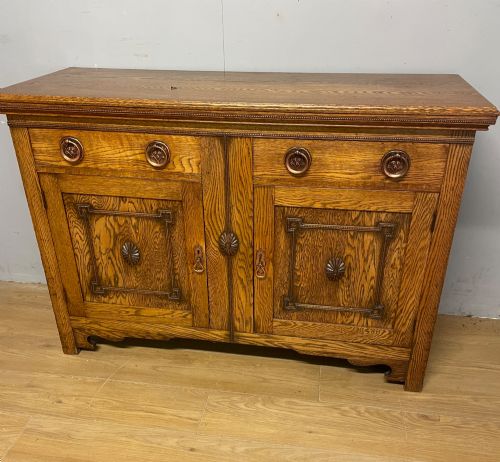
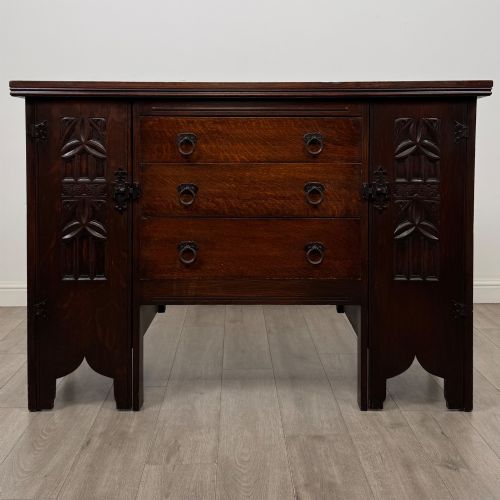
Edwardian Style Buffet Cabinet
These edwardian style buffet cabinet pieces bring utility and period form to a dining room or hall, offering substantial storage beneath a broad serving surface.
Edwardian Style Buffet Cabinet
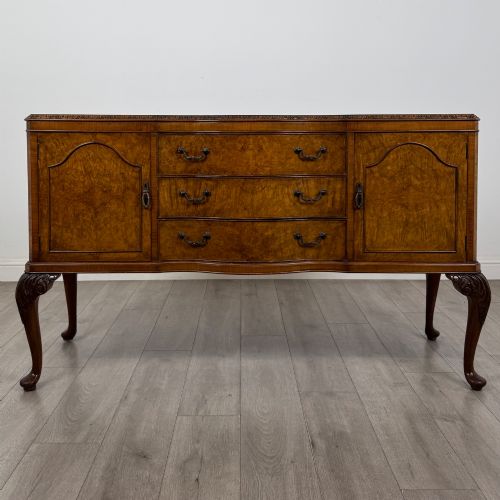
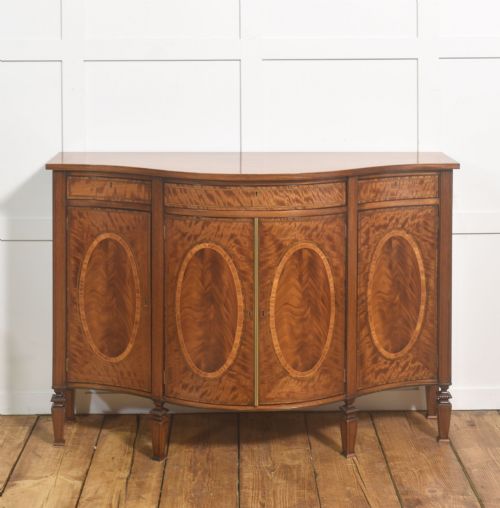
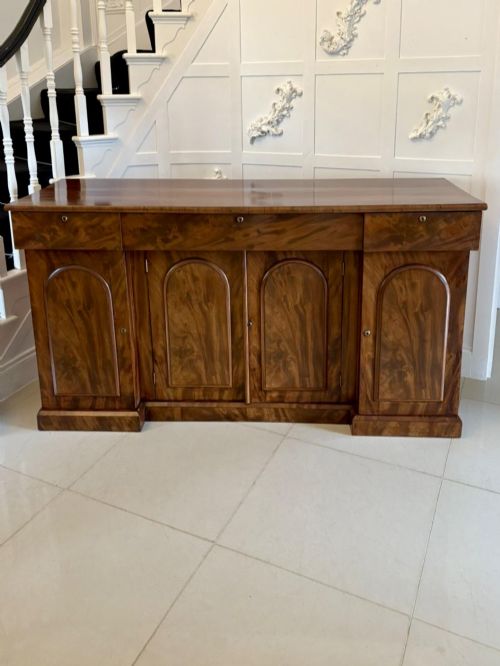
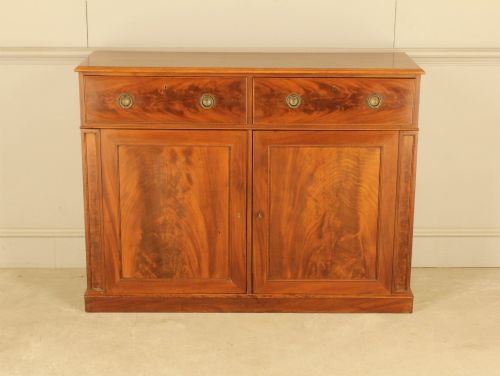
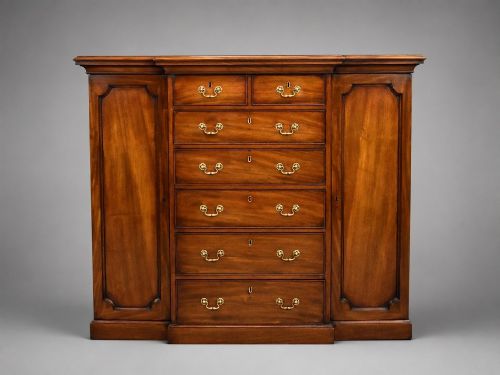
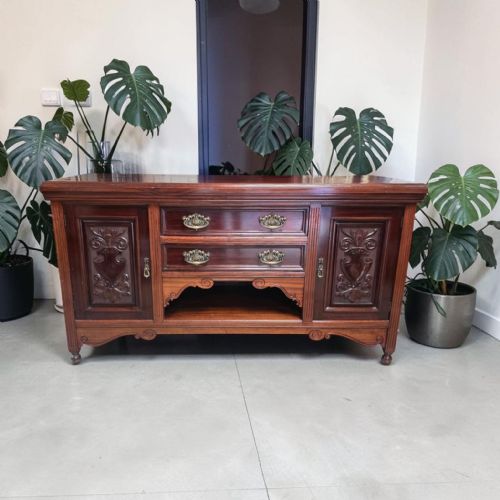
An edwardian style buffet cabinet serves as a formal storage piece in a dining room, combining cupboard doors with drawer space for linen and cutlery. Most examples seen here date from the Edwardian era and the early twentieth century, drawing heavily on earlier revival vocabulary.
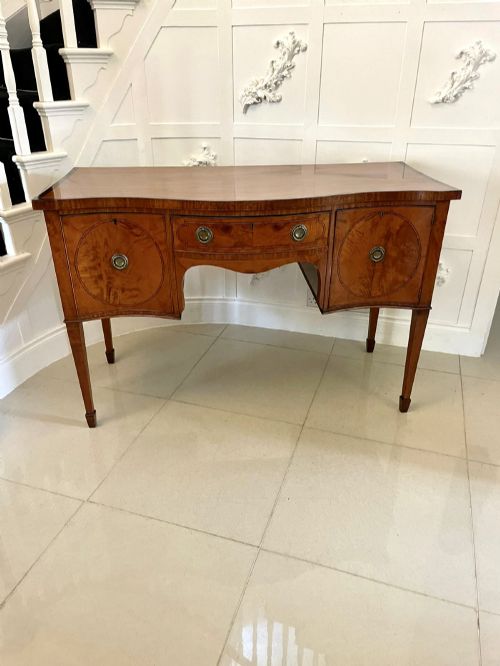
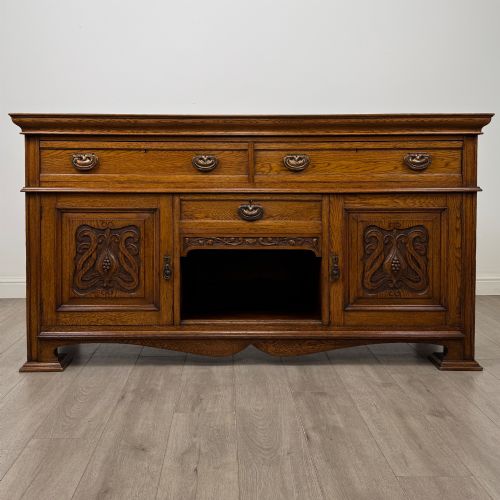
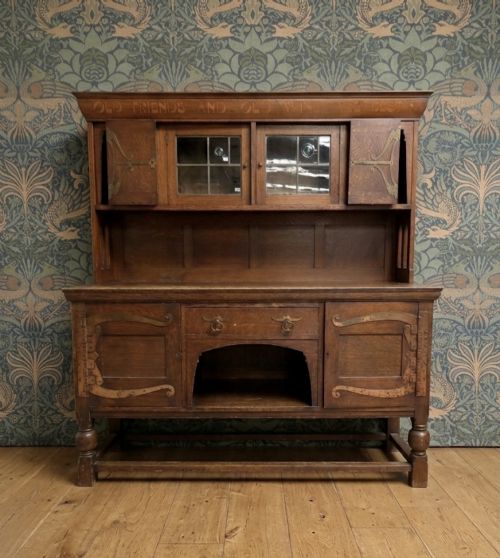
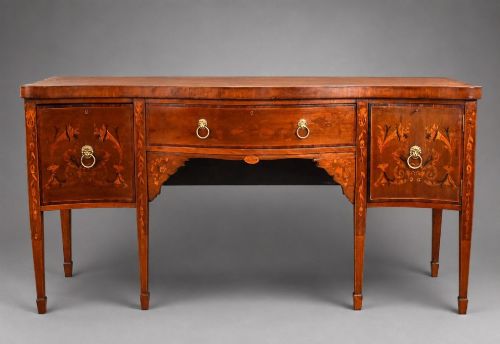
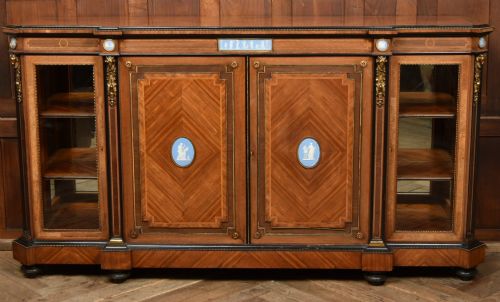
The form appears in various timber configurations, from bow-fronted mahogany and satinwood servers to solid and golden oak constructions associated with the Arts and Crafts movement. Sideboards and side cabinets share this lineage, frequently employing crossbanding and inlay to emphasise the linear proportions of the period.
How They Were Made
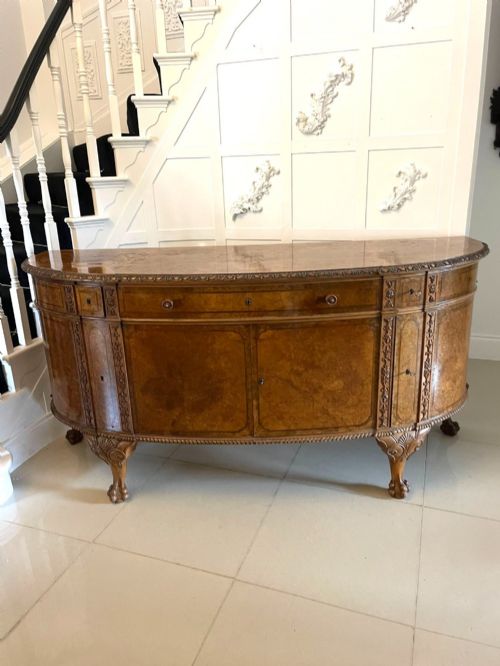
Cabinet makers utilised dense hardwoods such as mahogany, oak and walnut, often applying figured veneers like burr walnut or flame mahogany to the primary surfaces. Satinwood and boxwood provided contrasting stringing and inlay work, particularly on Sheraton Revival pieces.
Brass handles, hinges and copper escutcheons punctuate the timber surfaces, while glass panels feature in specific side cabinets and dressers. Construction relied on traditional joinery to support heavy timber tops and wide cupboard doors.
Some Arts and Crafts oak sideboards feature hand-beaten copper strap hinges that give the impression of medieval armour guarding the dinner service.
What Varies in Quality
The standard of timber selection governs the visual weight of the piece, distinguishing plain stock from richly figured burl, flame mahogany or meticulously matched satinwood veneers. Finer workshops invested greater skill in the precision of stringing, marquetry and crossbanding.
Structural integrity reveals itself in the handling of serpentine and bow-front shapes, where curved drawers and doors require exact carpentry. Original brass and copper hardware, alongside integrated locks and keys, marks out pieces executed with higher ambition.
Heal and Son·M. D. Miller and Sons·Leonard Wyburd·Shapland and Petter·Liberty and Co.
The Edwardian Style Buffet Cabinet Glossary
- Serpentine
- A curved front shape featuring a convex centre flanked by concave wings. This contour requires specialised joinery and careful veneer matching.
- Crossbanding
- A strip of veneer applied perpendicularly to the grain of the main surface, often framing the perimeter of a drawer front or top.
- Marquetry
- Decorative patterns formed by fitting together small pieces of tinted wood, ivory or shell into a veneer ground.
- Japanned
- A European imitation of East Asian lacquerwork, built up in layers of varnish and often decorated with raised metallic motifs.
Edwardian Style Buffet Cabinet: Frequently Asked Questions
What is an edwardian style buffet cabinet used for?
These pieces function primarily as dining room storage for tableware, linen and serving dishes. The broad top surface also acts as a servery during meals.
Smaller side cabinets and servers adapt easily to hallways and living spaces as general storage furniture.
How do I distinguish Edwardian from Victorian pieces?
Edwardian furniture generally exhibits lighter proportions and brighter timber tones, frequently incorporating satinwood inlay and Sheraton Revival motifs. Victorian equivalents tend to use darker, heavier timbers with more robust carved details.
Arts and Crafts pieces from the turn of the century prioritise plain oak construction and exposed hand-beaten copper fittings over classical revival ornament.
What woods are typical for these cabinets?
Mahogany and oak form the structural core of most examples, complemented by decorative veneers such as burr walnut, flame mahogany and satinwood. Boxwood and various dark hardwoods supply contrast through fine inlay and stringing.
Brass and copper hardware finishes the construction across both formal revival and Arts and Crafts designs.
How do I care for polished mahogany and walnut?
Keep timber surfaces away from direct sunlight and heat sources to prevent the wood and delicate veneers from drying out. Dust regularly with a dry cloth and apply occasional high-grade wax polish.
Avoid silicone-based sprays, which can penetrate aged finishes and damage the underlying polish over time.