



Edwardian Sterling Silver Flatware
Edwardian sterling silver flatware brings functional elegance to the dining table through durable precious metal construction.
Edwardian Sterling Silver Flatware
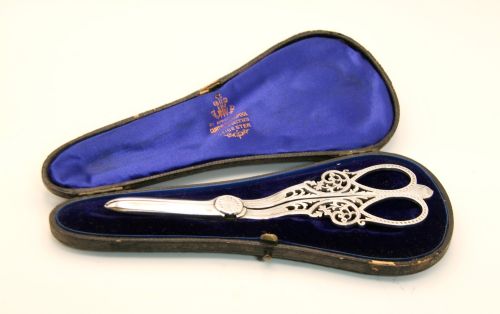
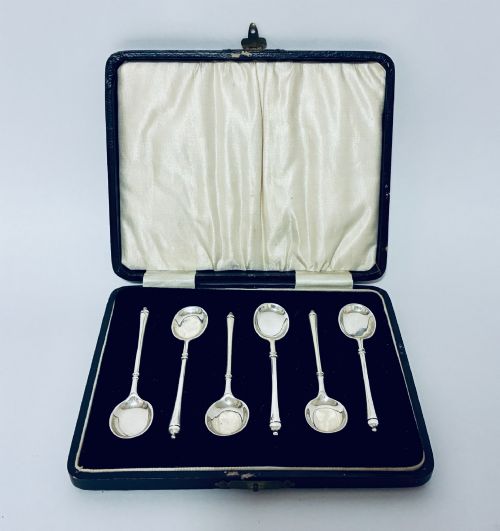
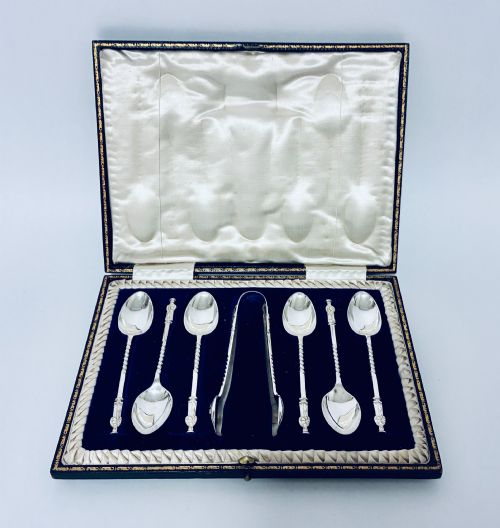
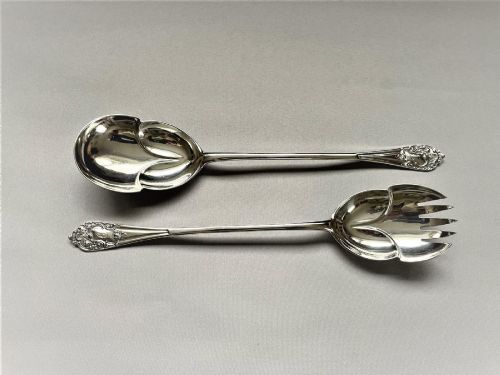
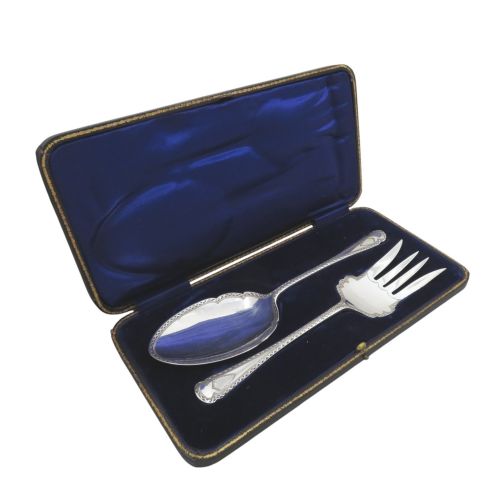
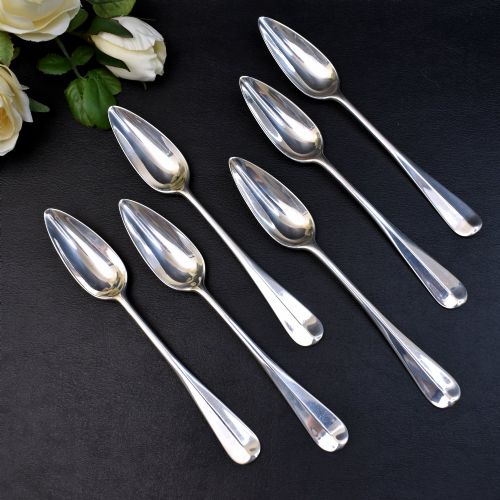
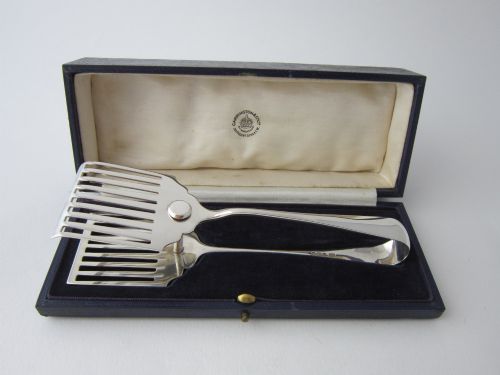
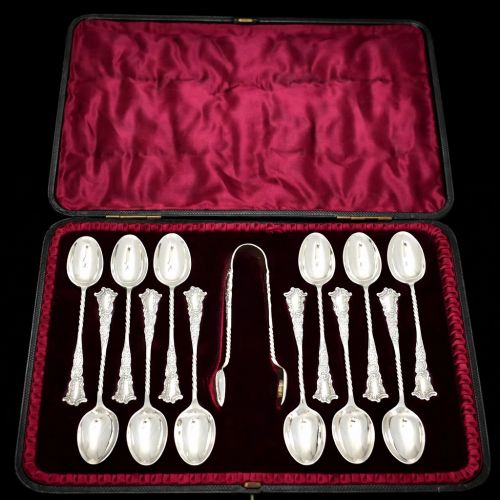
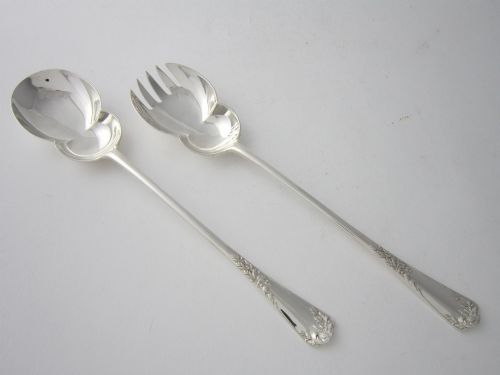
Edwardian sterling silver flatware comprises individual table implements, matching dining sets, and specialist serving pieces designed for formal dining. Buyers discover everything from single apostle teaspoons and butter knives to cased sets of salad servers and asparagus tongs originating from the early twentieth century.
The assortment on this page includes items spanning the Edwardian period alongside adjacent Victorian, George V, Art Nouveau, and Arts and Crafts styles. Pieces often arrive complete with their original fitted cases lined in velvet, silk, leatherette, or satin.
Materials and Techniques
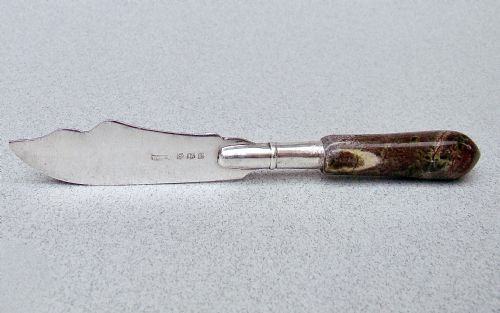
Makers utilised solid sterling silver alongside silver gilt for the primary metal components, shaping them into detailed utensils like straining ladles, grape scissors, and cake forks. Supplementary elements incorporate organic materials such as mother of pearl, agate, and steel to form contrasting handles and blades.
Silversmiths applied varied decorative techniques characteristic of the period, ranging from flowing Art Nouveau motifs to the hand-hammered surfaces typical of the Arts and Crafts movement.
Distinctions in Quality
Quality depends upon the clarity of the hallmarks stamped into the silver, the precision of the silversmith's workmanship, and the integrity of any associated fitted presentation case. Pieces created by notable designers or established retail houses display superior refinement in their decorative details and proportional balance.
Hamilton & Inches·Vale & John·William Devenport·Oliver Barker·Amy Sandheim·Garrard & Co·Robert Stebbings·Alvin·Whiting Co
The Edwardian Sterling Silver Flatware Glossary
- Sterling silver
- An alloy consisting of a high percentage of silver combined with other metals to ensure durability in daily use. This standard is denoted by specific hallmarks on British items.
- Silver gilt
- Silver that has been coated with a thin layer of gold on its surface. This technique produces a rich two-tone decorative effect.
- Hallmark
- A series of official marks stamped onto silver items indicating the maker, assay office, standard of purity, and year of manufacture.
- Apostle spoon
- A spoon featuring a finial shaped as one of the twelve apostles or Christ. These pieces often appear in fitted sets.
- Serving tongs
- Pincer-like implements designed for handling delicate foods such as asparagus, sugar lumps, or ice cubes. They often match smaller companion flatware.
Edwardian Sterling Silver Flatware: Frequently Asked Questions
What pieces are included in flatware sets?
Flatware sets encompass functional items such as teaspoons, coffee spoons, dessert forks, and butter knives. Many collections also include specialised serving utensils designed for specific courses.
Larger configurations often arrive packaged in dedicated presentation boxes intended for safe storage.
How do I identify the date of manufacture?
British silver incorporates stamped hallmarks that include a specific letter code corresponding to the year of assay. Additional marks indicate the town of testing and the silversmith's registered mark.
Reference books help translate these symbols to determine the exact production year.
Were these items meant for daily use?
Edwardian dining practices involved elaborate formal meals requiring dedicated utensils for every course. Wealthy households utilised sterling silver flatware for everyday dining as well as special occasions.
Cased sets were frequently given as wedding gifts or christening presents.
How should silver flatware be stored?
Proper storage involves keeping items in tarnish-resistant cloth rolls or their original fitted cases lined with velvet, silk, or satin. Minimising exposure to circulating air reduces the frequency of cleaning required.
Keeping pieces clean and dry preserves the underlying metal.