


Edwardian Silver Sugar Basin
These edwardian silver sugar basin examples offer practical elegance for the table, combining period form with fine metalwork.
Edwardian Silver Sugar Basin
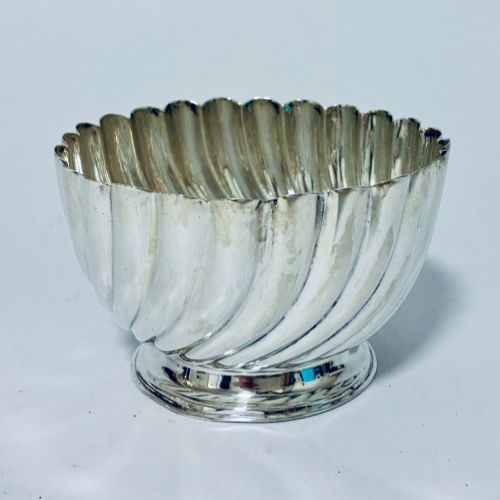
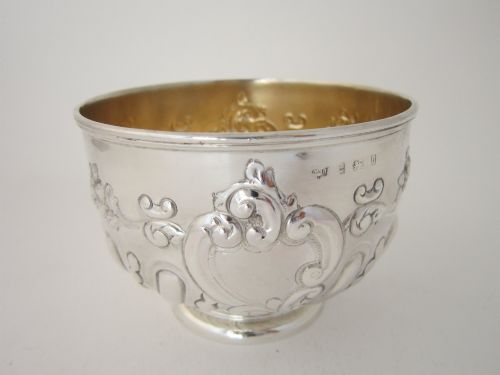
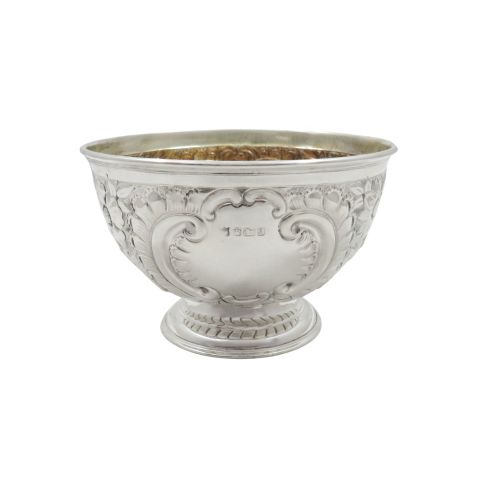
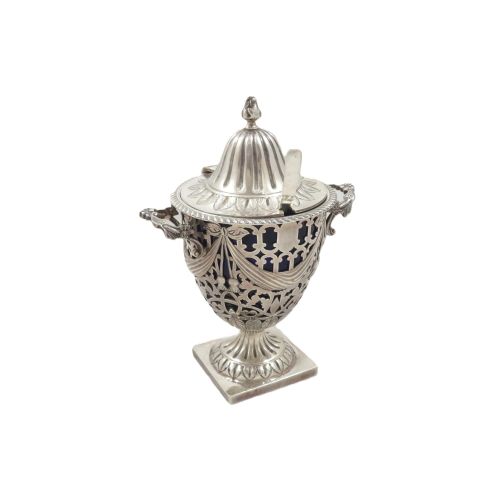
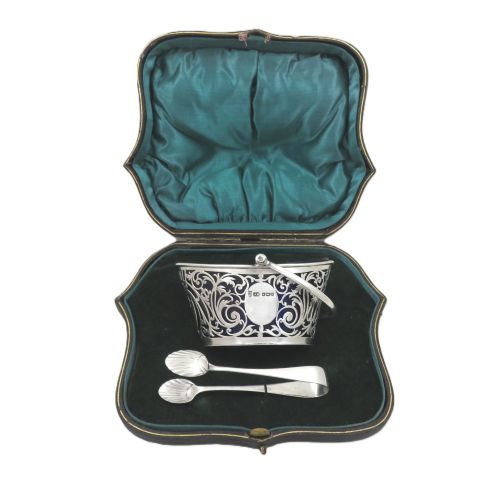
When searching for an edwardian silver sugar basin, a buyer discovers pieces primarily from the Edwardian and Victorian eras, alongside related forms from around nineteen hundred to nineteen ten. The selection spans open bowls, lidded urns, swing-handled baskets, and pieces fitted with glass liners.
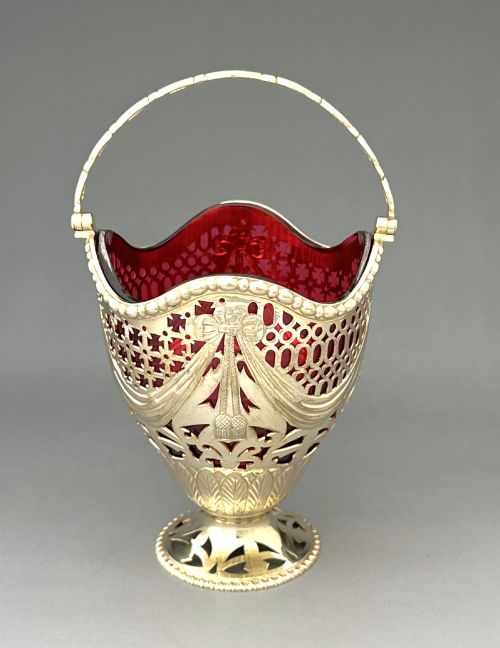
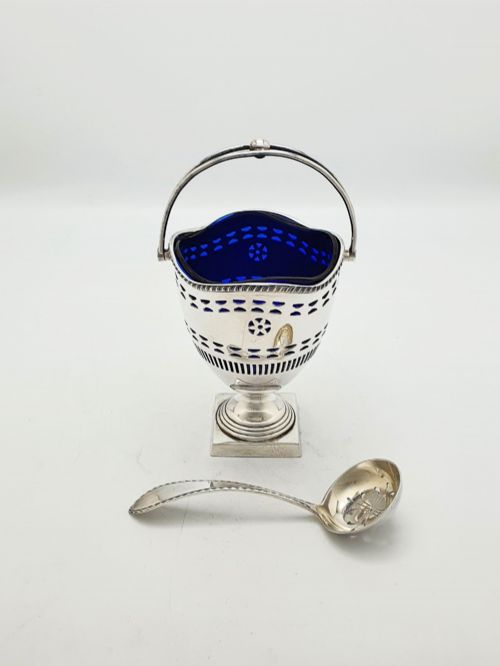
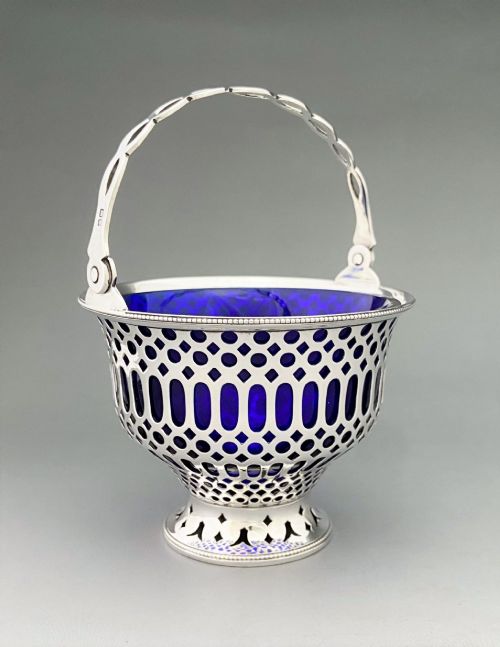
The most frequent variations on this page include sterling silver sugar baskets, pedestal bowls, and pierced designs accompanied by cobalt or cranberry glass inserts. Makers of the period also produced biscuit barrels, tea caddies, and preserve dishes within the same stylistic vocabulary.
Pieces reflect Victorian roots as well as Edwardian and Arts and Crafts aesthetics. Such items served a specific function in formal tea service, holding loose sugar cubes or granules before the widespread adoption of refined packaging.
How They Were Made
Silversmiths utilised sterling silver and silver plate, shaping metals through piercing, repoussé, and pedestal casting. Many vessels required skilled assembly to integrate hinged swing handles or secure fitted lids.
Interiors frequently incorporated coloured glass liners in cranberry or cobalt hues, blown or moulded to fit the pierced metal frames. Workshops also applied silver gilt finishes to achieve contrasting internal textures and tones.
Some sugar baskets arrive complete with their original miniature sifter spoons, ready for an afternoon tea that vanished a century ago.
What Varies in Quality
Superior examples display crispness in pierced metalwork and depth in repoussé ornamentation, where hand-chased details remain sharp and defined. The weight of the sterling silver and the proportion of the pedestal foot dictate the physical presence of the piece.
The quality of associated glass liners, particularly undamaged cranberry or cobalt glass with correct tolerances for the basket frame, elevates the integrity of the ensemble. Maker marks and clear hallmarking add historical documentation that distinguishes standard production from finer workshop output.
John Barrett
The Edwardian Silver Sugar Basin Glossary
- Sterling silver
- A silver alloy containing 92.5 percent pure silver by mass, standard for quality British tableware of the period.
- Repoussé
- A metalworking technique where the smith hammers the design from the reverse side to form a raised pattern on the front.
- Silver-gilt
- Sterling silver that has been coated with a thin layer of gold on the surface, often seen on the interior of bowls.
- Pierced work
- A decorative method involving the cutting or piercing of openwork patterns through the metal sheet.
- Cranberry glass
- A rich red-pink glass created by adding gold chloride to the molten batch, frequently used for interior liners.
Edwardian Silver Sugar Basin: Frequently Asked Questions
What is an edwardian silver sugar basin used for?
These vessels were designed to hold sugar lumps or loose granules on the formal dining or tea table. They complemented afternoon tea services alongside teapots, cream jugs, and porcelain cups.
Today, they function as decorative containers or serving pieces for small items, continuing their traditional role in domestic hospitality.
Why do some sugar basins have glass liners?
Liners made of cranberry or cobalt glass protected the metal from the corrosive properties of damp sugar and moisture. They also provided a striking visual contrast through openwork pierced silver baskets.
Coloured glass added vibrant hues to the table setting while keeping the functional interior easily washable.
How do I distinguish Edwardian from Victorian pieces?
Victorian examples often feature heavier repoussé decoration and ornate, florid ornamentation. Edwardian pieces tend toward lighter forms, classical revival motifs, and delicate pierced designs.
Assay office marks and date letters stamped into the silver provide the precise year of manufacture for verified pieces.
Can I use these antique basins daily?
Sterling silver and fitted glass liners remain durable enough for occasional functional use during meals or gatherings. Gentle hand washing without abrasive cleaners preserves the finish of both metal and glass.
Many collectors prefer to display them as part of a dining room interior or sideboard arrangement.