

Edwardian Silver Fob
These pieces gather the small silver items worn on watch chains during the early twentieth century.
Edwardian Silver Fob
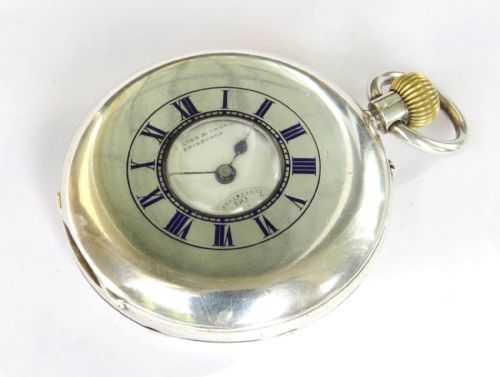
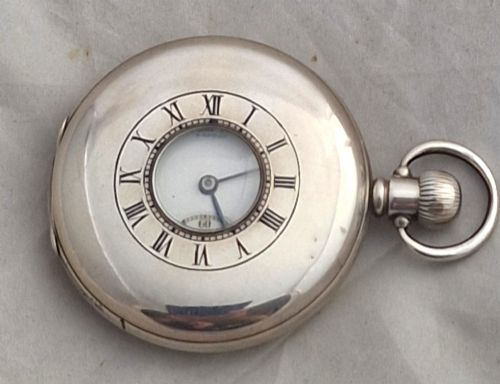
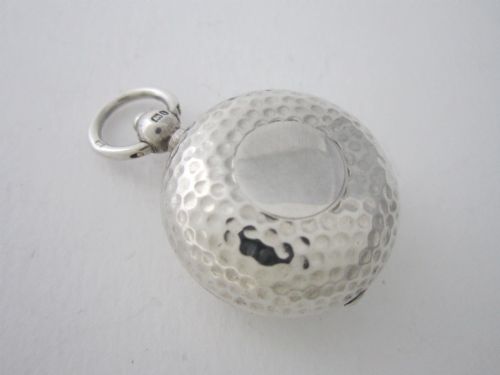
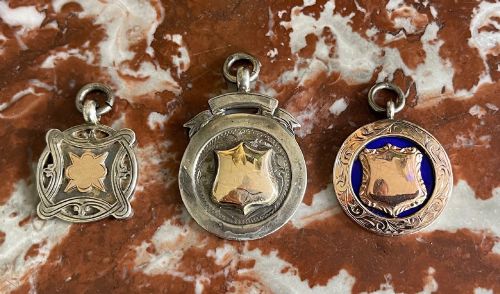
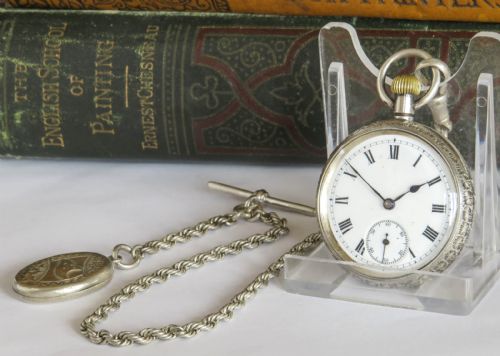
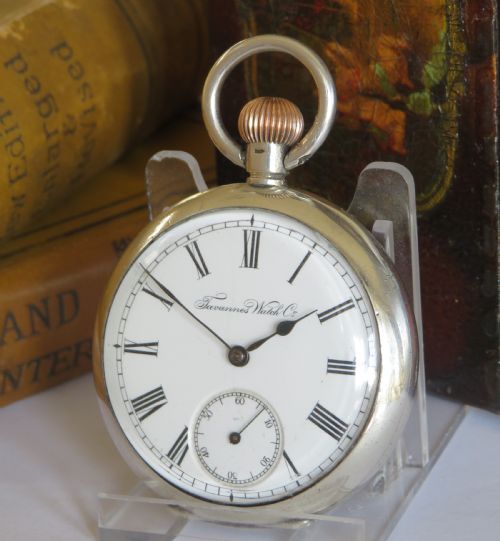
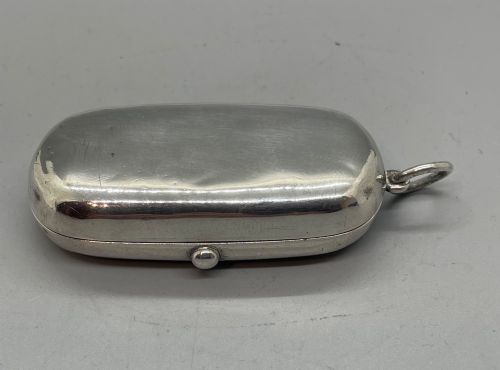
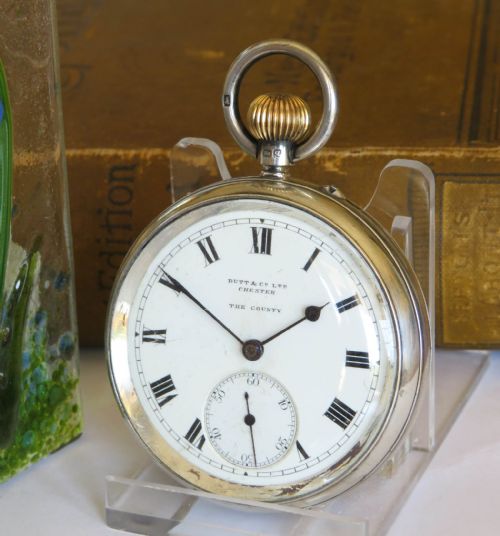
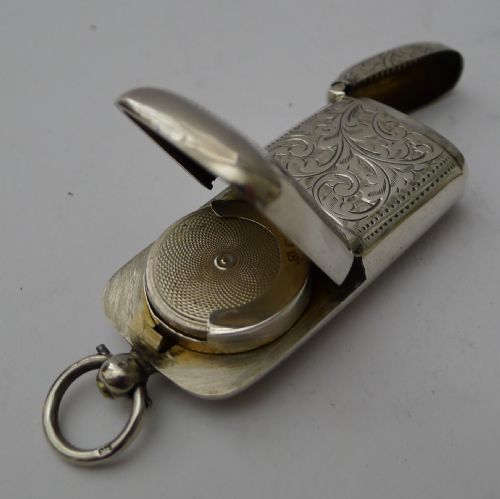
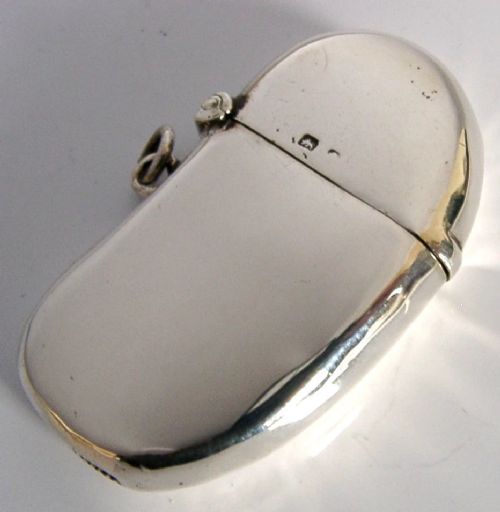
An edwardian silver fob sits at the end of a pocket watch chain, taking forms such as sovereign cases, vesta cases, whistles, compasses, and stamped medallions. The examples seen here span the Edwardian era alongside late Victorian and George V years, reflecting the widespread daily utility of pocket watches.
Sovereign cases and stamp cases appear frequently, often hallmarked in Birmingham or London. These small containers served practical purposes for carrying coins and postage stamps safely in a pocket or on a chain.
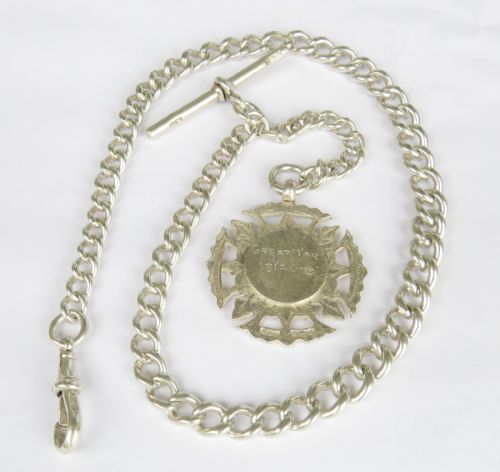
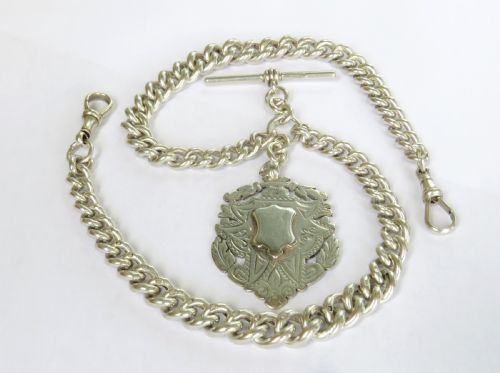
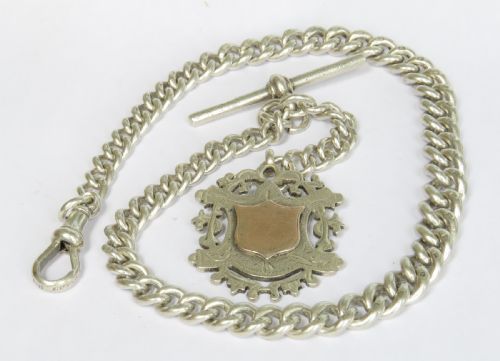
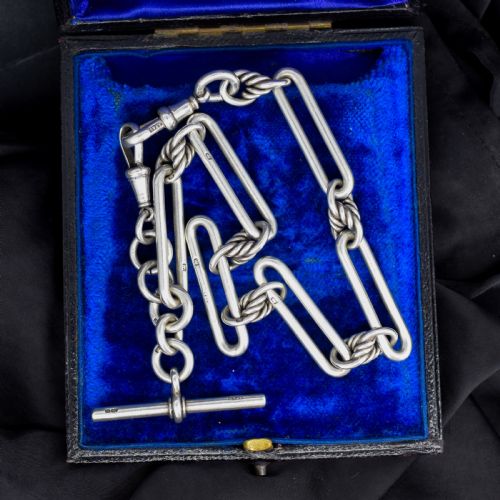
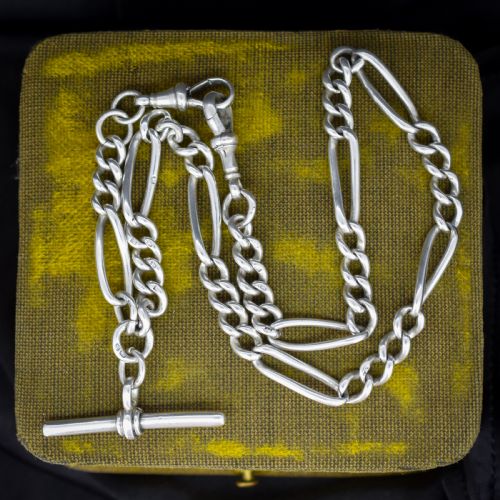
Watch chains, known as alberts, frequently accompany these items alongside seal fobs and inscribed medals. These linked silver strands completed the gentleman's waistcoat arrangement of the period.
How they were made
Silversmiths utilised sterling silver alongside enamel, glass, and brass components to construct these accessories. Stamping, casting, and hand-engraving shaped the medals, cases, and chains recorded in the listings.
Hallmarks stamped directly into the silver provide official records of assay offices in cities such as Birmingham and London, alongside dates and maker marks. These small punches guarantee the metal standard of the piece.
Among the whistles and stamp cases, lucky charm fobs bring miniature silver pigs and lucky bugs dangling from split rings.
What varies in quality
The weight of the silver and the crispness of the engraving dictate the standing of a piece. Substantial gauge silver chains and deep, clear hallmark stamps separate standard production items from finer workshop output.
Intricate detailing, such as applied enamel work or complex mechanisms on spinning fobs and sovereign cases, elevates the execution. Simpler stamped items sit at the accessible end of the scale.
Hamilton and Inches·Aaron Lufkin Dennison·Crisford and Norris·W and G Neal·JW Benson
The Edwardian Silver Fob Glossary
- Albert chain
- A chain attached to a pocket watch, designed to pass through a waistcoat buttonhole. It often bears a T-bar at one end and a swivel clasp for a fob at the other.
- Vesta case
- A small pocket container designed to hold matches, usually featuring a striking surface on the base. Many examples are hinged and shaped to match sovereign cases.
- Sovereign case
- A circular container engineered to hold British gold sovereign coins securely. They frequently feature spring-loaded internal mechanisms for releasing the coins.
- Hallmark
- A series of official marks stamped on precious metals, indicating the purity, assay office, and year of manufacture. British silver items typically bear a lion passant and an anchor, leopard head, or other city symbol.
- T-bar
- The crossbar attached to the middle or end of an albert chain, used to secure the chain through a buttonhole. It remains a defining feature of period watch chains.
Edwardian Silver Fob: Frequently Asked Questions
What is an edwardian silver fob used for?
These items hung from watch chains attached to pocket watches carried in waistcoats. They functioned as decorative pendants, utility containers, or membership badges for societies.
Many housed coins, stamps, matches, or whistles for daily convenience. Others simply served as decorative counterweights to keep the watch chain secure.
How do I know if my fob is Edwardian?
Silver pieces from this era usually carry hallmarks indicating the assay office and a specific date letter. Comparing these stamps against standard assay tables reveals the exact year of manufacture.
Stylistic cues such as specific lettering styles, Art Nouveau influences, and maker marks also help date the piece accurately.
Can I attach a fob to a modern chain?
Most pieces feature a jump ring or swivel clasp designed for historical watch chains. These connectors allow the item to be suspended from modern chains or worn as pendant necklaces.
Care should be taken with the sizing of the attachment ring to ensure it fits securely onto a thicker modern chain.
What is the difference between a vesta and a sovereign case?
A vesta case is designed to hold matches and incorporates a serrated striking edge on the exterior. A sovereign case is round and holds gold coins.
Sovereign cases often contain internal springs to push the coin out, whereas vesta cases rely on a simple hinged lid.