
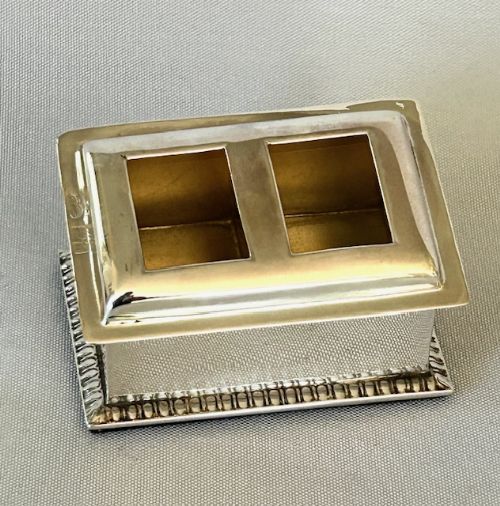


Edwardian Stamp Holder
An edwardian stamp holder is a small desk accessory or pocket case designed to keep postage stamps organised.
Edwardian Stamp Holder
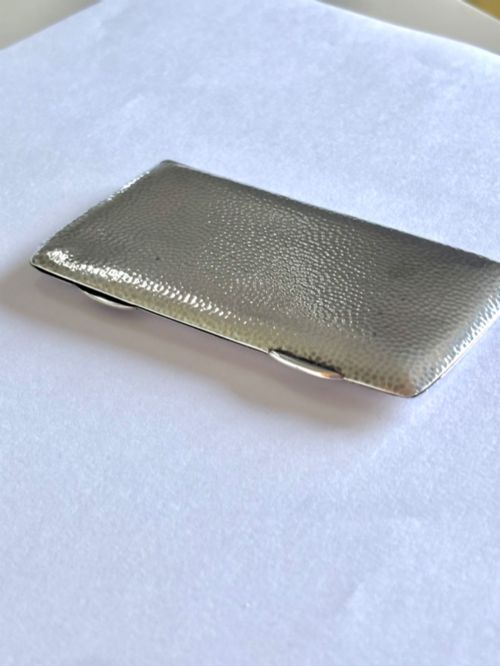
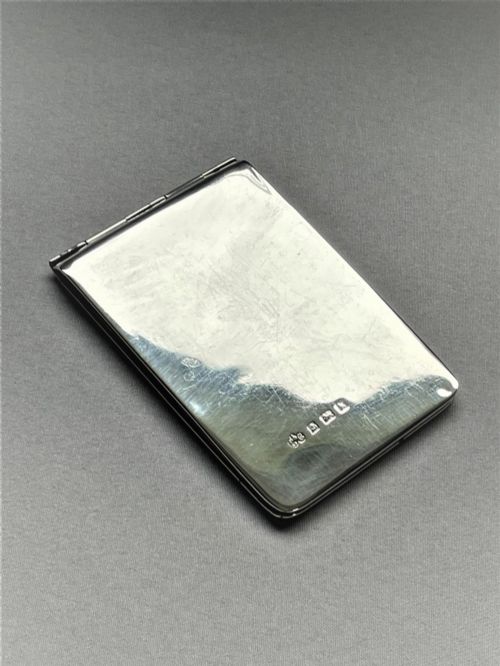
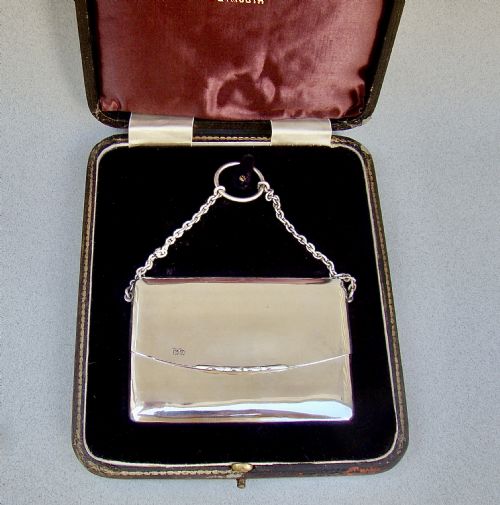
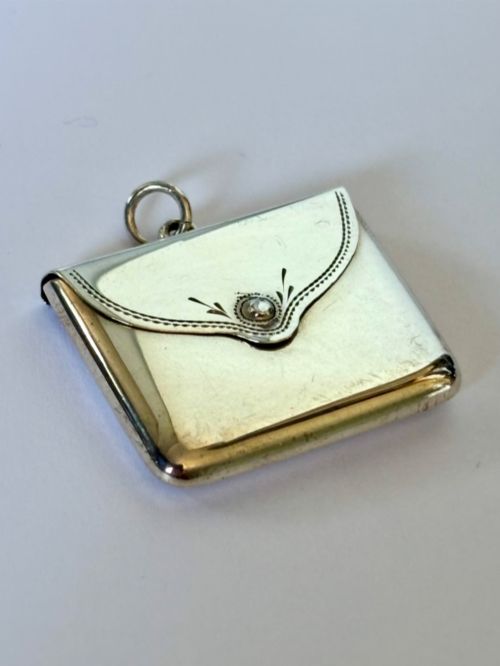
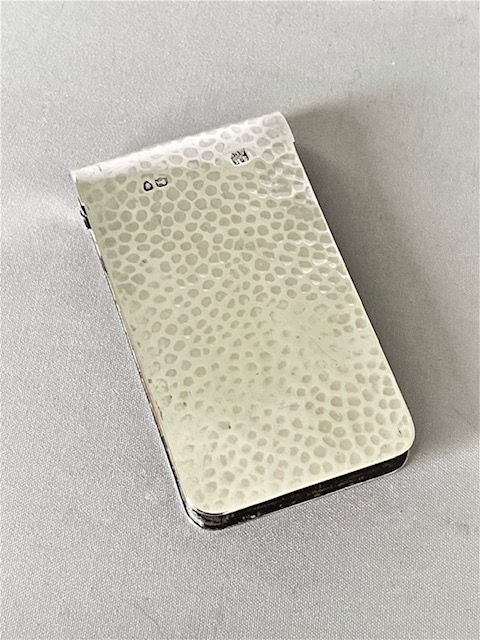
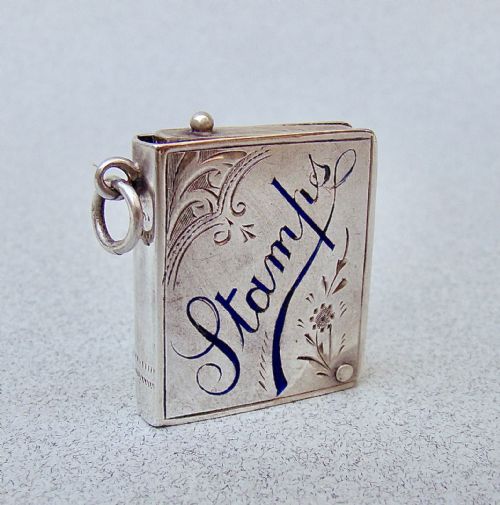
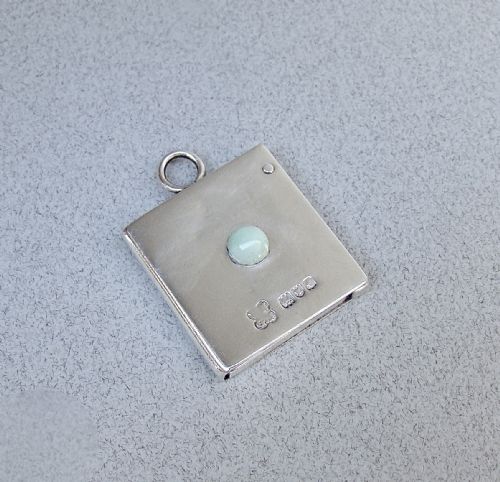
An edwardian stamp holder encompasses a variety of small desk accessories and pocket cases designed to keep adhesive postage clean and dry. These pieces range from simple silver desk boxes and double trough-shaped containers to novelty miniature forms shaped like envelopes, books, wheelbarrows, and garden trugs.
While many examples date strictly to the Edwardian decade, the selection includes related pieces from the late Victorian period and the subsequent George V years. These objects reflect a time when correspondence required dedicated receptacles for postage on every writing desk.
How they were made
Makers utilised sterling silver as the primary medium for these stamp holders, often employing pressing, stamping, and folding techniques to form miniature envelopes and books. Interior compartments were frequently gilt to prevent the silver from tarnishing due to the gum on postage stamps.
Some boxes incorporate cut glass bodies mounted with silver lids, or combine metalwork with leather and enamel detailing. Novelty items like wheelbarrows and garden trugs required careful soldering and hand-engraving to render realistic miniature textures in solid silver.
Listings feature sterling silver predominantly, alongside glass, leather, enamel, and brass materials across multiple styles.
What varies in quality
The distinction between standard commercial pieces and superior items lies in the crispness of the chasing, the execution of novelty designs, and the clarity of the town and maker hallmarks. Hand-engraved patterns and intricate mechanisms, such as swivel mounts or tight-fitting spring hinges, elevate the status of a piece.
Makers known for exceptional specialty silverwork command greater interest through heavier gauges of silver and more imaginative forms, whereas plainer boxes rely entirely on their pristine condition and balanced proportions.
Willian Aitken·Crisford and Norris·Sampson Morden·W and G Neal·Albert Ernest Jenkins·Levi and Salaman·Blanckensee and Sons
The Edwardian Stamp Holder Glossary
- Hallmark
- Official stamps applied to precious metals indicating the standard of purity, the assay office, and the date letter. These marks allow collectors to date silver stamp cases precisely to a specific year and city.
- Sterling silver
- An alloy consisting of ninety-two point five percent silver and seven point five percent other metals, usually copper. This standard composition provides the necessary durability for miniature desk accessories and pocket cases.
- Novelty piece
- An object shaped deliberately to resemble something entirely unrelated to its actual function. In stamp holders, this includes forms such as wheelbarrows, garden trugs, envelopes, and miniature books.
- Double stamp box
- A desk receptacle divided internally to accommodate two different denominations of postage stamps. They often feature hinged lids or trough-shaped compartments for easy retrieval.
- Assay office
- A statutory body charged with testing the purity of precious metal items before stamping them with official hallmarks. Offices represented in these pieces include Birmingham, London, and Chester.
Edwardian Stamp Holder: Frequently Asked Questions
What is an Edwardian stamp holder?
An edwardian stamp holder is a small silver desk accessory or pocket case created to store postage securely. They reflect the heavy reliance on postal correspondence during the early twentieth century.
These pieces range from hinged pocket wallets to heavy desk boxes with multiple compartments. Many reflect whimsical novelty designs shaped like everyday objects.
How were stamp holders used?
People used these holders to keep gummed postage stamps flat and dry before use. Desk versions sat beside inkwells and blotters, while pocket versions travelled in handbags or card cases.
Interior divisions allowed users to separate different stamp denominations. The spring-loaded or hinged lids ensured quick access when writing letters.
How do I identify a George V piece?
George V pieces are identified primarily through the assay office date letters stamped into the silver. King George V reigned from nineteen-ten onward, so hallmarks from nineteen-eleven or later fall into this era.
Stylistically, these items often continue Edwardian manufacturing traditions while bearing the monarch's profile or later date marks.