
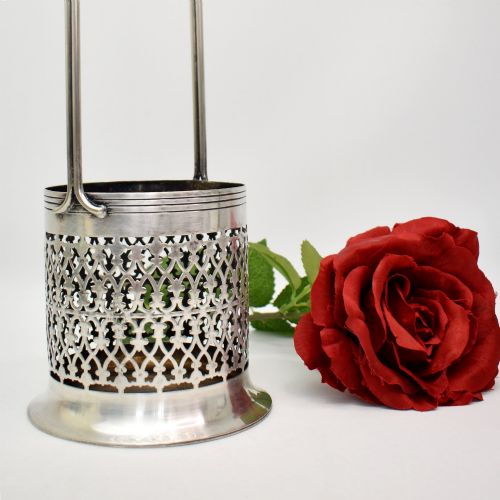


Edwardian Silver Coaster
These pieces of edwardian silver coaster design protect dining tables while holding wine bottles, decanters and glassware with traditional British craftsmanship.
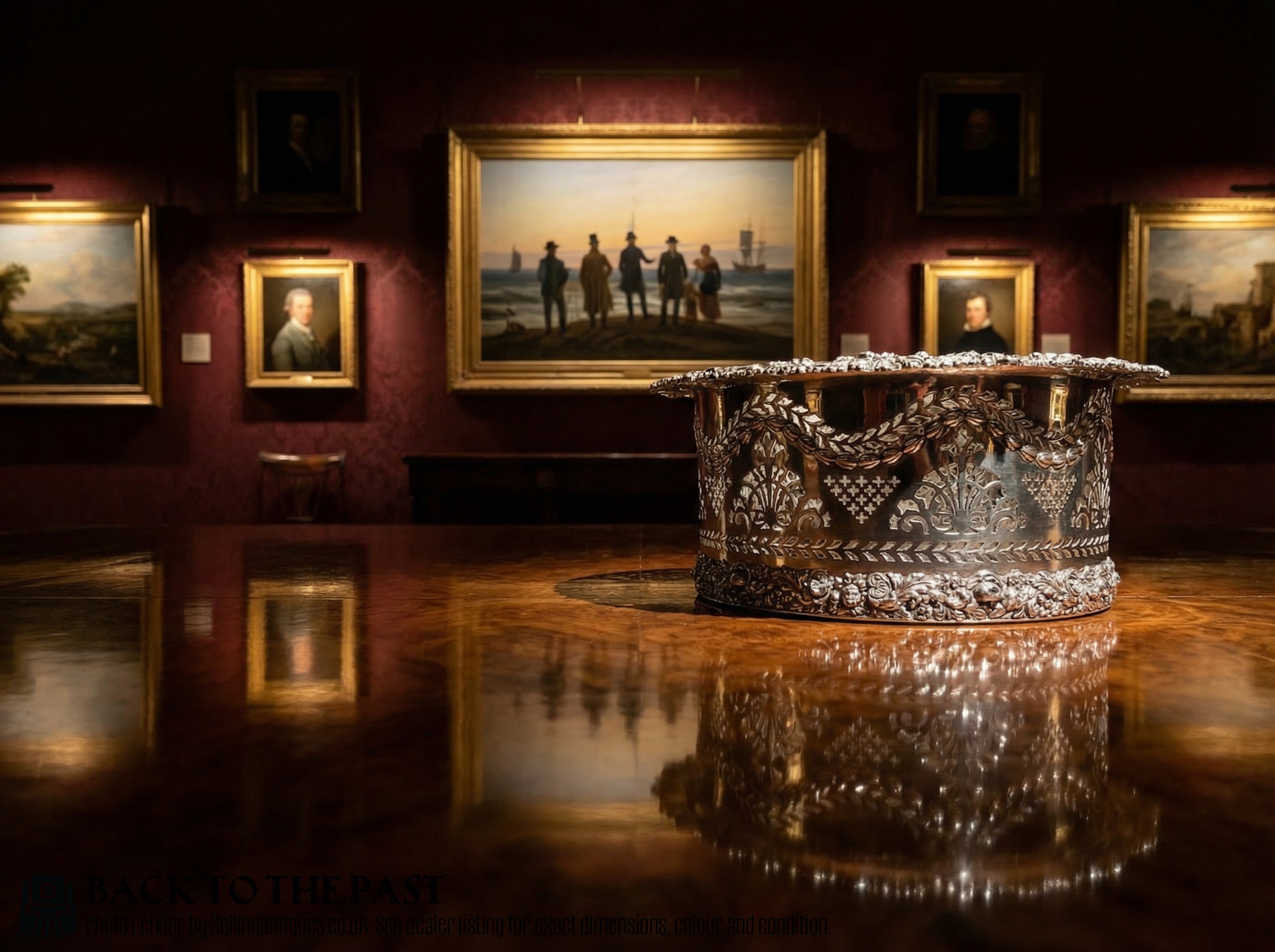
Edwardian Silver Coaster
An edwardian silver coaster is a table accessory designed to hold wine bottles, decanters, or glassware safely while protecting polished wood surfaces from moisture and rings. Buyers searching this phrase meet variations that range from single bottle holders to pairs and multi-bottle servers.
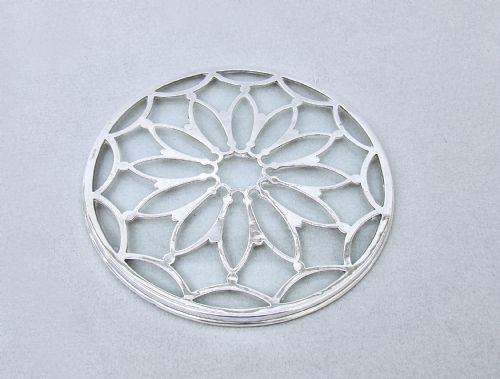
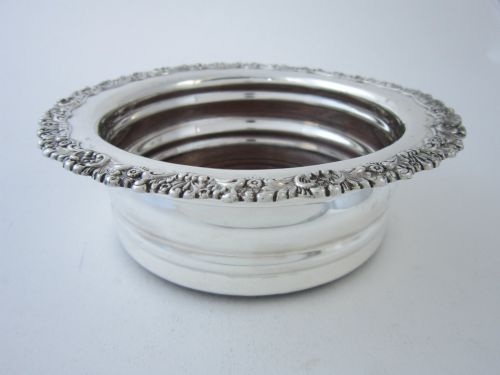
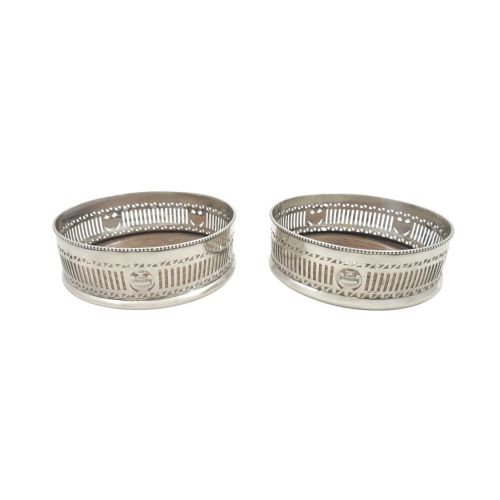
The version most commonly encountered on this page originates from the early twentieth century, spanning the Edwardian period and the surrounding decades up to 1925. These items take the form of circular trays, gallery rims, and pierced silver walls paired with underlying bases.
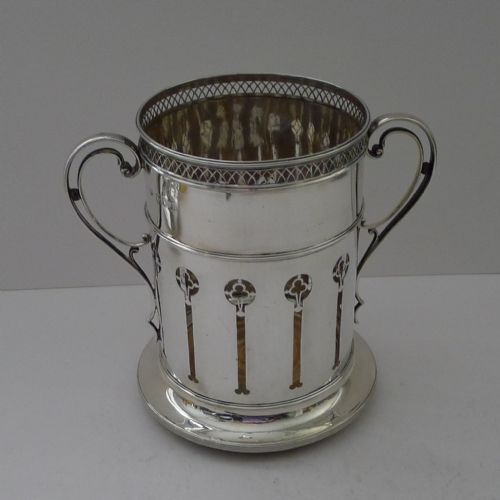
Makers produced these pieces in solid sterling silver and heavy silver plate, frequently incorporating contrasting materials like mahogany, oak, glass, and felt. Forms extend from standard wine coasters to dedicated teapot stands, condiment holders, and larger multiple-bottle frames.
Materials and Construction
Silversmiths constructed these items using sterling silver and silver plate applied over base metals, combining pierced sheet metal galleries with turned wooden bases made of mahogany or oak. Felt lining protected the underside of the base and cushioned the bottles placed inside.
Manufacturing techniques involved stamping, piercing, and scroll-cutting the metal rims, then securing them to wooden bases or glass inserts with fitted mounts. Makers also utilised cut crystal and glass for bottle bodies, pairing them with silver collars and coasters.
Several listings include specialised holders equipped with cork pullers, ensuring the wine is opened as safely as the bottle is seated.
Evaluating Quality and Detail
Quality in these items rests on the weight of the silver or silver plate, the crispness of pierced scrollwork and applied floral mounts, and the preservation of the inner wooden or glass components. Pieces with substantial metal gauge and intact original felt lining demonstrate superior retention of their original form.
Markers of distinction include hallmarked sterling silver from recognised silversmiths compared to standard silver plate, alongside balanced proportions in paired sets. The integration of turned timber bases with well-fitted metal galleries defines the upper tier of surviving examples.
Harrods Ltd·Brook and Son·Christofle·Asprey·D and J Welby
The Edwardian Silver Coaster Glossary
- Sterling silver
- A silver alloy containing 92.5 percent pure silver by mass, marked with hallmarks indicating standard purity and origin. This material forms the solid metal bodies of higher-end antique pieces.
- Silver plate
- A layer of pure silver fused to a base metal core such as copper, nickel, or brass. This technique allowed manufacturers to produce decorative items at a lower cost than solid silver.
- Gallery rim
- An elevated decorative border surrounding the edge of a tray or coaster. These rims often feature pierced scrollwork, bar patterns, or applied floral motifs.
- Decanter coaster
- A specialised holder designed specifically for the broader base of a decanter rather than a standard wine bottle. They often incorporate turned wooden bases to support heavier glass vessels.
- Pierced work
- Metal sheets cut through in geometric, floral, or scroll patterns to lighten the visual weight of the object. This technique is characteristic of Edwardian silversmithing.
Edwardian Silver Coaster: Frequently Asked Questions
What is an edwardian silver coaster used for?
These items serve to hold wine bottles, champagne magnums, and decanters on dining tables during meals. They prevent condensation and drips from marking polished wood furniture.
Beyond dining use, smaller versions function as teapot stands or hold condiment bottles and glassware. Their raised rims keep bottles stable when passed around the table.
How do I clean edwardian silver coasters?
Cleaning requires a soft microfiber cloth and a mild silver polish formulated specifically for antique metal. Care must be taken around wooden bases and felt linings to avoid moisture damage.
Harsh chemical dips should be avoided, especially on silver-plated items where heavy scrubbing can wear away the thin silver layer. Gentle hand wiping preserves the original patina and applied details.
Are these coasters sold in pairs?
Many examples on this page appear as matched pairs, which reflects the formal dining traditions of the early twentieth century. Single items and larger multiple-bottle frames also occur frequently.
Pairs were designed to sit at opposite ends of a dining table or to circulate different wine vintages among guests. Matched sets generally hold higher interest for collectors.
What materials are combined with the silver?
Makers frequently paired silver and silver plate with turned hardwoods such as mahogany and oak for the interior base. Felt or baize underneath protected table surfaces from scratching.
Glass and cut crystal also appear as inserts or companion bottles within condiment and liqueur sets. These mixed media constructions define the domestic metalwork of the era.
How can I identify an edwardian piece?
Edwardian items date from the reign of King Edward VII between 1901 and 1910, though similar manufacturing styles extended slightly past this decade. Hallmarks on sterling silver pieces provide exact assay office letters and date marks.
Stylistic cues include Art Nouveau influences, scroll and bar pierced galleries, and floral applied mounts. These design elements distinguish Edwardian work from earlier Victorian heavy ornamentation.