
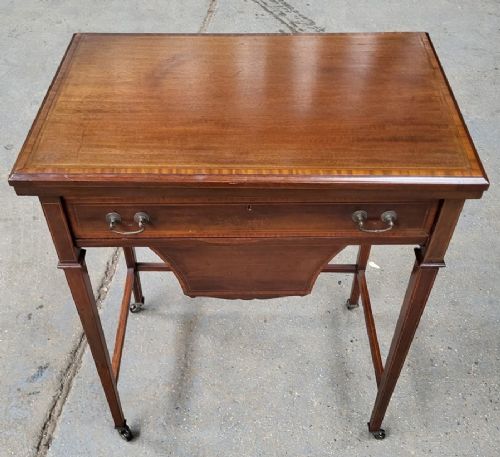
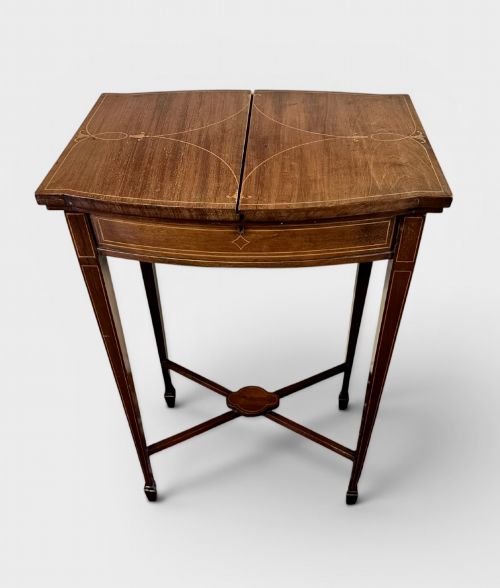
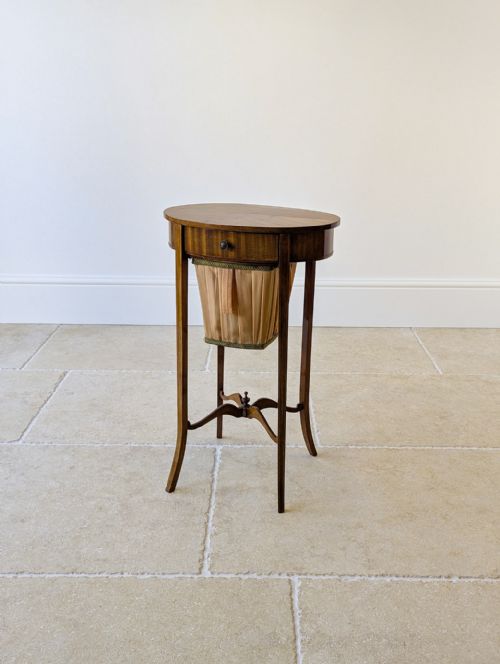


Edwardian Sewing Box Table
An edwardian sewing box table brings ingenious storage and refined timber work to a sitting room, serving both as a functional work space and a graceful occasional table.
Edwardian Sewing Box Table
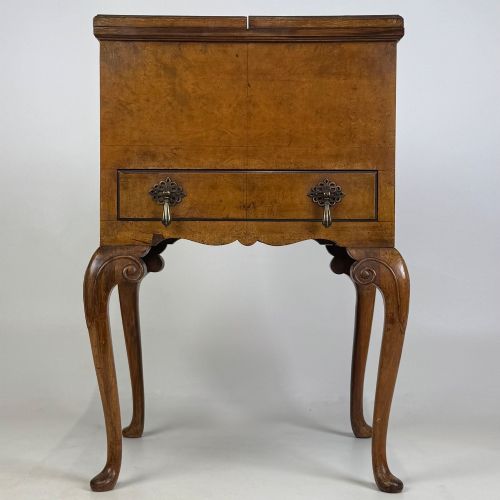
The edwardian sewing box table stands as a versatile piece designed to house needlework and small domestic pursuits while maintaining a polished presence in a reception room. These tables combine the function of a work box with the stature of a side table or lamp table.
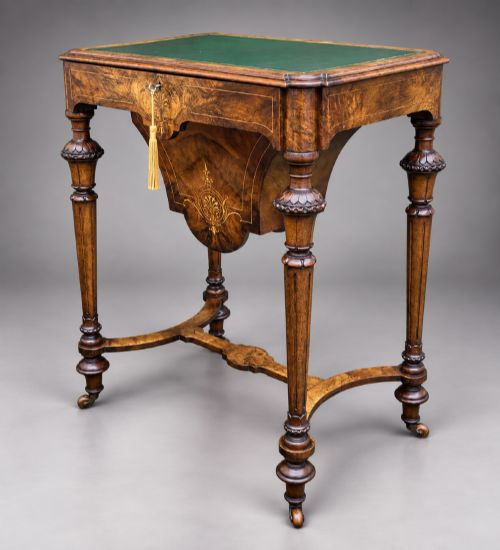
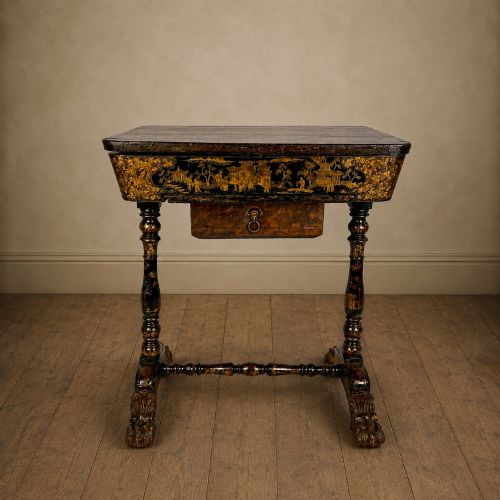
Most examples found here date from the edwardian period, constructed in mahogany or satinwood with delicate inlay and fitted interiors. Alongside these, nineteenth-century pieces in burr walnut, rosewood, and lacquered finishes appear frequently.
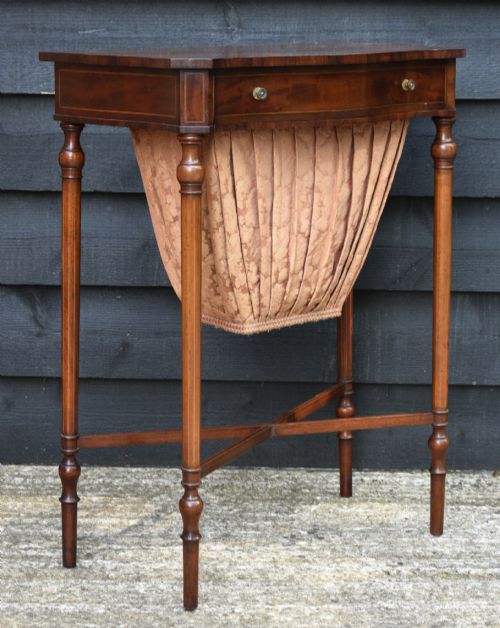
Makers often integrated silk baskets or partitioned compartments beneath the top to sort threads, buttons, and tools. Their small proportions suit modern interiors as bedside units or compact lamp tables.
Judging Quality
Integrity of the internal fittings and the condition of original fabric components elevate a piece above standard examples. Smooth operation of folding lids and fitted drawers indicates superior cabinet work.
Many a Victorian needlewoman relied on a secret compartment to hide her chocolate stash from the household.
Gillows
The Edwardian Sewing Box Table Glossary
- Work table
- A small occasional table equipped with drawers, boxes, or baskets intended to hold sewing and needlework materials. These pieces were essential for ladies' domestic tasks in the parlour.
- Marquetry
- The art of applying decorative veneer pieces in wood, shell, or ivory to form intricate pictorial patterns on a furniture surface. This technique highlights the skill of the cabinet maker.
- Satinwood
- A durable, lustrous timber with a yellow sheen used extensively for fine cabinet work and inlay during the eighteenth and nineteenth centuries. It provides a bright contrast against darker woods.
- Serpentine
- A furniture front or edge that curves outward in the centre and inward at the sides in a continuous wave. This shape requires precise woodworking to achieve a balanced silhouette.
- Trumpet table
- A pedestal table featuring a flaring, trumpet-shaped octagonal or round body above a tripod base, often enclosing a deep sewing bag. This form became popular during the mid-nineteenth century.
Edwardian Sewing Box Table: Frequently Asked Questions
What is an edwardian sewing box table used for?
These tables were originally built to store threads, needles, and fabric scraps for mending and embroidery while keeping the parlour tidy. Today, their divided compartments make them useful for jewellery, stationery, or modern craft supplies.
Placed beside a sofa or armchair, they also function well as compact lamp tables or bedside stands.
How do I spot an edwardian piece?
Edwardian tables generally display lighter timbers like satinwood and lighter mahogany, often accented with delicate boxwood stringing and shell inlays. The proportions tend to be slender and refined compared to heavier mid-Victorian designs.
Construction methods show machine assistance alongside hand finishing, with simpler, cleaner lines reflecting the turn-of-the-century aesthetic.
Are the silk baskets original?
Many tables retain their suspended fabric bags, though silk and velvet textiles frequently show wear from age and use. Because these materials degrade easily, replacement fabrics in historical styles are common.
Examining the gathering and the wooden framework above the bag helps determine whether the mounting remains undisturbed.
Can I use one as a bedside table?
Their modest footprint and enclosed storage make them well-suited for smaller bedrooms where surface space is limited. The top surface holds a reading lamp or book, while the internal compartments secure smaller personal items.
Care should be taken to protect polished wooden surfaces from liquid rings by using coasters.