

Edwardian Serpentine Table
An Edwardian serpentine table brings together sweeping curves and fine timber, offering a graceful surface that suits both period and modern interiors.
Edwardian Serpentine Table
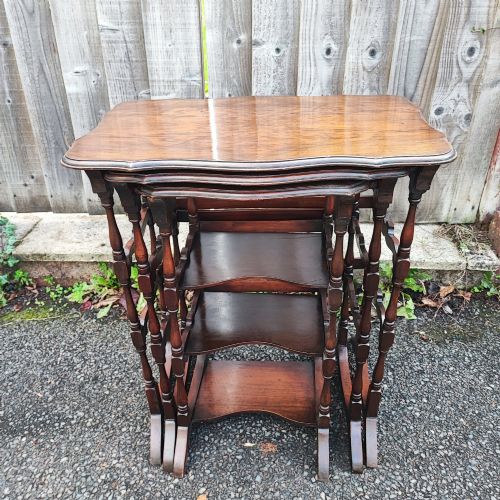
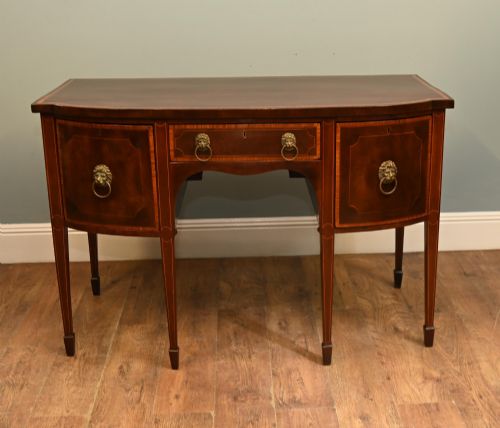
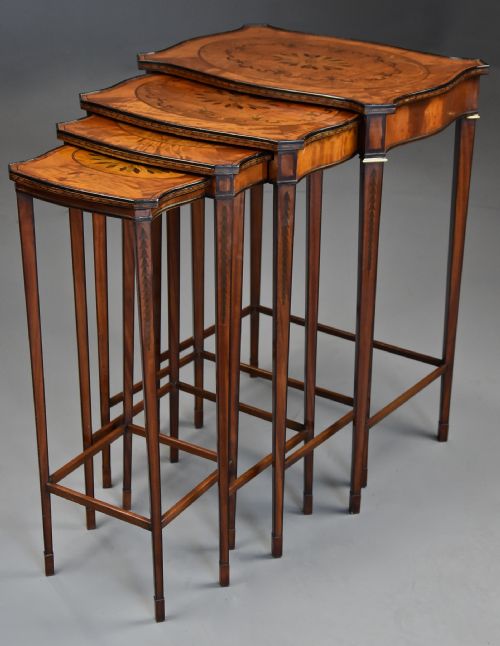
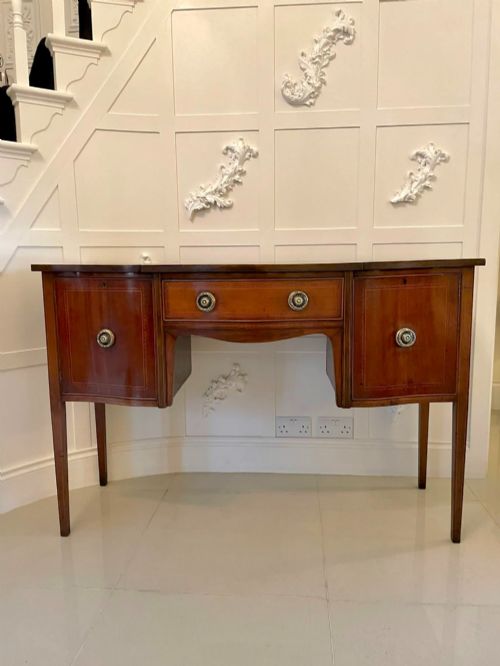
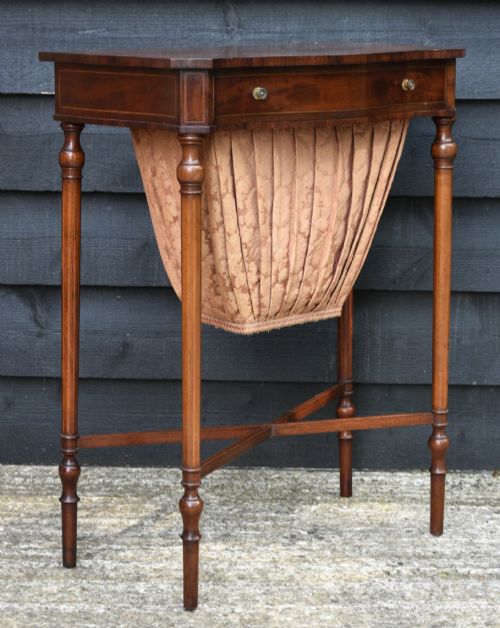
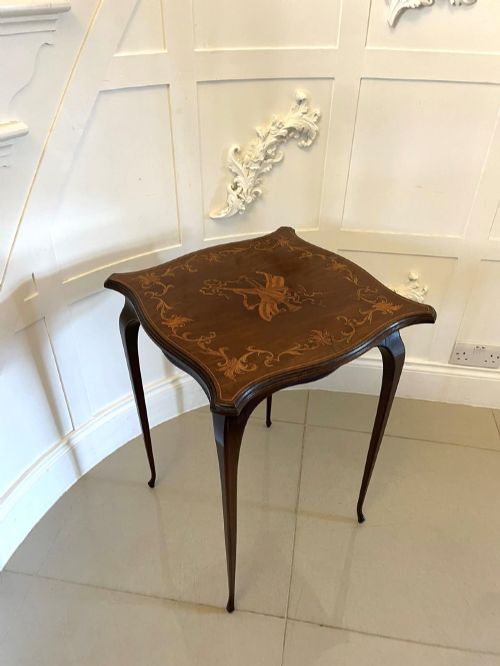
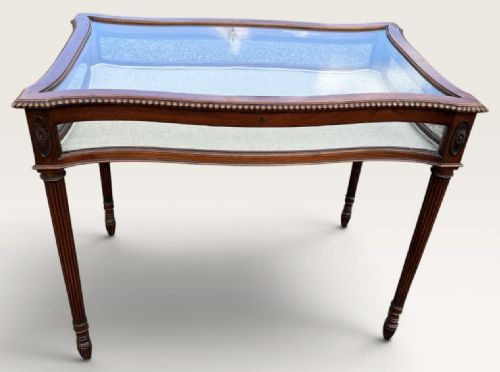
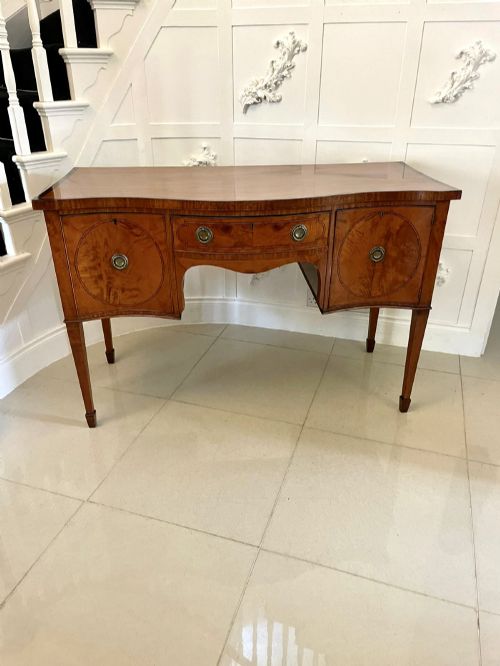
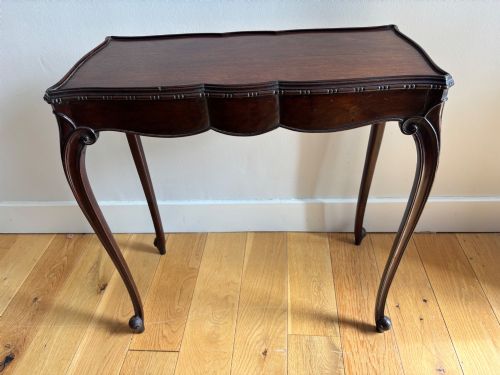
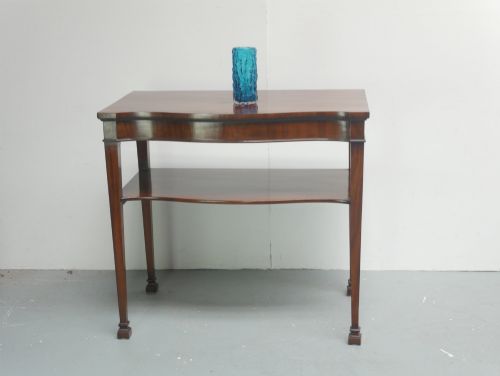
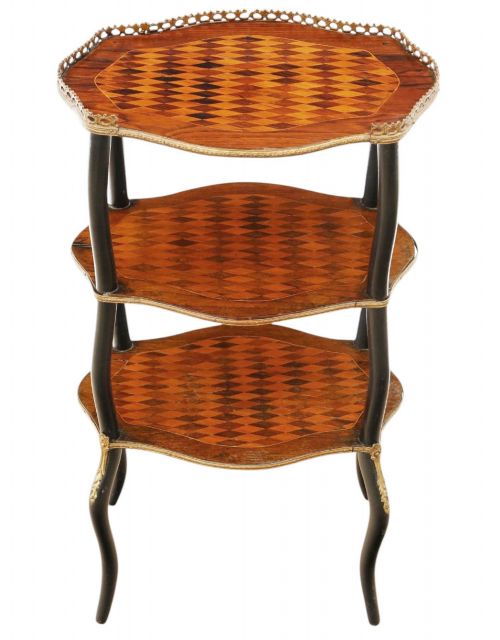
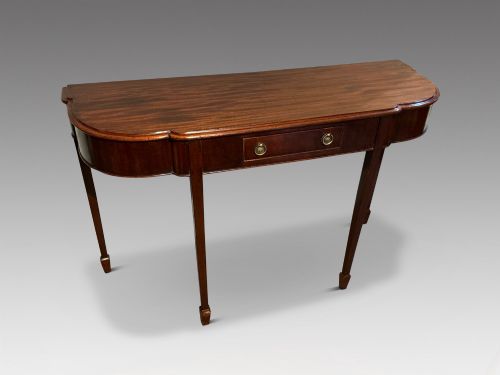
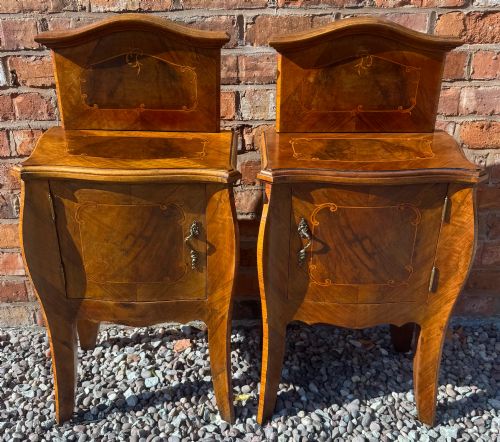
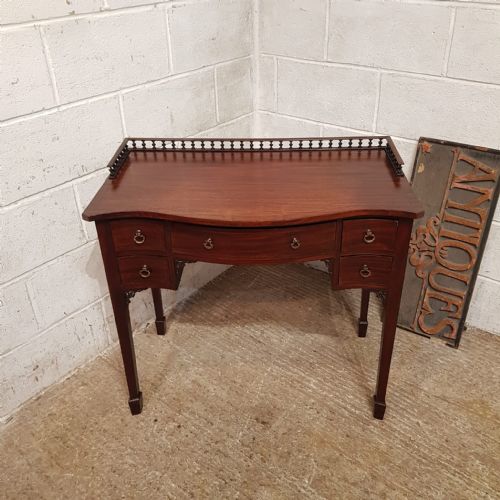
Makers often drew inspiration from earlier Georgian and Sheraton designs, applying delicate satinwood and boxwood inlay to rich mahogany and walnut bases. The selection on this page ranges from compact tea and nest tables to larger writing desks and console tables.
How They Were Made
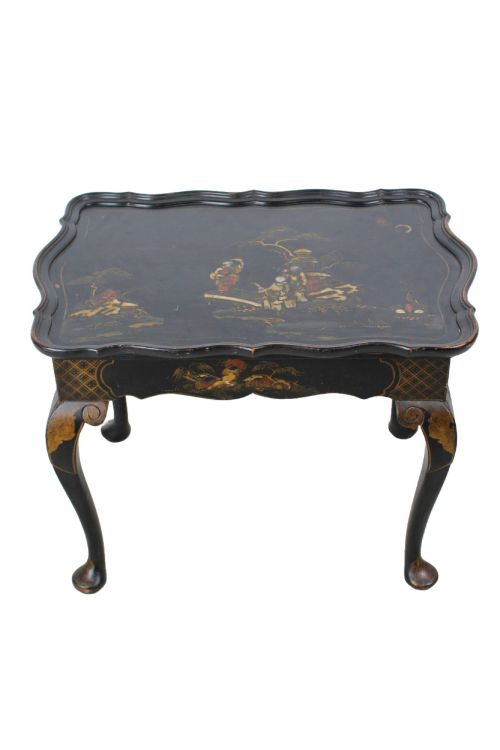
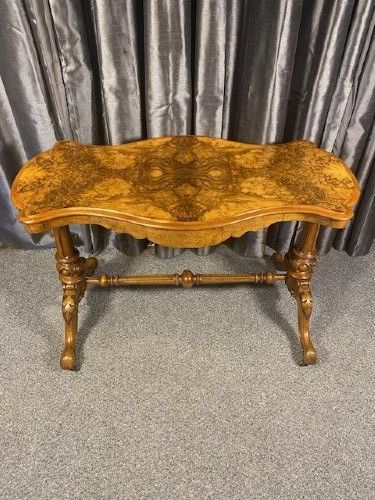
Cabinetmakers constructed these tables primarily from solid mahogany and walnut, frequently selecting highly figured burr walnut veneers for tabletops. They added decorative contrast through fine boxwood and satinwood stringing, alongside intricate marquetry and hand-painted details.
The complex curved edge required skilled timber shaping and precise jointing to maintain structural stability along the undulating front. Polished brass fittings and leather writing inserts completed many of the functional writing and card tables.
Edwardian Serpentine Table Retail Price Guide 2026
Typical asking prices for edwardian serpentine table among the pieces listed under this phrase on Sellingantiques today, from the lower quarter to the upper quarter. They describe what is for sale here now, not the wider market.
Form variations on this page include writing desks, card tables, occasional tables, sideboards, and etageres.
What Varies in Quality
The standard of timber selection largely dictates quality, with top-tier examples displaying deeply figured mahogany or richly patterned burr walnut veneers. Finer pieces also feature crisp, meticulously hand-cut wood inlay rather than simpler painted decoration.
Construction details such as dovetailed drawer linings and well-balanced proportions separate standard production furniture from superior workshop creations. The delicacy of the serpentine sweep and the precision of the edge banding reveal the maker's underlying skill.
Edwards and Roberts·Gillow·Maple and Co.
The Edwardian Serpentine Table Glossary
- Serpentine
- A convex curve flanked by two concave curves, creating an undulating edge that resembles a snake. This shape required advanced woodworking skill to execute cleanly.
- Marquetry
- The art of forming decorative patterns by fitting together contrasting veneers of wood and other materials. It frequently adorns the tops of Edwardian occasional and writing tables.
- Satinwood
- A lustrous, hard timber native to India and Sri Lanka with a yellowish hue, prized for contrasting stringing and inlay work. It often frames the edges of mahogany tabletops.
- Etagere
- A set of open display shelves supported by columns or slender legs, designed to hold small ornaments. These pieces often incorporate shaped serpentine tiers.
Edwardian Serpentine Table: Frequently Asked Questions
How do I identify an Edwardian piece?
Edwardian furniture typically displays lighter timbers, delicate satinwood or boxwood stringing, and influences from Sheraton and Georgian revival styles. Makers often favored slender proportions and bright polished finishes.
Comparing construction methods and timber figuring against known period examples helps confirm the date. Many pieces also carry workshop labels or distinct inlaid motifs characteristic of the early twentieth century.
Where should I place a console table?
A console or side table fits well against a hallway wall, behind a sofa, or beneath a mirror in a living room. Its shallow depth makes it ideal for narrow spaces without obstructing movement.
These tables provide a convenient surface for lamps, decorative objects, or correspondence. The curved front adds visual interest to an otherwise plain wall.
How do I care for antique wood?
Keep antique tables out of direct sunlight and away from heat sources to prevent the timber from drying out or warping. Dust regularly with a soft, dry cloth and apply a quality beeswax periodically.
Avoid using modern liquid polishes containing silicone, which can damage the traditional polish finish. Promptly wipe away any moisture to protect the veneer and inlay.