



Edwardian Mahogany Sewing Table
An edwardian mahogany sewing table brings refined utility to a room, offering clever compartments for needlework alongside elegant timber grain.
Edwardian Mahogany Sewing Table
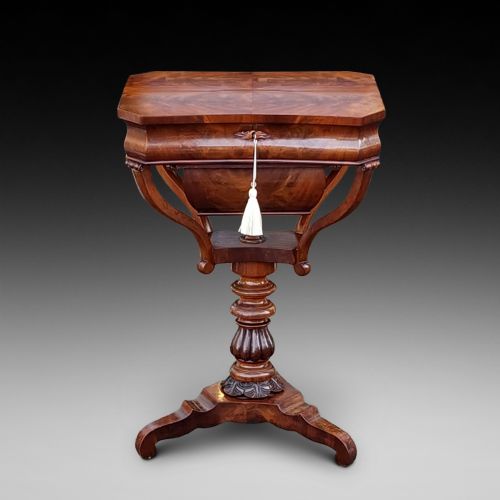
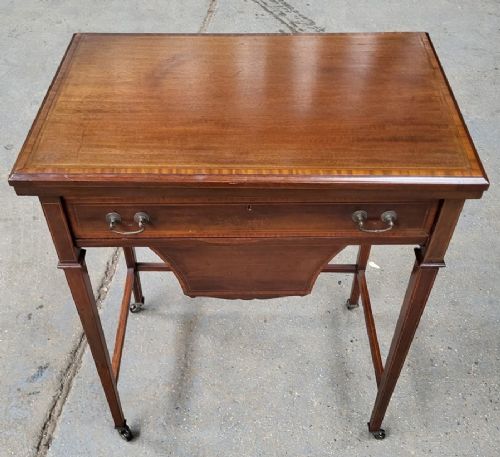
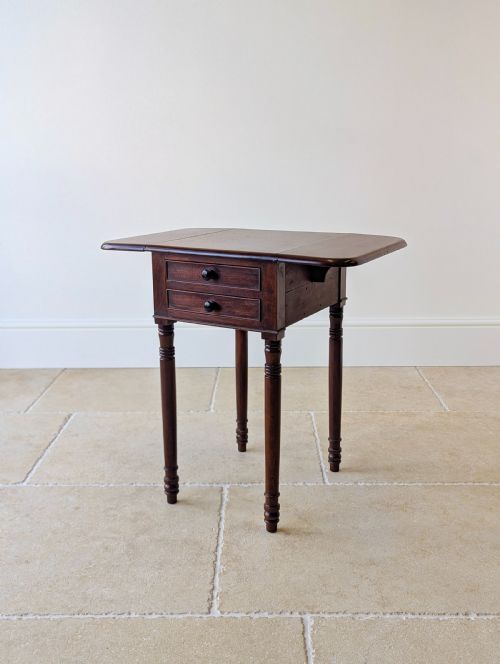
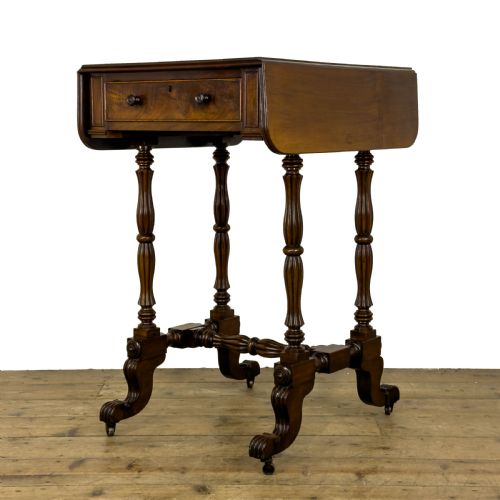
An edwardian mahogany sewing table is a compact piece of period furniture designed for domestic needlework, incorporating fitted interiors and drop leaves or lift-up lids. The pieces seen here span forms such as work tables, occasional tables, side tables, and writing tables, reflecting the versatile domestic roles these items fulfilled in the early twentieth century.
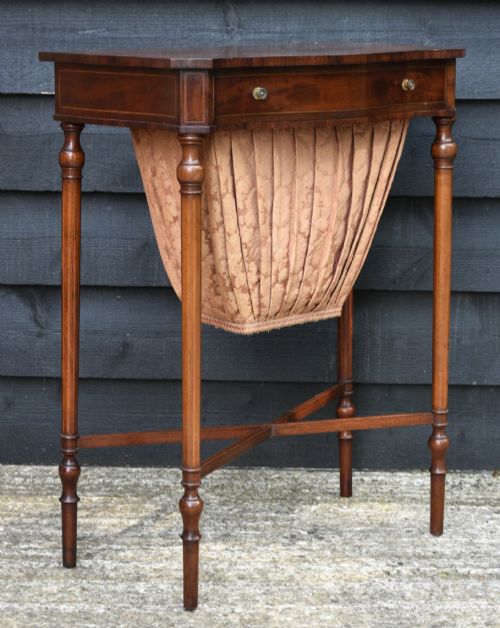
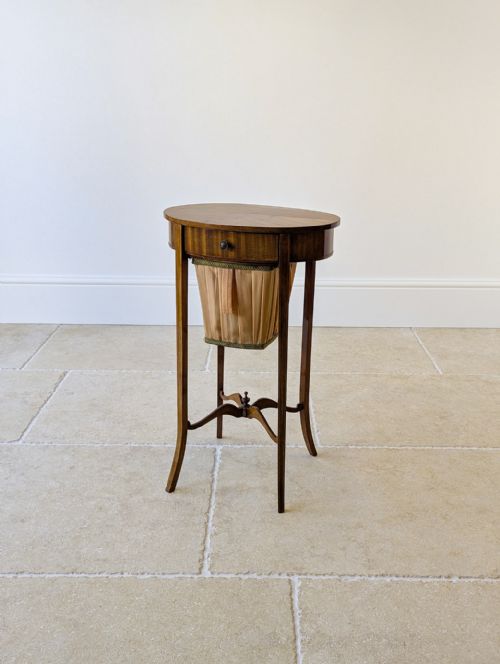
The version most commonly met on this page dates from the Edwardian period, frequently enhanced with boxwood and satinwood inlay, crossbanding, and sometimes a suspended silk basket. Alongside these Edwardian examples, the selection includes occasional pieces from the Victorian and Regency eras, as well as nineteenth-century interpretations sharing similar timber and form.
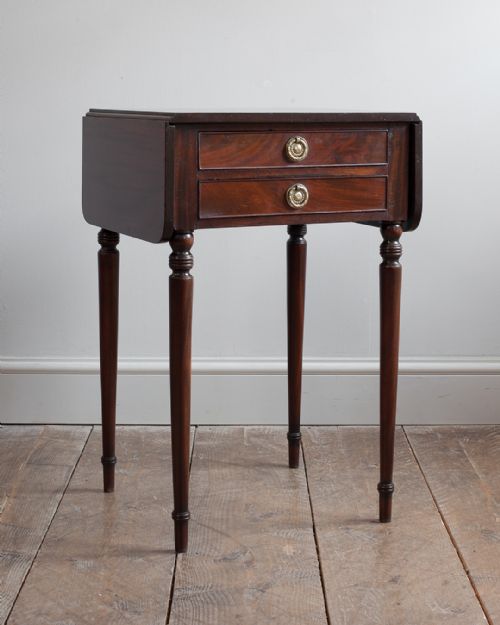
Makers of the period concentrated on practical elegance, combining shallow drawers for cottons and needles with deeper storage below. Buyers searching for an edwardian mahogany sewing table typically want a functional yet decorative item that fits neatly beside a chair or sofa.
How they were made
Cabinet makers utilised solid mahogany and flame mahogany veneers, building sturdy carcases that showcased rich natural grain patterns. Workshops applied contrasting stringing in boxwood and satinwood to outline table tops, drawer fronts, and tapered legs.
Hardware details such as brass handles and hinges added functional refinement, while internal compartments were carefully divided to organise sewing paraphernalia. Silk baskets and fabric linings were integrated into the under-tier to hold wools and ongoing needlework projects.
Edwardian Mahogany Sewing Table Retail Price Guide 2026
Typical asking prices for edwardian mahogany sewing table among the pieces listed under this phrase on Sellingantiques today, from the lower quarter to the upper quarter. They describe what is for sale here now, not the wider market.
Many Edwardian makers thoughtfully included concealed compartments for pins, ensuring no stray needle ever troubled the drawing room floor.
What varies in quality
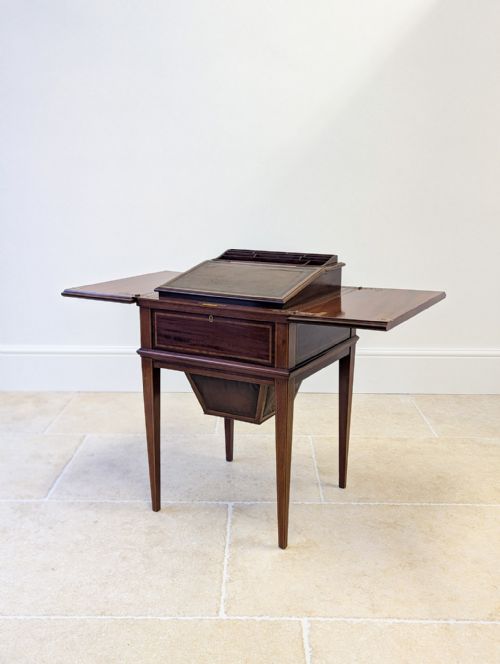
The distinction between standard examples and the finest pieces lies in the crispness of the inlay work and the choice of timber figurations, such as flame mahogany. Superior items often feature serpentine outlines, small proportions, and sophisticated metamorphic mechanisms that turn a simple work table into a writing surface.
Attention to detail in the fitted interior, including original compartments and intact silk components, elevates a piece significantly. The overall harmony of proportions and the finesse of the tapered supports determine the standing of each table within its period.
The Edwardian Mahogany Sewing Table Glossary
- Crossbanding
- A border strip of veneer laid around the edge of a table top so that the grain runs perpendicular to the central panel. This technique frames the primary timber and demonstrates careful cabinet making.
- Boxwood inlay
- Narrow lines or decorative motifs of pale boxwood inserted flush into the darker mahogany surface. It provides sharp visual contrast and defines geometric panels.
- Drop leaf
- A hinged flap on the side of a table top that can be raised to extend the surface area or lowered when space is limited. Brass brackets or swing legs support the leaf when in use.
- Metamorphic
- Describing a piece of furniture engineered to transform from one form of utility into another, such as combining a sewing table with a writing desk. These designs require precise internal mechanisms.
- Serpentine
- A gently undulating curved line, often seen on the front edges of table tops or cabinet frames. This shape requires skilled woodworking to achieve smooth, flowing contours.
Edwardian Mahogany Sewing Table: Frequently Asked Questions
What is a sewing table used for?
These tables were originally created for women to store threads, needles, fabrics, and ongoing needlework projects within reach of their seating area.
Today, they function perfectly as side tables, lamp tables, or bedside cabinets where concealed storage is useful.
How do I spot an Edwardian piece?
Edwardian furniture generally dates from the reign of King Edward VII between 1901 and 1910, often displaying lighter construction and delicate proportions compared to earlier Victorian furniture.
Look for refined satinwood and boxwood inlay work, Sheraton Revival influences, and bright mahogany tones.
What are silk baskets on these tables?
A silk basket is a fabric pouch, traditionally pleated in silk, suspended beneath the drawer or table top to hold balls of wool and fabric scraps.
Many original silk baskets have been replaced over the decades, though surviving examples retain their period character.
Can I use one as a desk?
Certain examples incorporate metamorphic designs with pull-out writing slides, hinged lids, or fitted stationery compartments specifically for correspondence.
Standard sewing tables with flat tops and drawers also serve well for holding a notebook or resting a laptop.
How do I care for mahogany?
Keep mahogany furniture away from direct sunlight and heat sources to prevent the timber and veneers from drying out or fading over time.
Polish the surface sparingly with a traditional beeswax to maintain the natural lustre of the grain.