
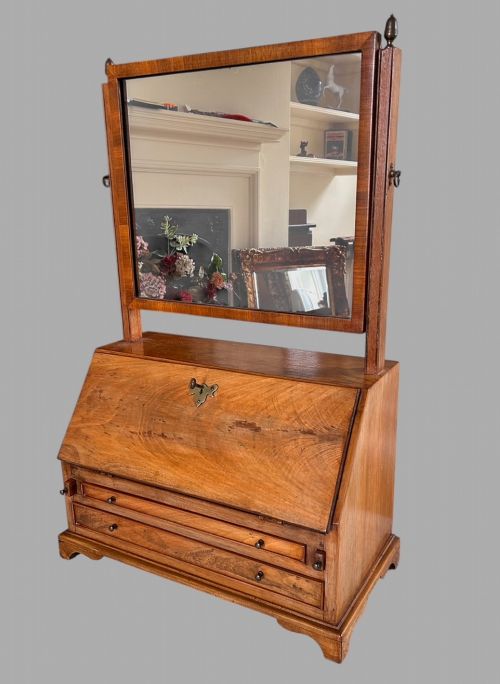

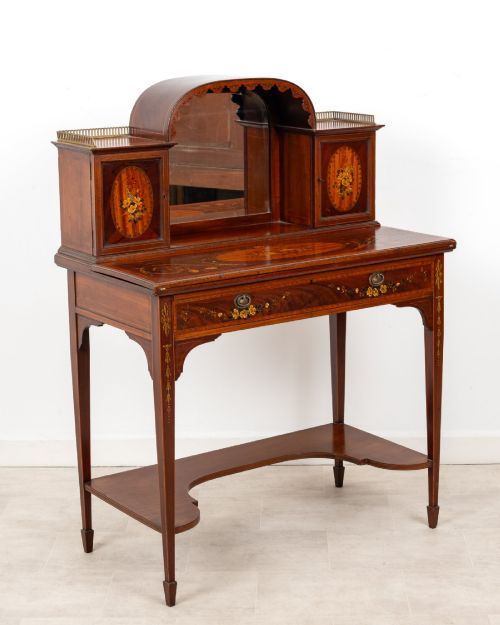


Edwardian Satinwood Vanity
Edwardian satinwood vanity pieces combine luminous timber with refined neoclassical lines, offering an elegant focal point for the bedroom.
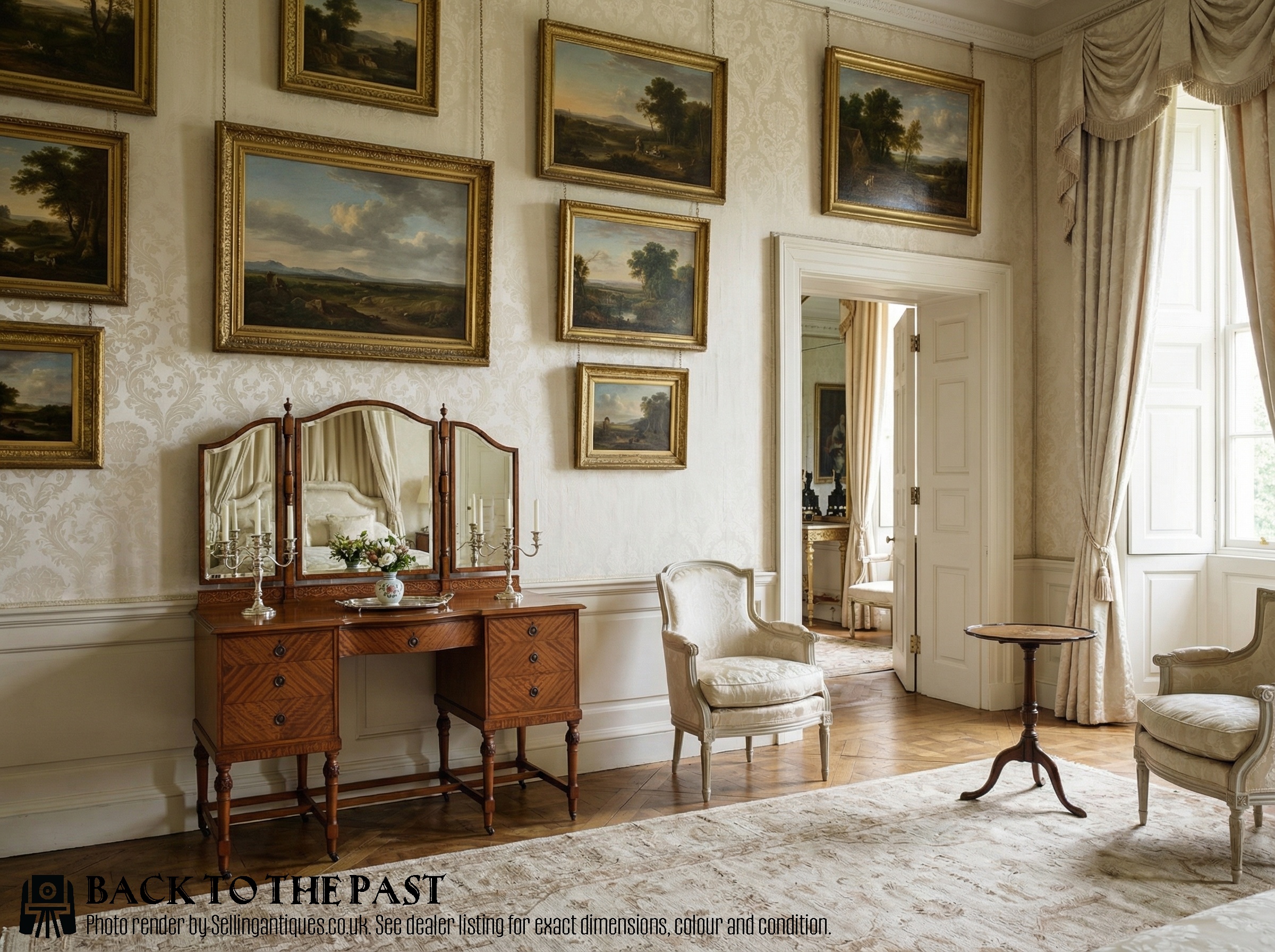
Edwardian Satinwood Vanity
When buyers search for Edwardian satinwood vanity, they encounter an array of sophisticated dressing tables, mirrors, and writing desks produced around the turn of the twentieth century. These furnishings span from compact table-top bureaus and painted dressing mirrors to large-scale inlaid dressing tables equipped with fitted boxes and mirrored superstructures.
The version most commonly met on this page is the Edwardian dressing table, frequently embellished with Sheraton Revival marquetry, contrasting mahogany banding, and delicate hand-painted floral motifs. Alongside these primary forms appear associated washstands, writing desks, and dressing stools built from the same pale, lustrous timber.
Dating primarily from the Edwardian period and the late nineteenth century, these pieces reflect a revival of lighter neoclassical aesthetics in British furniture design. They serve both a practical domestic function and provide a decorative showcase for fine cabinet-making techniques.
Materials and construction
Makers utilised satinwood as a primary timber or veneer, prized for its characteristic golden sheen and smooth grain. This lustrous surface was frequently contrasted with inlaid mahogany banding, ebony stringing, and elaborate marquetry details.
Structural elements often incorporated secondary hardwoods like mahogany or satin walnut to provide stability for larger dressing tables and washstands. Glass and mirror glass featured prominently in superstructures, while brass handles, drawer pulls, and marble tops added durability and weight to select pieces.
Several dressing tables retain original velvet-lined compartments designed specifically for concealing Victorian hairpins and scent bottles.
Distinctions in craftsmanship
The standard of an Edwardian satinwood vanity rests largely on the precision of its marquetry and inlay work. Finer examples display crisp, tightly fitted botanical or neoclassical motifs without gaps in the contrasting woods, whereas simpler pieces rely solely on painted decoration.
Structural integrity and hardware choices also separate standard production from exceptional pieces. Superior items feature solid brass fittings, well-figured timber veneers laid evenly over stable carcases, and maker signatures or stamps indicating distinguished London or provincial workshops.
Mappin and Webb·Edwards and Roberts·Gillows·Collinson and Lock·John Taylor of Edinburgh
The Edwardian Satinwood Vanity Glossary
- Satinwood
- A pale, durable tropical timber known for its reflective, satiny grain. It forms the primary visual signature of these dressing tables and desks.
- Marquetry
- Decorative patterns formed by fitting together thin veneers of various coloured woods. Master craftsmen utilised this technique to create elaborate floral urns and ribbons across drawer fronts.
- Sheraton Revival
- A late nineteenth and early twentieth-century style inspired by the neoclassical designs of George Sheraton. It prioritises slender proportions, symmetry, and delicate inlay.
- Superstructure
- An elevated assembly attached to the top of a desk or dressing table, usually incorporating small drawers, compartments, and a mirror. It maximises storage while maintaining a graceful silhouette.
- Stringing
- Thin lines of contrasting timber inlaid into the surface of furniture to frame panels and drawer edges. This subtle detailing defines Edwardian geometric borders.
Edwardian Satinwood Vanity: Frequently Asked Questions
What is a satinwood vanity?
A satinwood vanity is a dressing table, desk, or toilet mirror constructed from or veneered in pale satinwood timber, typically dating from the Edwardian era or late nineteenth century. These pieces were designed for personal grooming and writing, featuring fitted drawers and often a pivoting mirror.
They bring a bright, reflective quality to bedroom interiors and embody the refined craftsmanship of the Sheraton Revival style.
How do I care for satinwood furniture?
Satinwood benefits from being kept away from direct sunlight and extreme humidity, which can dry out the delicate veneers. Regular dusting with a soft, dry cloth maintains the natural sheen without requiring heavy polishes.
When placing items on the surface, use felt pads under glass or heavy objects to prevent scratching the polished finish.
Where were these pieces used?
These pieces were principally designed for principal bedrooms and dressing rooms in large Victorian and Edwardian country houses and town residences. They provided a dedicated station for morning routines, letter writing, and the storage of personal accessories.
Today, they transition easily into modern bedrooms as dressing tables or into studies as compact writing desks.
How do I distinguish Edwardian from Victorian pieces?
Edwardian satinwood furniture generally exhibits lighter proportions, simpler neoclassical lines, and brighter painted decorations than earlier Victorian examples. Victorian pieces often lean towards heavier construction, darker mahogany contrasts, and denser marquetry.
Cabinet-makers working around nineteen hundred frequently blended these influences, making timber selection and hardware key clues to the exact date.