
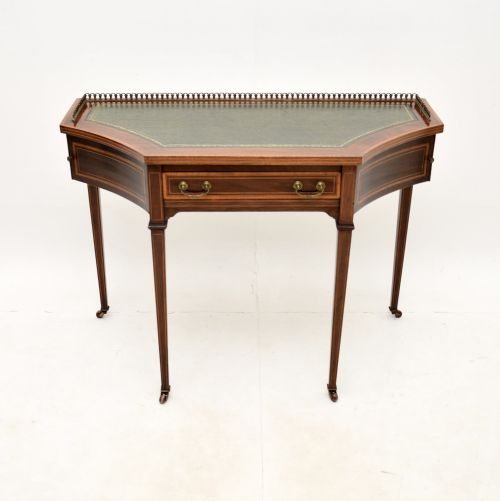



Sheraton Revival Dressing Table
These sheraton revival dressing table examples bring neoclassical elegance and fine mahogany or satinwood craftsmanship straight into a bedroom.
Sheraton Revival Dressing Table
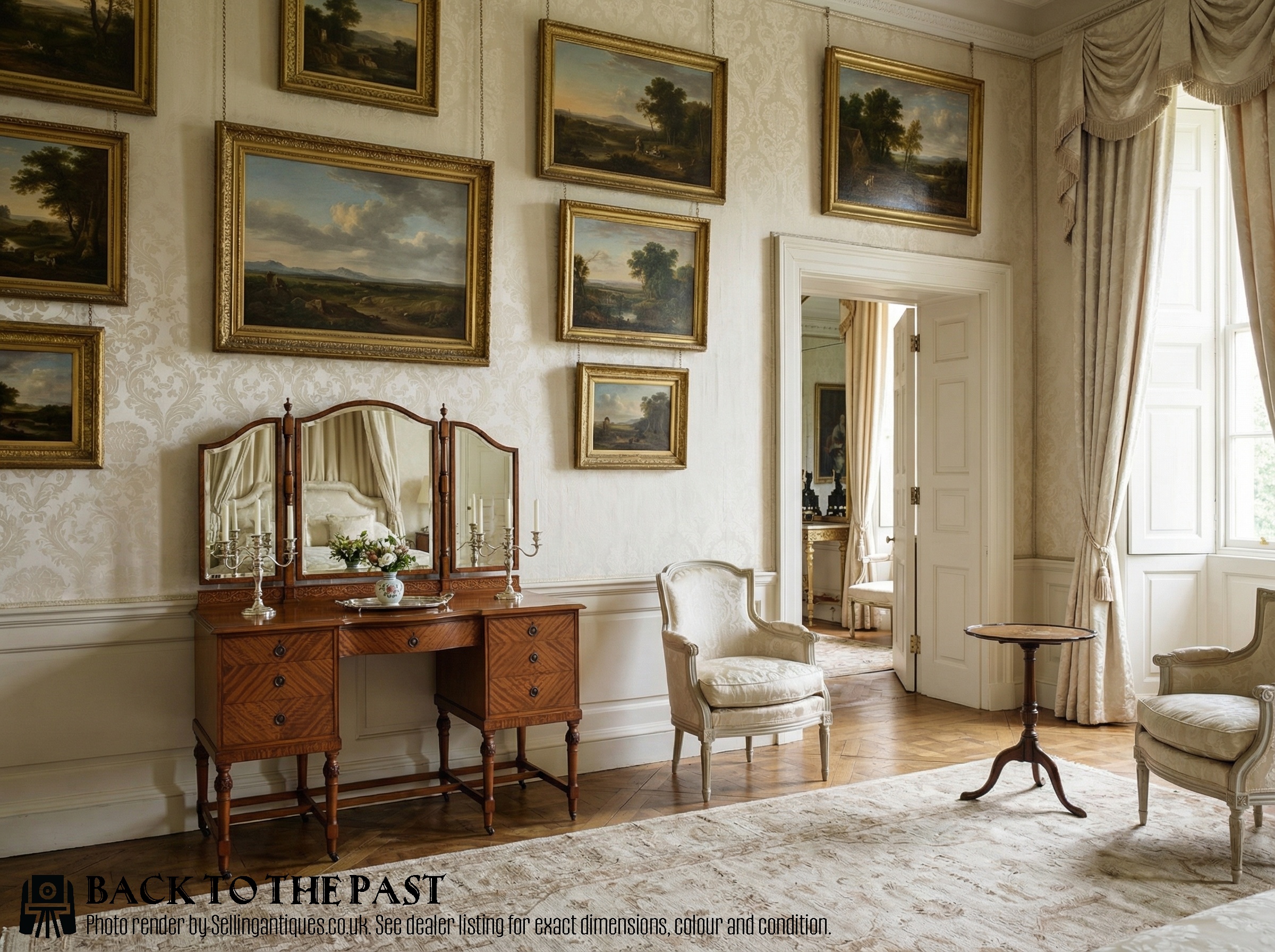
A sheraton revival dressing table combines the refined proportions of late eighteenth-century design with the practical needs of the Victorian and Edwardian eras. These pieces emerge predominantly in Edwardian and late Victorian periods, alongside related writing desks and dressing table mirrors.
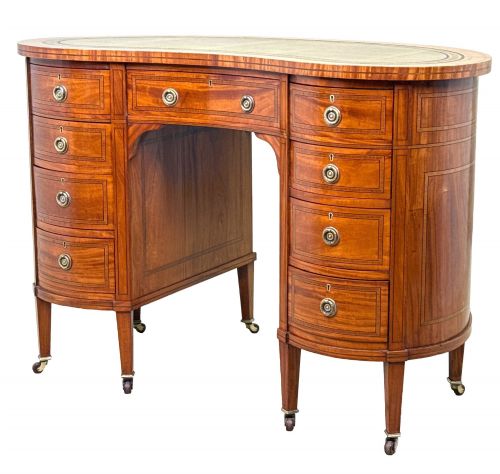
Most examples you will encounter utilise mahogany or satinwood, frequently enhanced with boxwood inlay and occasional painted decoration. They range from compact dressing tables with tilting mirrors to larger kidney-shaped and writing variants that served multiple functions in period bedchambers.
How they were made
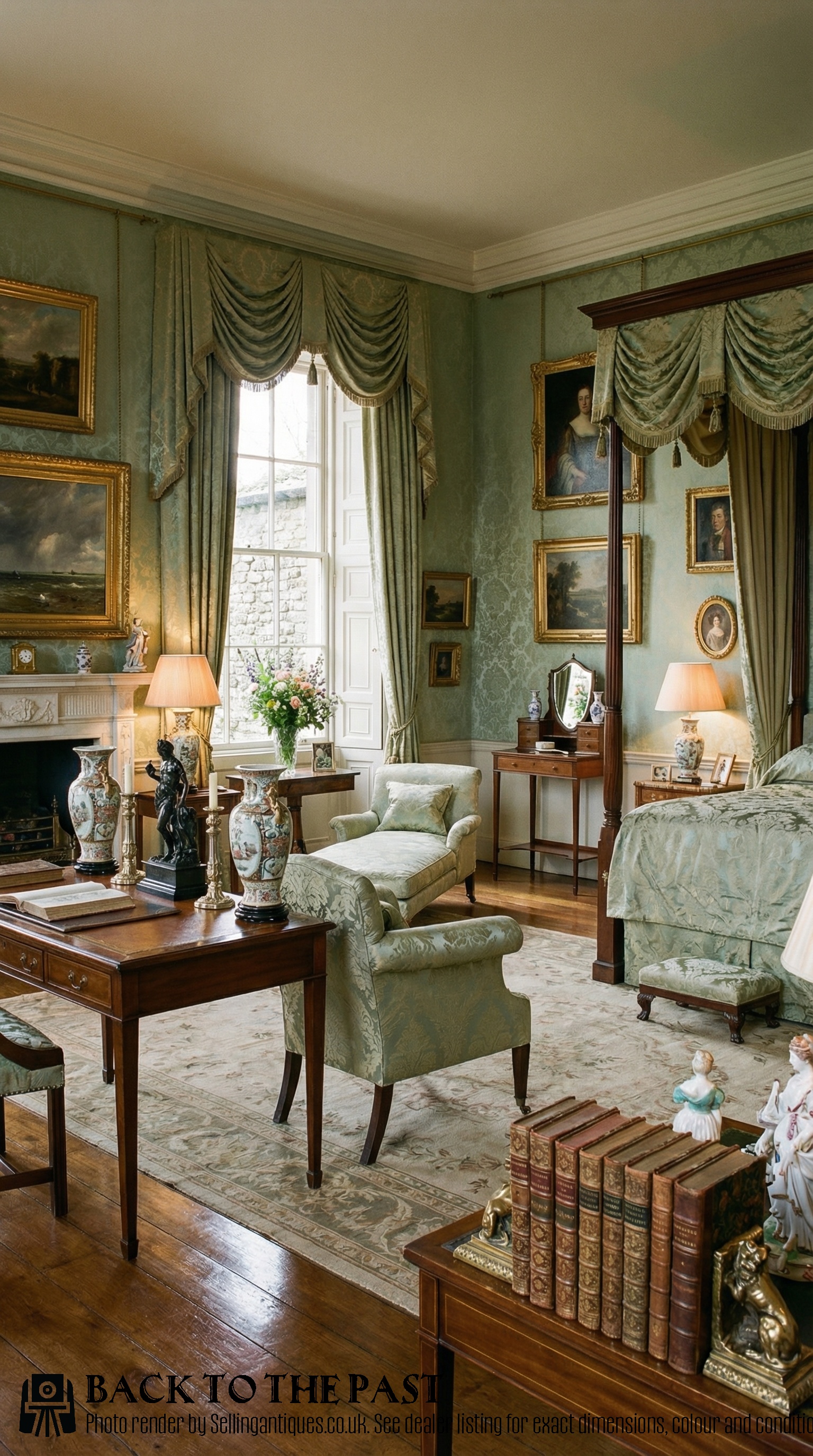
Cabinetmakers constructed these tables using solid timber frames overlaid with carefully selected mahogany and satinwood veneers. Artisans employed contrasting boxwood inlay to create delicate stringing and neoclassical motifs across drawers and tabletops.
Structural elements incorporated brass hardware for handles and fittings, whilst specialised surfaces featured inset leather panels. Many pieces combined joinery with hand-painted details to achieve the characteristic lightness of the revival style.
Several dressing tables hide neat kidney-shaped writing surfaces designed specifically for nineteenth-century correspondence.
What varies in quality
The standard of a piece rests heavily on the precision of its inlay and the choice of timber figure. Finer examples display meticulous boxwood line work and balanced proportions without relying on heavy ornamentation.
Construction methods in the drawers and the crispness of any painted decoration reveal the original maker's skill. Pieces bearing documented signatures or stamps reflect workshops that maintained rigorous standards of cabinet work.
James Shoolbred of London·Edwards & Roberts·Gillows·Maple & Co
The Sheraton Revival Dressing Table Glossary
- Sheraton Revival
- A late nineteenth and early twentieth-century design movement inspired by the furniture forms of Thomas Sheraton. It reinterprets neoclassical lines through lighter proportions and delicate inlay.
- Satinwood
- A dense, lustrous timber with a yellowish sheen used extensively for fine cabinet work and decorative veneers. It forms the primary surface of many high-status dressing tables.
- Boxwood Inlay
- Contrasting light wood inserted into recesses within darker timbers to create geometric patterns and borders. It defines the crisp linear decoration on these tables.
- Bonheur Du Jour
- A small lady's writing desk featuring a tiered superstructure with shelves and small drawers above the main surface. Several examples appear alongside traditional dressing forms.
- Kidney Shaped
- A curved tabletop profile designed to fit comfortably against the body during use. This form appears frequently on desks and dressing tables from the Edwardian period.
Sheraton Revival Dressing Table: Frequently Asked Questions
What is a sheraton revival dressing table?
A sheraton revival dressing table is a late nineteenth or early twentieth-century piece inspired by eighteenth-century neoclassical designs. These tables typically feature light timbers, tapered legs, and delicate inlay work.
They were designed for middle and upper-class bedchambers to serve personal grooming needs. Many incorporate matching mirrors and compartments for toiletries.
How do I identify the period?
You can identify the period by looking at the timber selection, construction methods, and overall decorative style. Pieces from this group date primarily from the late Victorian and Edwardian eras.
Makers of this time combined traditional cabinetmaking techniques with revival motifs like satinwood veneer and boxwood stringing. Stamped signatures from firms like Maple & Co or Edwards & Roberts also help confirm exact dates.
Are these tables suitable for modern bedrooms?
These tables adapt well to modern bedrooms as functional dressing stations or compact writing desks. Their slender proportions mean they do not overpower contemporary spaces.
They provide useful surface space and drawers for everyday storage whilst adding period character. Paired with a small stool, they function just as they did a century ago.
What materials were used?
Cabinetmakers relied heavily on mahogany and satinwood for the primary surfaces and structural frames. Boxwood provided the contrasting material needed for intricate inlay and stringing.
Additional materials include brass handles, glass mirror plates, and occasionally leather writing inserts. Painted decoration also appears on selected satinwood and mahogany examples.