



Edwardian Royal Worcester Pair
These Edwardian Royal Worcester pairs combine delicate porcelain forms with hand-painted artistry, offering collectors matching sets of British ceramics.
Edwardian Royal Worcester Pair
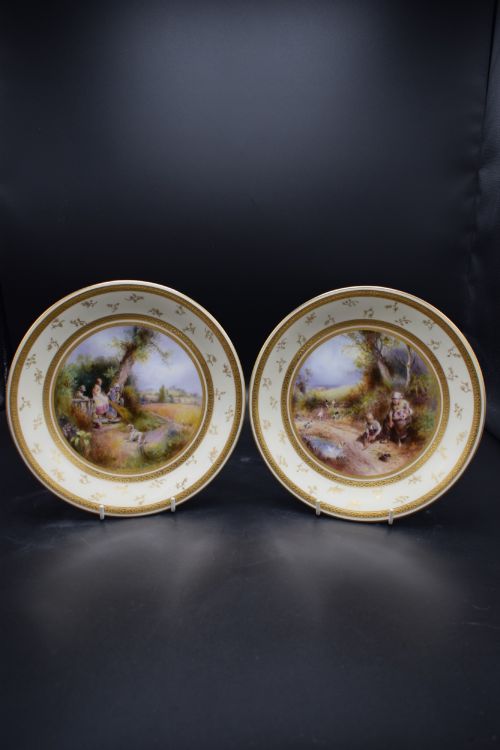
An edwardian royal worcester pair consists of matching ceramic objects created by the esteemed English pottery during the early twentieth century and late nineteenth century. Buyers seek these matched sets for their symmetrical display qualities and detailed artistry, often finding matching vases, ewers, cabinet plates, spill vases, and candlesticks.
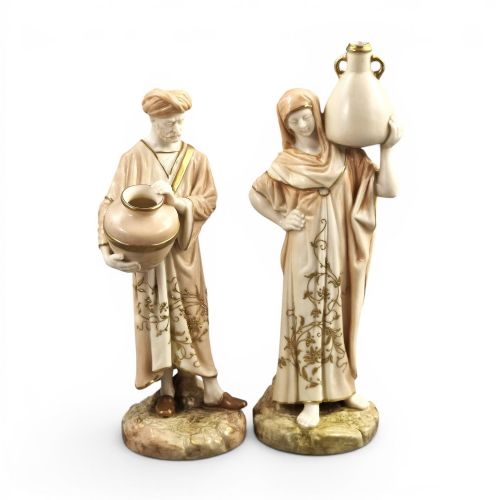
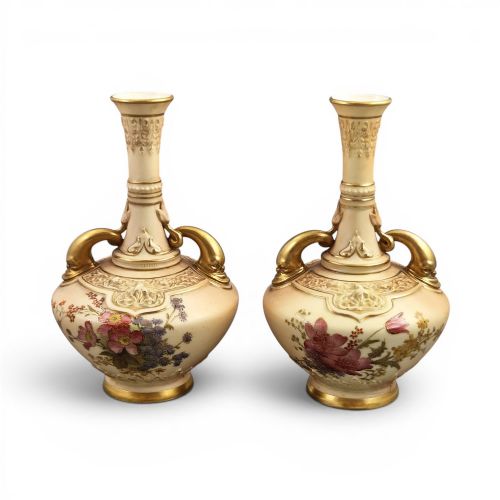
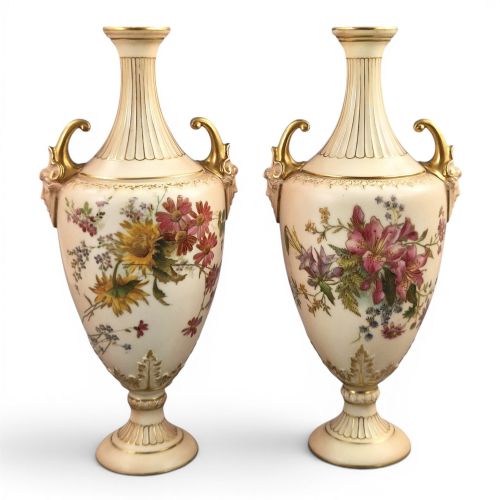
The most common versions met on this page include blush ivory vases featuring floral motifs, dolphin handles, or water carrier figures, alongside pieces decorated with painted pheasants, Highland cattle, swans, and fruit. These items showcase the varied output of the factory across several decades, spanning from late Victorian periods through to the 1940s.
Matching pairs demonstrate the factory's skill in producing balanced decorative items for domestic interiors, utilising porcelain and bone china as canvases for named artists. The forms range from small spill vases to large plaques and pedestals, each pair maintaining visual harmony through coordinated decoration and sizing.
Materials and methods
The manufacture of these pieces relies upon fine porcelain and bone china bodies, shaped into vessels, plates, and figurines. Artisans applied smooth glazes, including the characteristic blush ivory ground, to provide a pale base for subsequent hand-painting.
Decoration involved detailed enamel work and naturalistic painting executed by hand, often signed by notable factory artists such as James Hadley, Charles Baldwyn, and the Stinton family. Gilding, gold leaf, and gilt accents were then applied to rims, handles, and borders to finish the design.
Edwardian Royal Worcester Pair Retail Price Guide 2026
Typical asking prices for edwardian royal worcester pair among the pieces listed under this phrase on Sellingantiques today, from the lower quarter to the upper quarter. They describe what is for sale here now, not the wider market.
Listings feature items spanning the 19th Century up through the 1940s, with a strong concentration of Edwardian examples.
Assessing quality and execution
Quality in these pairs rests upon the complexity and skill of the hand-painted subject matter, with ornithological scenes, cattle, and portraits commanding particular attention. The precision of the enamel work and the richness of the gilding further separate standard production from exceptional studio output.
The presence of recognisable artist signatures, such as Baldwyn or Stinton, elevates a pair's standing significantly. Additionally, the crispness of moulded details on more elaborate forms like dolphin handles or pierced plates indicates superior craftsmanship during the manufacturing process.
James Hadley·C Baldwyn·Ricketts·James Stinton·Harry Stinton
The Edwardian Royal Worcester Pair Glossary
- Blush ivory
- A soft, matte cream-coloured porcelain body introduced by Royal Worcester in the late nineteenth century. This finish provides a warm background for floral and figurative hand-painting.
- Bone china
- A type of porcelain containing animal bone ash, resulting in a strong, bright white ceramic body. It allowed the factory to create thin, refined wall sections for cabinet pieces and vases.
- Enamel
- Coloured glass paste applied to the ceramic surface and fired to fuse permanently with the glaze. It provides vibrant, stable hues for detailed naturalistic scenes.
- Gilding
- The application of gold leaf or gold powder to ceramic surfaces for decorative accent. On these pieces, it highlights handles, rims, and borders.
- Spill vase
- A tall, narrow vessel designed to hold wooden spills used for lighting fires or candles. They frequently appear in matching pairs with floral or animal decoration.
Edwardian Royal Worcester Pair: Frequently Asked Questions
How do I identify Edwardian pieces?
Look for factory backstamps underneath the glaze, which often include date codes specific to the manufacturing year. Stylistic cues such as blush ivory grounds and naturalistic painting also point to this era.
Matching pairs from this period typically exhibit consistent numbering and signature styles used by the factory during those specific decades.
What subjects are painted on them?
Artists frequently depicted British wildlife, including pheasants, Highland cattle, swans, and storks, often set within natural landscapes. Floral studies, fruit, and figurative subjects like water carriers also appear regularly on these matched items.
The choice of subject often reflects the specific artist's specialism, such as Charles Baldwyn's birds or the Stinton family's cattle and game birds.
How were matching pairs used?
These items served primarily as decorative ornaments on mantelpieces, sideboards, and in glass-fronted cabinets during the Edwardian period. Cabinet plates and plaques were displayed on walls or stands to showcase artistic merit.
Vases and ewers functioned both as ornamental centerpieces and as containers for dried flowers or decorative displays within wealthy homes.
Are signed pieces more desirable?
Signed items by recognised factory artists generally attract greater interest from collectors due to the documented skill of the individual painter. Signatures by prominent artists like Harry Stinton or Charles Baldwyn indicate higher-tier studio work.
Unsigned pairs still represent standard factory production but lack the specific attribution that links a piece to a master decorator.