



Twin Handled Blush Vases
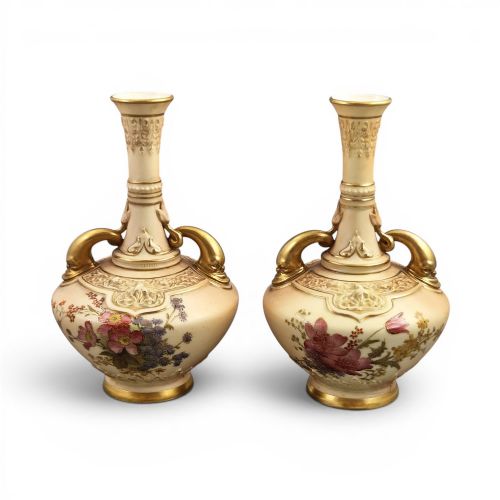
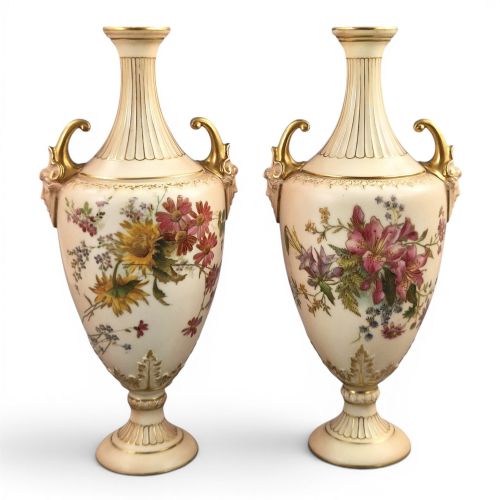
These twin handled blush vases are delicate porcelain vessels finished in soft ivory tones, offering an elegant focal point for a traditional mantelpiece.
Twin Handled Blush Vases
When you search for twin handled blush vases, you encounter decorative porcelain vessels originating from the late nineteenth century through to the early twentieth century. Most examples belong to the Edwardian and late Victorian periods, showcasing soft ivory colour palettes alongside delicate floral motifs and gilding.
The forms vary from ovoid vessels and loving cups to specialised pairs featuring figural handles such as dolphins or storks. These ornamental pieces reflect the sophisticated aesthetic sensibilities of British ceramic production during the height of the pottery's success.
How they were made
Makers utilised fine porcelain bodies coated in a soft ivory glaze that creates the characteristic muted background for subsequent decoration. Skilled artisans applied enamel colours by hand, often depicting floral subjects with notable precision before firing the pieces to fuse the pigments.
Gold leaf and gilding provide rich accents to the handles, rims, and bases of the vessels, catching the light against the matte porcelain surface. The inclusion of moulded elements like dolphin or stork handles demonstrates complex casting techniques combined with careful hand finishing.
Twin Handled Blush Vases Retail Price Guide 2026
Typical asking prices for twin handled blush vases among the pieces listed under this phrase on Sellingantiques today, from the lower quarter to the upper quarter. They describe what is for sale here now, not the wider market.
Some vessels feature sculpted dolphins serving as handles, proving that Victorian artisans occasionally took marine inspiration very literally.
What varies in quality
The distinction between standard production and superior examples rests upon the intricacy and authorship of the hand-painted decoration. Pieces bearing the signature of recognised artists exhibit a level of botanical detail and painterly finesse that elevates the entire object.
Furthermore, the crispness of the moulded handles and the application of gold leaf dictate the visual harmony of the vessel. Well-preserved gilding and subtle tonal transitions in the enamel work separate the finest ornamental items from simpler commercial output.
Royal Worcester·E Raby
The Twin Handled Blush Vases Glossary
- Blush ivory
- A soft, creamy porcelain glaze developed to resemble the delicate tint of human skin. It forms the matte background characteristic of this specific ceramic style.
- Gilding
- The application of gold leaf or gold paint to accentuate handles, rims, and decorative borders. This metallic finish adds contrast to the muted porcelain body.
- Ovoid
- An egg-shaped vessel form frequently utilised for decorative vases. This rounded silhouette provides an ample surface area for floral hand painting.
- Enamel
- Vitreous pigments applied over the glaze to introduce colour to the porcelain surface. These paints are fired at lower temperatures to bond permanently with the ware.
Twin Handled Blush Vases: Frequently Asked Questions
What are twin handled blush vases?
These decorative ceramic vessels feature two side handles and a soft ivory glaze. They originate predominantly from the late nineteenth and early twentieth centuries.
Artisans decorated the porcelain bodies with hand-painted floral motifs and gilt highlights, creating ornamental items intended for display in period interiors.
How were twin handled blush vases used?
These pieces served strictly as ornamental items rather than functional vessels for fresh flowers. Wealthy households displayed them on mantelpieces, side tables, or cabinets to demonstrate refined taste.
Their delicate painted surfaces and gilded accents made them unsuitable for holding water, positioning them purely as decorative art objects.
How do I date twin handled blush vases?
Dating relies primarily upon factory coding systems stamped onto the underside of the porcelain base. Specific date marks and pattern numbers indicate the exact year of manufacture.
Stylistic clues such as Victorian aesthetic influences or Edwardian forms also help narrow down the production period of each vessel.
How should I display twin handled blush vases?
Place these delicate porcelain vessels in stable locations away from direct sunlight and heavy foot traffic. Their soft enamel colours and gold leaf require gentle placement on secure surfaces.
Displaying them in pairs or alongside complementary Edwardian ceramics enhances their visual impact within a traditional room setting.