

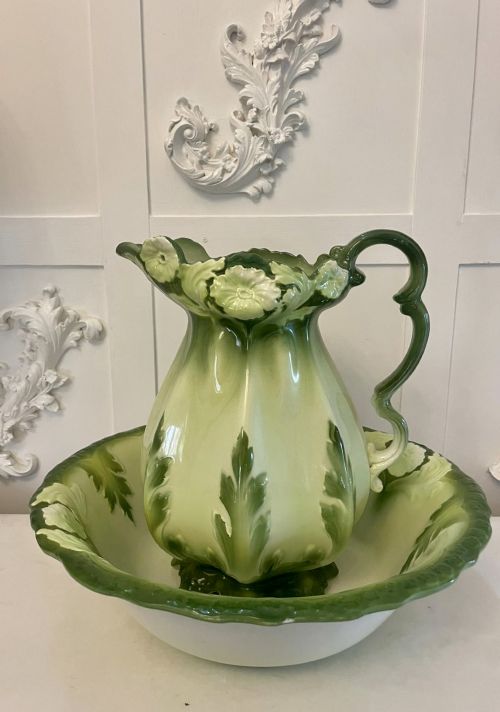
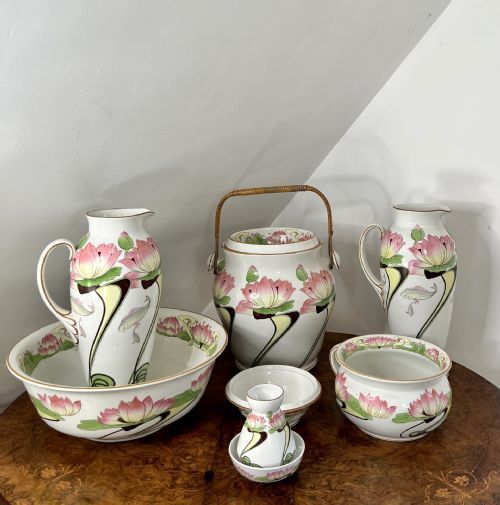


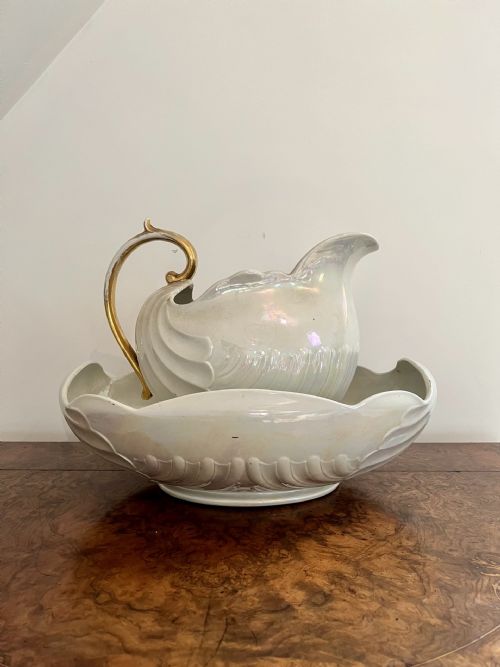


Edwardian Porcelain Pitcher
An edwardian porcelain pitcher brings utility and elegance to a room, offering fine ceramic craft from the turn of the twentieth century.
Edwardian Porcelain Pitcher
The edwardian porcelain pitcher category encompasses practical vessels and decorative ewers produced around the early twentieth century. Buyers seeking this phrase frequently encounter wash sets, washstand sets, and individual jugs originating from periods spanning the late nineteenth and early twentieth centuries.
Many examples appear as part of larger bathroom sets or washware collections, alongside standalone jugs, pitchers, and decorative ewers. The styles represented in these listings range from traditional Edwardian designs to Art Nouveau, Victorian Rococo Revival, and Victorian Chinoiserie.
Makers and potteries from the era produced both functional utility items and ornamental pedestal vases or jug-vases. Most pieces reflect domestic washstand use or cabinet display, finished with glazes, enamels, and gilt detailing.
How they were made
Makers utilised ceramic and porcelain bodies, sometimes categorised as soft paste porcelain or earthenware, shaped into jugs, ewers, and vases. These pieces received smooth glazes and were frequently decorated with hand painted motifs.
Artisans applied gold leaf, gilding, and enamel work to accentuate handles, rims, and body contours. Signature details such as blush ivory grounds and blue and white transfers appeared across various domestic and decorative forms.
Edwardian Porcelain Pitcher Retail Price Guide 2026
Typical asking prices for edwardian porcelain pitcher among the pieces listed under this phrase on Sellingantiques today, from the lower quarter to the upper quarter. They describe what is for sale here now, not the wider market.
What varies in quality
The standard of painting and hand decoration distinguishes finer examples, particularly where named artists contributed signed work to porcelain bodies. The crispness of transfer printing and the application of enamel and gold leaf also set individual pieces apart.
The completeness and preservation of matching wash sets or multi-piece washstand suites affect the character of the grouping. Intricate mouldings on ewers and pedestal vases demonstrate the technical skill employed by different potteries.
Royal Worcester·Coalport·Royal Doulton·Shelley
The Edwardian Porcelain Pitcher Glossary
- Ewer
- A large jug with a wide spout and handle, traditionally used for holding water alongside a wash bowl.
- Blush ivory
- A matte ceramic finish with a soft, warm cream tone, often highlighted with gilt and floral decoration by major potteries.
- Washware
- Ceramic vessels and sets intended for personal washing and bathroom utility on washstands.
- Soft paste porcelain
- A type of ceramic paste fired at lower temperatures than hard paste, producing a warm glaze and softer body.
- Enamel
- Opaque glass-like substance fused to the surface of porcelain for colourful painted decoration.
Edwardian Porcelain Pitcher: Frequently Asked Questions
What was an edwardian porcelain pitcher used for?
These pitchers served primarily as functional water jugs on bedroom washstands, paired with matching wash bowls for morning ablutions.
Over time, many surviving pieces transitioned into decorative display items, serving as vases or ornamental ewers in domestic interiors.
How do I care for my porcelain jug?
Wash porcelain gently by hand using lukewarm water and a mild detergent, avoiding harsh scrubbers that might damage surface gilding.
Keep pieces away from direct sunlight and extreme temperature fluctuations to protect delicate enamel work and gold leaf details.
Are these pitchers waterproof?
Most porcelain and ceramic pitchers hold water effectively, making them suitable for use as flower vases or functional jugs.
Pieces with delicate overglaze enamels or extensive gold leaf benefit from careful handling when filled with liquids.
How can I tell an Edwardian piece apart?
Edwardian items often display characteristic styling from the period around nineteen hundred, ranging from clean traditional forms to flowing Art Nouveau curves.
Checking base marks, glaze characteristics, and decorative motifs helps distinguish Edwardian production from earlier Victorian wares.