


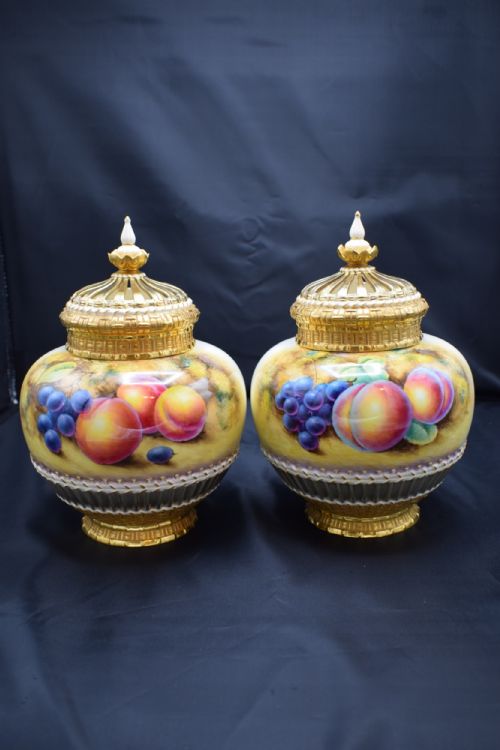

Royal Worcester Decorative Vase
Royal Worcester decorative vase pieces span Victorian and twentieth-century eras, offering hand-painted fruit, birds, and cattle on fine porcelain.
Royal Worcester Decorative Vase
A royal worcester decorative vase encompasses a variety of forms ranging from standard vases and urns to ewers and pot pourri vessels with covers. These pieces emerge across the nineteenth century, Edwardian era, and mid-twentieth century.
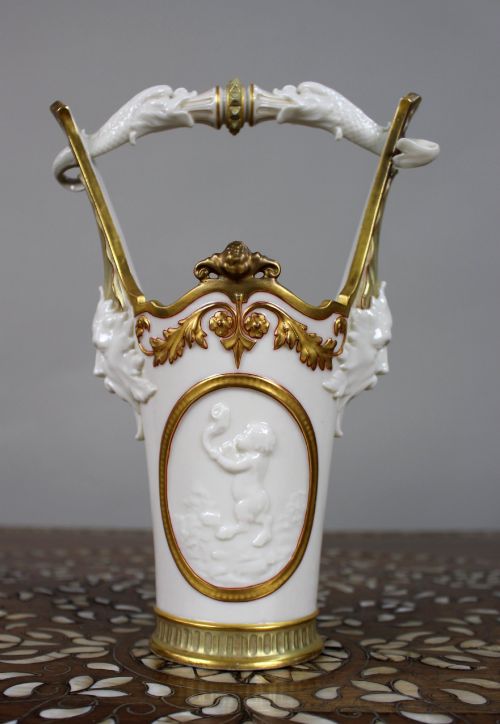
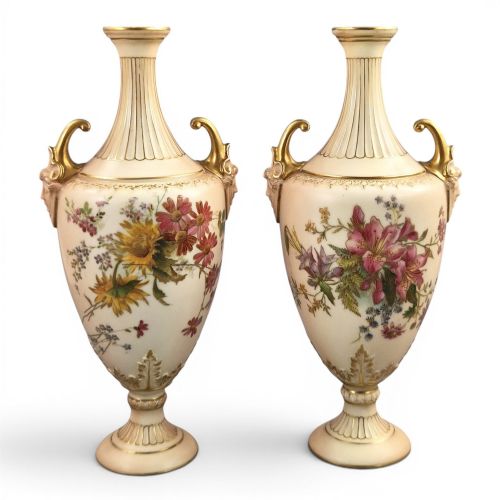
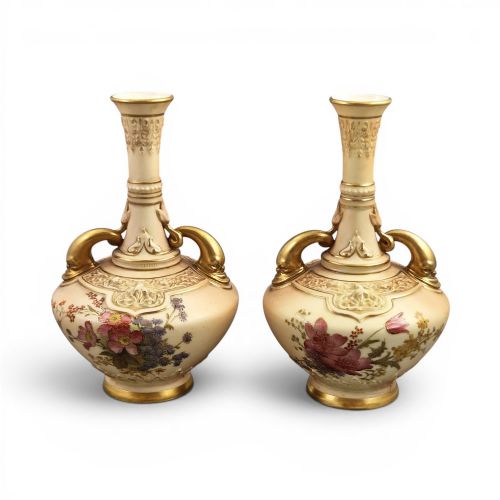
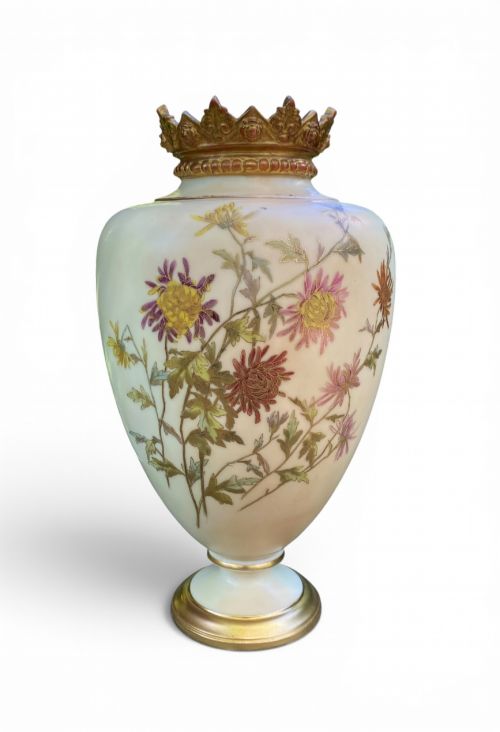
The inventory demonstrates distinct recurring motifs, including blush ivory finishes, floral patterns, and detailed hand-painted subjects like highland cattle, storks, and peacocks. Handled shapes, dolphin motifs, and crown tops frequently appear.
Makers and artists sign many examples, connecting individual works to known painters such as Stinton, Chivers, and Powell. Collectors encounter both pedestal designs and smaller cabinet pieces.
Materials and production methods
Potters shape these items using ceramic, bone china, and porcelain bodies, applying smooth glazes to create the characteristic surfaces. Enamel colours and gold leaf embellishments highlight handles, rims, and borders.
Painters execute naturalistic scenes directly onto the porcelain, utilising careful brushwork for subjects like fruit and livestock. Gilding and meticulous gilding techniques frame the central painted panels.
Listings feature materials including porcelain, bone china, enamel, and gold leaf across Victorian and twentieth-century eras.
Distinctions in quality
Complexity of decoration dictates distinction, where standard floral patterns differ significantly from intricate painted fruit or bird scenes signed by notable artists. Signed works carry higher artistic recognition.
Form and ornamentation complexity also separate items, such as standard spill vases compared against elaborately modelled ewers with dolphin handles or pierced pot pourri covers.
Hadley and Sons·A.B. Daniell and Son·Harry Stinton·Walter Powell·Kitty Blake
The Royal Worcester Decorative Vase Glossary
- Pot pourri vase
- A vessel featuring a pierced or perforated cover designed to hold scented dried plant material. These containers often include inner lids.
- Ewer
- A large jug with a shaped spout and a decorative handle, historically used for water but produced primarily for display in these periods.
- Gilding
- The application of gold leaf or gold paint to ceramic surfaces. It accentuates rims, handles, and painted panel borders.
Royal Worcester Decorative Vase: Frequently Asked Questions
What periods do these pieces date from?
The pieces span from the late nineteenth century through the Edwardian period and into the mid-twentieth century.
Production methods and artistic styles evolved across these decades while maintaining traditional painting standards.
How do I identify painted fruit scenes?
Painted fruit scenes display detailed studies of apples, grapes, and berries against shadowed backgrounds, frequently signed by artists such as Stinton or Ayrton.
These compositions sit within gilt borders on porcelain bodies.
What is a blush ivory finish?
Blush ivory is a matte, pale cream ceramic ground characteristic of late Victorian and Edwardian productions.
It provides a neutral backdrop for floral decoration and gilt enrichment.
How were pot pourri vases used?
Pot pourri vases held dried scented herbs and petals, releasing fragrance through pierced or perforated covers.
Many examples include an additional internal lid to secure the contents.